Gilang Muhammad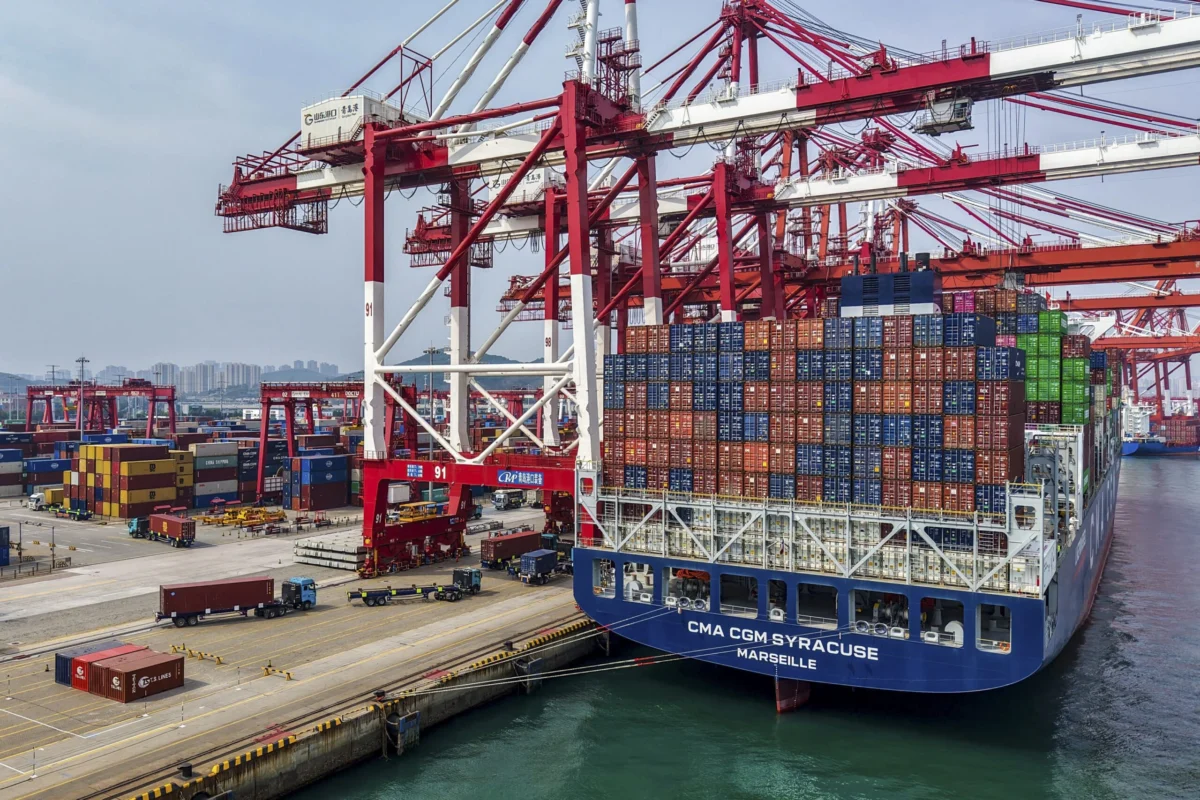
China’s economic landscape in June 2026 presented a complex and often contradictory picture, with consumer price inflation slowing more than anticipated, signaling enduring weakness in domestic demand, even as wholesale inflation surged, driven by elevated energy costs and strategic industrial growth. This bifurcated trend poses a significant challenge for Beijing’s policymakers as they navigate a post-pandemic recovery still grappling with structural imbalances.
Data released by the National Bureau of Statistics (NBS) on Thursday revealed that the Consumer Price Index (CPI), a key gauge of retail inflation, rose by a modest 1% in June from a year earlier. This figure fell short of economists’ consensus forecast of 1.1% growth in a Reuters poll and marked a deceleration from the 1.2% increase recorded in May. The core CPI, which excludes the more volatile food and energy components and is often considered a better indicator of underlying demand, mirrored this trend, also rising 1% year-on-year in June, a slight dip from the 1.1% increase observed in May. This persistent softness in core inflation underscores the muted consumer sentiment and spending power across the world’s second-largest economy.
Conversely, the Producer Price Index (PPI), which tracks the cost of goods at the factory gate, registered a robust 4.1% jump from a year earlier. This acceleration, which was in line with economists’ forecasts and outpaced May’s 3.9%, marked the strongest growth since July 2022, according to LSEG data. The divergence between consumer and producer prices highlights the acute pressure on Chinese manufacturers, who are facing rising input costs but struggle to pass these on to a price-sensitive consumer base. On a month-on-month basis, however, PPI showed a slight decline of 0.3%, an important detail suggesting that while the year-on-year increase is significant due to base effects, the immediate upward momentum in factory gate prices may be moderating.
Diverging Inflationary Pressures: A Deep Dive into June’s Data
The granular details of the June inflation report offer further insights into the underlying dynamics. Within the CPI basket, food prices continued their downward trajectory, declining 1.6% from a year earlier, a marginal easing from the 1.7% fall in May. This sustained reduction in food costs, particularly staple items, could be attributed to stable agricultural supplies and weakened consumer demand for higher-priced goods. Pork prices, a significant component of China’s food basket and often a bellwether for inflation, remained relatively subdued, reflecting ample supply and cautious household spending. Beyond food, categories such as durable goods and household appliances also saw limited price increases, indicating consumers’ continued hesitancy in making discretionary purchases. Transportation and communication services, however, showed marginal increases, partially offset by the broader deflationary pressures.
The acceleration in PPI, on the other hand, was largely driven by external factors and specific industrial sectors. Elevated global energy prices, exacerbated by ongoing geopolitical tensions in the Middle East, have pushed up the cost of crude oil, natural gas, and related downstream products. This directly impacts manufacturing inputs across various industries, from chemicals to heavy machinery. Furthermore, the burgeoning global demand for artificial intelligence (AI) computing power has created a significant surge in the prices of tech equipment and semiconductors, vital components for China’s high-tech manufacturing sector. These external pressures have provided a strong tailwind for wholesale prices, enabling them to return to substantial year-on-year growth after a prolonged period of contraction.
A Chronicle of China’s Inflationary Journey and Economic Evolution
To fully appreciate the significance of June’s figures, it is crucial to place them within the broader timeline of China’s recent economic performance. The period leading up to early 2026 was characterized by what many economists termed China’s "longest deflationary streaks in decades." This phase, particularly pronounced in 2023 and early 2024, saw a protracted decline in producer prices and dangerously low consumer inflation.
The year 2025 was particularly challenging, with producer prices recording their worst decline in almost two years in June of that year, falling a staggering 3.6% from the prior year. This sharp contraction was a symptom of a "deepening price war" that rippled through the economy, driven by overcapacity in several industrial sectors, intense competition, and a pronounced lack of domestic demand following the lifting of pandemic restrictions. Businesses, desperate to offload inventory and maintain market share, engaged in aggressive price cutting, further exacerbating the deflationary spiral. Consumer confidence remained fragile, weighed down by uncertainties in the labor market, a struggling property sector, and a cautious savings mentality.
The turning point for producer prices began in March 2026, when input costs started to rise again, primarily due to the escalating Middle East conflict. This geopolitical event disrupted global supply chains and sent commodity prices, particularly crude oil, soaring. Concurrently, the exponential growth in demand for AI-related technologies worldwide began to exert upward pressure on prices for specialized tech equipment and semiconductors, components in which China plays a significant manufacturing role. These twin forces helped to pull the PPI out of its prolonged deflationary slump and back into positive growth territory, signaling a shift in the global commodity and technology markets that directly impacted China’s industrial output.
Analyst Perspectives and the Two-Speed Economy

Economists and analysts have been closely scrutinizing these divergent trends, offering various interpretations of their implications for China’s economic trajectory. Tianchen Xu, a senior economist at Economist Intelligence Unit, noted that while "oil prices are by and large on an easing course, and this will prevent PPI from going higher," the year-on-year strength in PPI is largely attributable to the "low-base effect" from June last year’s deep contraction. More critically, Xu highlighted the "entrenched weakness in domestic demand," stating that "Factories can’t fully pass on cost increases to downstream clients." This inability to transfer rising input costs translates directly into compressed profit margins for manufacturers, potentially hindering investment, job creation, and overall business expansion. It also underscores the precarious position of many Chinese enterprises, caught between global commodity price volatility and a cautious domestic consumer.
The concept of a "two-speed growth" economy has increasingly gained traction among investors and strategists observing China. Neo Wang, China strategist at Evercore ISI, succinctly described this phenomenon as being "marked by robust exports versus weak consumption and housing market." He emphasized that this duality is now viewed as a "defining long-term feature of the Chinese economy."
The export sector, particularly in high-tech and AI-related products, has indeed shown remarkable resilience. Official data indicated that China’s manufacturing activity expanded faster than expected in June, with experts attributing this momentum to strong external demand, especially for AI-related technology. This robust export performance has provided a crucial buffer for China’s overall economic growth, offsetting some of the domestic fragilities.
However, the persistent weakness in consumption remains a significant drag. Consumer sentiment is subdued, a direct consequence of households grappling with the "negative wealth effect" stemming from the prolonged housing downturn. The property sector, once a primary engine of wealth creation for Chinese families, has been mired in a deep slump, with falling home prices eroding household assets and fostering a sense of insecurity. This has led to a cautious approach to spending, with many opting to save rather than consume, further dampening retail sales and service sector growth. The lack of a clear turnaround in the housing market continues to cast a long shadow over consumer confidence.
Policy Implications and Future Outlook
The resilience of the export and manufacturing sectors, juxtaposed with tepid consumer demand, is expected to reinforce Beijing’s current policy stance. Analysts like Gabriel Wildau, managing director at Teneo, suggest that policymakers are likely to "refrain from major new stimulus unless the slowdown persists beyond the conflict." The government appears to be prioritizing stability and targeted support for strategic industries over broad-based stimulus measures aimed at igniting consumer spending. This approach reflects a strategic pivot towards high-quality, innovation-driven growth, even if it means tolerating slower consumption-led expansion in the short term.
The upcoming top policy meeting by the 24-member Politburo of the Communist Party in late July is being eyed as "the next opportunity to escalate policy stimulus," according to Wildau. While expectations for a massive stimulus package are low, the Politburo may consider more targeted fiscal measures, infrastructure investments, or adjustments to monetary policy designed to inject liquidity into specific sectors or ease financing costs for businesses. However, any such measures would likely be carefully calibrated to avoid exacerbating existing debt risks or overheating specific segments of the economy. The emphasis is likely to remain on structural reforms and fostering innovation rather than simply boosting aggregate demand through conventional means.
On the international front, the International Monetary Fund (IMF) recently offered an optimistic assessment of China’s economic performance for the current year. In a report issued on Wednesday, the IMF raised its growth forecast for China to 4.6%, an increase from its previous projection of 4.4%, while trimming its outlook for global economic expansion to a sluggish 3%. The IMF attributed this more positive view to China’s "robust high-tech manufacturing and export performance," as well as "frontloaded public infrastructure investments." This endorsement from a major international body provides some validation for Beijing’s strategic focus on industrial upgrading and infrastructure development as drivers of growth. China has set a modest growth target of 4.5%-5% for the year, and the IMF’s revised forecast suggests that this target is well within reach, albeit largely driven by supply-side factors rather than a resurgence in domestic consumption.
Broader Impact and Structural Challenges
The continued divergence in China’s economic performance has broader implications both domestically and globally. Domestically, it highlights the persistent structural challenges facing the economy. The property market downturn is not merely a cyclical issue but a systemic one, intertwined with local government finances and household wealth. Addressing this requires deep-seated reforms that go beyond short-term fixes. Similarly, boosting consumer confidence necessitates not just economic stability but also a strengthened social safety net, improved income distribution, and greater certainty regarding future prospects.
Globally, China’s "two-speed" economy means that its role in the global economy is evolving. While its manufacturing prowess and export engine continue to be crucial for global supply chains, especially in high-tech sectors, its capacity to act as a major consumer of global goods and services remains constrained. This has implications for commodity-exporting nations and economies heavily reliant on Chinese tourism or consumer goods demand. The robust demand for AI-related tech from China also underscores its growing influence in the global technology landscape, potentially reshaping international trade flows and technological dependencies.
In conclusion, China’s June 2026 inflation data paints a picture of an economy in transition, caught between external resilience and internal fragilities. While rising factory gate prices reflect global commodity trends and strategic industrial growth, the persistent softness in consumer inflation underscores the ongoing struggle with domestic demand. For policymakers, the challenge lies in carefully balancing these conflicting signals, continuing to foster high-tech manufacturing and exports while devising effective, sustainable strategies to reignite consumer confidence and address the deep-seated issues in the property sector, thereby ensuring a more balanced and inclusive economic recovery. The coming months, particularly the Politburo meeting, will be critical in signaling Beijing’s strategic response to this complex economic reality.