Gilang Muhammad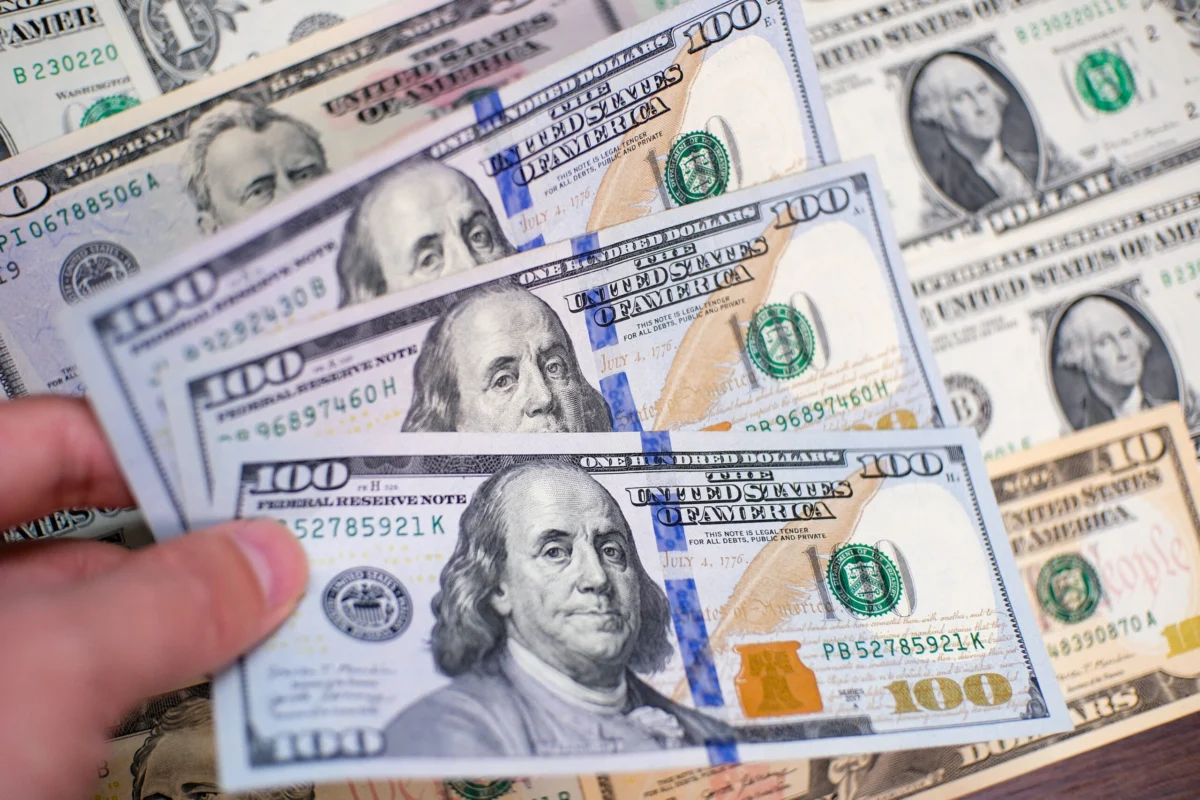
Leaders of the BRICS economic bloc convened over the weekend, reiterating their collective vision for a global financial system less reliant on the U.S. dollar. The summit discussions highlighted the burgeoning economic influence of the Global South and emphasized the critical need to expand trade in local currencies, a strategic move signaling a concerted effort to diminish dependence on the greenback. This ambition, fueled by geopolitical tensions, the specter of economic sanctions, and the impact of U.S. tariff policies, has become a recurring theme for the bloc. However, despite the strong rhetoric, financial experts and economists remain skeptical about the BRICS nations’ immediate capacity to significantly decouple from the dollar’s entrenched global dominance.
The Enduring Dominance of the Dollar and the Rise of De-dollarization Rhetoric
For decades, the U.S. dollar has served as the undisputed cornerstone of the international financial system, underpinning global trade, finance, and central bank reserves. Its preeminence stems from a combination of factors: the sheer size and stability of the U.S. economy, the depth and liquidity of U.S. financial markets, and a deeply ingrained network effect where its widespread acceptance reinforces its utility. This is evident in critical global commodities like oil and gold, which are predominantly denominated in the greenback. Data from the Bank for International Settlements (BIS) underscores this enduring reality, revealing that as of April, the U.S. dollar constituted a staggering 89% of all foreign exchange transactions – a marginal increase of 1 percentage point from the previous year. In contrast, the euro and the Japanese yen, the next most traded currencies, accounted for 29% and 17%, respectively, highlighting the dollar’s formidable lead.
The term "de-dollarization" has periodically surfaced, particularly during periods of global economic uncertainty or when confidence in U.S. economic stability or foreign policy is perceived to waver. From the Asian Financial Crisis of the late 1990s to the 2008 global financial crisis, and more recently, in response to U.S. unilateral sanctions and protectionist trade policies, calls for alternative financial architectures have grown louder. The underlying premise is straightforward: a world where most international transactions are conducted in a single national currency grants significant leverage to the issuing nation, allowing it to exert considerable influence over global economic and political affairs.
BRICS: A Collective Push for Economic Sovereignty
The BRICS bloc, initially comprising Brazil, Russia, India, China, and South Africa, has recently expanded to include Egypt, Ethiopia, Iran, Saudi Arabia, and the United Arab Emirates. This expansion, finalized in January 2024, signifies a growing desire among non-Western nations to forge a more multipolar economic order. Collectively, these ten member countries represent a significant portion of the global economy, accounting for an estimated 27% of world output, 24% of merchandise exports, and 22% of foreign direct investment inflows in 2024, according to a March report from the United Nations Conference on Trade and Development (UNCTAD). The report acknowledged that this expansion "brings fresh opportunities, avenues for cooperation and vast potential."
At the recent summit, South African President Cyril Ramaphosa articulated the bloc’s shared objective, stating, "BRICS should press ahead with greater use of local currencies, stronger cross-border payment systems and deeper financial interconnectivity." This sentiment was echoed by other leaders, particularly those from energy-rich economies like Iran and Russia, whose ability to conduct international trade in dollars has been severely curtailed by U.S. sanctions. Iranian President Masoud Pezeshkian specifically highlighted the vulnerability of the current financial system, which he described as "vulnerable to political shocks due to its concentration on a limited number of currencies." He urged the bloc to prioritize the development of robust payment, settlement, and depository infrastructure within BRICS to diversify away from the dollar.
The Geopolitical Drivers of De-dollarization
The motivations behind the de-dollarization drive within BRICS are multifaceted, blending economic aspirations with strategic geopolitical considerations. For countries like Russia and Iran, the impetus is largely pragmatic: circumventing U.S. and allied sanctions that restrict their access to dollar-denominated financial markets. Following Russia’s invasion of Ukraine in 2022, the swift and comprehensive imposition of sanctions, including the freezing of central bank assets and exclusion from the SWIFT international payment system, underscored the potent weaponization of the dollar and the global financial infrastructure. This experience served as a stark warning to other nations about the potential risks of over-reliance on a currency whose issuer can unilaterally impose such penalties.
China, the largest economy within BRICS, has a long-term strategic goal of increasing the international usage of its currency, the renminbi (RMB or yuan), to match its growing economic stature. A more internationally accepted yuan would reduce China’s exposure to U.S. monetary policy shifts and offer an alternative for its vast trading partners. India, while keen on promoting the rupee’s international role, also seeks greater strategic autonomy and a reduction in external vulnerabilities. Other BRICS members, ranging from Brazil to Saudi Arabia, are motivated by a desire to insulate their economies from U.S. domestic policy decisions, such as interest rate hikes by the Federal Reserve, which can trigger capital outflows and currency depreciation in emerging markets.
Challenges and Divergent Interests: The Roadblocks to De-dollarization
Despite the unified rhetoric, the path to significant de-dollarization for the BRICS bloc is fraught with substantial challenges, both internal and external. Experts point to a lack of deep financial and macroeconomic integration, wide trade imbalances, and, crucially, deep-seated distrust between key member states as the most formidable hurdles.
Jayant Krishna, a senior fellow at the Center for Strategic and International Studies, articulated a core problem: the BRICS bloc currently lacks the "unified institutional, financial, and macroeconomic infrastructure needed to substitute the inherent liquidity and trust" that the dollar commands globally. The dollar’s dominance is not merely a function of U.S. power but also of its unrivaled liquidity, transparency, and the rule of law underpinning U.S. financial markets – qualities that no single BRICS currency or a hypothetical BRICS common currency currently possesses.
The China-India Rivalry: A Major Brake on Cohesion
One of the most significant internal challenges to BRICS cohesion and its de-dollarization agenda is the persistent rivalry between China and India. Reema Bhattacharya, head of Asia research at Verisk Maplecroft, describes this as "the single biggest brake on cohesion across the bloc." While both Beijing and New Delhi aspire to greater strategic autonomy from Washington, they remain direct economic and geopolitical competitors across various fronts, including manufacturing, technology, investment, and regional influence.
This strategic tension is compounded by a widening trade imbalance. China is one of India’s largest business partners, with total bilateral trade reaching a record $151.1 billion in the year ending March 2026. However, India’s trade deficit with Beijing has simultaneously surged to a record $112.16 billion, up from $99.21 billion. This imbalance makes a wholesale shift away from the dollar less appealing for India, especially considering its robust trade relationship with the U.S. India’s goods and services trade with the U.S. was approximately $239 billion in 2025, yielding a significant goods trade surplus of $58.4 billion and a services trade surplus of $4.7 billion. For India, maintaining dollar-denominated trade facilitates its ability to manage its trade surplus with the U.S. and offset deficits with other partners, including China. The underlying trust required for deeper financial integration, such as a shared payment system or a common currency, is severely undermined by these economic disparities and geopolitical frictions.
Divergent National Priorities
Beyond the China-India dynamic, BRICS members exhibit vastly different national priorities regarding de-dollarization. Krishna Bhimavarapu, APAC Economist at State Street Investment Management, notes that "Russia and Iran want to reduce dollar exposure because of sanctions risk; China wants greater international use of the renminbi but maintains capital controls; India, meanwhile, supports greater use of the rupee." These differing objectives make it challenging to formulate a coherent, unified strategy for de-dollarization that satisfies all members. China’s capital controls, for instance, limit the renminbi’s full internationalization, making it less attractive as a truly global reserve currency.
"Baby Steps" and Limited Concrete Progress
Despite the ongoing discussions, concrete steps towards large-scale de-dollarization have been modest. The BRICS 2026 declaration, for example, conspicuously lacked any mention of a common currency or firm details on trade settlements and investments using BRICS local currencies. Instead, it merely tasked the BRICS Payment Task Force with exploring "practical solutions for cross-border payments," a much more incremental approach.
While some bilateral progress has been made, it often stems from specific circumstances rather than a coordinated BRICS policy. Reema Bhattacharya points out that "Russia and China now settle close to ninety percent of their trade in rubles and yuan," but this shift has been primarily "accelerated by U.S. sanctions after 2022," rather than being the result of a deliberate, pre-planned BRICS initiative.
A fundamental hurdle remains the lack of deep, liquid markets for most BRICS currencies outside their home economies. This discourages exporters from accepting them for international transactions, making dollar invoicing the "path of least resistance" for global commodities and trade. Without the robust financial infrastructure, regulatory certainty, and investor confidence that underpin the dollar, any alternative currency faces an uphill battle to gain widespread acceptance.
External Reactions and the Resilience of the Dollar
The discussions within BRICS have not gone unnoticed by global powers. Former U.S. President Donald Trump, for instance, has previously issued stern warnings to the bloc, threatening severe economic repercussions if they actively moved away from the dollar. In a social media post, Trump stated, "We require a commitment from these Countries that they will neither create a new BRICS Currency, nor back any other Currency to replace the mighty U.S. dollar, or they will face 100% Tariffs and should expect to say goodbye to selling into the wonderful U.S. Economy." While his stance is particularly aggressive, it reflects a broader U.S. determination to defend the dollar’s status, which provides significant economic and geopolitical advantages.
Economists generally agree that displacing the dollar will be an extraordinarily long and arduous process, if it happens at all. The sheer scale of U.S. bond markets, the dollar’s role as the primary safe-haven currency during crises, and the network effects that make it convenient for businesses and central banks worldwide to use it, provide immense inertia. Any alternative would need to offer comparable liquidity, stability, and trust, which would require decades of sustained effort and a level of economic and political integration that the BRICS bloc has yet to demonstrate.
Future Outlook: A Multi-Polar Currency System or Persistent Dollar Dominance?
The recent BRICS summit underscores a growing global aspiration for a more diversified international financial system, one that offers alternatives to the dollar and reduces vulnerability to unilateral actions by any single nation. While the bloc has made significant strides in increasing its collective economic footprint and advocating for the Global South, the journey towards meaningful de-dollarization remains arduous.
As Krishna Bhimavarapu aptly summarizes, "Ultimately, no BRICS-led alternative currently matches the liquidity and market depth, credibility and global acceptance of the Dollar." The current trajectory suggests that while bilateral trade in local currencies may continue to expand, especially under geopolitical pressure, the emergence of a viable BRICS common currency or a rapid, widespread abandonment of the dollar appears unlikely in the near to medium term. Instead, the world may gradually evolve towards a more multi-polar currency system where several major currencies, including the dollar, euro, yen, and potentially the renminbi, coexist and compete for influence, rather than a dramatic replacement of the greenback. The BRICS discussions represent an important step in this ongoing evolution, signaling a persistent, albeit challenging, quest for greater economic sovereignty among a rising cohort of nations.