Clara Shinta

Bitcoin (BTC) experienced a significant downturn following Thursday’s Wall Street open, establishing new multimonth lows as a wave of selling pressure permeated the United States stock market. This sharp decline in the cryptocurrency market was largely attributed to the unexpected leadership transition at Nvidia, a bellwether technology company, which sent shockwaves through the broader equity markets already grappling with persistent macroeconomic concerns. The confluence of these events underscored the increasing interconnectedness between the volatile cryptocurrency landscape and traditional financial markets, particularly in periods of heightened uncertainty.
A Tumultuous Market Opening: Bitcoin’s Descent and Nvidia’s Shock
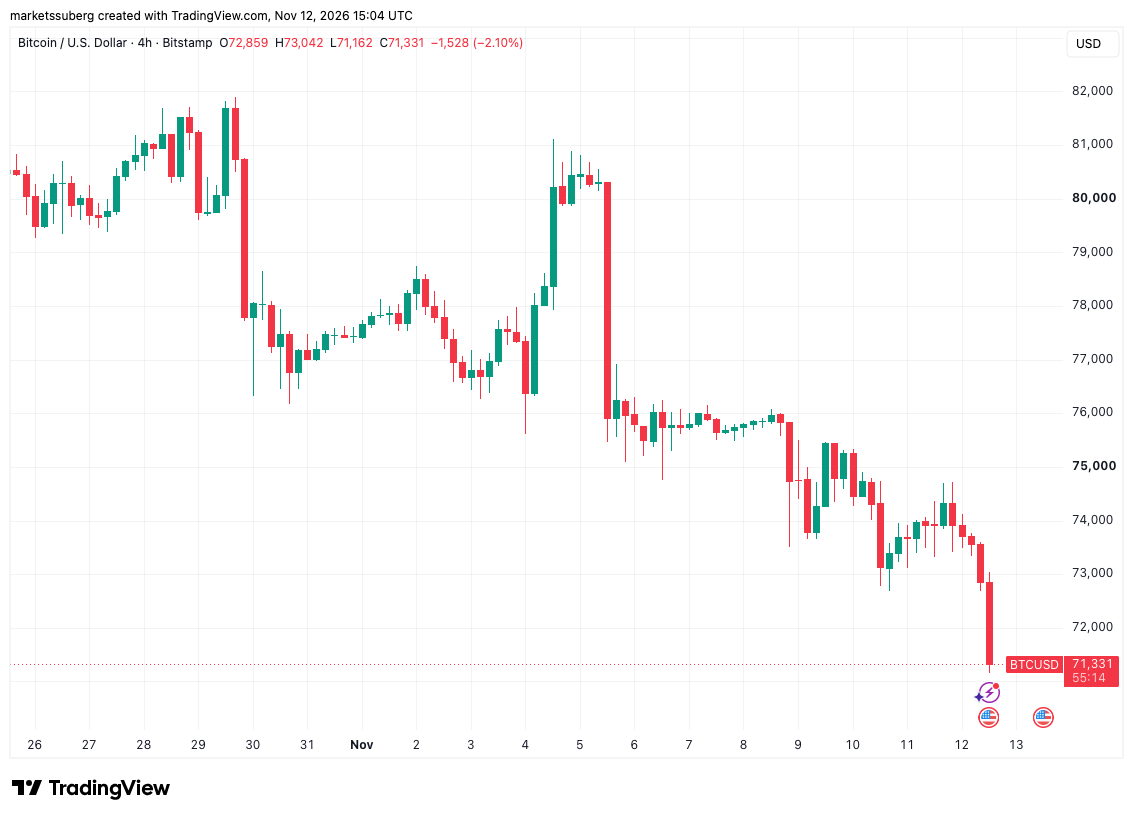
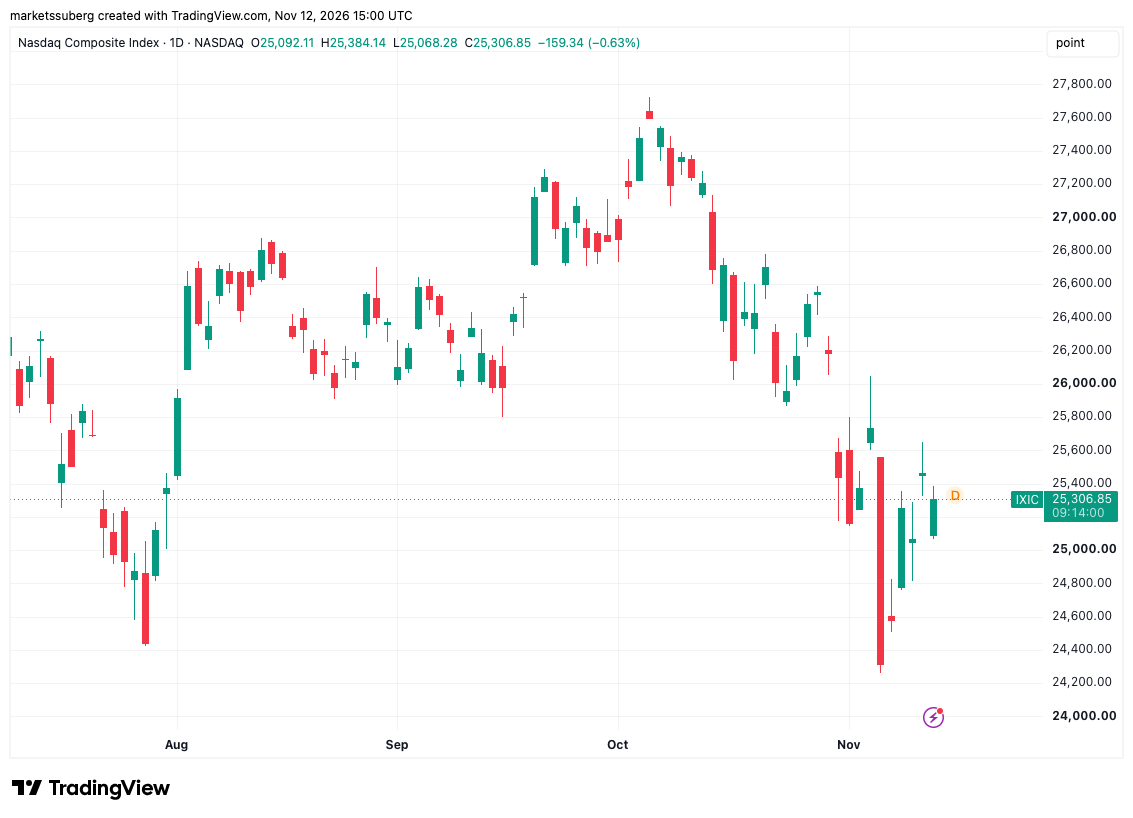
The morning of Thursday witnessed a swift and decisive downturn across financial assets. Data compiled from TradingView indicated that BTC/USD breached the $72,000 mark, an ominous threshold not seen since August 20. This retreat pushed Bitcoin’s month-to-date losses to a notable 7.4%, signaling a deepening bearish sentiment among cryptocurrency investors. The fall was not isolated; it mirrored a broader apprehension stemming from the conventional financial sector, with the tech-heavy Nasdaq Composite Index also registering declines, albeit more modest, of 0.6% at the time of reporting.

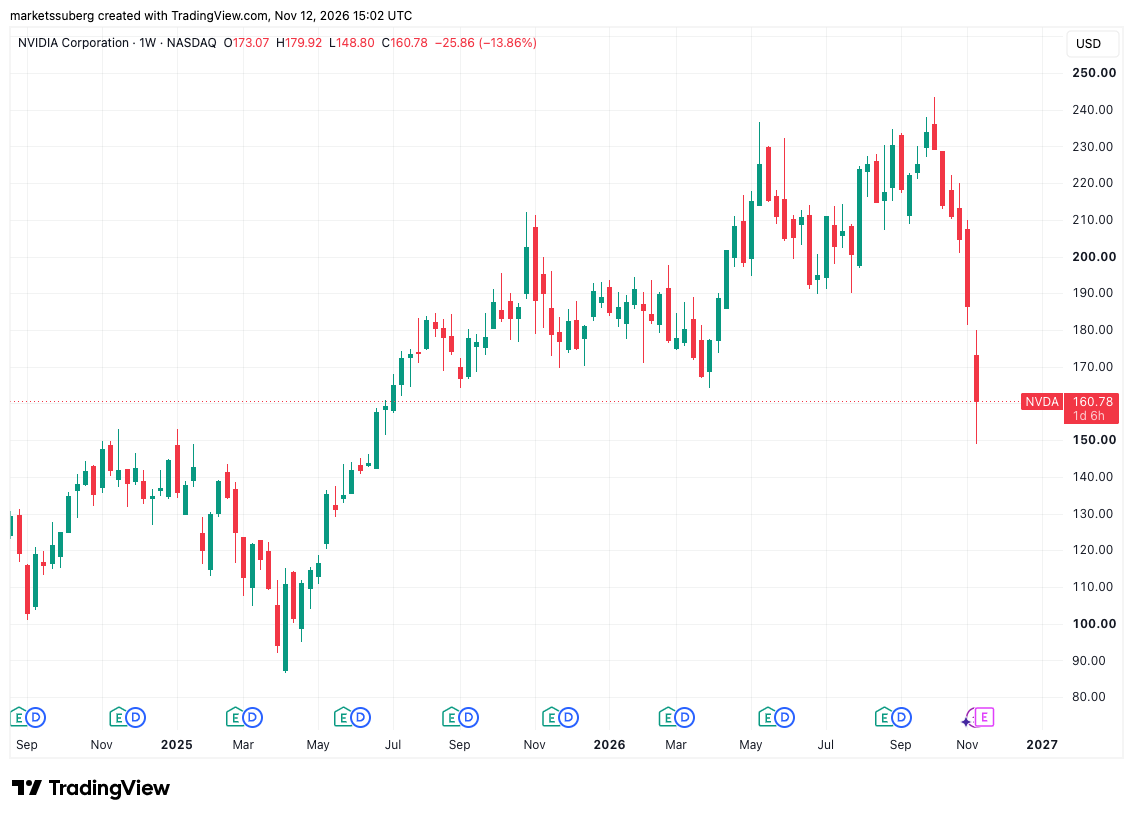
The primary catalyst for this market instability appeared to be the sudden and immediate resignation of Jensen Huang, the highly influential co-founder and long-standing Chief Executive Officer of Nvidia. The news, which broke shortly before the market opened, instantly triggered a substantial sell-off in Nvidia’s shares (NVDA), which plummeted by nearly 13% at the Wall Street open. Huang’s departure, coming as a surprise to many market participants, cast a shadow of uncertainty over one of the world’s most critical technology companies, particularly given its dominant position in the artificial intelligence (AI) and graphics processing unit (GPU) markets.
Nvidia’s Leadership Vacuum: Interim Appointment and Market Reaction
The announcement from Nvidia confirmed Jensen Huang’s immediate resignation as both CEO and a member of the company’s Board of Directors. In response to this abrupt departure, the company moved swiftly to appoint Colette Kress, who currently serves as Executive Vice President and Chief Financial Officer, as the Interim Chief Executive Officer. Nvidia’s official press release stated, "Kress will continue to serve as Executive Vice President and Chief Financial Officer while serving as Interim Chief Executive Officer until a permanent successor has been named." The statement further elaborated on the company’s commitment to finding a suitable long-term leader: "The Board is initiating a search for a permanent Chief Executive Officer and will consider internal and external candidates."
The market’s reaction to Huang’s exit was immediate and severe for Nvidia. The 13% drop in NVDA stock at the open represented a significant loss of market capitalization, reflecting investor concern over the void left by a visionary leader widely credited with steering Nvidia to its current prominence in the tech industry. Huang’s leadership has been synonymous with Nvidia’s strategic pivots and innovations, from its early days in gaming graphics to its current indispensable role in AI, data centers, and professional visualization. His departure at a time when the AI sector is experiencing explosive growth adds a layer of complexity and perceived risk for investors.
Mohamed El-Erian, a renowned economist and president of Queens’ College, Cambridge, described Huang’s resignation as a "significant development" with far-reaching implications that would extend beyond the confines of Nvidia itself. In an analysis, El-Erian articulated the multifaceted challenges facing the company: "The situation will remain in the spotlight, not only as the company navigates the loss of its highly-influential founder, but also as various political investigations (formal and informal) unfold." While specific details on these "political investigations" were not explicitly provided in the original context, such remarks from a prominent economist suggest potential scrutiny related to market dominance, regulatory compliance, or geopolitical factors, particularly concerning advanced semiconductor technology. This added layer of complexity undoubtedly contributed to investor apprehension.
Bitcoin’s Technical Breach and Macroeconomic Undercurrents
Beyond the immediate shockwaves from Nvidia, Bitcoin’s price action was also heavily influenced by underlying macroeconomic currents. The cryptocurrency’s fall pushed it below its crucial 21-week simple moving average (SMA), a widely watched technical indicator that stood at $73,078 on the preceding Wednesday. Breaching this long-term moving average is often interpreted by technical analysts as a bearish signal, suggesting that the asset’s momentum has shifted downward and that further declines could be on the horizon. For many traders, the 21-week SMA serves as a key demarcation line between bullish and bearish trends over a medium-term horizon.
The broader macroeconomic environment, characterized by persistent inflationary pressures and the Federal Reserve’s hawkish monetary policy stance, provided a fertile ground for market jitters. On Tuesday, just two days prior to the market turmoil, the October print of the Consumer Price Index (CPI) was released, revealing inflation figures that came in above market expectations. This "hot" inflation report immediately led markets to price in a higher probability of additional interest rate hikes by the Federal Reserve in upcoming meetings, potentially in December or January. Higher interest rates typically reduce investor appetite for riskier assets like cryptocurrencies and growth stocks, as they increase the cost of borrowing and make safer, fixed-income investments more attractive.
Against this backdrop, market participants keenly awaited the release of the US Producer Price Index (PPI) report on Friday, as highlighted by Keith Alan, co-founder of crypto trading platform Material Indicators. Alan emphasized the potential for this report to either exacerbate or alleviate market anxieties. "Fundamentally, a cool PPI report that lowers the odds of aggressive rate hikes in December/January could easily flip this script bullish," Alan wrote on X (formerly Twitter). He further noted that if the PPI figures align with market expectations, the spot price of Bitcoin could find itself navigating between existing patches of exchange order-book liquidity, suggesting a period of consolidation or sideways movement rather than a decisive trend reversal. The PPI, which measures the average change over time in the selling prices received by domestic producers for their output, offers another crucial gauge of inflationary pressures at the wholesale level. A higher-than-expected PPI would reinforce concerns about persistent inflation, strengthening the case for further Fed tightening and likely extending the downward pressure on risk assets.
Liquidation Cascades and Market Sensitivity
The sharp drop in Bitcoin’s price triggered a significant cascade of liquidations across the cryptocurrency derivatives market. Data from CoinGlass, a leading crypto analytics platform, revealed that 24-hour crypto liquidations soared to an alarming $730 million. Liquidations occur when leveraged trading positions are forcibly closed by exchanges because the trader’s collateral falls below a required maintenance level, often due to adverse price movements. Such large-scale liquidations can amplify downward price pressure as exchanges sell off assets to cover margin calls, creating a domino effect that can accelerate market declines. The substantial figure underscores the prevalence of high-leverage trading in the crypto space and its vulnerability to sudden market shifts.
This event further highlighted the inherent sensitivity of the cryptocurrency market to external shocks, particularly those originating from the traditional financial sector. Historically, Bitcoin has often been touted as a hedge against conventional market volatility, a "digital gold" that operates independently. However, recent years have shown an increasing correlation between Bitcoin and major equity indices, especially the tech-heavy Nasdaq. This growing interconnectedness suggests that institutional adoption and the integration of cryptocurrencies into broader investment portfolios have made them more susceptible to the same macroeconomic forces and sentiment shifts that influence traditional assets.
Broader Implications and Future Outlook
The events of Thursday painted a clear picture of a financial landscape under duress, where corporate leadership changes and macroeconomic indicators converge to create market volatility. For Nvidia, the task of finding a permanent CEO who can match Jensen Huang’s vision and influence will be critical. The interim appointment of Colette Kress, while providing immediate stability, sets the stage for a period of strategic re-evaluation and potential shifts in investor confidence. The "political investigations" mentioned by El-Erian also add an element of regulatory uncertainty that could impact Nvidia’s future operations and market standing.
For Bitcoin and the broader cryptocurrency market, the immediate future hinges significantly on the trajectory of inflation and the Federal Reserve’s monetary policy. A "cool" PPI report on Friday could offer a temporary reprieve, but the overarching narrative remains one of caution as long as inflation persists above target levels and interest rate hikes remain a credible threat. The breach of key technical support levels, such as the 21-week SMA, suggests that Bitcoin may need to consolidate or even test lower price points before a sustained recovery can materialize. Furthermore, the magnitude of liquidations indicates that market leverage remains a significant factor, potentially leading to further volatility if prices continue to move unfavorably.
The episode serves as a powerful reminder of the intricate web connecting various financial markets. The resignation of a prominent tech CEO, typically a concern for specific equity investors, can ripple through to the seemingly disparate world of cryptocurrencies, especially when compounded by prevailing macroeconomic anxieties. As investors navigate this complex environment, the focus will remain on upcoming economic data releases, central bank pronouncements, and the leadership transitions within influential corporations, all of which contribute to the evolving narrative of global financial markets.