
 Clara Shinta
Bitcoin (BTC) experienced a significant downturn on Thursday, dropping sharply and risking the loss of a crucial support level at $82,500. The digital asset’s slide coincided with a pronounced surge in global oil prices, driven by escalating concerns over potential military action between the United States and Iran. This confluence of geopolitical tension and macroeconomic pressures sent ripples through various markets, amplifying investor anxiety over inflation and the trajectory of central bank monetary policy.
The Immediate Market Fallout: Bitcoin’s Retreat from Key Support
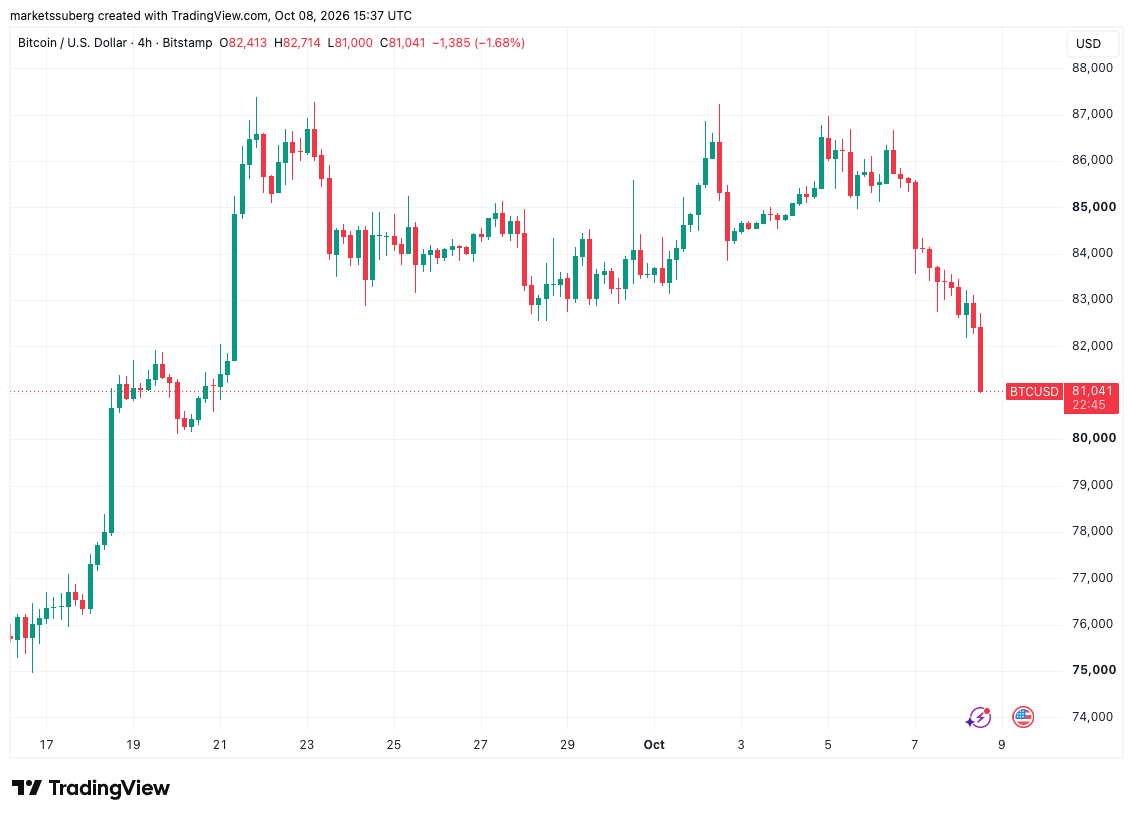
As Wall Street commenced trading on Thursday, Bitcoin’s value began to erode rapidly. Data from TradingView indicated that BTC/USD plunged to $81,000 on Bitstamp, marking its lowest point since September 21. This move put significant pressure on the $82,500 support level, a threshold widely recognized by analysts as critical for Bitcoin’s short-to-medium-term market structure. The breach of this level triggered substantial liquidations across the broader cryptocurrency market, with cross-crypto long positions totaling approximately $430 million unwound at the time of reporting, according to data from CoinGlass. This wave of liquidations further exacerbated the downward price momentum, reflecting a rapid shift in sentiment and risk aversion among leveraged traders.
The significance of the $82,500 level cannot be overstated. Market analysts, including prominent trader Rekt Capital, have highlighted this price point as a "deciding factor" for Bitcoin’s next structural development. Previously, this level has been compared to critical junctures observed at the tail end of the 2022 bear market, which saw Bitcoin rebound from multi-year lows near $57,000. Sustaining price action above such a level often signals a healthy accumulation phase or consolidation before further upward movement, while a decisive break below it can portend deeper corrections. The current inability of Bitcoin to hold this support underscores the market’s heightened sensitivity to external macroeconomic and geopolitical shocks, challenging the narrative of its growing independence from traditional financial markets. The suddenness of the drop also illustrated how quickly bullish sentiment, which had seen Bitcoin trading comfortably above $84,000 just days prior, could dissipate in the face of macro uncertainty.
Geopolitical Volatility: US-Iran Tensions Ignite Oil Markets
The catalyst for Bitcoin’s decline and the broader market nervousness originated in the Middle East, where fears of renewed US-Iran military engagement sent crude oil prices soaring. Reports circulating from sources like NBC News, citing a Pentagon official and individuals familiar with the matter, indicated that the US military was actively preparing options for fresh strikes against Iran. This intelligence immediately reverberated through global energy markets, given Iran’s strategic position in the Persian Gulf and its critical role in global oil supply chains.
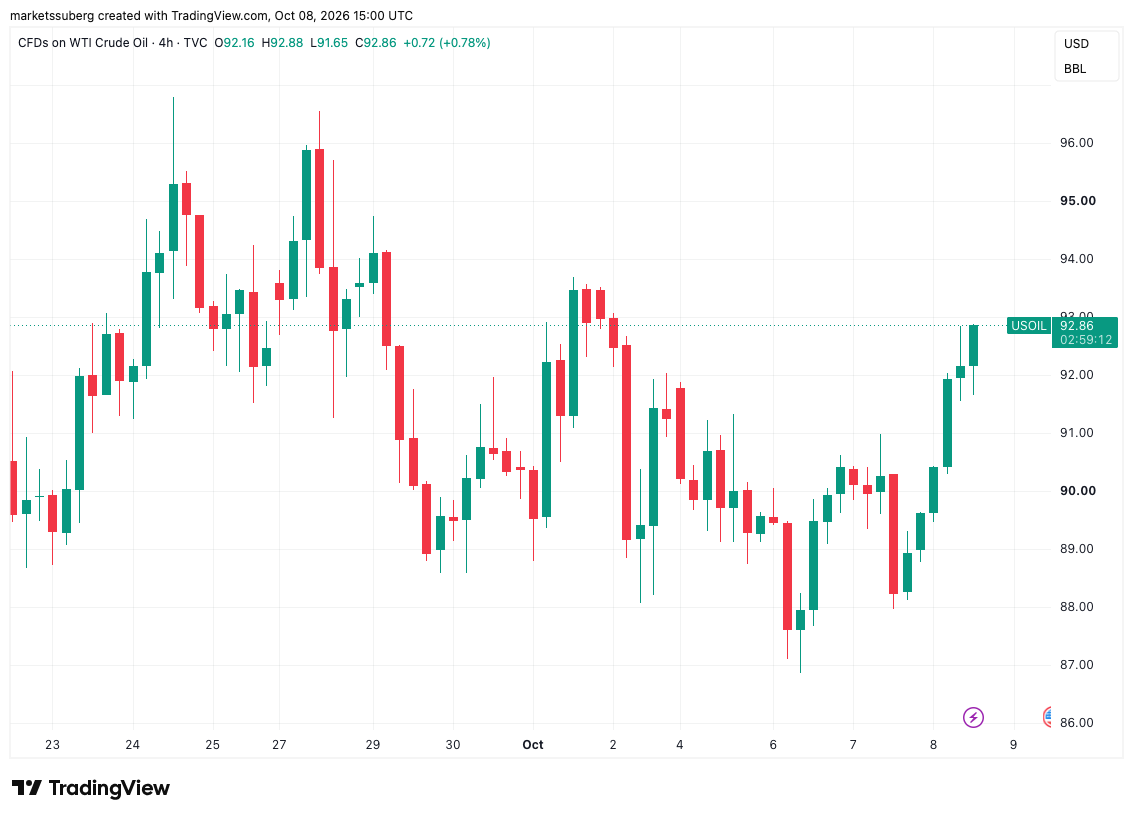
Following these reports, West Texas Intermediate (WTI) crude, the US benchmark, surged to $93.20 per barrel, marking its highest price since October 2. Concurrently, Brent crude, the international benchmark, climbed to $105.88. Such rapid appreciation in oil prices is a direct consequence of perceived supply risks. Any military conflict in the Middle East, particularly involving Iran, raises concerns about disruptions to oil production and, more critically, the transit of crude through the Strait of Hormuz. This narrow waterway, bordered by Iran, is a choke point through which a significant portion of the world’s seaborne oil passes daily. Historically, even the threat of instability in this region has been enough to send energy prices dramatically higher, impacting global economies reliant on stable and affordable energy supplies. The memory of previous geopolitical flashpoints, such as the 1973 oil crisis or the Iran-Iraq War, serves as a stark reminder of the profound economic consequences of Middle Eastern instability. The current spike reflects a deep-seated market fear that any direct military confrontation could severely constrain global oil supply, irrespective of actual damage to production facilities, simply due to increased shipping risks and insurance costs.
Diplomatic Nuances Amidst Escalation Fears
Adding a layer of complexity to the unfolding geopolitical narrative were the seemingly contradictory statements from US President Donald Trump. Speaking at a rally in San Antonio, Texas, President Trump acknowledged ongoing diplomatic efforts with Iran, stating that Middle East envoy Steve Witkoff was making progress on a peace deal. He even suggested that an end to the conflict could be "very soon." However, in the same breath, Trump revealed a curious detachment, remarking, "I think the deal isn’t really something that I want to do, but they’re willing to offer us anything to stop." This statement, as quoted by the Independent, introduced an element of ambiguity. While hinting at a potential diplomatic resolution, his expression of "little personal interest" in the deal could be interpreted in various ways – from a negotiating tactic to a genuine preference for a more assertive stance.
Such mixed signals from the highest levels of government often create further uncertainty in financial markets. Investors and analysts are left to decipher whether diplomatic channels genuinely hold promise for de-escalation or if military options remain firmly on the table, irrespective of perceived progress. The market’s immediate reaction to the oil price surge suggests a leaning towards the latter, indicating that the threat of military action currently outweighs the potential for a swift diplomatic breakthrough. The historical context of US-Iran relations, marked by decades of mistrust, sanctions, and proxy conflicts, further complicates the interpretation of such statements. Previous administrations have also grappled with the challenge of balancing diplomatic engagement with deterrents, often finding that the path to lasting peace is fraught with obstacles and prone to sudden reversals.
Macroeconomic Headwinds: Bond Yields and Inflationary Pressures
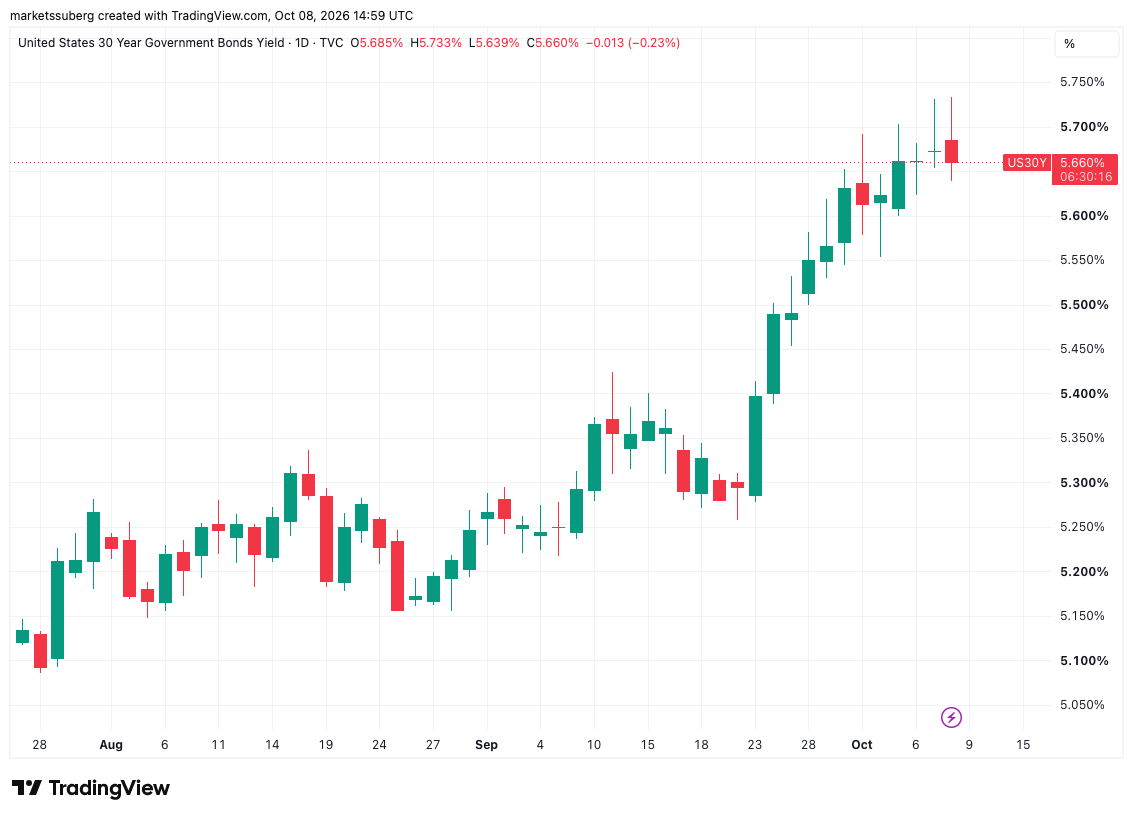
Beyond the immediate impact on oil and cryptocurrencies, the escalating geopolitical tensions and associated inflation fears cast a long shadow over broader macroeconomic indicators, particularly the US bond market. The yield on the US 30-year Treasury bond, a key barometer of long-term interest rate expectations and economic sentiment, soared to a new 24-year high of 5.73% on Thursday. Although it subsequently retreated slightly to 5.65%, the initial spike underscored the pervasive nervousness among investors.
Rising bond yields are typically a response to expectations of higher inflation and/or increased government borrowing. In this scenario, the prospect of an oil price shock directly fuels inflation concerns, as energy costs permeate nearly every sector of the economy. Higher inflation erodes the purchasing power of fixed-income investments, compelling bond investors to demand higher yields as compensation. Furthermore, geopolitical instability can prompt a "flight to safety," where investors seek refuge in perceived safer assets. While US Treasuries are generally considered safe havens, an environment of rising inflation expectations can temper this appeal, leading to yield increases as the market adjusts to a new reality of higher rates. The 24-year high signals a significant shift in the long-term outlook for inflation and interest rates, suggesting that markets are bracing for a more protracted period of economic uncertainty and tighter financial conditions. This has direct implications for corporate borrowing costs, mortgage rates, and ultimately, consumer spending, potentially dampening overall economic growth.
The Federal Reserve’s Stance: Sustained Fight Against Inflation
Adding another layer of pressure to financial markets, particularly bond yields, were the hawkish comments from Federal Reserve Governor Christopher Waller. Speaking at a Central Bank of Turkey forum in Istanbul, Waller reiterated the Fed’s resolute commitment to combating inflation, signaling the likelihood of further interest rate hikes. "If the economic data continue to come in as expected, I anticipate additional hikes to support a timelier return of inflation to our 2 percent goal," Waller stated. He did, however, introduce an element of flexibility, noting, "But there is some flexibility about when those hikes will occur… The hikes do not need to come at consecutive meetings, but they should be in place in an acceptable period of time."
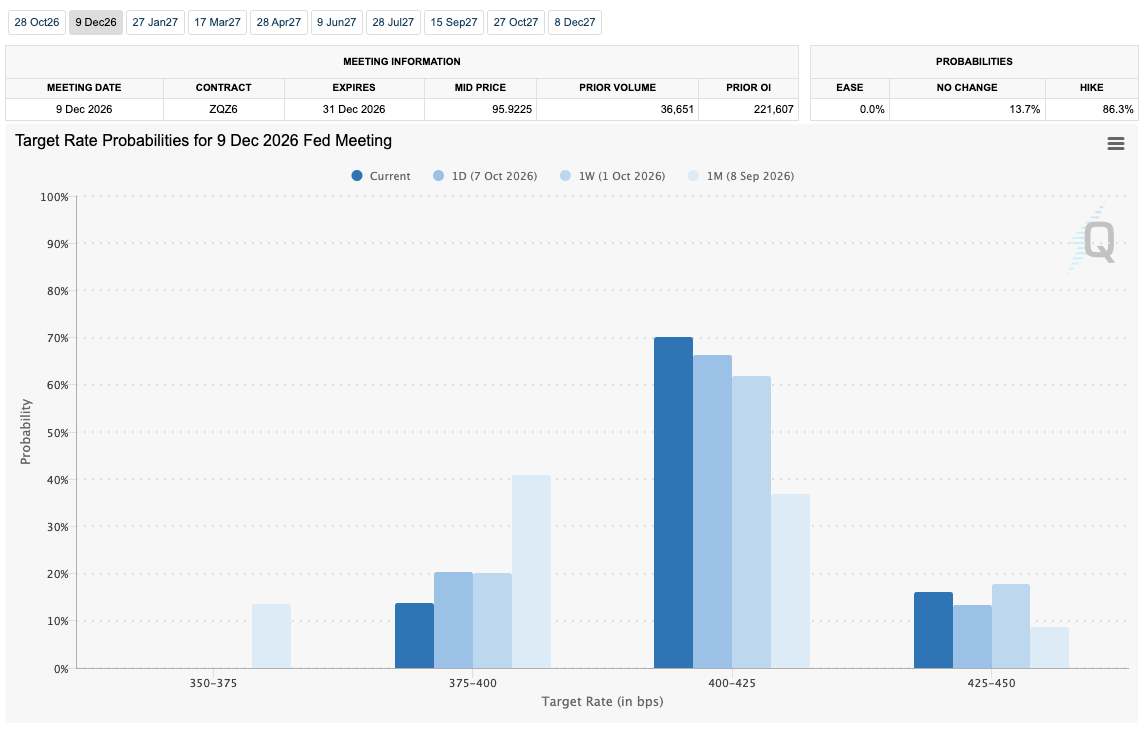
Waller’s remarks reinforced the "higher for longer" narrative that has dominated central bank discourse, suggesting that the Fed is prepared to maintain a restrictive monetary policy stance for an extended period to ensure inflation is definitively brought under control. The market’s interpretation of such signals is crucial, as evidenced by the latest data from CME Group’s FedWatch Tool. On Thursday, market participants significantly increased their bets on a 0.25% interest rate hike at the Fed’s December Federal Open Market Committee (FOMC) meeting, with the odds of this outcome surpassing 70%. This contrasts with the consensus for the October meeting, which continued to favor a rate pause at the current level of 3.75-4%. The increasing probability of a December hike, even with Waller’s caveat about non-consecutive meetings, reflects the market’s conviction that inflationary pressures, exacerbated by rising oil prices, will compel the Fed to continue its tightening cycle. Higher interest rates typically weigh on risk assets like Bitcoin, as they increase the cost of capital and make less risky, yield-bearing investments (like bonds) more attractive by comparison. This dynamic underscores the tight correlation between the Fed’s monetary policy and the performance of speculative assets.
The Interconnectedness of Global Markets: A Ripple Effect
The events of Thursday vividly illustrate the profound interconnectedness of global financial markets. What began as geopolitical concerns in the Middle East rapidly translated into a surge in energy prices, reignited fears of inflation, and hardened the stance of central banks, ultimately impacting everything from long-term government bonds to speculative digital assets like Bitcoin. This intricate web of causality demonstrates that no market operates in isolation, and even seemingly disparate events can create a powerful ripple effect across the global financial landscape.
Bitcoin, despite its initial promise as a decentralized and uncorrelated asset, has increasingly demonstrated sensitivity to macroeconomic factors and global risk sentiment. Its plunge alongside traditional assets like equities and bonds (albeit in different directions) during periods of heightened uncertainty suggests that it is still largely perceived as a risk-on asset, rather than a definitive safe haven. Investors tend to liquidate riskier holdings during periods of global instability, favoring liquidity or more traditional defensive assets. The concurrent rise in gold prices, for example, would offer an interesting comparison, as gold often benefits from such "flight to safety" dynamics. The current environment presents a challenging backdrop for Bitcoin, which must navigate not only its own inherent volatility but also the unpredictable forces of geopolitics and stringent monetary policy.
Expert Perspectives and Forward Outlook
Market analysts are now closely watching the $82,500 level for Bitcoin, recognizing it as a pivotal point. A sustained break below this could signal further downside potential, while a swift recovery might suggest resilience. The outlook for oil prices remains highly dependent on the evolving geopolitical situation between the US and Iran. Any de-escalation could lead to a rapid reversal in oil’s upward trajectory, while further provocations or military action would likely drive prices even higher, prolonging inflationary pressures globally.
The Federal Reserve’s path is equally critical. Should inflation prove more persistent than anticipated, partly due to energy costs, the Fed may be compelled to maintain its hawkish stance, even at the risk of slowing economic growth. This "higher for longer" interest rate environment would likely continue to exert downward pressure on risk assets and challenge overall market stability. Investors are advised to remain vigilant, closely monitoring geopolitical developments, energy market dynamics, and central bank communications. The current climate underscores the importance of diversified portfolios and a nuanced understanding of how global events can rapidly reshape investment landscapes. The interplay of these forces will determine whether Bitcoin can reclaim its lost ground or if it faces a more prolonged period of consolidation or decline in the face of enduring global uncertainties.
This article is produced in accordance with Cointelegraph’s Editorial Policy and is intended for informational purposes only. It does not constitute investment advice or recommendations. All investments and trades carry risk; readers are encouraged to conduct independent research.








