Clara Shinta
The past week in the cryptocurrency world has been marked by a confluence of significant developments, spanning pioneering advancements in blockchain security, critical network economic adjustments, contentious political entanglement with digital assets, and a robust resurgence in market optimism. From proactive measures to fortify Bitcoin against theoretical quantum threats to Solana’s strategic move to accelerate its disinflationary schedule, and from a contentious report on investor losses tied to former President Donald Trump’s crypto ventures to a bullish outlook for Bitcoin’s long-term trajectory, the digital asset landscape continues its dynamic evolution. These narratives collectively underscore the industry’s relentless pursuit of innovation, its ongoing navigation of regulatory complexities, and the ever-present tension between technological progress and market sentiment.
Fortifying Bitcoin Against the Quantum Threat: A Dual Approach to Security
Despite lingering skepticism within the Bitcoin community regarding the immediate proximity of a quantum computing threat, recent developments highlight a concerted effort to proactively upgrade the network’s cryptographic defenses. The theoretical emergence of sufficiently powerful quantum computers poses a significant risk to current public-key cryptography, including the Elliptic Curve Digital Signature Algorithm (ECDSA) that secures Bitcoin transactions. Such a machine could potentially break existing private keys, allowing attackers to drain funds from exposed public keys. Two distinct initiatives have emerged this week, demonstrating progress towards a quantum-resistant future for the world’s leading cryptocurrency.
StarkWare’s Experimental Quantum-Resistant Transaction on Mainnet
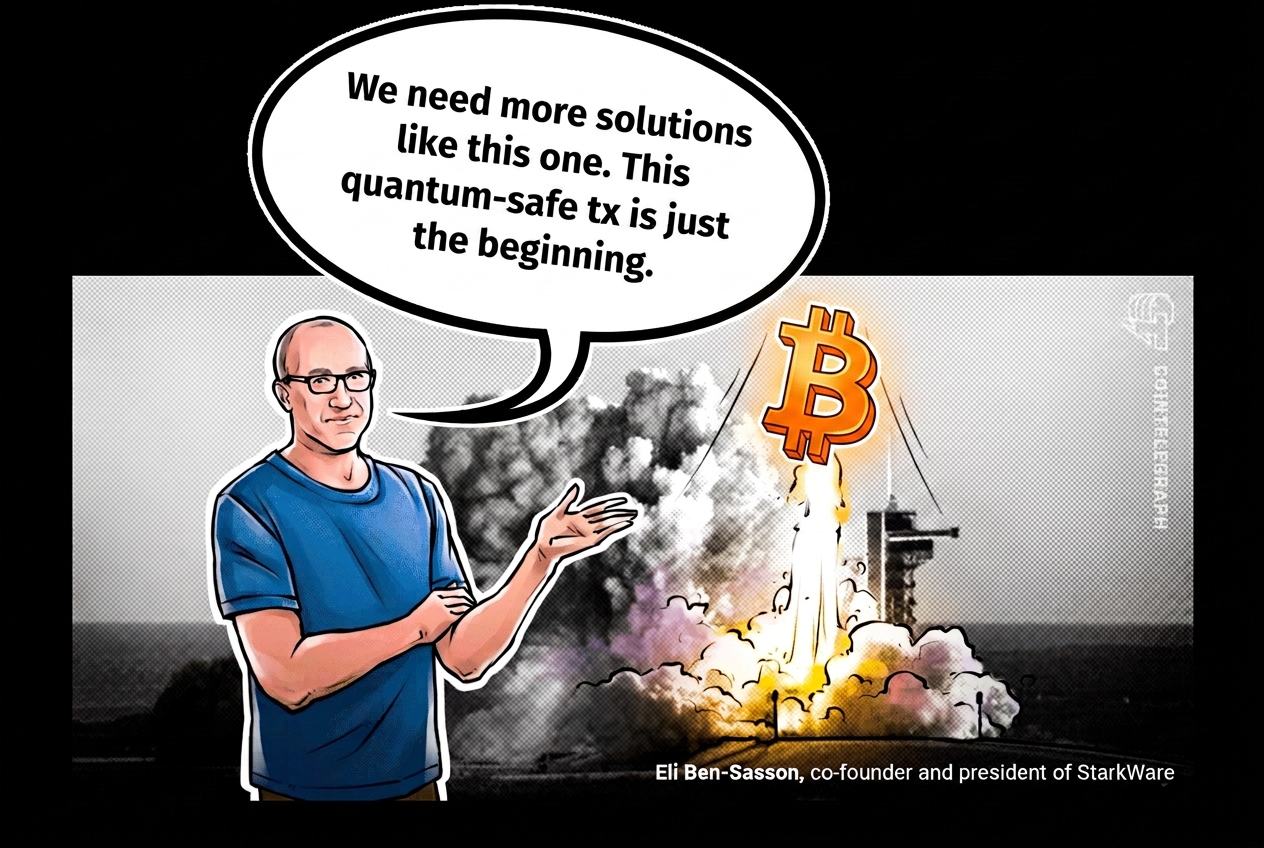
In a notable practical demonstration, StarkWare researcher Avihu Levy successfully executed an experimental quantum-resistant transaction on the Bitcoin mainnet. This innovative scheme, dubbed Quantum Safe Bitcoin (QSB), is designed to protect transactions during the brief, vulnerable period when public keys are exposed in the mempool before being confirmed on the blockchain. The on-chain data confirms that StarkWare spent a 10,000-satoshi output (approximately $7.84 at current BTC prices) secured by Levy’s QSB.
The QSB scheme intricately combines hash-based one-time signatures with sophisticated computational searches. This process effectively binds an authorization to a specific transaction, providing a temporary shield against quantum attacks. While a significant proof-of-concept, the QSB, in its current experimental form, is characterized by considerable practical limitations. Each transaction takes several hours to process and incurs a substantial cost, estimated between $150 to $200. This makes it more of a "last resort" mechanism rather than a scalable, everyday solution, underscoring the formidable challenges in integrating advanced quantum-resistant cryptography into existing blockchain architectures without compromising efficiency or affordability. The test, however, demonstrates the feasibility of such protections and offers valuable insights into potential future implementations.
Blockstream’s SHRINCS Proposal: A Long-Term Upgrade Vision
Complementing StarkWare’s immediate protection efforts, Blockstream researchers published a Bitcoin Improvement Proposal (BIP) on August 27 for the SHRINCS signature scheme. This proposal represents a more comprehensive, long-term strategy to integrate quantum-secure cryptography across all Bitcoin transactions. The core challenge in post-quantum cryptography is often the significantly larger signature sizes compared to conventional schemes, which can bloat blockchain data and increase transaction fees.
The Blockstream team has made impressive strides in addressing this, achieving a 13.23-fold reduction in the size of a large, hash-based post-quantum signature. Despite this significant optimization, the SHRINCS signature remains at least nine times larger than Bitcoin’s current ECDSA signatures. This size increase inherently comes with trade-offs, potentially impacting transaction throughput, storage requirements, and network bandwidth. Jonas Nick, a Blockstream Research contributor, hailed SHRINCS as "the first concrete proposal for a post-quantum signature scheme designed specifically for Bitcoin." While acknowledging that it is "not optimal along every axis," Nick emphasized its strength as "a very good trade-off among the options we have now," highlighting the delicate balance between security, efficiency, and practicality in designing future-proof cryptographic solutions for Bitcoin.

The ongoing research and development in quantum-resistant cryptography underscore a proactive stance within the Bitcoin ecosystem, aiming to safeguard the network’s foundational security well before quantum computers pose an existential threat. These initiatives, while in their nascent stages, lay the groundwork for a more resilient and future-proof digital financial system.
Solana’s Strategic Economic Overhaul: Accelerating Disinflation and Surging Network Activity
Solana, a prominent high-performance blockchain, enacted a pivotal economic policy change this week as its validators overwhelmingly approved a proposal to double the network’s annual disinflation rate. This decision, aimed at fine-tuning the blockchain’s tokenomics, is set to significantly reduce the issuance of its native SOL token over the coming years, potentially enhancing its scarcity and long-term value proposition.
Doubling the Disinflation Rate
The proposal, officially designated SGP-0002 and colloquially known as "Double Disinflation," garnered substantial support from the Solana validator community. Overall participation reached 60.7% of eligible stake, with a decisive 67% voting in favor of the measure. A notable 25.16% voted against, and 7.84% abstained, indicating a healthy debate and diverse perspectives within the ecosystem regarding the optimal economic trajectory. This approval means the annual disinflation rate will increase from 15% to 30%, a significant acceleration designed to bring the network’s inflation to its terminal target more rapidly.
The immediate impact of this change is projected to be a reduction of 18.9 million SOL tokens in issuance over the next six years. Under the new, accelerated schedule, Solana is now expected to achieve its terminal inflation rate of 1.5% in approximately 2.8 years. This is a considerable improvement over the previous schedule, which projected reaching the same terminal rate in roughly 5.7 years. The move is a strategic attempt to control the supply of SOL, making it scarcer over time, which proponents believe will bolster its value in a competitive market.
Record Transaction Volumes Underscore Network Health
The economic adjustments coincide with robust growth in Solana’s network activity. On-chain data, highlighted by The Kobeissi Letter, revealed that Solana processed a staggering 4.2 billion transactions during July. This figure represents a 13.5% increase from the previous month and a remarkable 91% surge since December, when transaction counts hovered around 2 billion. This continuous upward trend in transaction volume underscores the growing utility and adoption of the Solana network, driven by its high throughput and low transaction costs, making it a preferred platform for various decentralized applications (dApps), NFTs, and emerging real-world asset (RWA) tokenization projects. The combination of accelerating disinflation and surging network usage paints a picture of a blockchain ecosystem actively managing its economic future while experiencing organic growth in user engagement and developer activity.
Political Figures and Crypto: The Trump Controversy and Regulatory Implications
The intersection of politics and cryptocurrency continued to generate headlines, with a new report from a consumer advocacy group alleging substantial investor losses linked to former US President Donald Trump’s digital asset ventures. This development further fuels the ongoing debate about the ethics of elected officials engaging with and promoting cryptocurrencies, pushing for stricter regulatory oversight.
Public Citizen’s $4.7 Billion Loss Allegation
Public Citizen, a non-profit consumer advocacy organization, released a report claiming that investors have collectively lost an estimated $4.7 billion since 2022 through digital asset projects associated with former President Donald Trump and his family. The report meticulously breaks down these alleged losses across several high-profile ventures:
- Official Trump (TRUMP) Memecoin: Investors reportedly lost $3.2 billion. This memecoin, like many others, experienced extreme volatility, driven by speculative interest and its direct association with a public figure.
- World Liberty Financial Governance Token: An estimated $1 billion in losses was attributed to this project, which aimed to create a new financial ecosystem.
- Trump Media’s Digital Asset Treasury: This entity, connected to Trump’s media empire, saw an estimated $450 million in losses from its digital asset holdings.
- Trump Non-Fungible Token (NFT) Trading Cards: Launched in 2022, these digital collectibles are reported to have resulted in at least $9.3 million in investor losses.
The report also noted a singular exception to the trend of losses: holders of the USD1 stablecoin, also associated with some of these ventures, experienced no reported losses, highlighting the inherent stability of properly managed stablecoins compared to volatile speculative assets.
The CLARITY Act and Legislative Pushback
The controversy surrounding Trump’s crypto profits and alleged investor losses has become a significant sticking point in the passage of the CLARITY Act. This proposed legislation aims to provide clearer regulatory guidelines for the cryptocurrency industry. Democrats, in particular, have reportedly intensified their efforts to include stronger protections within the act, specifically to prevent elected officials from issuing or directly benefiting from cryptocurrencies while in office. The concern is that such activities could create conflicts of interest, exploit public trust, and expose ordinary citizens to undue financial risk. This legislative push reflects a broader political desire to establish more robust ethical guardrails around public servants’ involvement in the highly speculative digital asset market.
The "GOLD" Token Debacle: A Case of Impersonation and Disavowal
Adding another layer of complexity and controversy, the "Real Trump Coins" entity found itself embroiled in a separate incident involving the unauthorized promotion of a "Trump Digital GOLD" token. The entity publicly denied launching, promoting, or authorizing the Solana-based GOLD token, which briefly appeared across its online presence before experiencing a rapid collapse. Real Trump Coins quickly blamed "third-party bad actors" for the promotion.
The incident unfolded when the Real Trump Coins X (formerly Twitter) account promoted the GOLD token on Saturday, directing users to RealTrumpCoins.com, where the token was also advertised. These posts were subsequently deleted, and the account now links to a different domain, TrumpCoins.com. In an official X post, Real Trump Coins stated, "Trump Coins has not authorized and will not launch, promote, or authorize any digital token," further adding that it was collaborating with authorities to investigate the matter. This event underscores the pervasive issue of scams, impersonation, and unauthorized promotions that plague the crypto space, especially when associated with high-profile individuals, highlighting the critical need for vigilance and official verification.
Bitcoin’s Resurgent Rally and Bullish Long-Term Forecasts
The cryptocurrency market witnessed a significant uptick this week, with Bitcoin leading a robust rally that has outpaced several traditional tech sectors. This resurgence, coupled with strong institutional inflows and highly optimistic long-term price predictions from Wall Street analysts, signals a potentially new bullish cycle for the digital asset.
Bitcoin Outpaces the AI Trade

BlocksBridge Consulting reported that Bitcoin’s impressive 23% rally over the past week has demonstrably outperformed most AI-linked infrastructure stocks. This comparison is particularly noteworthy as the AI sector has been a dominant narrative in traditional markets. While companies like CoreWeave rose approximately 21%, Nebius gained 17%, and IREN advanced 15%, Bitcoin’s performance eclipsed them. Moreover, beaten-down Bitcoin mining companies saw even more dramatic gains, with Canaan, American Bitcoin, and Cango surging between 41% and 67%. This indicates a renewed investor confidence in the crypto sector, potentially diverting capital from other high-growth tech narratives back into digital assets. The rally suggests that Bitcoin is decoupling from, or at least outperforming, the "AI trade," reasserting its unique market drivers.
Surging ETF Inflows and Institutional Interest
A critical factor fueling Bitcoin’s recent ascent has been the substantial inflows into Bitcoin Exchange-Traded Funds (ETFs). These ETFs have minted over $3.3 billion in August, marking the strongest month since October 2025’s all-time high. This consistent influx of institutional capital underscores growing mainstream acceptance and accessibility of Bitcoin for traditional investors. While a nine-day hot streak of inflows ended on Friday with some outflows, the overall trend for August remains overwhelmingly positive, indicating sustained institutional demand and a maturing market infrastructure. The ability of these regulated investment vehicles to attract significant capital is often seen as a precursor to broader market rallies and increased liquidity.
Bernstein’s Bold Long-Term Price Predictions
Adding further fuel to the bullish sentiment, Wall Street analysts from Bernstein released a highly optimistic forecast, predicting the commencement of a new four-year market cycle for Bitcoin. Bernstein’s analysis suggests that Bitcoin is set to reclaim the $125,000 mark under both its base case and bull case scenarios. Looking further ahead, the firm projects Bitcoin to peak at an astounding $300,000 by 2029 under its base case scenario. In a more bullish environment, Bernstein’s forecast sees Bitcoin topping an unprecedented $500,000 in the same year. These predictions are likely underpinned by a confluence of factors including anticipated continued institutional adoption, the scarcity driven by successive halving events, increasing global macroeconomic instability driving demand for alternative assets, and the ongoing maturation of the crypto ecosystem. Such high-profile forecasts from traditional financial institutions often serve to galvanize investor sentiment and attract further capital into the market.
CryptoQuant CEO Declares Bear Market Over
Echoing the resurgent market optimism, Ki Young Ju, CEO of on-chain analytics firm CryptoQuant, declared the Bitcoin bear market officially "over." His assertion is based on the first positive reading from CryptoQuant’s proprietary Bull/Bear Market Cycle Indicator since early October. This indicator measures on-chain profitability metrics, comparing them against a 365-day moving average. Key components include the Market Value to Realized Value (MVRV) ratio, Net Unrealized Profit/Loss (NUPL), and the Spent Output Profit Ratio (SOPR). Values above zero for the Bull/Bear indicator typically signal bullish phases in the BTC price cycle, indicating improving profitability for holders.
The indicator’s current cycle lows were observed on February 5, when BTC/USD fell to $60,000, registering an "extreme bear" reading of -1.244. As of August 26, the Bull/Bear indicator displayed a positive reading of 0.042, firmly placing it within its "bull" bracket. This shift from extreme bearish conditions to a bullish signal, derived from fundamental on-chain data, provides a data-driven perspective supporting the narrative of a market turnaround and the potential for sustained upward momentum.
Revolut Enters the Stablecoin Arena with EURR
The digital payments giant Revolut has embarked on a significant expansion of its cryptocurrency offerings, commencing the phased rollout of its first stablecoin, EURR, a euro-pegged token. This move marks Revolut’s entry into the burgeoning stablecoin market, targeting a substantial user base across Europe.

Strategic European Launch and Phased Expansion
Revolut has initiated the launch of EURR to approximately 2 million customers across three key European markets: Denmark, Poland, and Portugal. This initial rollout strategically targets countries where Revolut has a strong user presence and where demand for euro-pegged digital assets is likely to be significant. The company has announced plans for a broader, phased expansion to other European Economic Area (EEA) markets later this year, indicating a methodical approach to integrating EURR across its vast European customer base. This expansion aligns with the increasing demand for stable, fiat-backed digital currencies that can facilitate quicker, cheaper, and more efficient cross-border transactions.
Underlying Infrastructure and Blockchain Integration
EURR is issued by Bridge Building S.A., a Luxembourg-based entity that is part of Stripe-owned stablecoin infrastructure company Bridge. This partnership leverages established expertise in stablecoin issuance and regulatory compliance, crucial for a financial institution like Revolut. The stablecoin will be seamlessly integrated into Revolut’s retail app, allowing users to hold, send, and potentially spend EURR alongside their traditional fiat and other crypto holdings. Initially, EURR is launching on the Ethereum network, the leading smart contract platform, which offers broad compatibility with existing decentralized finance (DeFi) protocols and applications. Revolut also has plans to support multiple blockchain networks and enable transfers to external wallets, signaling a commitment to interoperability and wider adoption for its new stablecoin. This strategic move positions Revolut to capitalize on the growing utility of stablecoins for payments, remittances, and digital commerce within the European market and beyond.
Weekly Market Snapshot: Winners, Losers, and Emerging Trends
The week concluded with a generally positive sentiment in the crypto markets, although some assets experienced corrections. Bitcoin (BTC) saw a modest gain of 1.1%, trading at $78,420, while Ethereum (ETH) increased by 0.6% to $2,469. XRP (XRP) was a notable underperformer among the majors, declining by 8.7% to $1.38. The total cryptocurrency market capitalization stood at $2.64 trillion, according to CoinMarketCap, reflecting the overall upward trend despite individual fluctuations.
Among the top 100 cryptocurrencies, several altcoins posted significant gains:
- VeChain (VET): Led the pack with an 18.5% gain, often driven by news of enterprise adoption or technological upgrades.
- SPX6900 (SPX): Recorded a 17.3% increase, indicating strong speculative interest or specific project developments.
- Uniswap (UNI): The governance token for the leading decentralized exchange gained 15.2%, reflecting positive sentiment around DeFi and its ongoing evolution.
Conversely, some altcoins experienced notable declines:
- Aptos (APT): Was down 16.4%, potentially due to profit-taking after previous rallies or specific project-related news.
- Stable (STABLE): Fell by 14.7%, suggesting a re-evaluation of its peg or underlying mechanisms.
- Morpho (MORPHO): Declined by 13.6%, which could be attributed to broader market corrections or specific protocol developments.
The Week’s FUD (Fear, Uncertainty, Doubt)
Despite the overall positive market sentiment and technological advancements, pockets of fear, uncertainty, and doubt emerged, highlighting ongoing challenges and public concerns within the crypto space.
Americans View Crypto in Retirement Plans as Risky
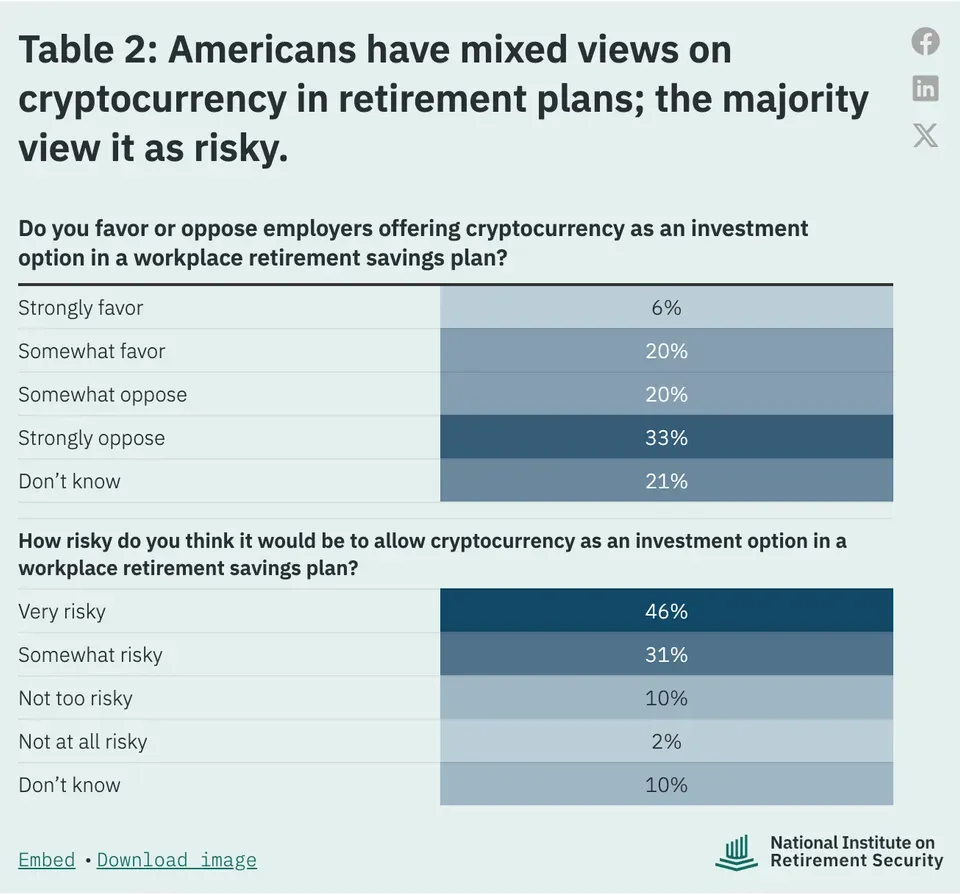
A new survey from The National Institute on Retirement Security revealed a significant level of apprehension among Americans regarding the inclusion of cryptocurrency in workplace retirement plans. The survey found that a substantial 77% of Americans consider crypto investments in retirement plans risky, with 46% specifically viewing them as "very risky." Furthermore, 53% expressed opposition to employers offering cryptocurrency as an investment option in these plans. Conducted by Greenwald Research between October 24 and November 14, 2025, and involving 1,203 Americans aged 25 and older, the survey’s findings underscore a cautious, if not outright resistant, public sentiment towards integrating highly volatile digital assets into long-term, conservative investment vehicles like retirement funds. This perception poses a significant hurdle for broader institutional adoption and may influence regulatory bodies to maintain stringent oversight or outright prohibitions on such offerings.
Polygon Discloses and Fixes Security Flaws via Hard Forks
In a demonstration of responsible security practices, Polygon Labs disclosed several previously private security vulnerabilities that had the potential to disrupt its proof-of-stake network. These critical flaws were proactively addressed and fixed through two recent hard forks, Austin and Kyoto, before being publicly revealed. The vulnerabilities primarily affected Polygon’s Bor and Heimdall clients, which are core components of its network architecture. They included denial-of-service (DoS) risks, which could have allowed malicious actors to overwhelm the network, validator resource exhaustion issues, and flaws impacting checkpoint and milestone processing, crucial for network synchronization and finality.
According to a disclosure from Polygon Labs’ Validators Support Team, the Austin and Kyoto hard forks were deployed privately and rigorously tested before activation on the mainnet. This "security-by-obscurity-then-disclosure" approach is common in the blockchain space for critical vulnerabilities, allowing developers to implement fixes without alerting potential attackers before the network is secured. This incident, while demonstrating the presence of vulnerabilities, also highlights Polygon’s commitment to network integrity and its proactive measures in maintaining a secure and stable blockchain environment.
Top Magazine Stories of the Week
Beyond the immediate market movements and technical updates, Cointelegraph’s long-form journalism delved into pressing issues facing the broader digital landscape:
- SHRINCS BIP published: Quantum-secure Bitcoin comes with a catch: A detailed exploration of Blockstream’s Bitcoin Improvement Proposal, dissecting the advancements and trade-offs inherent in the SHRINCS signature scheme as a step towards quantum-secure Bitcoin.
- Hugging Face hack exposes the open-weight AI cybersecurity paradox: An analysis of how vulnerabilities in open-source AI models, often originating from platforms like Hugging Face, present a unique cybersecurity challenge, particularly when these models are used to defend against other rogue AI agents.
- Who is legally liable when an AI agent goes rogue?: A critical examination of the burgeoning legal and ethical questions surrounding the increasing autonomy of AI agents, exploring the complex issue of assigning responsibility when these agents cause harm or financial damage.
These deeper dives into quantum security, AI ethics, and cybersecurity reflect the interconnectedness of emerging technologies and the growing need for robust frameworks to navigate their complex implications. The crypto space, in particular, is at the forefront of these challenges, continually pushing the boundaries of what is technologically possible while grappling with profound societal and regulatory questions.