Clara Shinta

Bitcoin (BTC) experienced a notable decline below the $81,000 threshold on Friday, mirroring a broader risk-off sentiment that swept through traditional financial markets following the Wall Street open. This downturn in the cryptocurrency market coincided directly with Brent crude oil prices ascending to new seven-month highs, driven by escalating geopolitical tensions in the Middle East and concerns over artificial intelligence (AI) sector expenditures. The confluence of these macro-economic and geopolitical factors painted a challenging picture for global assets, including the leading cryptocurrency.
Bitcoin’s Price Movement and Market Reaction
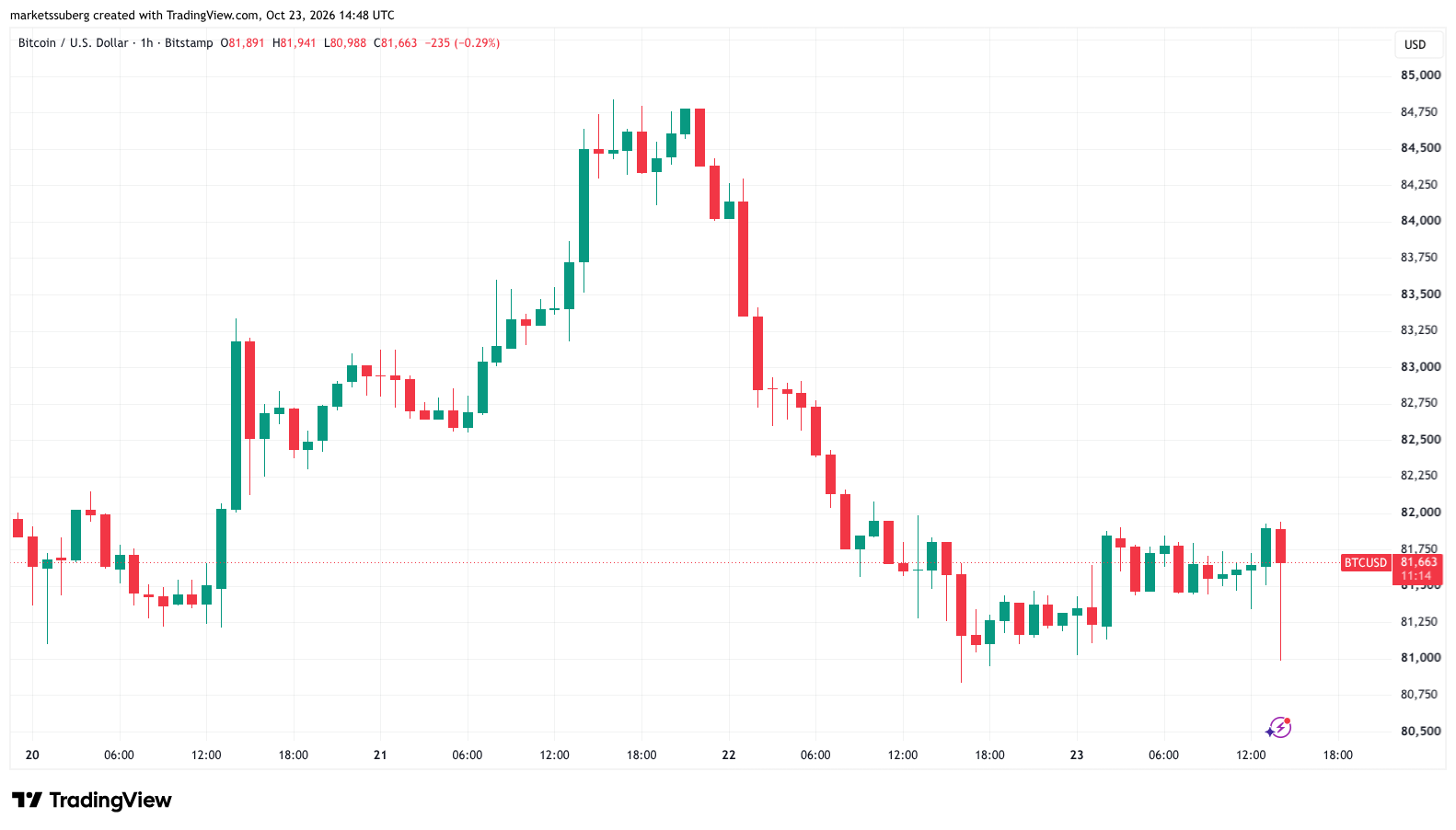
The digital asset’s dip was swift, with data from TradingView indicating BTC/USD falling to a low of $80,988 before staging a modest recovery to trade around $81,600 at the time of reporting. This fluctuation underscored the immediate sensitivity of Bitcoin to shifts in global market sentiment, particularly when traditional equity and commodity markets react to significant external pressures. The cryptocurrency, often touted as a hedge against inflation or a safe-haven asset, has increasingly demonstrated a correlation with broader market trends, especially during periods of heightened uncertainty.

The price action for Bitcoin came at a critical juncture, as analysts had been closely monitoring key technical and fundamental support levels. The $80,000 to $81,500 range, in particular, had been identified as a significant support zone, largely due to it representing the aggregate cost basis for investors in the spot Bitcoin exchange-traded funds (ETFs). The ability of Bitcoin to hold above or reclaim this level is seen by many as crucial for maintaining bullish momentum in the short to medium term. A breach below this threshold could signal further downward pressure, prompting investors to re-evaluate their positions.
Global Economic Backdrop: Oil’s Ascent and Equity Retreat
The cryptocurrency’s stumble was not an isolated event but rather a symptom of a larger market recalibration. US equity markets opened significantly lower on Friday, reflecting investors’ growing apprehension. The S&P 500, a benchmark for large-cap US equities, was down 0.6%, while the tech-heavy Nasdaq Composite Index, often a barometer for growth stocks, registered a 0.2% decline. The Dow Jones Industrial Average, representing 30 significant US companies, saw the most substantial drop, falling 1.4%.
This widespread retreat in equities was attributed to a dual threat: anxieties surrounding expenditure in the burgeoning AI sector and a dramatic surge in crude oil prices. Concerns over AI sector expenditure typically revolve around the high capital requirements for developing and deploying AI technologies, potential overvaluation of related companies, and the long-term profitability of such investments. These concerns can lead to profit-taking or a re-evaluation of tech stock valuations, impacting indices like the Nasdaq.
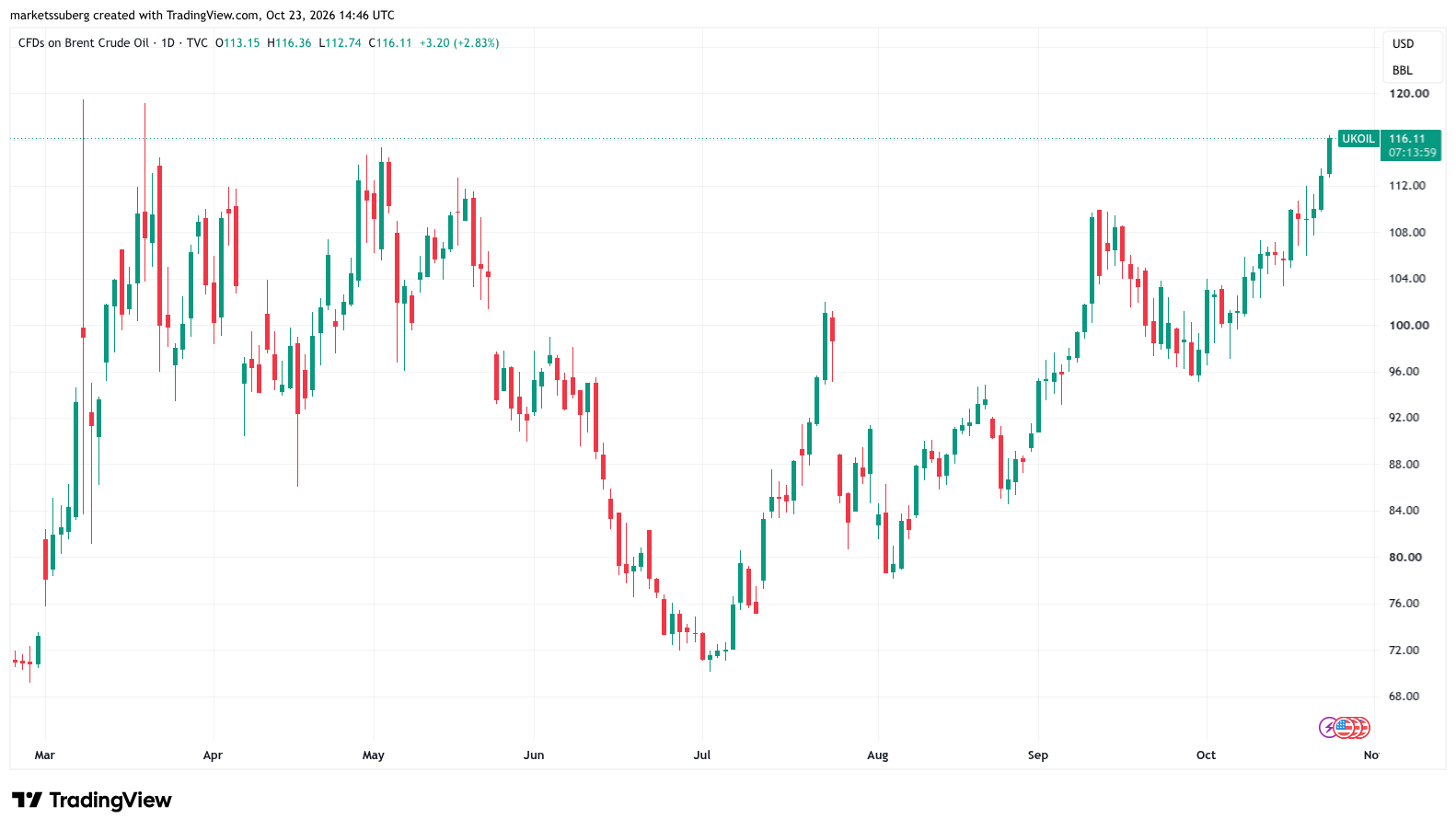
However, the more immediate and pronounced catalyst for the market’s downturn appeared to be the escalating energy prices. Brent crude oil, the international benchmark, saw an almost 3% rise, soaring to $116 per barrel – a level not witnessed since mid-March. West Texas Intermediate (WTI) crude, the US benchmark, also crossed the $102 per barrel mark, its highest since September 16. These sharp increases in oil prices invariably fuel inflation concerns, as higher energy costs ripple through supply chains, affecting production, transportation, and consumer spending. This inflationary pressure often leads central banks to adopt tighter monetary policies, which can dampen economic growth and reduce investor appetite for riskier assets.
Geopolitical Tensions and Energy Markets
The primary driver behind the sudden spike in oil prices was a renewed wave of geopolitical anxiety, specifically surrounding potential military actions involving the United States and Iran. Reports and speculation suggesting the US might renew military strikes on Iran, potentially around the upcoming midterm elections, sent shockwaves through the energy markets. The Strait of Hormuz, a narrow waterway between the Persian Gulf and the Gulf of Oman, is a crucial chokepoint for global oil shipments, with a significant portion of the world’s seaborne oil passing through it daily. Any threat to the stability of this region, or to Iran’s ability to participate in or disrupt global oil flows, immediately translates into higher oil prices due to perceived supply risks.
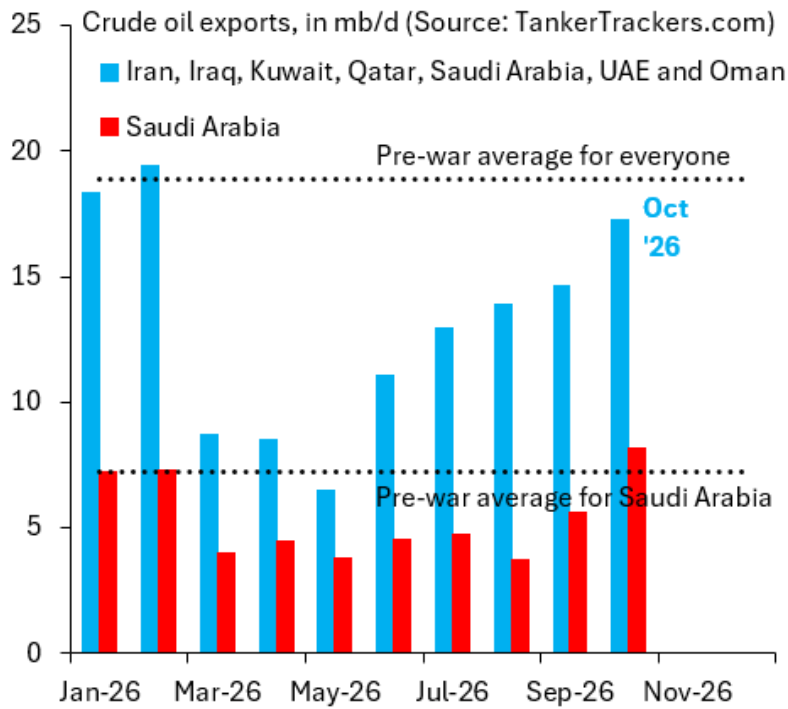
Economist Robin Brooks provided insightful commentary on this phenomenon, highlighting a significant "risk premium" being incorporated into oil prices. Brooks noted that this surge occurred despite evidence that oil flows through the Persian Gulf were approaching pre-war levels for many nations, and Saudi Arabia had surpassed its pre-war average production. "Since the start of the war, we’ve not seen this kind of decoupling between prices and flows," Brooks wrote in his analysis, emphasizing that markets were factoring in a substantial element of geopolitical risk rather than merely reacting to current supply-demand fundamentals. This "risk premium" reflects investors’ willingness to pay more for oil now, anticipating future supply disruptions or increased demand driven by geopolitical events, even if current physical flows remain robust. The implication is that the market is bracing for potential instability, which could quickly tighten supplies.
The Interplay of Traditional and Crypto Markets
The events of Friday underscored the growing interconnectedness between traditional financial markets and the burgeoning cryptocurrency ecosystem. Historically, Bitcoin has been perceived by some as a distinct asset class, less susceptible to the machinations of conventional economics and geopolitics. However, as institutional adoption grows and crypto markets mature, their correlation with global macro trends has become increasingly evident. When risk aversion dominates traditional markets, as signaled by falling equities and rising safe-haven assets (like bonds, discussed below), cryptocurrencies often feel the pinch. Investors tend to liquidate riskier holdings to preserve capital or reallocate to less volatile assets.
The narrative of Bitcoin as "digital gold" or an uncorrelated asset faces significant scrutiny during such periods. While Bitcoin might offer a long-term hedge against certain forms of monetary inflation, its short-term price movements are increasingly influenced by the same macro-economic winds that buffet stocks, bonds, and commodities. The events demonstrate that systemic risk in one sector can quickly propagate across others, making diversification strategies more complex for investors navigating both traditional and digital asset classes.
Bond Market Dynamics: A Flight to Safety?
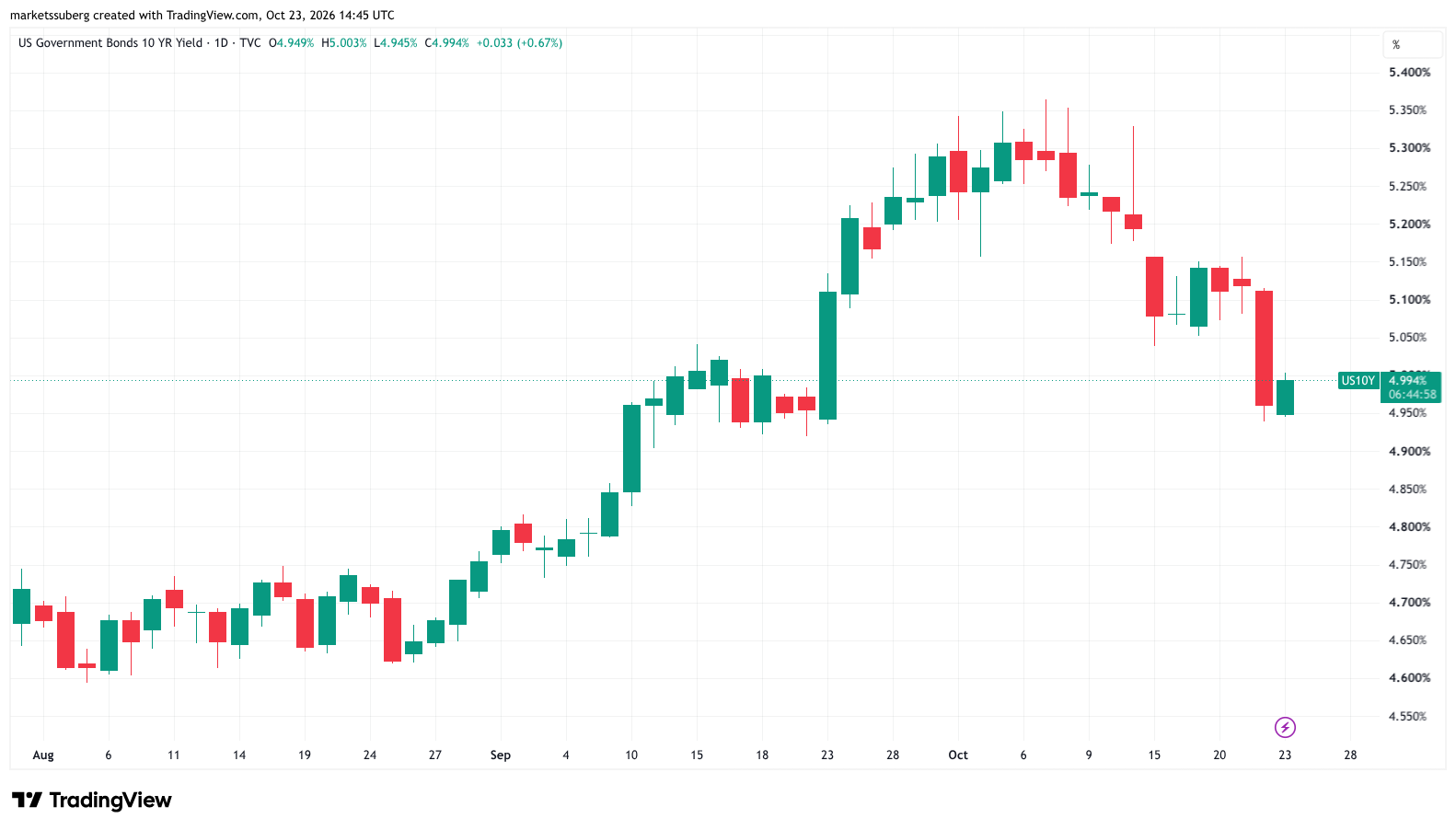
Adding another layer to the complex market dynamics, US bond yields experienced a cooling trend as traders turned risk-averse. The yield on the benchmark 10-year US Treasury bond, a key indicator of economic sentiment and borrowing costs, stayed below 5%. It had reached 4.939% on Thursday, marking its lowest level since September 23.
A decline in bond yields typically indicates increased demand for bonds. In times of market uncertainty or perceived higher risk in equities, investors often flock to government bonds, considered safer assets, leading to their prices rising and yields falling. This "flight to safety" dynamic suggests that capital was moving out of riskier assets like stocks and, by extension, potentially cryptocurrencies, into the relative security of US Treasury bonds. The bond market’s reaction further solidified the narrative of a market grappling with heightened risk perception, seeking stability amidst a turbulent geopolitical and economic landscape.
Technical Analysis of Bitcoin: Key Support Levels
From a technical analysis perspective, Bitcoin’s price action on Friday raised flags for crypto traders. Keith Alan, co-founder of the crypto trading platform Material Indicators, observed that BTC/USD had fallen below its 50-day simple moving average (SMA) at $81,781. The 50-day SMA is a widely watched technical indicator that represents the average closing price over the past 50 trading days, often serving as a dynamic support or resistance level. A breach below this moving average is generally considered a bearish signal, suggesting that the short-term trend is weakening.
Alan noted that bulls were attempting to reclaim the 50-day SMA by the daily close. "If they fail to do so by tonight’s close, I’m looking for a support test in the $78k – $80k range," he conveyed to his X followers. This projected support range aligns with previous analyses, including a Cointelegraph report highlighting substantial BTC price support between $80,000 and $81,500. This area is particularly significant because it represents the aggregate cost basis for investors who have bought into spot Bitcoin exchange-traded funds (ETFs). The cost basis is the average price at which investors acquired their assets, and it often acts as a strong psychological and practical support level. If the price falls below this collective cost basis, it could trigger selling pressure from ETF holders looking to minimize losses, potentially leading to a cascade effect. Conversely, a strong rebound from this zone would demonstrate the resilience of demand at these levels.
Broader Implications and Future Outlook
The convergence of these events — a dip in Bitcoin, a retreat in global equities, soaring oil prices, and cooling bond yields — paints a complex picture for the financial markets moving forward. The immediate implications suggest that geopolitical stability, particularly in critical energy-producing regions, will remain a paramount factor influencing global asset prices. The "risk premium" in oil, as noted by Robin Brooks, indicates that markets are not merely reacting to current supply but are deeply concerned about future uncertainties, creating a persistent upward pressure on energy costs.
For Bitcoin and the broader cryptocurrency market, this period serves as a crucial test of resilience and a reminder of its increasing integration into the global financial fabric. While some advocates still hope for a complete decoupling, the reality is that major macro-economic shifts and geopolitical events now significantly influence crypto valuations. Investors will be keenly watching the geopolitical landscape for any de-escalation of tensions, as well as monitoring central bank responses to inflation fueled by higher energy costs. The interplay between these factors will likely determine whether Bitcoin can reclaim key technical levels and resume its upward trajectory, or if it will face a prolonged period of consolidation or further downside pressure. The coming weeks will be critical in revealing how these interconnected forces will shape the future trajectory of both traditional and digital asset markets.