Gilang Muhammad
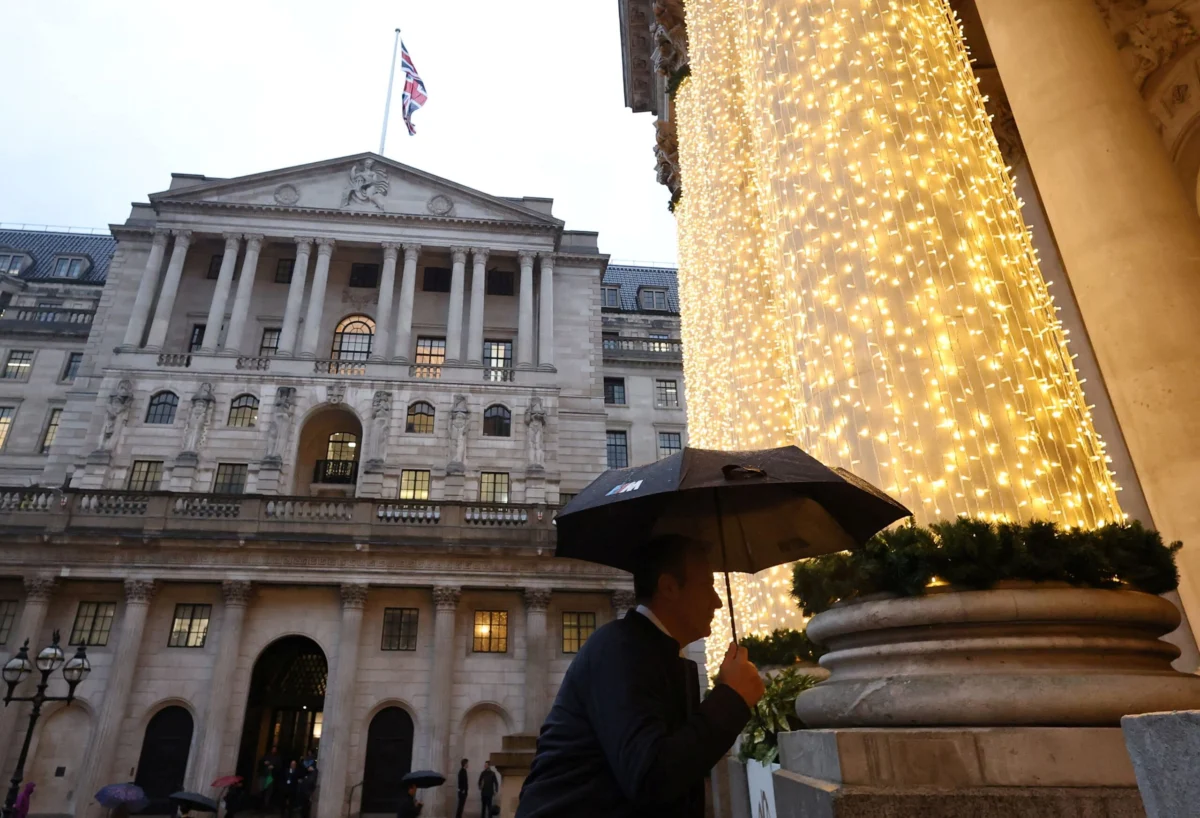
The Bank of England, on Thursday, implemented its first interest rate hike since August 2023, raising its key rate by 25 basis points to 4%. This widely anticipated move positioned the UK central bank as the last among major global counterparts to embark on a tightening cycle in response to the escalating geopolitical tensions in the Middle East, specifically the conflict involving the U.S., Israel, and Iran, which commenced eight months prior. The decision underscores a significant pivot in monetary policy, driven by persistent inflationary pressures exacerbated by global energy shocks.
A Crucial Policy Shift Amidst Geopolitical Volatility
The Monetary Policy Committee (MPC) of the Bank of England voted 8-1 in favour of the quarter-point increase. The lone dissenting member advocated for a more aggressive 50 basis point hike, pushing the key interest rate to 4.25%, reflecting deep concerns within the committee regarding the embedded nature of inflationary risks. In its official statement, the MPC directly linked the policy adjustment to the ongoing international turmoil: "The conflict in the Middle East is now in its ninth month. Global energy prices have continued to rise from an already elevated level." This acknowledgment highlights the profound influence of external factors on domestic economic stability and the Bank’s commitment to its primary mandate of price stability.
Policymakers now project that UK inflation will climb to "about 5%" by mid-2027. This revised forecast represents a stark adjustment from earlier, more optimistic outlooks, signaling a prolonged battle against rising prices. The MPC, however, expressed confidence that inflation would subsequently decline "as the impact of rising energy prices on 12-month inflation rates fades, and still restrictive monetary policy bears down on inflation." This conditional optimism hinges on the assumption that current monetary tightening will effectively curb demand and that energy price volatility will eventually stabilize.
Financial markets had largely priced in the rate hike, with LSEG data indicating over a 99% probability of a quarter-point increase ahead of the announcement. Traders also assessed a one-in-four chance of a further rate hike in December, reflecting an expectation of continued vigilance from the Bank of England as it navigates an increasingly complex economic landscape.
The Genesis of Inflationary Pressures: A Chronology
The current inflationary environment in the UK is a confluence of several factors, with the Middle East conflict acting as a significant accelerant. To understand the gravity of the Bank of England’s decision, it is essential to trace the recent history of economic pressures and policy responses:
- Post-Brexit Economic Adjustments (2020-2021): Following the UK’s departure from the European Union, the economy grappled with new trade barriers, labor market adjustments, and supply chain disruptions, laying groundwork for some inflationary pressures.
- Global Pandemic and Supply Shocks (2020-2022): The COVID-19 pandemic triggered unprecedented global supply chain issues, leading to sharp increases in commodity prices and shipping costs. Massive fiscal and monetary stimuli worldwide also injected significant liquidity, contributing to demand-side inflation.
- Russia-Ukraine Conflict (February 2022 onwards): The invasion of Ukraine severely disrupted global energy and food markets. Europe, heavily reliant on Russian gas, faced an acute energy crisis, driving up utility bills and broader consumer prices across the continent, including the UK.
- UK’s Previous Tightening Cycle (December 2021 – September 2023): In response to persistently high inflation, the Bank of England embarked on a series of rate hikes starting in December 2021, gradually increasing the Bank Rate from a historic low of 0.1% to 5.25% by August 2023, where it was held until this latest hike. This aggressive tightening aimed to bring inflation, which peaked above 11% in late 2022, back towards the 2% target.
- The Pause (November 2023): After fourteen consecutive rate hikes, the MPC voted to hold the Bank Rate at 5.25% in November 2023, signaling a potential pause in the tightening cycle as inflation began to show signs of moderating.
- Escalation of Middle East Conflict (Eight Months Ago onwards): The conflict involving the U.S., Israel, and Iran, beginning approximately eight months ago, introduced a new and significant geopolitical risk premium into global energy markets. Tensions in critical shipping lanes, particularly the Strait of Hormuz, a vital chokepoint for global oil supplies, fueled fears of supply disruptions.
- Resumption of Tightening (This Week): The current rate hike marks a resumption of tightening, directly attributed by the Bank of England to the "elevated" global energy prices resulting from the protracted Middle East conflict. This move signals that the Bank believes the inflationary impulse from this new geopolitical shock necessitates further monetary intervention, despite the previous pause.
Iran War Intensifies Inflationary Pressure and UK Vulnerability

The ongoing conflict in the Middle East has proven to be a critical determinant of the global economic outlook, particularly for energy-importing nations like the United Kingdom. Bank of England Governor Andrew Bailey, in the November Monetary Policy Report, had already underscored the precariousness of the situation, stating that without "real progress towards settling the conflict in the Middle East… risks to energy prices, and so to inflation, are to the upside." His earlier remarks foreshadowed the current policy action, indicating a proactive stance from the Bank. "Without news which softens the risks to inflationary pressures, I can see the argument for a further increase in rates and thereafter taking a more conditional approach, dependent on the evidence on energy prices and inflation dynamics," Bailey had articulated, outlining the conditional nature of future policy decisions.
Data released earlier this month reinforced the inflationary concerns, revealing that the U.K.’s annual inflation rate had jumped to 3.5% in September. This uptick was primarily driven by the surging cost of motor fuels, a direct consequence of higher global oil prices. As a net energy importer, the U.K. is inherently vulnerable to external energy shocks. The nation relies heavily on international markets for its oil and gas supplies, making it particularly susceptible to price volatility stemming from geopolitical events such as the conflict in the Middle East. The disruption or even the threat of disruption to global energy supplies translates quickly into higher domestic prices, impacting everything from transportation costs to manufacturing expenses and, ultimately, household budgets.
Dissenting Voices and the Threat of Second-Round Effects
The MPC’s decision was not unanimous, highlighting the nuanced debate within the central bank regarding the appropriate magnitude of monetary tightening. Catherine L Mann, the committee’s most hawkish member, cast the lone vote for a more aggressive 50 basis point hike. Her rationale stemmed from research pointing to "non-linear inflation risks" and the potential for embedded inflationary expectations.
Mann argued that her previous votes for 25 basis point increases represented a "down payment" aimed at pre-empting "second-round effects," reinforcing policy credibility, and upholding "good policy." Second-round effects refer to the phenomenon where initial price increases (like those from energy shocks) lead to higher wage demands and then further price increases as businesses pass on higher labor costs, creating a persistent wage-price spiral.
"The economy has crossed the estimated statistical threshold into a high inflation-tight labour market regime where the asymmetric behavioural responses of households and firms support more robust second-round effects," Mann explained in the MPC’s policy statement. She further elaborated that "A different research approach estimates that the economy may well have breached the policy credibility threshold, which worsens the policy trade-off… From a risk management and credibility perspective, a 50-basis point hike in Bank Rate is ‘good policy’." Her arguments underscore the concern that allowing inflation to persist could lead to a loss of central bank credibility, making it even harder and more painful to bring prices under control in the future. The debate within the MPC reflects the delicate balancing act central banks face: acting decisively enough to curb inflation without unduly stifling economic growth.
Market Reaction and Expert Analysis
The financial markets reacted to the Bank of England’s announcement with a degree of stability, largely due to the hike being widely anticipated. Yields on U.K. government bonds, known as gilts, had been rising even before the policy announcement and continued their upward trajectory thereafter. The yield on the benchmark 10-year gilt was last observed 2 basis points higher at 5.1546%, while the 2-year gilt yield rose by 4 basis points to trade at 4.782%. Rising gilt yields typically indicate investor expectations of higher future interest rates and inflation, reflecting the market’s absorption of the Bank’s hawkish stance.
The British pound, which had hit a post-Brexit high against major currencies on Wednesday, remained largely flat against both the U.S. dollar and the euro on Thursday afternoon. This muted reaction suggests that the rate hike was already factored into the currency’s valuation, and other global economic dynamics might have offset any immediate strengthening effect.

Investment strategists weighed in on the significance of the Bank of England’s move. Scott Gardner, investment strategist at JPMorgan Personal Investing, described the November hike as "hugely symbolic." He noted the dramatic shift in sentiment: "This is a 180-degree turn from the start of the year when many believed interest rates would come down as UK inflation had been mostly tamed." Gardner’s analysis encapsulates the unexpected reversal driven by geopolitical events.
He further cautioned about the lingering uncertainties: "The path ahead remains uncertain with much depending not only on how oil trades but also on natural gas prices which have risen sharply over the past few months." The volatility in energy markets continues to be a primary concern. Gardner also highlighted the worrying signs of embedded inflation: "Worryingly, there are tentative signs of second-round inflation effects in the UK economy as we have seen an acceleration in goods and services inflation." This aligns with Catherine Mann’s hawkish concerns. However, he also acknowledged the Bank’s dilemma: "The Bank will be wary of this but also conscious of being too aggressive with rate hikes which could stunt the positive UK economic growth we’ve seen of late." This illustrates the tightrope walk the BoE must undertake to curb inflation without triggering a recession.
Broader Implications and The Path Ahead
The Bank of England’s decision carries significant implications for various facets of the UK economy. For households, higher interest rates will translate into increased borrowing costs, particularly for those with variable-rate mortgages or those looking to remortgage. This adds further strain to household budgets already grappling with the cost-of-living crisis. While savers might see slightly better returns, the overall impact on consumer spending is likely to be restrictive, potentially dampening economic activity.
Businesses will also face higher costs for borrowing and financing investments, which could temper expansion plans and hiring decisions. Small and medium-sized enterprises (SMEs), often more reliant on bank lending, may find it particularly challenging to navigate this higher-rate environment. The cumulative effect of increased input costs (from energy) and higher financing costs could squeeze profit margins, especially for non-exporting firms.
The broader economic growth outlook remains delicately poised. While the UK economy has shown some resilience, as noted by Gardner, aggressive rate hikes risk tipping it into recession. The BoE’s challenge is to calibrate its policy precisely enough to bring inflation under control without severely undermining growth and employment. This necessitates a careful watch on a multitude of economic indicators, including wage growth, consumer confidence, and business investment.
Looking ahead, the future trajectory of monetary policy will heavily depend on the evolution of the Middle East conflict and its consequent impact on global energy prices. Any de-escalation could alleviate inflationary pressures, potentially allowing the Bank to pause or even reverse its tightening. Conversely, an intensification of hostilities could necessitate further rate hikes. Domestically, the persistence of second-round effects – specifically wage growth and core inflation (which excludes volatile energy and food prices) – will be critical determinants. If wage increases continue to outpace productivity gains, the Bank will feel compelled to maintain a hawkish stance.
The BoE’s latest move underscores a global trend where central banks are increasingly forced to react to unpredictable geopolitical events. While many major central banks, including the US Federal Reserve and the European Central Bank, initiated their tightening cycles earlier in response to post-pandemic inflation, the Bank of England’s resumption of hikes specifically highlights the acute and renewed threat posed by the Middle East conflict to its inflation mandate. The coming months will be crucial in determining whether this latest policy intervention can effectively anchor inflation expectations and steer the UK economy towards a path of sustainable price stability.