Gilang Muhammad
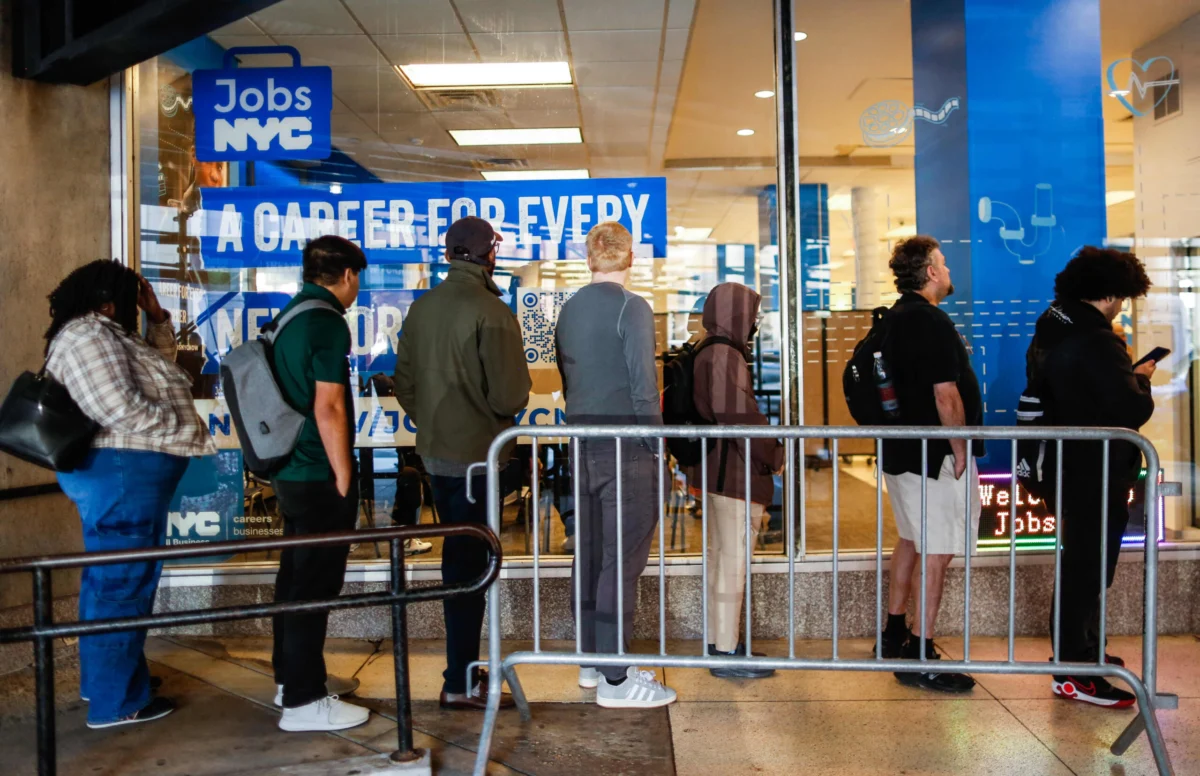
Americans who lose their jobs are increasingly confronting a grim reality: the path to re-employment is lengthening, casting a shadow over an otherwise resilient labor market. This growing duration of joblessness represents a significant, and often overlooked, challenge for the nation’s economic landscape, impacting millions of individuals and signaling potential structural shifts.
A Sobering Trend: Unemployment Durations Lengthen
The average duration of unemployment for jobless workers surpassed 27 weeks in October, according to the latest jobs report released by the Bureau of Labor Statistics (BLS). This equates to a job search stretching nearly seven months on a seasonally adjusted basis, marking the longest such period outside of the immediate pandemic disruption since 2016. The last time Americans faced such extended job-seeking periods was during the sluggish recovery following the 2008 financial crisis, highlighting the severity of the current trend.
This figure is particularly concerning given the broader context of the U.S. labor market. While top-line indicators like the unemployment rate and nonfarm payroll additions often paint a picture of strength, the underlying dynamics reveal a more complex and, for many, more challenging reality. The persistence of long-term unemployment suggests that the friction in the labor market is increasing, making it harder for those who have lost their jobs to quickly transition back into employment.
The Anatomy of Long-Term Unemployment
The BLS data further indicates that approximately 2 million Americans have now been without work for at least 27 weeks. Individuals falling into this category are formally referred to as the "long-term unemployed." In October, this group constituted 27.6% of all jobless workers, a proportion not seen since late 2021. This substantial share underscores that the issue is not an isolated anomaly but a significant component of the overall unemployment picture.
Economists are closely monitoring this series. Cory Stahle, a senior economist at Indeed, a prominent hiring platform, noted, "This is a series that can be noisy from month to month. But if you look over a longer time horizon, there is no mistake in the trend." This observation emphasizes the need to look beyond monthly fluctuations and recognize the underlying, consistent upward trajectory in job search durations. The trend suggests that even as overall employment numbers may appear robust, a growing segment of the workforce is being left behind or struggling to reintegrate.
The "Low-Hire, Low-Fire" Conundrum
The lengthening duration of unemployment is particularly troubling because it occurs within a labor market often characterized as "low-hire, low-fire." This dynamic describes a scenario where companies are hesitant to conduct widespread layoffs, reflecting a desire to retain skilled talent and avoid the costs associated with mass dismissals and rehiring. However, these same companies are also cautious about expanding their workforces aggressively. The result is a reduced churn in the labor market: fewer people are being laid off, but fewer are also being hired, creating a bottleneck for those actively seeking employment.
This phenomenon is a casualty of broader economic uncertainty. Businesses, facing persistent inflation, elevated interest rates imposed by the Federal Reserve to cool the economy, and geopolitical instability, are adopting a more conservative stance. They are prioritizing efficiency, optimizing existing workforces, and often delaying investment in new hires. This cautious approach, while potentially stabilizing for current employees, creates significant hurdles for job seekers, especially those who have been out of work for an extended period. The labor force participation rate, particularly for prime-age workers (25-54), has shown some recovery but remains below pre-pandemic peaks, indicating that some potential workers are still on the sidelines, discouraged or facing structural barriers.
The Human and Economic Toll of Extended Joblessness
The implications of long-term unemployment extend far beyond economic statistics, deeply affecting individuals and the broader economy. Research consistently shows that Americans who experience extended periods without work face a cascade of negative consequences:
- Financial Erosion: Savings are depleted, leading to increased debt, delayed financial goals, and heightened economic insecurity. For many, unemployment benefits, which typically last up to 26 weeks in most states, offer only temporary relief. As Stahle pointed out, "Now, the average unemployed person takes longer to find a job than their benefits would last. That is a really key point of this." This creates a critical period of financial vulnerability once benefits cease, forcing individuals to rely on dwindling savings or family support.
- Reduced Earning Potential: Over time, prolonged joblessness can lead to lower future earnings. Employers may view gaps in employment negatively, and individuals may be forced to accept lower-paying jobs or roles below their skill level to re-enter the workforce.
- Skill Depreciation: Rapid technological advancements mean that skills can quickly become outdated. Extended time away from a professional environment can lead to a decline in relevant skills, making it harder to compete for new positions.
- Mental and Physical Health Impacts: The stress, uncertainty, and financial strain associated with long-term unemployment are well-documented to negatively impact mental health, leading to increased rates of anxiety, depression, and other psychological distress. Physical health can also suffer due to increased stress and limited access to healthcare, especially for those who lose employer-sponsored benefits.
- Erosion of Networks and Self-Perpetuating Cycles: Researchers at the Federal Reserve Bank of Richmond highlighted earlier this year that "Time spent unemployed may itself reduce the probability of finding a job, perhaps because skills depreciate, networks thin or employers interpret long unemployment durations as a negative signal." This creates a vicious cycle where the very act of being unemployed for a long time makes it harder to secure future employment. The longer one is out of work, the more challenging it becomes to tap into professional networks, and the perceived stigma can increase.
From a macroeconomic perspective, widespread long-term unemployment can dampen consumer spending, reduce overall economic output, and strain social safety nets. It can also exacerbate income inequality, creating a more fragmented society where some segments of the population are thriving while others struggle to maintain basic economic security.
A "Jarring" Narrative: The Paradox of the Current Labor Market
The rise in long-term unemployment stands in stark contrast to several other seemingly robust indicators of the labor market, creating a "jarring" narrative for many observers and, more importantly, for those directly experiencing joblessness.
October’s employment data revealed several strengths:
- Strong Payroll Growth: Nonfarm payrolls exceeded economists’ forecasts, adding 165,000 jobs. This robust job creation, while a slowdown from the peak hiring frenzy of 2021-2022, still indicates underlying demand for labor.
- Low Unemployment Rate: The national unemployment rate ticked down to 4.1%, slightly lower than economists had predicted, signaling a tight labor market from a top-line perspective.
- High Job Openings: A separate BLS report for September showed job openings came in much higher than expected, suggesting that companies are still looking to hire, even if at a slower pace. The Job Openings and Labor Turnover Survey (JOLTS) report, a key indicator of labor demand, showed millions of available positions.
- Increased Quits Rate: The number of workers voluntarily quitting their jobs spiked to levels not seen since March 2025. A high quits rate is typically a barometer of worker confidence, as individuals are more likely to leave a job if they are confident in their ability to find new, often better, employment. This suggests that for many employed individuals, opportunities are still perceived to be available.
- Declining Layoffs: The BLS also reported that layoffs and discharges dropped to their lowest volume in more than a year, reinforcing the "low-fire" aspect of the current market.
However, as Elizabeth Renter, lead economist at Life360, aptly put it, "It’s difficult to separate what’s happening to you or the people around you from the big picture. When your LinkedIn is filled with layoffs and your social circle features a few folks who have been job seeking for several months, positive narratives about the labor market can seem jarring." This sentiment captures the disconnect between aggregated economic data and the lived experiences of many Americans. While the overall picture may appear stable, pockets of significant distress are clearly emerging.
Corporate Strategies, Technological Shifts, and High-Profile Layoffs
Despite the overall low layoff numbers, a recent string of high-profile workforce reductions by major corporations could further complicate the perception of a heating labor market. These strategic cuts, often driven by a focus on efficiency, cost control, and technological integration, contribute to the "jarring" narrative and can fuel anxiety among workers.
For instance, Disney announced plans to cut thousands of jobs, marking the latest in several waves of layoffs at the media giant this year. Similarly, American Express revealed plans to slash its headcount by 5%, explicitly citing a reorientation around artificial intelligence (AI). These examples highlight a growing trend where technological advancements, particularly in AI, are not just augmenting human labor but, in some cases, leading to job displacement. While AI’s long-term impact on the labor market is still unfolding, these early instances suggest that certain roles may become redundant, requiring workers to reskill or transition to new industries.
These corporate decisions, while rational from a business perspective, add another layer of complexity to the job search for the long-term unemployed. Those seeking re-entry into industries undergoing such transformations might find their previous skills less valued, necessitating significant investment in new training and adaptation.
The Policy Conundrum: Benefits and Workforce Development
The rising share of long-term unemployed individuals also sheds light on why initial and continuing jobless claims have remained remarkably low. Since most government unemployment benefits cease after 26 weeks, many of the long-term unemployed are no longer counted in these weekly claims figures, even though they remain actively seeking work. This statistical quirk means that the official jobless claims might not fully capture the extent of ongoing labor market distress.
The current situation presents a significant policy challenge. With the average job search now exceeding the duration of standard unemployment benefits, there is an increased urgency to evaluate the adequacy of the social safety net. Policymakers face questions about whether current workforce development programs are sufficient to help the long-term unemployed reskill for an evolving job market. Investing in targeted training programs, career counseling, and job placement services could be crucial in bridging the gap between available talent and employer needs, especially in sectors experiencing rapid technological change. Furthermore, discussions around extending unemployment benefits during periods of elevated long-term unemployment, or implementing more flexible benefit structures, may gain traction.
Expert Outlook and the Path Forward
Economists are divided on the immediate future of the labor market. Some believe that the Federal Reserve’s aggressive interest rate hikes are now taking a more pronounced toll, slowly but steadily cooling demand for labor and contributing to the lengthened job search duration. Others maintain that the underlying strength of the economy, coupled with demographic shifts and ongoing labor shortages in specific sectors, will prevent a severe downturn.
The dual nature of the current labor market — characterized by overall strength but increasing hardship for those on the sidelines — suggests a critical juncture. The U.S. economy appears to be navigating a complex path, attempting to bring down inflation without triggering a recession. However, the cost of this "soft landing" may disproportionately fall on the long-term unemployed. Their struggles represent not just individual hardships but also a potential drag on overall economic growth and a challenge to the principle of inclusive prosperity. Addressing this growing issue will require a nuanced understanding of the forces at play, from macroeconomic policies to individual skill development and targeted support programs, to ensure that the American dream remains accessible to all who seek it.