Clara Shinta
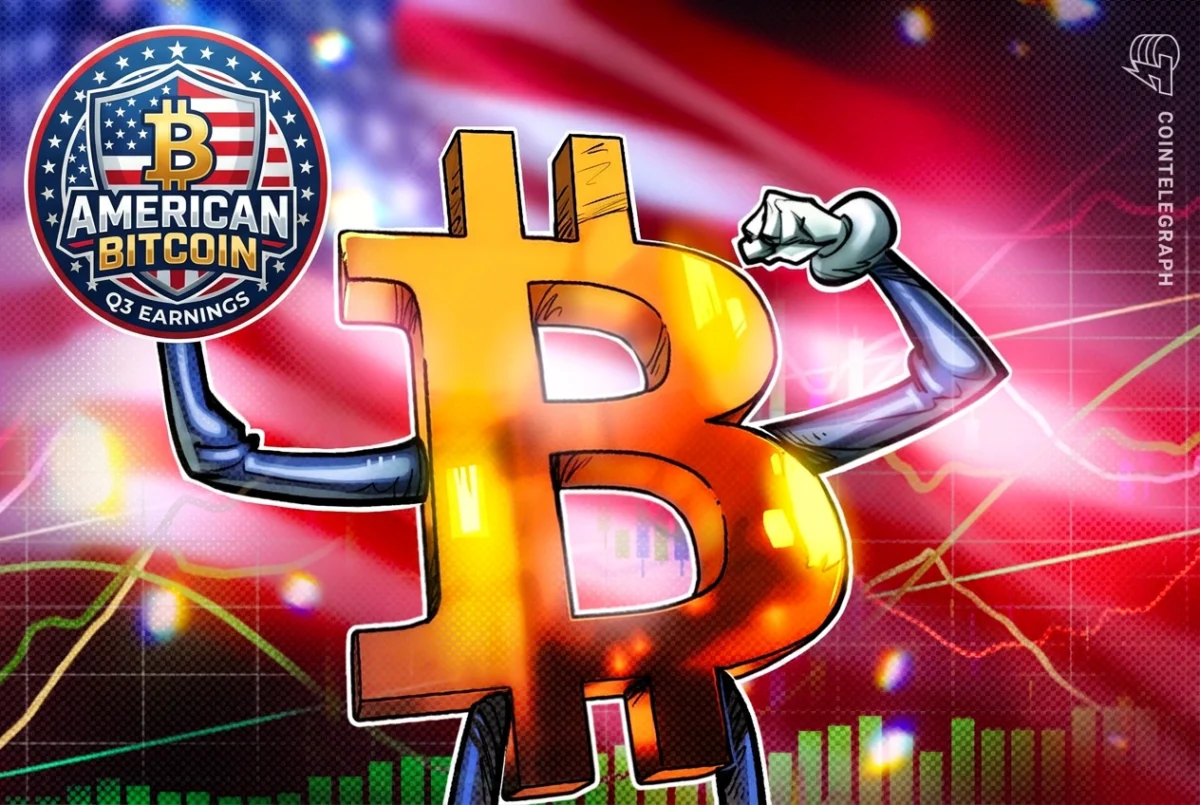
American Bitcoin, a prominent player in the cryptocurrency mining sector, reported a net income of $126 million for the recent quarter, a figure that initially suggests robust performance. However, a deeper analysis of its financial statements, released on Wednesday, reveals a complex operational landscape characterized by escalating mining costs and dwindling profits from its core mining activities. This divergence in financial metrics, coupled with the company’s steadfast focus on Bitcoin mining while major industry rivals increasingly pivot towards artificial intelligence (AI), raises critical questions about American Bitcoin’s long-term strategic viability and competitive positioning within an rapidly evolving technological and economic environment.
The reported net income, while significantly exceeding analyst expectations, was predominantly driven by a substantial $197.3 million non-cash gain on the company’s Bitcoin (BTC) holdings. This accounting treatment, which reflects the appreciation of its digital asset reserves, effectively masked underlying operational challenges. In contrast to this non-cash boon, the company’s mining revenue experienced a notable decline, falling 5.5% to $63.4 million from the preceding quarter. Concurrently, the cost to mine a single Bitcoin surged by approximately 15%, reaching an alarming $42,100. This upward pressure on operational expenses directly impacts profitability and underscores the growing difficulties faced by miners in the current market cycle.
Further scrutinizing the financial data, American Bitcoin would have registered an operating loss of approximately $5.5 million had it not been for the gains derived from its Bitcoin holdings. This critical detail highlights the dependence of the company’s reported profitability on the volatile fluctuations of the Bitcoin market rather than the efficiency or profitability of its primary business function – mining. Adding to the financial complexities, the company also disclosed a separate loss of $64.3 million on derivatives, indicating potential hedging activities or speculative positions that did not yield favorable outcomes during the quarter.
Despite these evident pressures, American Bitcoin CEO Mike Ho expressed a degree of optimism in the company’s earnings announcement. "Despite seasonal power cost pressures, we continued mining Bitcoin at a structural discount to spot," Ho stated, emphasizing the company’s ability to acquire Bitcoin through mining at a cost lower than its market price. This assertion, however, is juxtaposed against the backdrop of an industry grappling with diminishing returns and intensifying competition.
The company’s earnings per share (EPS) stood at $1.73, significantly outperforming analysts’ consensus estimate of $0.26, according to Yahoo Finance data. This beat, primarily attributed to the non-cash Bitcoin gains, initially provided a momentary boost. Nevertheless, market sentiment quickly reflected a more nuanced understanding of the underlying financials. Shares of American Bitcoin (ABTC) closed Thursday down approximately 15% at $5.31, indicating investor apprehension regarding the sustainability of its business model. Concurrently, Bitcoin itself experienced a downturn, trading at $76,119, a 5% decrease over the preceding 24 hours as of 8:50 p.m. UTC, according to CoinGecko data.
Mining Margins Under Pressure: An Industry-Wide Challenge
The results released by American Bitcoin underscore a critical and widening divide within the Bitcoin mining industry. While American Bitcoin continues its strategy of mining and accumulating BTC, a significant number of its major competitors, including Riot Platforms, MARA Holdings, and Core Scientific, are actively diversifying their operations by investing heavily in artificial intelligence infrastructure. This strategic divergence presents a compelling narrative about the future direction of digital asset infrastructure companies.
David Gamble, founder of Enigma Holdings, an asset management company specializing in Bitcoin mining and AI infrastructure, offered a trenchant analysis of American Bitcoin’s reported profit. "Ultimately, mining Bitcoin below its market price doesn’t automatically mean you’re creating shareholder value," Gamble told Cointelegraph, highlighting the importance of considering the full spectrum of operational costs, capital expenditure, and market dynamics. His perspective emphasizes that while mining at a discount might seem advantageous on the surface, it doesn’t guarantee long-term profitability or sustainable growth for shareholders.
The company’s operational figures further illustrate this point. American Bitcoin’s gross mining profit declined to $25.8 million from $33 million in the previous quarter, a significant contraction. Consequently, its reported mining margin, which represents the percentage of revenue remaining after direct mining costs, dropped to 41% from 49%. This narrowing margin leaves the company with a smaller share of its mining revenue to cover overheads, debt servicing, and future investments, putting considerable strain on its financial health.
Moreover, American Bitcoin’s quarterly revenue of $63.4 million fell short of analysts’ estimates of $74.35 million, representing a gap of nearly 15%. This revenue miss, coupled with the escalating costs, paints a picture of a company struggling to meet market expectations on its core operational performance. The company mined 891 BTC during the quarter, a decrease from 932 BTC in the preceding three months. This reduction in output, American Bitcoin stated, was primarily attributable to higher electricity prices, a common challenge faced by energy-intensive industries globally. The volatility of energy markets, often exacerbated by geopolitical events and seasonal demand shifts, poses a persistent threat to mining profitability.
Gamble further cautioned against relying solely on the accumulation strategy. "I don’t necessarily think their accumulation strategy is flawed, but I do think it raises questions about long-term sustainability," he elaborated. He pointed to the inexorable increase in Bitcoin mining difficulty, a mechanism inherent to the Bitcoin protocol that adjusts to maintain a consistent block time regardless of the total computational power (hashrate) dedicated to the network. This increasing difficulty necessitates continuous investment in newer, more efficient mining hardware (ASICs) to maintain competitive hashing power and profitability. Failing to do so risks obsolescence and a diminishing share of block rewards.
Comparing the current quarter to the same period last year, American Bitcoin’s revenue remained largely static, moving from $64.2 million to $63.4 million. However, the reported net profit dramatically surged from $3.5 million to $126 million, a clear testament to the significant impact of the non-cash gains on its Bitcoin holdings. This stark contrast highlights the company’s financial vulnerability to Bitcoin’s price movements, as opposed to generating consistent, robust profits from its mining operations.
The Strategic Divergence: AI vs. Bitcoin Accumulation
The strategic landscape for digital infrastructure companies is undergoing a profound transformation. American Bitcoin’s unwavering commitment to mining and holding BTC stands in stark contrast to the burgeoning trend among its peers to diversify into artificial intelligence. This pivot by rivals is not merely a tactical adjustment but a fundamental re-evaluation of revenue streams and competitive advantages in a rapidly evolving technological ecosystem.
Riot Platforms, for instance, has embarked on an ambitious program of building large-scale AI data centers, leveraging its existing energy infrastructure and expertise in managing high-density computing operations. Similarly, MARA Holdings is actively expanding into AI while maintaining its Bitcoin mining operations, seeking a hybrid model to capitalize on both sectors. Core Scientific, a former major Bitcoin miner, has already made a significant shift, redirecting much of its business towards providing AI data center services, signifying a more radical transformation of its core business model.
This move into AI is driven by several compelling factors. The demand for high-performance computing (HPC) for AI training and inference is experiencing exponential growth, creating a lucrative market for data center operators. AI workloads often command higher margins compared to Bitcoin mining, especially in periods of low Bitcoin prices or high mining difficulty. Furthermore, diversifying into AI offers a hedge against the inherent volatility of the cryptocurrency market, providing more stable and predictable revenue streams.
American Bitcoin, on the other hand, has chosen to double down on its Bitcoin reserves. At the end of September, the company held a substantial 8,427 BTC, a significant increase from 3,418 BTC a year earlier. This "hodling" strategy bets heavily on the long-term appreciation of Bitcoin, positioning the company to benefit from future price surges. While this strategy has historically proven rewarding for some early adopters, it also exposes the company to considerable market risk and liquidity challenges.
Gamble underscored a fundamental shift in the industry’s competitive landscape. "The real competitive advantage in this industry is shifting toward energy infrastructure," he asserted. "It’s no longer just about how much Bitcoin you can mine or how much hashrate you can deploy." This insight points to the critical role of secure, affordable, and scalable energy supply as the foundational element for both Bitcoin mining and AI data centers. Companies that can secure preferential access to cheap, reliable power, or develop their own renewable energy sources, will hold a significant advantage.
Indeed, Bitcoin miners and AI companies are increasingly competing for the same finite resources, particularly power supply and specialized cooling infrastructure. Gamble noted that AI data centers, given their often higher revenue per megawatt, could potentially generate more profit than Bitcoin mining in certain regions or under specific market conditions. This competition for energy resources could further drive up power costs for Bitcoin-only miners, exacerbating their margin pressures.
However, Gamble also provided a crucial caveat, tempering any notion of an easy transition for all miners. "That doesn’t mean every mining facility can simply transition into AI," he explained. The transition from Bitcoin mining to AI data centers requires substantial capital expenditure, not just in terms of energy infrastructure but also in adapting facilities for different cooling requirements, network connectivity, and specialized AI hardware. Companies must account for existing equipment depreciation, the costs of replacing or repurposing hardware, new financing costs, and the opportunity cost of deploying capital elsewhere. These factors present significant barriers to entry for many traditional Bitcoin miners looking to pivot.
Broader Implications and Future Outlook
The strategic choices made by American Bitcoin and its rivals unfold against a backdrop of several overarching industry trends. The impending (or recent, depending on the specific quarter’s context relative to the April 2024 event) Bitcoin halving event, which reduces the block reward for miners by 50%, is a critical factor. Halvings historically increase mining difficulty and put immense pressure on less efficient miners, often leading to consolidation or exit from the market. Companies that cannot maintain profitability post-halving face existential threats. American Bitcoin’s rising mining costs, even before accounting for a halving impact, suggest it may face heightened challenges in a reduced-reward environment.
Global energy markets remain volatile, with prices influenced by geopolitical tensions, regulatory shifts, and the accelerating transition to renewable energy sources. Bitcoin miners, by virtue of their energy-intensive operations, are particularly susceptible to these fluctuations. Companies that have invested in vertically integrated energy solutions, such as owning power plants or securing long-term power purchase agreements at favorable rates, are better positioned to weather these storms. American Bitcoin’s mention of "seasonal power cost pressures" indicates its exposure to these external market forces.
Furthermore, the continuous technological arms race in ASIC development demands significant capital expenditure. To remain competitive, miners must constantly upgrade their hardware to the latest, most energy-efficient models. This ongoing investment cycle drains capital and puts pressure on cash flow, making it challenging for companies to simultaneously build large Bitcoin reserves and invest in diversification strategies. The capital allocation decisions of American Bitcoin will be under intense scrutiny as it navigates these competing demands.
The regulatory environment for cryptocurrency mining is also in flux across various jurisdictions. While some regions offer favorable conditions, others impose strict regulations, higher energy taxes, or outright bans. These regulatory uncertainties add another layer of risk for miners and can influence strategic decisions regarding geographical expansion or diversification.
For investors, American Bitcoin’s current strategy presents a high-risk, high-reward proposition. If Bitcoin experiences a substantial and sustained bull run, the company’s large reserves could lead to significant paper profits and potentially unlock substantial shareholder value. However, if Bitcoin’s price stagnates or declines, the company’s reliance on non-cash gains and its narrowing mining margins could expose it to severe financial distress, potentially leaving it behind competitors who have diversified their revenue streams and mitigated single-asset risk. The market’s reaction to the earnings report, with the company’s shares falling significantly, suggests that investors are acutely aware of these inherent risks and are questioning the long-term sustainability of a pure-play Bitcoin mining and accumulation strategy in an increasingly complex and competitive landscape.