Lina Wu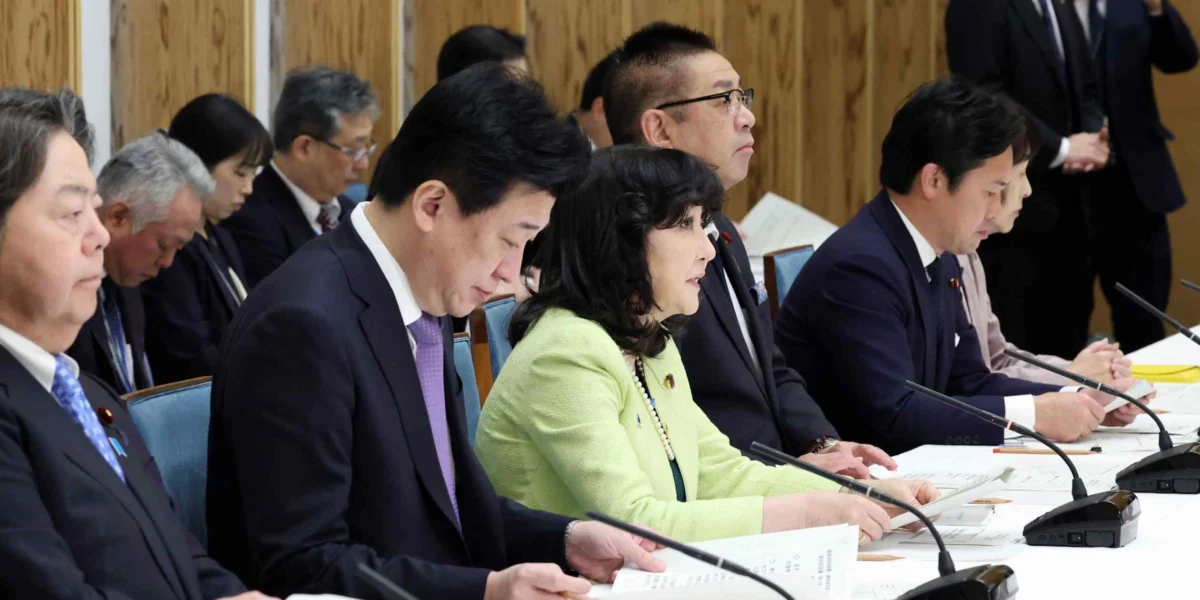
Japanese government ministries and agencies are demonstrating a pronounced reluctance to trim their budgetary allocations, as the nation’s ambitious efficiency initiative, mirroring the principles of the U.S. "DOGE" (though the original article likely intended a different acronym, perhaps related to fiscal discipline or program review), has so far yielded proposed spending cuts amounting to a mere 17 billion yen (approximately $110 million USD). This figure represents a significant shortfall compared to the broader fiscal consolidation goals envisioned by the Finance Ministry, which is now tasked with intensifying its efforts to identify further programs for elimination.

The Challenge of Fiscal Pruning in Bureaucratic Structures
The lukewarm response from various government departments underscores a perennial challenge faced by administrations worldwide: the inherent difficulty in dismantling established programs and reallocating resources, particularly when entrenched interests and departmental mandates are at play. The current initiative, spearheaded by the Finance Ministry under the leadership of Finance Minister Satsuki Katayama, aims to scrutinize special tax measures and subsidies, seeking to streamline government expenditure and bolster fiscal health. However, the initial results suggest a deep-seated resistance to significant budgetary adjustments within the Japanese bureaucracy.
Minister Katayama, seen in a recent meeting of cabinet ministers reviewing these fiscal measures, appears to be at the forefront of this push for greater efficiency. Her role is critical in navigating the complex web of inter-departmental politics and persuasive arguments that invariably accompany any proposal for spending reductions. The meager 17 billion yen in proposed cuts, while representing some movement, is a stark indicator of the uphill battle faced by the Finance Ministry in its quest for substantial fiscal reform. For context, Japan’s total government spending in fiscal year 2023 was projected to exceed 114 trillion yen, making the current proposed cuts a minuscule fraction of the overall budget.

Genesis of the Efficiency Drive: A Response to Fiscal Pressures
The impetus for this intensified budget review stems from Japan’s persistent fiscal challenges. The nation carries one of the highest levels of public debt among developed economies, a situation exacerbated by demographic shifts, including an aging population and a declining birthrate, which place increasing demands on social security and healthcare systems. Furthermore, the need to invest in strategic areas such as digital transformation, green energy, and national security requires careful fiscal management to avoid unsustainable debt accumulation.
The Finance Ministry’s approach, while not explicitly named "DOGE" in official Japanese policy documents, echoes the spirit of comprehensive budget efficiency reviews that have been undertaken in various forms by governments globally. These initiatives typically involve a rigorous examination of all government expenditures, with a focus on identifying redundancies, inefficiencies, and programs that may have outlived their original purpose or are no longer cost-effective. The goal is to liberate resources that can be redirected towards more pressing national priorities or used to reduce the budget deficit.

The timeline for such initiatives is often protracted, involving multiple stages of review, consultation, and negotiation. While the initial announcement of the initiative may have been met with public pronouncements of commitment, the practical implementation, as evidenced by the current low figures, reveals the intricate process of departmental resistance. It is plausible that departments, when initially asked to propose cuts, have put forward their least impactful or most easily justifiable reductions, saving their more significant program eliminations for later, or as a last resort.
Behind the Numbers: What Does 17 Billion Yen Represent?
The 17 billion yen in proposed cuts, while seemingly small in the grand scheme of the Japanese budget, could represent a variety of specific programs or subsidy adjustments. These might include:

- Minor adjustments to existing subsidy programs: For example, reducing the eligibility criteria for certain grants, lowering subsidy rates, or phasing out support for initiatives with limited uptake.
- Elimination of redundant administrative functions: This could involve consolidating certain departmental tasks, reducing travel budgets, or cutting back on non-essential office supplies and services.
- Re-evaluation of smaller-scale research and development projects: Projects that have not shown significant progress or promise might be terminated.
- Phasing out legacy IT systems or outdated equipment: While seemingly operational, these can represent significant ongoing maintenance costs.
Without specific details from the Finance Ministry, it is difficult to pinpoint the exact nature of these proposed cuts. However, the consistent theme across such efficiency drives is the tendency for initial proposals to focus on less contentious, smaller-scale adjustments. The real challenge lies in tackling larger, more deeply entrenched programs that often have significant constituencies or are central to a ministry’s operational mandate.
Reactions and Inferred Dynamics
While no direct quotes from ministries resisting the cuts have been provided, the outcome itself speaks volumes about the internal dynamics. It is a common bureaucratic phenomenon for departments to present their "easy wins" for elimination first, while holding back on more substantial reforms that might impact staffing, core functions, or political influence.

One can infer that departmental officials likely engage in intense internal discussions and lobbying efforts to protect their budgets. Arguments might include:
- "Essential functions": Claiming that the programs targeted for cuts are vital to the ministry’s mission and public service delivery.
- "Economic impact": Arguing that cutting a particular subsidy or program could harm specific industries or regions, leading to job losses or reduced economic activity.
- "Long-term investment": Framing current expenditures as necessary investments for future benefits, making immediate cuts seem short-sighted.
- "Already optimized": Asserting that their department’s budget is already lean and efficient, leaving little room for further reductions.
The Finance Ministry, in turn, is likely employing various strategies to overcome this inertia. This could include:

- Setting clear, non-negotiable reduction targets: Demanding specific percentage cuts from each ministry.
- Cross-ministerial comparisons: Highlighting departments that have made more significant progress in their reduction efforts to create a sense of competition.
- Public pressure: Leveraging media attention to highlight the need for fiscal discipline and the slow pace of reform.
- Political directives: Enlisting the support of the Prime Minister’s office to exert higher-level pressure.
Broader Implications for Japan’s Fiscal Future
The current situation has significant implications for Japan’s long-term fiscal stability and its ability to fund critical national priorities. If the government cannot effectively prune its budget, it faces several potential outcomes:
- Continued High Debt Levels: Persistent deficits will lead to a further accumulation of public debt, increasing the burden on future generations for debt servicing.
- Limited Fiscal Space for New Investments: A bloated budget leaves less room for crucial investments in areas like climate change adaptation, technological innovation, and defense modernization.
- Reduced Capacity for Social Spending: As the population ages, the demand for pensions and healthcare will rise. Without fiscal reform, meeting these demands could become increasingly challenging, potentially leading to benefit cuts or tax increases.
- Impact on Economic Competitiveness: High debt levels can, in the long run, affect investor confidence and the country’s credit rating, potentially impacting borrowing costs and economic growth.
The Finance Ministry’s task is therefore not merely one of budgetary housekeeping; it is a critical endeavor for ensuring Japan’s economic resilience and its capacity to address future challenges. The success of this initiative hinges on the government’s ability to foster a culture of fiscal accountability and to implement reforms that, while potentially unpopular in the short term, are essential for the nation’s long-term prosperity.

The coming months will be crucial in observing whether the Finance Ministry can successfully pressure ministries to identify more substantial cuts. The current 17 billion yen figure suggests that the real work of fiscal reform is only just beginning, and that the path ahead will likely be marked by continued negotiation, political maneuvering, and a persistent struggle against bureaucratic inertia. The ultimate success of this budget efficiency drive will be a key indicator of the government’s commitment to fiscal sustainability and its capacity to adapt to evolving economic and social landscapes.