Gilang Muhammad
Prices for a broad spectrum of goods and services continued their upward trajectory in August, according to a comprehensive report released Friday by the Bureau of Labor Statistics (BLS). This persistent inflationary pressure has significantly amplified expectations for the Federal Reserve to implement an interest rate hike at its upcoming policy meeting, scheduled to conclude next Wednesday. The data serves as the final critical inflation indicator the central bank will consider before its pivotal vote on the nation’s key interest rate, placing immense scrutiny on the Federal Open Market Committee (FOMC) and its commitment to price stability.
The Consumer Price Index (CPI), a widely recognized gauge of inflation that measures the average change over time in the prices paid by urban consumers for a market basket of consumer goods and services, advanced a seasonally adjusted 0.4% for the month. This monthly increase pushed the year-over-year inflation rate to 3.4%, both figures aligning with the Dow Jones consensus forecast from leading economists. While the headline numbers met expectations, a deeper dive into the report revealed underlying inflationary momentum that signals continued challenges for the Fed in its battle against rising prices.
Dissecting August’s Inflationary Landscape: Headline vs. Core Metrics
The headline CPI, which includes all categories of goods and services, was primarily driven by a resurgence in energy costs. However, a crucial metric for monetary policymakers, the core CPI, which strips out the often-volatile food and energy components to provide a clearer picture of underlying inflation trends, also registered a significant gain. The core CPI posted a 0.3% monthly increase, notably surpassing forecasts by 0.1 percentage point. Annually, the core inflation rate stood at 2.4%, matching the consensus estimate. This slight but material deviation in the monthly core reading is particularly impactful, as it suggests that inflationary pressures are not solely concentrated in specific, transient sectors but are becoming more entrenched across the economy.
The Federal Reserve operates under a dual mandate from Congress: to achieve maximum sustainable employment and maintain price stability, typically defined as a 2% annual inflation rate for the Personal Consumption Expenditures (PCE) index, though CPI is also closely monitored. The August CPI report, particularly the uptick in core inflation, moves the economy further away from the Fed’s long-term inflation target, strengthening the argument for decisive action.
Market Response and Shifting Odds for a Rate Hike
Financial markets reacted swiftly to the inflation data, adjusting their expectations for the Fed’s next move. Traders, utilizing tools like the CME Group’s FedWatch tracker, which monitors fed funds futures prices to gauge the probability of rate changes, significantly ramped up their bets on a quarter-percentage-point increase in the benchmark interest rate. Odds for such a hike surged from approximately 70% prior to the report’s release to nearly 90% following the BLS announcement. This dramatic shift underscores the market’s interpretation of the report as a definitive signal for tighter monetary policy.
Despite the heightened probability of a rate hike, stock market futures exhibited a counter-intuitive surge in morning trade. This seemingly paradoxical reaction was largely attributed to a significant plunge in oil prices observed concurrently, suggesting that investors might have been weighing the potential for eased energy costs against the inflation data. Meanwhile, Treasury yields presented a mixed picture, reflecting nuanced interpretations across different maturities. The policy-sensitive 2-year Treasury note, however, saw a notable jump of 4.6 basis points (one basis point equals 0.01%) to 4.594%. The 2-year yield is particularly sensitive to expectations of near-term Fed policy, making its ascent a strong indicator of impending monetary tightening.
Voices from the Financial Sector
Economists and investment strategists were quick to offer their analysis of the implications. Chris Zaccarelli, chief investment officer for Northlight Asset Management, articulated the prevailing sentiment: "There’s no guarantee that the Fed will hike next week, but it’s hard to see how the central bank can justify leaving rates on hold." His statement encapsulates the dilemma facing the FOMC, caught between the need to curb inflation and the desire to avoid stifling economic growth.
Kathy Bostjancic, chief economist at Nationwide, echoed these concerns, stating, "Chair Warsh and others signaled that interest rates can remain on hold only if disinflation continues and today’s August report did not deliver that." She further highlighted the compounding risk: "Further, the renewed march higher in oil, gasoline and diesel prices add to concerns that higher energy prices could spill over to other goods and services and inflation expectations." Nationwide, in response to the report, revised its forecast to now anticipate a quarter-point hike next week.
A Deeper Dive into Inflationary Drivers
The August CPI report provided granular detail on the specific categories contributing to the overall price increases:
- Energy Sector: Energy prices were the primary propellant of the headline CPI number. Gasoline prices alone jumped by 3.9% for the month, accounting for more than one-third of the index’s total gain. Broadly, the energy index rose 2.1% in August, fueled by escalating geopolitical tensions in the Middle East that have impacted global oil supply perceptions. Over the past 12 months, the energy index has surged by an alarming 16.3%, with gasoline prices up 27.4% and fuel oil prices soaring by 52% on an annual basis. These increases directly impact consumer budgets and business operational costs, creating ripple effects throughout the economy.
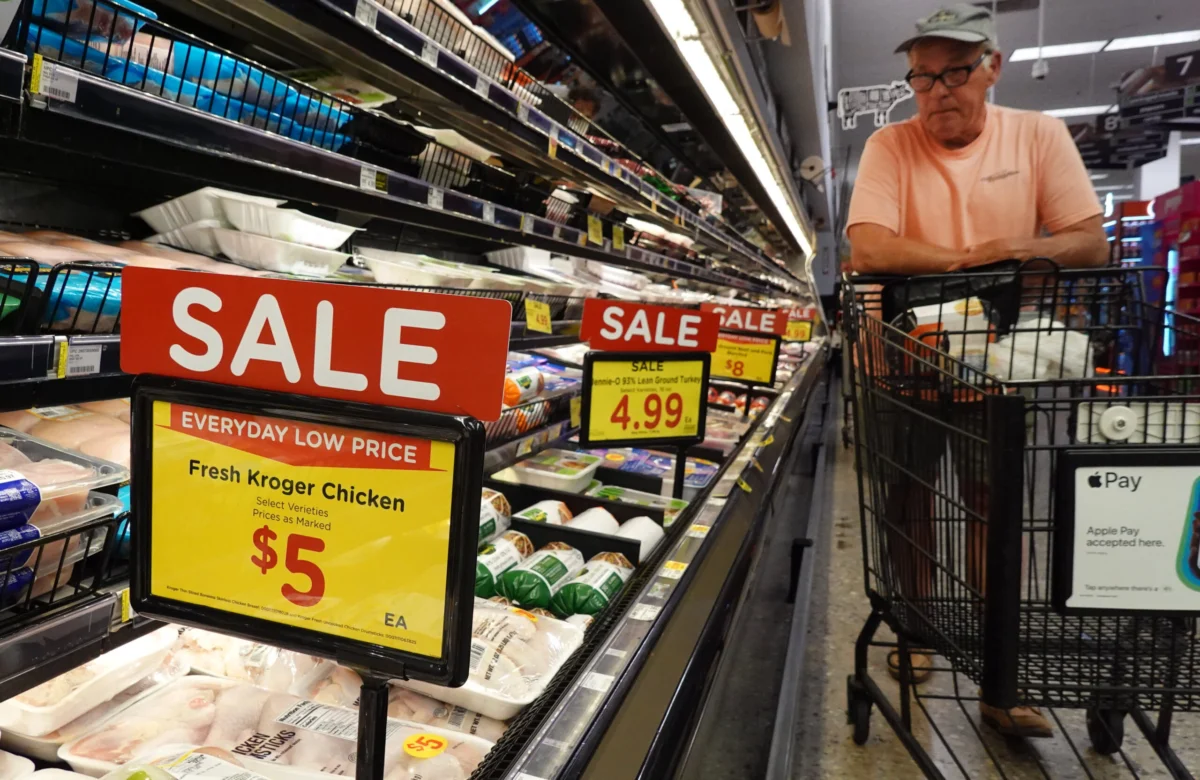
- Food Prices: Food prices edged up 0.1% in August, a more modest increase compared to other categories. Food at home costs, representing groceries purchased for consumption at home, remained flat for the month, offering a minor reprieve to household budgets. However, on an annual basis, the broader food index accelerated by 2.7%, reflecting sustained upward pressure on food supply chains and production costs.
- Shelter Costs: A significant and often "sticky" component of inflation, shelter costs climbed by 0.3% in August. This rise is particularly notable as it follows two months of moderation, indicating a potential re-acceleration in housing-related expenses such as rent and owners’ equivalent rent. Given that shelter costs represent a substantial portion of household expenditure, their continued increase poses a persistent challenge to inflation control.
- Transportation Services: This category saw a 0.5% increase, reflecting higher costs for various services related to travel and commuting.
- Vehicle Prices: Used cars and trucks, which had experienced extreme volatility in recent years, rose by 0.4% in August. New vehicle prices also contributed to the upward trend, increasing by 0.3%. These gains point to broad-based inflationary pressures extending into the automotive sector, driven by factors such as supply chain constraints and robust consumer demand.
- Other Categories: Tariff-sensitive apparel prices remained flat for the month, offering a rare instance of stability. Motor vehicle insurance, surprisingly, fell by 0.8%, providing a minor offset to other rising costs.
The Federal Reserve’s Policy Dilemma and Chairman Warsh’s Stance
The current fed funds rate, a benchmark for numerous consumer loans including mortgages, credit cards, and auto loans, is pegged in a range of 3.5%-3.75%, where it has remained for the entirety of 2026. This period of stability followed a series of aggressive rate hikes in late 2025 and earlier, as the Fed sought to rein in inflation that had surged post-pandemic.
The August CPI report arrives at a critical juncture, providing the Federal Reserve with its final major piece of inflation data before the highly anticipated September FOMC meeting. The Committee, comprised of governors of the Federal Reserve System and presidents of several Federal Reserve Banks, faces a delicate balancing act. While some officials have advocated for a more patient approach, emphasizing the potential for existing monetary policy tightening to work through the economy, the latest inflation figures make such a stance increasingly difficult to defend.
Chairman Kevin Warsh, a prominent figure within the Federal Reserve leadership, has consistently articulated a steadfast commitment to bringing inflation back down to the Fed’s 2% target. His recent comments, widely interpreted as advocating for further monetary tightening, emphasized that if inflation numbers do not improve, "we have work to do." The August report, with its persistent and even accelerating core inflation, suggests that the "work" may indeed be necessary. The credibility of the central bank hinges on its ability to effectively manage inflation expectations and demonstrate its resolve.
Broader Economic Implications and the Path Ahead
A quarter-point interest rate hike, while seemingly small (25 basis points), carries significant implications across the economy. For consumers, it translates to higher borrowing costs for new loans and potentially increased payments on variable-rate debt. This can dampen consumer spending, which is a major component of economic activity. For businesses, higher interest rates mean more expensive financing for investments, expansion, and day-to-day operations, potentially slowing hiring and capital expenditures.
The risk of higher energy prices "spilling over" into other goods and services, as highlighted by economists, is a particular concern. When transportation costs rise due to expensive fuel, businesses often pass these costs on to consumers through higher prices for goods. This can lead to a self-perpetuating cycle of inflation, making the Fed’s job even harder. Geopolitical instability, particularly in energy-producing regions like the Middle East, adds an unpredictable layer of complexity to the inflation outlook, as supply disruptions can swiftly impact global commodity markets.
Looking forward, the Federal Reserve’s decision next week will be closely watched not only by financial markets but also by businesses and households across the nation. The central bank is navigating a complex economic environment characterized by resilient employment figures, but also by persistent inflationary pressures. Its actions will dictate the trajectory of borrowing costs, influence investment decisions, and ultimately shape the economic landscape for the foreseeable future. The August CPI report has, for many, solidified the expectation that the Fed’s "work to do" will indeed involve another step towards tighter monetary policy, signaling a continued commitment to reining in inflation, even if it comes with the risk of moderating economic growth.