Lina Wu
JAKARTA — A notable public disagreement has emerged between Indonesia’s top economic and finance ministers regarding the scope and scale of a proposed government initiative aimed at ensuring every citizen aged 17 and above possesses a bank account. This divergence of opinion between Coordinating Minister for Economic Affairs Airlangga Hartarto and Finance Minister Purbaya Yudhi Sadewa has brought to the fore concerns about policy consistency and the government’s strategic approach to financial inclusion. The dispute, which surfaced through recent public statements and internal discussions, underscores the complexities inherent in implementing ambitious nationwide programs and highlights potential challenges in achieving unified governmental direction.
The Ambition for Universal Financial Inclusion
The underlying objective of the proposed scheme is to foster broader financial inclusion across the Indonesian archipelago. With a population exceeding 270 million, a significant portion of whom still operate outside the formal banking system, the government has identified the establishment of bank accounts as a critical step towards economic empowerment and greater participation in the formal economy. Proponents argue that universal access to banking services can unlock a multitude of benefits, including easier access to credit, secure savings, streamlined remittance services, and participation in digital payment ecosystems, all of which are crucial for economic development and poverty reduction.
The government’s commitment to financial inclusion is not new. It has been a recurring theme in economic policy discussions, with various initiatives launched over the years to encourage banking penetration. These have included efforts to simplify account opening procedures, promote mobile banking, and develop financial literacy programs. However, the ambition to achieve near-universal account ownership among the adult population represents a significant escalation of these efforts, demanding substantial resources and coordinated execution.
Divergent Views on Program Scale
The core of the disagreement lies in the projected scale and operational approach of the universal bank account initiative. Minister Hartarto, in his capacity as the coordinating minister for economic affairs, has reportedly advocated for a more expansive and aggressive rollout of the program. Sources close to the economic ministry suggest that Hartarto’s vision involves a rapid, nationwide campaign, potentially with government subsidies or incentives to accelerate account opening, targeting millions of unbanked individuals within a compressed timeframe. This approach is believed to be driven by a desire to quickly demonstrate tangible progress in financial inclusion and to align with broader economic development targets.
Conversely, Finance Minister Sadewa has expressed reservations about the magnitude and financial implications of such an ambitious undertaking. While acknowledging the importance of financial inclusion, Sadewa has reportedly cautioned against an overly rapid or underfunded implementation, citing potential strains on government budgets and the banking sector’s capacity. His concerns are understood to center on the sustainability of the program, the need for robust risk management, and the potential for unintended consequences if the rollout is not meticulously planned and adequately resourced. Sadewa’s perspective emphasizes a more measured and fiscally responsible approach, ensuring that the program is built on a solid foundation and can be sustained over the long term without jeopardizing other critical public services.
Timeline of Public Disagreement and Policy Implications
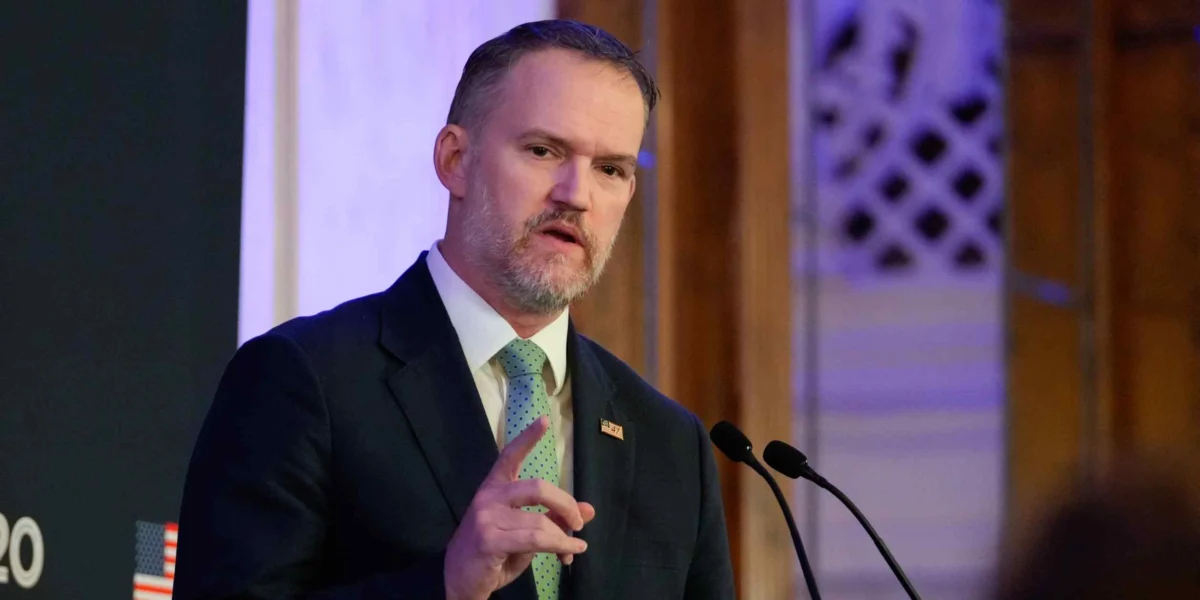
The public discord began to surface in recent weeks, with initial reports of differing opinions within cabinet meetings. Minister Hartarto, speaking at a public forum on financial technology on September 5, 2026, emphasized the urgency of the universal bank account initiative, stating, "We must ensure that every Indonesian citizen aged 17 and above has a bank account by the end of the next fiscal year. This is not just about convenience; it is about economic justice and empowerment." He alluded to a "comprehensive government-backed program" to achieve this goal.
Just days later, on September 9, 2026, Minister Sadewa, during a press conference following a fiscal review, offered a more cautious perspective. "While our commitment to financial inclusion is unwavering," Sadewa stated, "we must be realistic about the resources and infrastructure required. A large-scale program of this nature necessitates careful budgeting and phased implementation. We are exploring various models, but the exact scale will depend on our fiscal capacity and the readiness of the banking sector." This subtle but distinct divergence in public messaging has drawn attention from analysts and the business community.
The implications of this internal disagreement are significant for policy implementation. A lack of consensus at the highest levels of government can lead to policy paralysis, delays in execution, and confusion among stakeholders, including financial institutions, citizens, and international partners. For a program as far-reaching as universal bank account ownership, this can undermine public trust and hinder the effective mobilization of resources. It also raises questions about the coordination mechanisms within the economic policymaking apparatus.
Supporting Data and Context on Financial Inclusion in Indonesia
Indonesia’s journey towards financial inclusion is marked by significant progress but also persistent challenges. According to data from Bank Indonesia, the central bank, the financial inclusion rate, measured by the proportion of adults with access to formal financial services, has steadily increased. As of the latest available figures from early 2026, approximately 78% of the adult population had access to at least one formal financial service. However, this still leaves an estimated 22% of adults, or roughly 48 million individuals, unbanked or underbanked.
The unbanked population is disproportionately concentrated in rural areas, among lower-income households, and in certain vulnerable groups. These individuals often face barriers such as lack of identification, low financial literacy, geographical distance from bank branches, and perceived high costs associated with banking. The proposed universal bank account scheme aims to directly address these barriers.
The existing banking infrastructure in Indonesia comprises a mix of large state-owned banks, private commercial banks, and a growing number of smaller rural banks. While these institutions have expanded their reach, particularly through digital channels, achieving universal coverage requires a strategic partnership between the government and the private sector. The government’s role is often seen as providing the enabling policy framework, regulatory support, and potentially financial incentives, while banks are expected to provide the services.
Potential Reactions from Stakeholders
The public spat between the two ministers is likely to elicit varied reactions from different stakeholders. Financial institutions, particularly banks, will be keenly watching for clarity on the government’s ultimate plan. They need to understand the scale of potential new account openings, any associated costs or incentives, and the regulatory environment that will govern the program. A rushed or poorly planned initiative could strain their operational capacity and require significant investment in customer acquisition and support. Conversely, a well-structured program with clear incentives could represent a significant growth opportunity.
Consumer advocacy groups and civil society organizations are likely to welcome the overarching goal of financial inclusion. However, they may also express concerns about the potential for exploitation of vulnerable populations if the program is not implemented with strong consumer protection measures. Ensuring that new account holders understand the terms and conditions of their accounts, and are not subjected to predatory fees, will be paramount.
International financial institutions and development partners, who often provide technical assistance and funding for financial inclusion initiatives, will also be observing the situation closely. Their support is often contingent on clear policy direction and demonstrable government commitment. The public disagreement could create uncertainty about the program’s future, potentially affecting the flow of external aid and expertise.
Analysis of Broader Implications
The disagreement between Minister Hartarto and Minister Sadewa is symptomatic of broader challenges faced by large developing economies in formulating and implementing cohesive economic policies. The tension between ambitious development goals and fiscal realities is a constant balancing act. In Indonesia, the push for rapid economic growth and improved living standards necessitates bold policy interventions. However, the responsible management of public finances remains a critical imperative, especially in an era of global economic uncertainty.
The debate also highlights the importance of effective inter-ministerial coordination. For a policy as cross-cutting as financial inclusion, which involves the ministries of finance, economic affairs, communication and information technology, and social affairs, among others, a unified strategy is essential. The current public display of disagreement suggests potential weaknesses in the government’s internal communication and decision-making processes.
Moving forward, the resolution of this dispute will likely involve a process of negotiation and compromise between the two ministries. It is probable that the final program will adopt a more tempered approach, balancing the ambition of universal coverage with the practical considerations of fiscal sustainability and operational capacity. This could involve a phased rollout, focusing initially on specific regions or demographics, or exploring innovative partnerships with fintech companies to reduce costs and increase reach.
The ultimate success of any universal bank account scheme will depend not only on its scale but also on its design and execution. Factors such as ease of account opening, affordability of services, accessibility of banking channels (including digital and agent banking), and robust financial literacy programs will be critical determinants of whether the initiative truly empowers citizens and contributes to sustainable economic development. The current public discourse, while highlighting a policy friction, also serves as an opportunity for a more thorough public debate and refinement of what is a crucial policy objective for Indonesia. The coming months will reveal how this high-level disagreement is resolved and what shape the future of financial inclusion in Indonesia will ultimately take.