Gilang Muhammad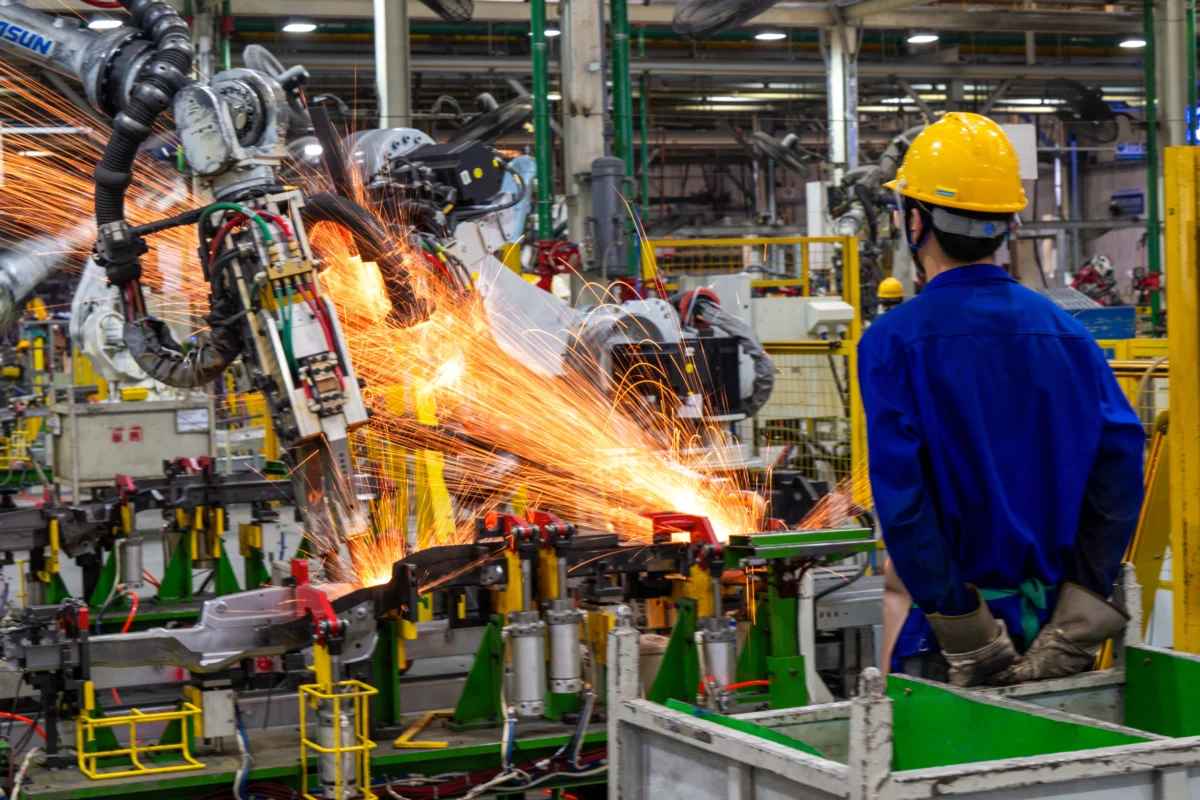
LIUZHOU, CHINA – China’s vast manufacturing sector experienced its second consecutive month of contraction in August 2026, according to official data released by the National Bureau of Statistics (NBS) on Monday. The Purchasing Managers’ Index (PMI), a key gauge of factory activity, registered at 49.8, marginally better than July’s reading of 49.2 but still remaining below the crucial 50-point threshold that separates expansion from contraction. This latest data point, while exceeding Reuters-polled economists’ consensus forecast of 49.6, underscores the persistent economic pressures confronting Beijing and reinforces the urgency for more decisive policy interventions to bolster waning growth momentum.
The backdrop to this manufacturing slowdown is a broader deceleration across the Chinese economy, which has been grappling with a confluence of challenges throughout the year. The second quarter of 2026 saw Gross Domestic Product (GDP) growth cool to a disappointing 4.3%, marking the weakest pace since late 2022. This figure stands in stark contrast to China’s historical growth rates, which often comfortably exceeded 6-7% for decades, signaling a structural shift and a more challenging operating environment for businesses and policymakers alike. The primary culprits behind this slowdown have been identified as persistently soft domestic demand, a protracted slump in the real estate sector, and growing geopolitical uncertainties, all of which continue to exert a heavy drag on overall economic activity.
A Deepening Economic Malaise and Key Indicators
The economic malaise that characterized the first half of the year has shown signs of deepening as 2026 progressed into its latter half. Consumer spending, a vital engine for China’s pivot towards a consumption-driven economy, has notably stalled. Data from July revealed a significant slowdown in retail sales growth, indicating a cautious consumer sentiment possibly influenced by rising unemployment and uncertainty about future income prospects. Urban investment, a long-standing pillar of China’s economic expansion, has not only slowed but has begun to contract at an accelerated pace, a development that has particularly alarmed policymakers given its multiplier effect on various industries from construction to materials.
Industrial output, another crucial indicator of the health of the manufacturing powerhouse, also registered a slowdown in July. Concurrently, growth in industrial profits cooled to its weakest pace recorded this year, further squeezing corporate margins and dampening investment appetite. These figures collectively paint a picture of an economy struggling to regain its footing amidst a complex interplay of internal and external headwinds.
Paradoxically, amidst this widespread weakness, exports have emerged as one of the few resilient pillars propping up China’s growth narrative this year. Bolstered by a global boom in artificial intelligence (AI) infrastructure spending, which has fueled demand for Chinese-made tech components and related goods, outbound shipments have recorded robust double-digit growth for the majority of the year. This export strength has provided a much-needed buffer, cushioning some of the drag emanating from domestic vulnerabilities and external shocks. However, the sustainability of this export-led growth remains a point of debate, particularly given the volatile nature of global demand and ongoing trade tensions.
Government Response and the Trickle of Stimulus
Economists and market analysts are now closely scrutinizing Beijing’s policy responses, anticipating a more aggressive rollout of fiscal and monetary stimulus measures. The prevailing sentiment is that better growth prospects might materialize in the latter half of the year, contingent on several factors including the fading of adverse weather conditions that impacted production in some regions and, more critically, an accelerated pace of fiscal spending by local governments.
Tianchen Xu, a senior economist at the Economist Intelligence Unit, highlighted the growing concern among policymakers regarding "the collapse in urban investment." Xu suggested that this concern is likely to translate into a rapid acceleration of fiscal spending, which should "fast-track project approval and fund disbursement." Such an approach typically involves increased government investment in infrastructure projects, public works, and other initiatives designed to stimulate demand and create employment. However, Xu cautioned that the full effect of these policy expansions would likely only become more prominent in the coming month and throughout the fourth quarter, pointing to early, albeit nascent, signs of recovery in domestic demand.
The NBS release for August did indeed offer some glimmers of hope within the broader contractionary landscape. The sub-indexes tracking production and new orders both expanded, registering 50.4 and 50.6 respectively. This suggests that while overall activity remains subdued, there’s an uptick in the volume of goods produced and new business received. Furthermore, new export orders rebounded to 50.1 in August from 49.6 in the preceding month, signaling a recovery in overseas demand. This rebound is particularly noteworthy given the global economic uncertainties, including the prolonged Middle East turmoil, indicating a resilience in international markets for Chinese products.
However, not all indicators were positive. The sub-indexes related to raw materials inventory and employment both remained in contractionary territory, staying below the 50-mark threshold. This suggests that firms are still managing their input costs cautiously, not building up significant stocks, and remain hesitant to expand their workforces, reflecting a lingering lack of confidence in sustained demand recovery.
Sectoral Divergence and Inflationary Pressures
A more granular look at the manufacturing sector reveals a significant divergence in performance. High-tech equipment manufacturing continued to outpace the broader factory sector, showcasing the strategic shift China is attempting towards higher-value industries. The production and new orders readings for the electronic machinery and equipment, and computer communication devices sectors, for instance, topped 53 – a robust expansionary signal. This performance underscores the ongoing global demand for advanced electronics and China’s strong position in their supply chains, particularly benefiting from the AI boom mentioned earlier. In stark contrast, consumer goods production lagged significantly, registering a sub-50 reading at 49, further highlighting the weakness in household consumption.
Nguyen Hoang Nam, China economist at Capital Economics, observed that overall, firms appeared to be anticipating "a boost to economic activity as local governments step up spending over the rest of the year." This expectation of increased government support seems to be a key factor underpinning any nascent optimism within the manufacturing community.
Adding another layer of complexity, the improvement in the factory-gate price sub-indexes pointed to renewed inflationary pressures. This uptick in prices is attributed, in part, to higher global crude and metal prices, which translate into increased input costs for manufacturers. Zhiwei Zhang, president at Pinpoint Asset Management, noted that "The rise of commodity prices may have benefited some firms in the upstream manufacturing sector," particularly those involved in resource extraction or primary processing. However, Zhang quickly added a crucial caveat: these price gains were primarily driven by supply constraints and global market dynamics rather than a robust surge in demand, underscoring the underlying weakness that persists in the market.
Non-Manufacturing Sector and Broader Economic Outlook
Beyond the factory floors, the non-manufacturing gauge, which encompasses construction and services activity, remained unchanged at 49% in August, indicating a continued contraction in these vital sectors. Within this, the construction industry sub-index experienced a slight dip of 0.1 percentage point to 46.9%, reflecting the ongoing struggles of the property sector and its cascading effects on related industries. Furthermore, specific segments within the services category, including wholesale, retail, and capital markets services activity, also contracted, painting a picture of broad-based softness across the economy.
Looking ahead, market participants are also awaiting the results of the private RatingDog manufacturing PMI survey, estimated to show factory activity climbing to 51, according to a Reuters poll. This gauge, which tends to capture smaller and more export-oriented firms, has historically presented a somewhat rosier picture compared to the official NBS PMI reading, offering an alternative perspective on the health of a different segment of the manufacturing landscape. The divergence between official and private PMIs often highlights the differing experiences of state-owned enterprises versus private companies, or large-scale manufacturers versus smaller, more nimble players.
Implications and The Path Forward
The persistent contraction in China’s manufacturing sector carries significant implications, both domestically and globally. Internally, the slowdown exacerbates challenges related to employment stability, particularly for the vast migrant worker population, and could further dampen consumer confidence, creating a self-reinforcing cycle of cautious spending. For Beijing, the economic headwinds present a complex policy dilemma: how to stimulate growth effectively without re-inflating asset bubbles or accumulating unsustainable levels of debt, especially at the local government level. The long-term strategy of rebalancing the economy towards consumption and high-tech manufacturing appears to be encountering friction amidst these short-term pressures.
Globally, China’s manufacturing output is intricately linked to international supply chains and commodity markets. A sustained slowdown could lead to reduced demand for raw materials from exporting nations and potentially impact global trade volumes. The reliance on Chinese exports for AI infrastructure components, while currently a strong point, also highlights potential vulnerabilities should China’s production capacity face more severe disruptions.
Analysts widely agree that while short-term stimulus measures may provide a temporary bump to economic activity, a sustained and robust recovery hinges on addressing the deeper structural issues, most notably the deleveraging of the property sector and the restoration of robust consumer and investor confidence. The coming months will be crucial in observing the efficacy of Beijing’s policy responses and their ability to steer the world’s second-largest economy back towards a path of more stable and sustainable growth. The image of robotic arms diligently assembling auto parts in Liuzhou, while symbolic of China’s industrial prowess, belies the complex and challenging economic environment in which these operations are currently unfolding.