Gilang Muhammad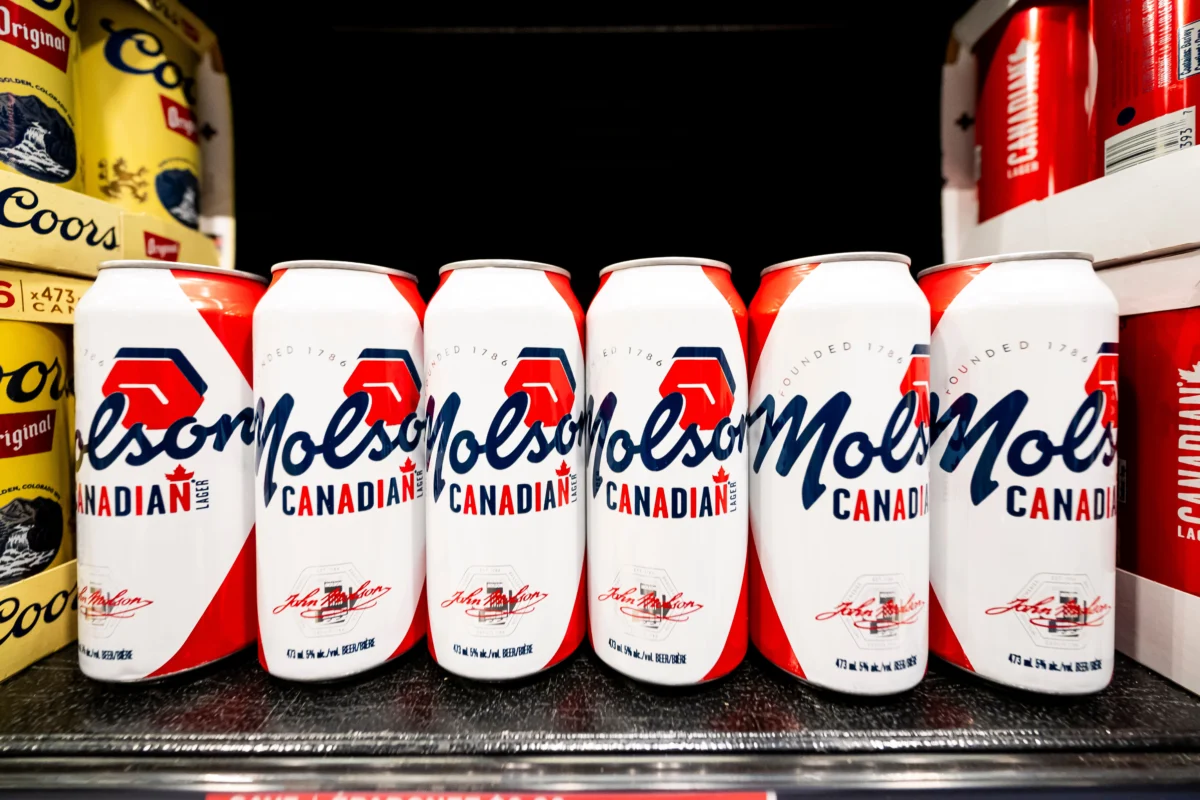
The simmering trade dispute between the United States and Canada has boiled over into an full-blown economic confrontation, with the White House announcing a sweeping ban on Canadian imports, including motorbikes and a range of alcoholic beverages, set to take effect later this month. This aggressive move, enacted through a series of executive orders by U.S. President Donald Trump, comes as diplomatic and trade relations with Ottawa continue to deteriorate, hitting a new low point on the same day Canada’s own CA$27.6 billion retaliatory tariffs on American goods officially came into force. The tit-for-tat measures underscore a profound breakdown in the trade relationship between two of the world’s closest allies and largest trading partners, raising alarm bells for businesses, economists, and political observers across North America.
Deepening the Divide: New US Restrictions Take Aim at Canadian Exports
In a significant escalation of trade tensions, President Trump late Monday unveiled executive orders prohibiting the importation of various Canadian products. These bans, slated to commence on September 29, 2026, target a diverse range of goods, effectively replacing existing 50% tariffs with outright prohibitions. Among the most prominent items now barred from entering the U.S. market are larger-capacity motorcycles and mopeds, a direct blow to Canada’s manufacturing sector. Beyond motorized vehicles, the restrictions extend to agricultural and consumer goods, including Canadian whey products, molasses, non-alcoholic beer, and an extensive list of alcoholic beverages. This latter category encompasses malt beer, wines, cider, whiskies, vodka, and other spirits, signaling a comprehensive attack on Canada’s beverage industry.
The White House also detailed modifications to existing tariffs on other Canadian products, with changes scheduled to become effective on September 15, 2026. These adjustments include the addition of all-terrain vehicles (ATVs) and animal hides to the list of dutiable imports, while rock salt and cement will be removed from the tariff schedule. U.S. Trade Representative Jamieson Greer articulated the administration’s rationale, stating that these measures were a "natural consequence of Canada’s continued discriminatory treatment of crucial American exports." This statement reflects the persistent grievances Washington has voiced regarding Canada’s trade policies, particularly in key sectors like dairy, automotive, and alcohol.

Canada’s Retaliatory Strike: A "Dollar for Dollar" Response
The American actions were announced concurrently with the implementation of Canada’s own substantial retaliatory tariffs. Effective September 8, 2026, Ottawa imposed duties on CA$27.6 billion worth of U.S. imports, targeting a broad spectrum of more than 700 goods. This extensive list includes vital American exports such as steel products, various dairy items, farm equipment, pulp and paper, and electronics. Canadian officials had previously characterized these tariffs as a "dollar for dollar" response to the 50% tariffs that the U.S. had imposed on Canadian goods in August 2026, following the spectacular collapse of bilateral trade talks just prior to an August 21 deadline.
Canadian Prime Minister Mark Carney, addressing the nation on Tuesday, acknowledged that Canada’s tariffs would "come with a cost" for Canadian consumers and businesses. However, he firmly asserted their necessity, emphasizing that such measures were crucial to protect Canadian industries, workers, and communities from what Ottawa perceives as unjustified American trade aggression. This defiant stance underscores Canada’s commitment to defending its economic interests and signals a prolonged period of strained relations.
A Chronology of Escalation: From Grievances to Full-Blown Conflict
The current crisis represents the culmination of months, if not years, of escalating tensions and failed negotiations. The roots of this particular dispute can be traced back to earlier American grievances regarding Canada’s supply management system for dairy and poultry, perceived unfair practices in the automotive sector, and long-standing disagreements over lumber.

- Early 2025 – Late 2025: Initial "Alcohol Wars" Erupt: Even before the broader tariff escalations of 2026, the alcohol sector emerged as a significant flashpoint. In March 2025, stores in several Canadian provinces began removing U.S. alcohol products from their shelves, often accompanied by public campaigns advocating for boycotts. Saskatchewan Premier Scott Moe, in August 2025, announced a 50% tariff on American alcohol imports, citing it as a "reciprocal measure" to support local businesses and push for a fair trade resolution. This early phase had a tangible impact: U.S. spirits exports to Canada plummeted by more than 70% year-on-year between March 2025 and December 2025, according to the Distilled Spirits Council of the United States.
- August 2026: US Imposes 50% Tariffs, Talks Collapse: The broader trade war officially ignited in August 2026 when the U.S. levied significant 50% tariffs on a range of Canadian goods. This action followed the dramatic collapse of trade talks aimed at resolving outstanding disputes, which faltered just days before a critical August 21 deadline. Both sides quickly engaged in a blame game, with each accusing the other of employing unfair practices detrimental to their respective domestic industries and workers.
- September 8, 2026: Canada Retaliates; US Announces Further Bans/Tariffs: The current climax arrived on September 8, 2026. Canada’s CA$27.6 billion tariffs on U.S. imports became effective, marking its "dollar for dollar" response. Hours later, the White House announced its new import bans and tariff modifications, deepening the trade chasm. The U.S. import bans will take effect on September 29, 2026, while the tariff adjustments are set for September 15, 2026.
This sequence of events illustrates a pattern of escalating actions and reactions, demonstrating a profound inability of both nations to find common ground through diplomatic channels, leading to a direct economic confrontation.
The Nexus of Disagreement: Sectoral Flashpoints
The trade conflict is not a monolithic entity but rather a complex web of disputes across various key economic sectors.
- Automotive Industry Under Threat: The automotive sector, a cornerstone of the integrated North American economy, faces perhaps the gravest threat. President Trump has repeatedly accused Canada of disadvantaging U.S. exports through its auto policies and has explicitly threatened to impose a crippling 50% tariff on Canadian cars, trucks, and auto parts starting January 1, 2027. This threat looms large over an industry characterized by deeply integrated supply chains that crisscross the U.S.-Canada border multiple times during the manufacturing process. Such a tariff would not only devastate Canadian auto production but also severely disrupt U.S. manufacturers who rely on Canadian components, leading to higher costs for consumers and potential job losses on both sides of the border. Prime Minister Carney, in his counter-argument, highlighted that Canada is the biggest consumer of U.S.-made cars and steel, underscoring the reciprocal nature of their automotive trade.
- Dairy and the Supply Management System: Canada’s long-standing supply management system for dairy products has been a persistent target of U.S. criticism. The system, which controls production, imports, and prices, is designed to provide stable incomes for Canadian farmers but is viewed by the U.S. as a protectionist barrier that limits market access for American dairy producers. The U.S. administration argues that Canada’s policies create an unfair advantage for its domestic dairy industry at the expense of U.S. farmers, contributing to the overall trade imbalance.
- The "Alcohol Wars" Intensify: What began as provincial-level skirmishes has now been formalized into federal policy. The U.S. ban on Canadian alcoholic beverages, including whiskies, wines, and beers, is a direct response to the earlier Canadian provincial boycotts and tariffs on U.S. spirits. Chris Swonger, president and CEO of the Distilled Spirits Council of the United States, lamented that American distillers had "shouldered the brunt of this trade dispute" even before the latest escalations. He reiterated his call for a "negotiated solution that restores U.S. spirits to retail shelves throughout Canada and returns the spirits sector to a permanent zero-for-zero tariff framework," emphasizing the significant economic damage already incurred by American producers. The U.S. market for Canadian alcoholic beverages, particularly whiskies and craft beers, represents a significant export avenue for Canada, and these new bans will have a substantial impact on those producers.
- Beyond the Major Sectors: The dispute also encompasses vital resources and manufacturing. The ongoing steel and aluminum tariffs, initially imposed by the U.S. and then retaliated against by Canada, continue to harm both nations’ manufacturing sectors by increasing input costs. Farm equipment, pulp and paper, and electronics are also caught in Canada’s retaliatory net, affecting industries critical to both economies. The new U.S. ban on Canadian larger-capacity motorcycles and mopeds, while perhaps smaller in overall trade volume than auto or dairy, symbolically targets a specific manufacturing niche and adds to the growing list of prohibited items.
Economic Fallout and Industry Reactions
The immediate economic ramifications of these escalating trade measures are a source of significant concern for businesses and policymakers alike. While the existing tariffs apply to a relatively small fraction of the staggering $715.5 billion annual trade in goods between the U.S. and Canada, economists have issued dire warnings about the potential for an immediate and substantial blow to small- and medium-sized businesses (SMEs) and a broader risk to economic growth from further escalation.

- Macroeconomic Concerns: The constant uncertainty surrounding trade policy stifles investment and creates an unpredictable environment for cross-border commerce. Analysts at major financial institutions have begun to factor in the potential for reduced GDP growth in both countries as businesses contend with higher costs and disrupted supply chains. The U.S. trade deficit in goods with Canada, cited by President Trump as a rationale for his actions, stands at a figure that the administration views as problematic, despite Canada’s arguments that this deficit is skewed by U.S. energy imports from Canada.
- Business Impact: Justin Angotti, an associate in the International Trade and National Security Group at law firm Reed Smith, articulated the precarious position businesses now face. "Companies on both sides of the border will need to wait to see if these tariffs hold, more measures are enacted, or each country decides to de-escalate," Angotti noted. "In the meantime, those businesses will realize both tariff-, compliance-, and uncertainty-related costs." This translates to increased operational expenses, the need for costly legal and logistical advice to navigate complex new regulations, and the chilling effect of not knowing what the trade landscape will look like in the coming weeks and months. Supply chains, meticulously built over decades under the umbrella of free trade agreements, are now being fractured, forcing companies to seek alternative, often more expensive, suppliers.
- Industry Voices: Industry associations in both countries have been vocal in their appeals for de-escalation. The American Chamber of Commerce in Canada and its Canadian counterpart have consistently warned of the detrimental effects on integrated industries, urging leaders to return to the negotiating table. Manufacturing groups, agricultural federations, and consumer goods associations have all expressed deep concern over the tariffs’ impact on their members, highlighting potential job losses, reduced competitiveness, and higher prices for consumers.
Political Ramifications and Geopolitical Shifts
Beyond the immediate economic impact, the escalating trade war carries significant political and geopolitical ramifications for both the United States and Canada, and potentially for global trade relations.
- Strained Diplomacy: The bilateral relationship, traditionally characterized by close cooperation and mutual respect, has been severely strained. The public exchanges of blame and the direct economic attacks signal a departure from the collaborative spirit that has long defined U.S.-Canada relations. This tension could spill over into other areas of cooperation, including defense, environmental initiatives, and shared border management, potentially undermining broader continental security and stability.
- Canada’s European Pivot: In response to the deteriorating relationship with Washington, Ottawa is actively exploring new strategic alliances. Bloomberg reported on Tuesday that Canada is now eyeing closer trade and security ties with the European Union, signaling a potential geopolitical pivot. This move reflects Canada’s desire to diversify its economic partnerships and reduce its heavy reliance on the U.S. market, thereby mitigating the impact of future American protectionist measures. A strengthened Canada-EU alliance could represent a significant shift in global trade dynamics and an attempt by Canada to safeguard its economic future by fostering deeper ties with like-minded nations.
- The Future of North American Trade: The stability of the United States-Mexico-Canada Agreement (USMCA), which succeeded NAFTA, is now under scrutiny. While the current tariffs and bans may operate outside the direct dispute resolution mechanisms of USMCA, the overarching trade environment creates immense pressure on the agreement. The aggressive posture taken by the U.S. administration raises questions about the long-term viability of multilateral trade frameworks and whether such agreements can withstand sustained unilateral actions by member states. The precedent set by this conflict could encourage other nations to pursue similar protectionist measures, further fragmenting the global trading system.
The Path Forward (or Lack Thereof)
As the U.S. and Canada dig deeper into their respective trade trenches, the path to de-escalation appears increasingly fraught. Both governments remain firm in their positions, attributing blame to the other and vowing to protect their domestic interests. Calls from industry leaders and economists for a return to dialogue and a negotiated solution have been consistent, yet a breakthrough remains elusive.
The current trajectory points towards a prolonged period of uncertainty for businesses, higher costs for consumers, and a significant chilling effect on cross-border investment. The immediate future will reveal whether the economic pain inflicted by these tariffs and bans will eventually force both nations back to the negotiating table, or if the political will to stand firm will override the economic imperative to cooperate. For now, the North American trade landscape remains volatile, with profound implications for the economies and diplomatic relations of two of the world’s most interdependent nations.