Farhan Pambudi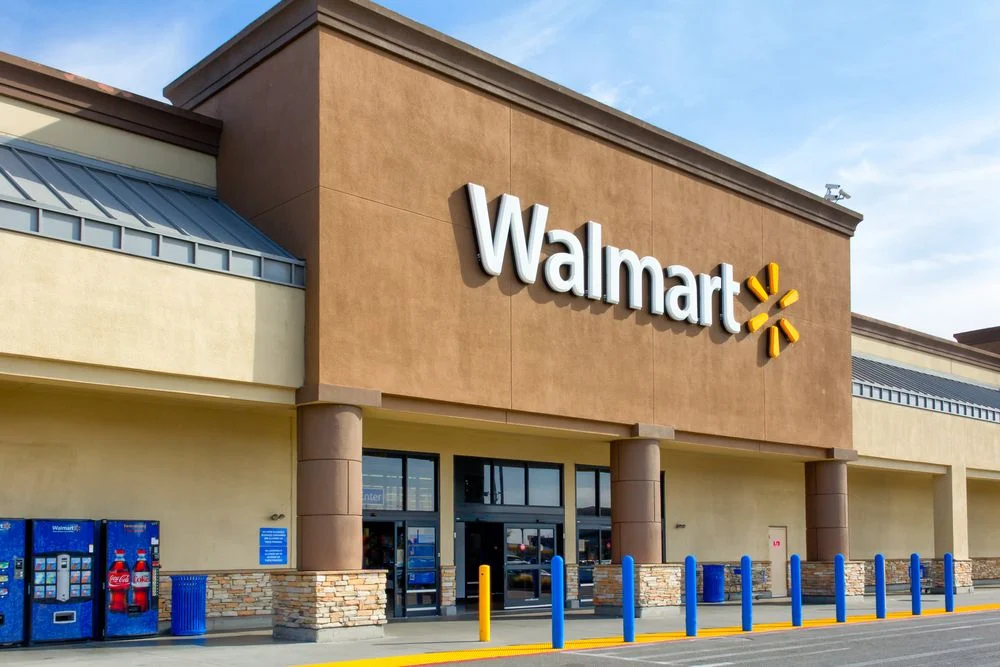
Walmart Inc., the world’s largest retailer, announced on Friday a significant shift in its corporate strategy by confirming it will finally begin accepting Apple Pay and Google Pay at its stores and Sam’s Club locations. The decision marks the conclusion of a decade-long resistance to third-party mobile wallets, a stance that had positioned the retail giant as one of the few remaining major holdouts in the transition toward universal contactless payment adoption. According to the company’s official statement, the rollout of "Tap to Pay" capabilities will begin at select locations on August 24, with a comprehensive expansion planned to reach all stores and clubs by the end of the current calendar year. The integration will eventually extend to the company’s extensive network of fuel stations, with a projected completion date set for the middle of 2027.
For years, Walmart’s refusal to adopt Near Field Communication (NFC) technology—the protocol that powers Apple Pay and Google Pay—was a point of contention for millions of consumers. While the vast majority of U.S. retailers transitioned to NFC-enabled terminals following the 2014 launch of Apple Pay, Walmart remained committed to its proprietary payment ecosystem. This latest move signals a pragmatic surrender to consumer demand and the reality of a retail landscape where digital wallets have become the preferred method of transaction for a significant portion of the population.
The Evolution of Walmart’s Payment Strategy
Walmart’s reluctance to embrace Apple Pay was never a matter of technical inability, but rather a strategic choice driven by a desire to control the customer experience and the associated transaction data. In the early 2010s, Walmart spearheaded a consortium of retailers known as the Merchant Customer Exchange (MCX). This group, which included heavyweights like Target, Best Buy, and CVS, sought to develop a mobile payment system called CurrentC.
The primary objective of CurrentC was twofold: to bypass the high interchange fees associated with credit card networks and to retain direct access to customer purchasing data. Unlike Apple Pay, which uses tokenization to mask a user’s actual card details from the merchant, CurrentC was designed to link directly to a user’s bank account. Furthermore, it relied on QR code technology rather than NFC, which Walmart executives believed was more accessible to a broader range of smartphone users at the time.
However, CurrentC faced numerous hurdles, including a clunky user interface and a high-profile security breach during its pilot phase. By 2016, the MCX initiative was effectively abandoned as partners began to defect and adopt Apple Pay to satisfy their customers. While Target and Best Buy eventually folded and integrated NFC technology, Walmart doubled down on its own internal solution: Walmart Pay.
Launched in late 2015, Walmart Pay utilized a QR code-based system integrated directly into the Walmart app. By forcing users to stay within its own app, Walmart could continue to collect valuable data on shopping habits, push personalized promotions, and encourage the use of its "Scan & Go" technology. While Walmart Pay saw moderate success among frequent shoppers, it created a point of friction for occasional visitors who did not wish to download a dedicated app simply to complete a purchase.
Timeline of the Transition to Contactless Payments
The journey toward this week’s announcement has been marked by several key milestones in the retail and financial technology sectors:
- 2012: Formation of the Merchant Customer Exchange (MCX) by Walmart and other retailers.
- 2014: Apple Pay is launched, utilizing NFC technology. Walmart publicly declines to support it.
- 2015: Google launches Android Pay (now Google Pay). Walmart introduces Walmart Pay, a QR-based alternative.
- 2016: CurrentC is officially postponed indefinitely, signaling the failure of the MCX consortium.
- 2017-2019: Most major U.S. retailers, including Target, Costco, and CVS, begin accepting Apple Pay.
- 2020: The COVID-19 pandemic accelerates the demand for "touchless" payments, leading to a surge in digital wallet adoption.
- 2023: Industry reports indicate that Apple Pay is accepted at approximately 85% of U.S. retailers.
- August 21, 2026: Walmart officially announces the upcoming support for Apple Pay and Google Pay.
- August 24, 2026: The phased rollout begins at select Walmart and Sam’s Club locations.
- Late 2026: Expected completion of the rollout across all physical retail stores.
- Mid-2027: Expected completion of Tap to Pay integration at Walmart and Sam’s Club fuel stations.
Supporting Data and Market Pressure
The decision to pivot comes at a time when digital wallet usage has reached a critical mass. According to recent financial industry data, over 75% of iPhone users in the United States have activated Apple Pay. Furthermore, contactless payments accounted for more than 50% of all in-person card transactions globally in 2023. By continuing to exclude these options, Walmart was increasingly alienating a demographic of younger, tech-savvy consumers—specifically Gen Z and Millennials—who rarely carry physical wallets.
Market research suggests that "payment friction"—the difficulty or inconvenience of completing a transaction—directly impacts customer loyalty. In a retail environment where convenience is a primary driver of foot traffic, Walmart’s insistence on QR codes was becoming a competitive disadvantage. Competitors like Target and Kroger (which also resisted for years before finally adopting NFC) saw measurable improvements in checkout speed and customer satisfaction scores after integrating standard mobile wallets.
Additionally, the technical landscape of credit cards has shifted. Most modern credit and debit cards now come equipped with their own NFC chips for "tap to pay" functionality. By upgrading its terminals to support Apple Pay and Google Pay, Walmart is also enabling customers to tap their physical cards, further streamlining the checkout process and reducing wear and tear on card readers.
Official Responses and Strategic "Spin"
In its official communication, Walmart has framed the inclusion of Apple Pay and Google Pay not as a reversal of policy, but as an expansion of customer choice. The company’s announcement emphasized that this move is part of a broader commitment to digital transformation.
"Tap to Pay is a great addition to the other payment options already offered like cash, credit card, or Walmart Pay," the company stated. "Giving customers and members more choice at checkout is part of a broader effort to make managing and using their money easier."
Industry analysts, however, view the move as a necessary concession. Retail technology expert Sarah Perez noted that Walmart’s decision highlights the limits of even the largest corporations to dictate consumer behavior in the face of established technological standards. While Walmart Pay will remain an option, it is expected to become a niche tool used primarily by those seeking specific app-based rewards or using the Scan & Go feature at Sam’s Club.
Broader Impact and Implications for the Retail Industry
The integration of Apple Pay and Google Pay at Walmart has significant implications for the broader fintech ecosystem. First, it effectively solidifies NFC as the undisputed standard for in-person digital payments in the United States. With the largest retailer in the world adopting the technology, the incentive for any remaining small-to-medium businesses to hold out has virtually vanished.
Second, the move may impact the data-sharing dynamic between retailers and tech giants. One of Walmart’s primary concerns was that Apple and Google would sit between the retailer and the customer, potentially siphoning off transaction data that Walmart uses for its sophisticated inventory and marketing algorithms. By moving to NFC, Walmart may lose some granular visibility into the specific identities of customers who do not use the Walmart app, though the company likely calculated that the gains in transaction volume and customer retention outweigh these data losses.
For Sam’s Club members, the update is particularly noteworthy. The warehouse club has long been a testing ground for Walmart’s more advanced retail technologies. The addition of Tap to Pay will complement the existing "Scan & Go" feature, which allows members to scan items as they shop and pay via their phones to skip the checkout line entirely. This dual-track approach ensures that both "traditional" shoppers and "mobile-first" members have a streamlined experience.
Technical Security and Fraud Prevention
Beyond convenience, the shift to Apple Pay and Google Pay offers enhanced security for Walmart customers. Both platforms utilize a process known as tokenization. When a customer taps their phone at a Walmart terminal, the actual credit card number is never transmitted. Instead, a unique, one-time "token" is shared to authorize the transaction. If a retailer’s database were to be compromised, the stolen tokens would be useless to hackers, as they cannot be reused for subsequent purchases.
This layer of security is a significant upgrade over traditional magnetic stripe cards and even some chip-based transactions. As retail cyberattacks become more sophisticated, the adoption of tokenized mobile payments serves as a critical defense mechanism for both the consumer and the corporation.
Conclusion
Walmart’s decision to embrace Apple Pay and Google Pay represents a landmark moment in the history of retail payments. It marks the end of an era of "payment wars" where retailers attempted to build walled gardens around their transaction data. By prioritizing consumer convenience and adopting universal standards, Walmart is positioning itself to better compete in an increasingly digital economy. As the rollout progresses through 2026 and into 2027, the retail giant will finally join the ranks of the modern contactless world, much to the relief of millions of shoppers across the country.