Farhan Pambudi
TechCrunch Disrupt, the globally recognized conference for the startup ecosystem, has officially unveiled the 2026 agenda for its Builders Stage, marking a strategic shift toward operational excellence and long-term scalability in a post-AI-hype market. Scheduled to take place from October 13 to 15 at the Moscone Center in San Francisco, the event is expected to draw more than 10,000 founders, investors, and technology operators. The Builders Stage, one of six industry-specific tracks at the conference, is designed to provide a tactical roadmap for companies navigating the transition from early-stage innovation to enterprise-level growth.
As the venture capital landscape continues to recalibrate following the rapid fluctuations of the mid-2020s, the 2026 Builders Stage focuses on the "how-to" of company building. The curated sessions aim to move beyond theoretical discussions of artificial intelligence, instead offering case studies on defensibility, talent retention in a competitive labor market, and the evolving requirements for Series A funding. The announcement comes at a time when the "move fast and break things" mantra is being replaced by a focus on "efficient growth" and "durable revenue," reflecting a more disciplined approach to entrepreneurship.
Historical Context and the Evolution of the Builders Stage
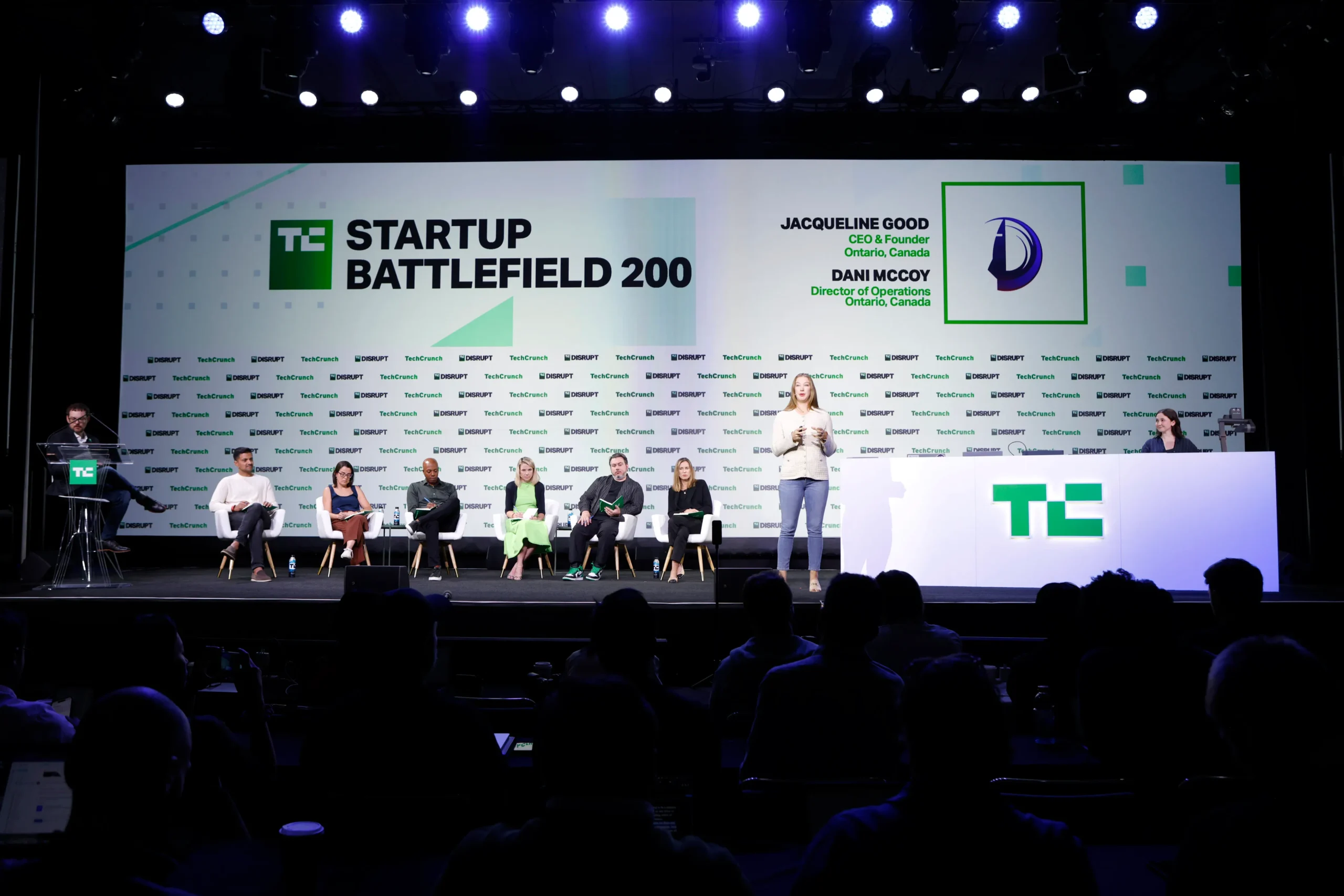
TechCrunch Disrupt has long served as a bellwether for the technology industry. Historically known for its Startup Battlefield competition, which launched companies like Dropbox and Cloudflare, the event has evolved to include specialized stages that address the specific needs of different stakeholders. The Builders Stage was introduced to bridge the gap between the visionary pitches seen on the Disrupt Stage and the technical deep dives of the industry-specific tracks.
In 2026, the context for the Builders Stage is defined by the maturation of generative AI. While previous years focused on the novelty of large language models (LLMs), the current cycle is characterized by the integration of these technologies into core business operations. Investors are no longer satisfied with "AI-first" labels; they are increasingly looking for "AI-integrated" businesses that demonstrate clear unit economics and customer retention. The 2026 agenda reflects this shift, prioritizing sessions that help founders distinguish between temporary momentum and sustainable product-market fit.
Navigating the AI Defensibility Crisis
A central theme of the 2026 Builders Stage is the challenge of building a defensible business in an era where platform giants like OpenAI, Anthropic, and Google can render entire product roadmaps obsolete with a single software update. The session "What Happens When OpenAI Ships Your Roadmap" features industry leaders such as Michel Tricot (CEO of Airbyte) and Linda Tong (CEO of Webflow), who will discuss the concept of "moats" in the age of AI.
Analysis of the current market suggests that many startups are struggling with "feature-creep" from larger players. For founders, the strategic imperative has shifted from building a better interface to owning proprietary data or providing complex workflow integrations that are difficult for general-purpose AI models to replicate. This session is expected to provide a framework for identifying where true defensibility exists and how to pivot when a core product becomes a feature of a larger ecosystem.

Furthermore, the agenda includes a deep dive into "tokenmaxxing," a term used to describe the orchestration of multiple AI models to optimize cost and performance. As Zuzanna Stamirowska (CEO of Pathway) and other experts will argue, the most successful AI companies in 2026 are those that maintain model-agnostic architectures, allowing them to swap underlying technologies as the frontier of AI research advances.
The Financial Baseline: $0 to $10M ARR in 90 Days
The financial requirements for startup success have undergone a significant transformation. In a session titled "The 90-Day GTM: Why $0–$10M ARR Is the New Baseline," investors like Tomasz Tunguz of Theory Ventures will address the compression of go-to-market (GTM) timelines. In 2026, the expectation for "traction" has moved significantly higher. Due to AI-enabled sales tools and automated distribution channels, the speed at which a company is expected to reach $10 million in Annual Recurring Revenue (ARR) has accelerated.
This acceleration has created a "Series A Gap," where companies that would have been considered successful in 2023 are now struggling to meet the heightened metrics of 2026. The Builders Stage will feature a panel on "The Series A in 2027," providing founders with a forward-looking view of the metrics that will be required to unlock institutional capital in the coming year. Partners from Index Ventures and Bessemer Venture Partners are expected to emphasize that while capital is available, it is being concentrated in a smaller number of high-conviction bets.
Human Capital and the Hybrid Workforce
The traditional structure of a startup team is being rewritten by the rise of "AI co-founders" and autonomous agents. The 2026 agenda includes a provocative session on "Hiring When AI Is a Co-Founder," led by Gusto CEO Josh Reeves. The conversation focuses on the "human infrastructure" of a startup—how to decide which roles should be filled by employees and which should be delegated to AI agents.
Data from 2025 indicated that high-growth startups were operating with significantly lower headcounts than their predecessors, often achieving higher revenue-per-employee ratios. However, this shift has introduced new challenges in culture and retention. The Builders Stage will address the psychological toll of this environment in a session titled "Yes, It’s Hard to Be a Founder: An Honest Conversation." Featuring David H. Rosmarin of Harvard Medical School and Nell Daly of Revenge Capital, this segment aims to destigmatize the mental health challenges associated with high-pressure entrepreneurship, focusing on burnout, decision fatigue, and the identity strain of leadership.
M&A as a Proactive Strategy
For many years, Mergers and Acquisitions (M&A) were viewed as an "exit" or a fallback plan. In 2026, the Builders Stage posits that M&A is now a core early-stage strategy. Karl Alomar of M13 and Lindsey Mignano of Mignano Law Group will lead a session on building a company with an acquisition-ready architecture from day one.
As the IPO market remains selective, mid-market acquisitions have become the primary liquidity event for many venture-backed companies. The session will explore how founders can align their product strategy with the needs of potential corporate development teams at larger tech firms. By understanding the "buy versus build" internal logic of companies like Salesforce, Adobe, or Alphabet, founders can position their startups as essential infrastructure, increasing the likelihood of a high-value exit even in a tightening capital market.

Supporting Data and Market Projections
The themes of the Builders Stage are supported by broader economic data within the technology sector. According to industry reports, venture capital investment in San Francisco has seen a 15% year-over-year increase in early 2026, largely driven by the resurgence of the Moscone Center as a hub for global tech events. However, the "failure rate" for seed-stage companies that do not achieve product-market fit within 18 months has also risen, highlighting the importance of the tactical advice offered at Disrupt.
Furthermore, the "AI Disruptors 60" list, which will be revealed at the event by Greenfield Partners, serves as a benchmark for the industry. This list identifies the top 60 companies pushing AI into new territories, such as autonomous web navigation and intelligent physical machines. The inclusion of these companies on the Builders Stage ensures that attendees are learning from those at the actual frontier of the market.
Broader Impact and Implications for the Ecosystem
The TechCrunch Disrupt 2026 Builders Stage agenda suggests a maturation of the startup ecosystem. The focus on "Product-Market Fit Red Flags" and "The Zero-to-1K Playbook" indicates a return to the fundamentals of business building. The overarching implication is that while technology—specifically AI—is a powerful catalyst, it is not a substitute for sound operational strategy, cultural integrity, and financial discipline.
As San Francisco prepares to host this massive influx of technology leaders, the city reinforces its status as the epicenter of the global tech economy. The conversations held at the Builders Stage will likely set the tone for the 2027 funding cycle, influencing how founders pitch, how investors evaluate risk, and how the next generation of "category-defining" companies is built.
For the 10,000 attendees descending on the Moscone Center this October, the Builders Stage offers more than just inspiration; it provides a survival guide for a market that is moving faster and demanding more than ever before. With sessions ranging from "The Real Tokenmaxxing" to "Ask the Investors," TechCrunch Disrupt 2026 remains an essential forum for those serious about scaling the next wave of technological innovation.