Gilang Muhammad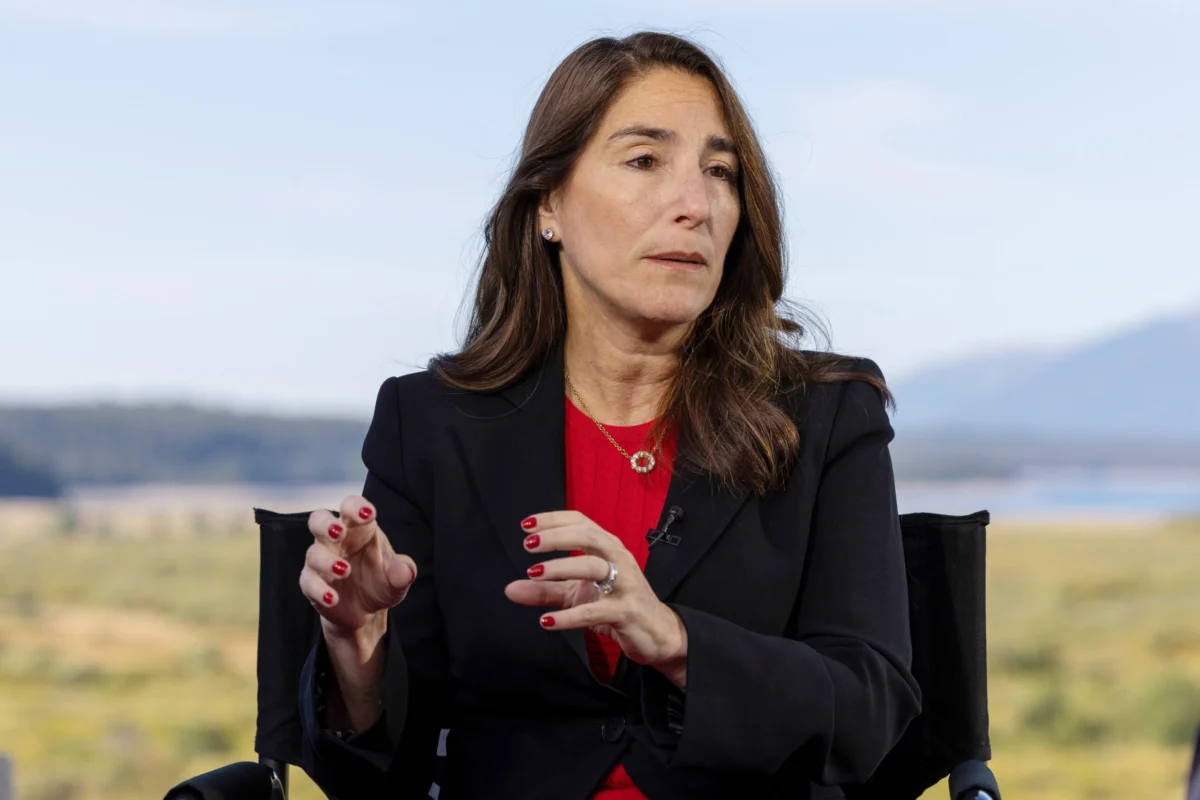
Cleveland Federal Reserve President Beth Hammack delivered a resolute call for immediate action on interest rates during the central bank’s annual symposium in Jackson Hole, Wyoming, asserting that current inflation data underscores the urgent need for tighter monetary policy despite a recent slowdown in monthly price increases. Her remarks on Thursday reiterated a consistent stance that the Federal Reserve remains too distant from its mandated inflation target, challenging prevailing market expectations of a pause in rate hikes.
The Enduring Challenge of Inflation and the Fed’s Mandate
The Federal Reserve operates under a dual mandate from Congress: to achieve maximum employment and maintain price stability. The latter is typically defined by a 2% annual inflation rate, as measured by the Personal Consumption Expenditures (PCE) price index. For over five years, as Hammack highlighted, inflation has consistently run "well above our target," presenting a significant challenge to the central bank’s credibility and the economic well-being of American households. The latest data, which Hammack cited as showing inflation running around 3% on an annualized basis, while a deceleration from peak levels, remains stubbornly above the Fed’s comfort zone.
This prolonged period of elevated inflation has its roots in a complex interplay of factors that emerged following the COVID-19 pandemic. Initial disruptions to global supply chains, coupled with robust consumer demand fueled by substantial fiscal and monetary stimulus, ignited a rapid surge in prices. Geopolitical events, such as the Iran war, have further exacerbated commodity price pressures, while the imposition of tariffs has added to import costs. More recently, the burgeoning demand for resources related to artificial intelligence technologies has introduced another layer of inflationary pressure, particularly in energy and specialized components. While policymakers traditionally tend to "look through" supply shocks, viewing them as temporary, the sustained nature of these disruptions has led some Fed officials, including Hammack, to express concern that these effects could become deeply embedded within the economic fabric.
Hammack’s Consistent Hawkish Stance and the Jackson Hole Platform
Beth Hammack’s recent comments are not an isolated instance but rather a continuation of her firm position on monetary tightening. At the pivotal July meeting of the Federal Open Market Committee (FOMC), where she serves as a voting member this year, Hammack was one of three dissenters who advocated for a quarter-percentage-point hike, preferring it over the committee’s decision to hold the benchmark federal funds rate in its current range of 3.5%-3.75%. Her dissent underscored a belief that the existing policy rate was not sufficiently restrictive to combat entrenched inflation.
Speaking live from Jackson Hole, an annual gathering of central bankers, finance ministers, academics, and financial market participants from around the world, Hammack emphasized the urgency of the situation. "I don’t want to prejudge anything. But I believe now is the time to act," she stated unequivocally. "I believe that we’ve been in an inflationary situation for more than five years. It’s been running well above our target. I don’t see any restriction in policy when I look at financial conditions and when I talk to market participants." This sentiment suggests that despite the significant cumulative tightening already implemented by the Fed, Hammack perceives that financial conditions, such as credit availability and asset valuations, have not yet reached a level that meaningfully restrains economic activity and, by extension, inflation.
The Jackson Hole Economic Policy Symposium, organized by the Federal Reserve Bank of Kansas City, serves as a critical forum for discussing long-term policy issues and economic challenges. Speeches delivered here often signal shifts in central bank thinking or reinforce existing policy directions, making Hammack’s hawkish remarks particularly noteworthy against a backdrop of increasing speculation about the end of the rate-hiking cycle.
The Erosion of Purchasing Power and the Risk of an Inflationary Mindset

Hammack vividly illustrated the real-world consequences of persistent inflation by sharing an anecdote from a recent meeting with workers in Erie, Pennsylvania. These individuals, despite holding "good jobs," expressed a profound "sense of despair," feeling unable to "make ends meet" or afford simple pleasures like an "ice cream cone on the weekend with their kids." This poignant observation underscores the tangible impact of eroded purchasing power on everyday Americans, a sentiment corroborated by various consumer confidence surveys that consistently highlight inflation as a top concern.
The longer inflation deviates from the Fed’s 2% objective, the more difficult and potentially painful it becomes to bring it back down. Hammack warned of the insidious danger of an "inflationary mindset" taking root within the public consciousness. This refers to a scenario where individuals and businesses begin to expect high inflation to persist, leading them to demand higher wages and raise prices preemptively, thereby creating a self-fulfilling prophecy that further embeds inflation into the economy. Such a mindset can be exceedingly challenging to dislodge, often requiring more aggressive and prolonged monetary tightening, which carries its own risks for economic growth and employment. The memory of the high inflation periods of the 1970s and early 1980s, and the severe measures taken by then-Fed Chair Paul Volcker to quell it, serves as a historical precedent for the dangers of an entrenched inflationary psychology.
Divergence from Market Expectations and Broader FOMC Dynamics
Despite Hammack’s urgent call for action, market pricing tells a different story. Futures markets, which reflect investor expectations for the federal funds rate, largely indicate that the Fed will opt to stay on hold at both its upcoming September and October meetings. Current projections suggest that the earliest the market anticipates another quarter-percentage-point hike is December, and even that is far from a certainty, with probabilities fluctuating. This divergence highlights a significant split between some Fed officials, like Hammack, and the broader market’s interpretation of economic data and the likely path of monetary policy.
The market’s more dovish outlook likely stems from several factors:
- Decelerating Headline Inflation: While core inflation remains sticky, headline Consumer Price Index (CPI) and PCE numbers have come down significantly from their peaks, leading some to believe the worst of the inflationary surge is over.
- Signs of Economic Slowdown: While the economy has shown resilience, there are pockets of weakness, and persistent tightening could tip it into a recession.
- Lagged Effects of Policy: Monetary policy operates with a lag, meaning the full impact of previous rate hikes may not yet have been felt. Markets often price in the anticipated effects of these past actions.
- Focus on the "Last Mile": There’s a debate within the FOMC and among economists about how difficult the "last mile" of disinflation will be to achieve the 2% target. Some believe that further hikes risk overtightening, while others, like Hammack, prioritize reaching the target swiftly.
The Federal Open Market Committee is a diverse body, comprising 12 members: the seven members of the Board of Governors, the president of the Federal Reserve Bank of New York, and presidents of four other Federal Reserve Banks on a rotating basis. This diversity often leads to a range of views, from the most hawkish members advocating for continued tightening to more dovish members who might prioritize employment stability or believe that current policy is already sufficiently restrictive. The "dot plot," a quarterly summary of individual FOMC members’ projections for the federal funds rate, typically illustrates this spectrum of opinions, showing that while a consensus often emerges, significant differences can persist.
The Broader Economic Implications of Further Tightening
Should the Federal Reserve heed calls like Hammack’s and proceed with further interest rate hikes, the implications for the broader economy would be significant.
- Borrowing Costs: Higher rates directly translate to increased borrowing costs for consumers and businesses. Mortgage rates, already elevated, would likely climb further, impacting the housing market and affordability. Auto loans, credit card rates, and business loans would also become more expensive, potentially dampening consumer spending and corporate investment.
- Economic Growth: Tighter monetary policy is designed to cool aggregate demand by making borrowing and spending less attractive. While necessary to combat inflation, excessive tightening runs the risk of slowing economic growth too much, potentially leading to a recession and an increase in unemployment.
- Financial Market Volatility: Unexpected rate hikes or a more hawkish stance from the Fed can introduce volatility into financial markets, affecting stock prices, bond yields, and currency valuations.
- Global Impact: As the world’s largest economy, U.S. monetary policy has global ramifications. Higher U.S. rates can strengthen the dollar, making U.S. exports more expensive and increasing the debt burden for countries that borrow in dollars.
The Fed faces a delicate balancing act: fighting inflation without unduly harming the labor market or tipping the economy into a severe downturn. Hammack’s impassioned plea underscores the conviction among some policymakers that the risks of allowing inflation to persist outweigh the risks of further tightening. Her call to action serves as a potent reminder that the battle against inflation is far from over, and difficult decisions may still lie ahead for the Federal Reserve.