Gilang Muhammad
A pivotal inflation report, set for release on Wednesday, August 13, 2026, by the Bureau of Labor Statistics, is anticipated to reveal a modest deceleration in price increases for July, potentially providing the Federal Reserve with a much-needed pause in its aggressive campaign to tame inflation. Economists are keenly awaiting the Consumer Price Index (CPI) data, which is expected to show a headline monthly increase of just 0.1% across all items, with the more closely watched core reading, which strips out volatile food and energy components, projected to rise by 0.2%, according to the Dow Jones consensus. On an annual basis, these figures would translate to 3.4% for the headline CPI and 2.5% for core CPI, both representing a 0.1 percentage point dip from June’s readings. While these annual rates remain stubbornly above the Fed’s long-term 2% target, two consecutive months of muted price gains could offer policymakers on the Federal Open Market Committee (FOMC) valuable time to assess the economic landscape before committing to further interest rate adjustments.
The significance of this report cannot be overstated, as the global economy grapples with the lingering effects of supply chain disruptions, geopolitical tensions, and shifting consumer demand patterns. The Federal Reserve, under the leadership of Chairman Kevin Warsh, has been navigating a complex and often contradictory set of economic signals since he assumed his post in May. The central bank’s dual mandate of achieving maximum employment and price stability has been severely tested, with inflation persistently elevated while signs of a softening labor market begin to emerge.
The Fed’s Balancing Act: Inflation vs. Economic Growth
For months, the Federal Reserve has been locked in a determined battle against inflation, implementing a series of interest rate hikes designed to cool an overheating economy. The current target range for the federal funds rate stands at 3.5%-3.75%, a level reached after multiple aggressive increases throughout 2025 and early 2026. This hawkish stance has been driven by the conviction that sustained high inflation poses a significant threat to long-term economic stability and erodes purchasing power for American households. However, the aggressive tightening has also raised concerns about the risk of tipping the economy into recession, making each subsequent policy decision increasingly fraught with difficult trade-offs.
Joe Brusuelas, chief economist at RSM, articulated the immediate implications of the upcoming data, stating, "If we get a July CPI report anywhere near my forecast, the balance of the committee is going to look right through the supply shock, and the FOMC will remain on hold for the remainder of the year." He added that such data would provide "something of an assist" for Chairman Warsh, who has faced considerable policy challenges. The remark underscores the internal debates within the FOMC, where some members prioritize bringing inflation down rapidly, even at the risk of slower growth, while others advocate for a more cautious approach to avoid undue economic contraction.
Recent FOMC Deliberations and Dissenting Voices
The July FOMC meeting, held just weeks prior to this report, highlighted the growing divergence of opinions within the committee. The decision to hold the key borrowing rate unchanged at 3.5%-3.75% was not unanimous, passing with a 9-3 vote. The three dissenting voters unequivocally favored a quarter-percentage-point increase, signaling their belief that inflation pressures remained too strong to warrant a pause. Among the more vocal proponents for continued tightening has been Governor Lisa Cook, who recently indicated her preparedness to advocate for further rate hikes if the incoming inflation data does not show sufficient cooperation. Her stance reflects a segment of the committee deeply concerned about the stickiness of inflation and the potential for it to become entrenched if not decisively addressed.
Conversely, the market’s perception of the Fed’s trajectory has undergone a significant repricing in recent weeks. A confluence of factors, including a spate of less threatening economic indicators and tentative signs of easing geopolitical tensions in the Middle East, has led traders to scale back their expectations for immediate rate hikes. According to CME’s FedWatch gauge, the probability of a rate hike at the upcoming September meeting has fallen to approximately 50-50, with a greater likelihood now assigned to potential increases in October or December. This shift suggests that investors are increasingly betting on the Fed adopting a more data-dependent and patient approach, especially if the July CPI report confirms a cooling trend.
A Broader Look at the Economic Landscape
The backdrop to Wednesday’s CPI release is a mosaic of mixed economic signals. June provided a welcome reprieve on the inflation front, with the headline CPI rate declining by 0.4% on a monthly basis and the core reading remaining flat. This moderation was largely attributed to receding energy prices, which had surged in earlier months due to global supply disruptions and geopolitical events, as well as a noticeable moderation in shelter costs. However, the broader economic picture presented by the labor market has been less straightforward.
A jobs report released the Friday before the CPI announcement showed that nonfarm payrolls unexpectedly fell by 23,000 in July. This marked the first decline in job additions in several months, potentially signaling a deceleration in the robust labor market that has characterized much of the post-pandemic recovery. Paradoxically, the unemployment rate simultaneously dropped to 4.1%, complicating the interpretation of labor market health. This divergence suggests that while job creation might be slowing, the overall tightness of the labor market, reflected in the low unemployment rate and persistent wage growth, could still exert upward pressure on prices. The Fed typically views a strong labor market as a precondition for inflation, and any significant loosening could influence its policy stance.
The Road Ahead: Jackson Hole and Critical Decisions
The Federal Reserve’s calendar offers policymakers the distinct advantage of absorbing both the July and August inflation readings before their next formal meeting. The central bank traditionally skips an August FOMC meeting, instead converging for its annual economic symposium hosted by the Kansas City Fed in Jackson Hole, Wyoming. This gathering, typically held in late August, serves as a crucial forum for central bankers, economists, and financial market participants to discuss key policy challenges and research. It often provides a platform for Fed officials to signal future policy directions, making Chairman Warsh’s remarks, if any, particularly scrutinized this year.
"If you’re not confused, you’re not paying attention," Brusuelas quipped, encapsulating the prevailing uncertainty in mid-August. This sentiment highlights the complex environment the Fed navigates, where economic data points often contradict, and global events introduce new variables with little warning. The Jackson Hole symposium, therefore, presents an opportune moment for the Fed to clarify its forward guidance and address the market’s evolving expectations, especially concerning the future path of interest rates.
Divergent Analyst Outlooks and Potential Scenarios
Despite the recent signs of cooling inflation and a softening labor market, not all economists are convinced that the Fed is out of the woods. Some analysts are bracing for a potential upside surprise in the July CPI data or, at the very least, indications that underlying inflation remains too stubborn for the Fed to ignore. Bank of America, for instance, maintains a more hawkish outlook, continuing to call for three additional rate increases in the coming months.
In a recent client note, BofA economists argued that the July jobs report, despite the dip in payrolls, "didn’t change the overall picture on the labor market – it’s stable. And more importantly, the Fed’s reaction function is heavily skewed towards the inflation data as noted by recent Fed speak." This perspective underscores the view that the Fed’s primary focus remains on price stability, and even minor signs of labor market weakening might not deter it from further tightening if inflation persists.
BofA’s analysis delves into specific triggers for future hikes: "Should the Fed’s primary inflation gauge average 0.25% increases over the next two months, it is all but guaranteed that the Fed will begin hiking rates in September." Conversely, an average increase below 0.2% would likely delay any further rate hikes. Anything in between, according to BofA, would render September’s decision "a coin flip," with the ultimate outcome hinging on Chairman Warsh’s stance and whether recent reports suggesting his openness to hikes, if needed, truly reflect his reaction function, or if the more dovish commentary from the July press conference is a better indicator. This highlights the critical role of the Fed Chair in shaping policy, particularly when the committee itself is divided.
Furthermore, if the inflation numbers were to come in unexpectedly "hot," Warsh could find himself facing a committee not merely contemplating a single hike but potentially advocating for multiple, successive moves. Historically, the central bank rarely acts just once when adjusting monetary policy; rather, it tends to implement a series of changes to achieve its desired effect. This suggests that a single rate hike might be perceived as insufficient to address entrenched inflation, prompting calls for a more prolonged tightening cycle.
Cleveland Fed President Beth Hammack, one of the three dissenters at the June meeting who favored an immediate rate increase, reiterated this sentiment recently. In a Yahoo Finance interview on Monday, she expressed her expectation that multiple increases would likely be necessary. "I don’t know exactly where we’ll end. I would say in general, one 25-basis-point move probably doesn’t do a whole lot for the economy. So, it’s probably, you know, some number of movements, but I don’t want to prejudge what that number is going to be," Hammack stated. Her remarks underscore the view held by some hawkish members that the current level of interest rates may still be insufficient to bring inflation back to target, especially given the perceived stability of the labor market. "I’m squarely focused, because we have this stability in the labor market, that we can bring inflation back down to target," she added, emphasizing the trade-off between employment and price stability that is central to the Fed’s mandate.
Broader Implications for Consumers, Businesses, and Global Markets
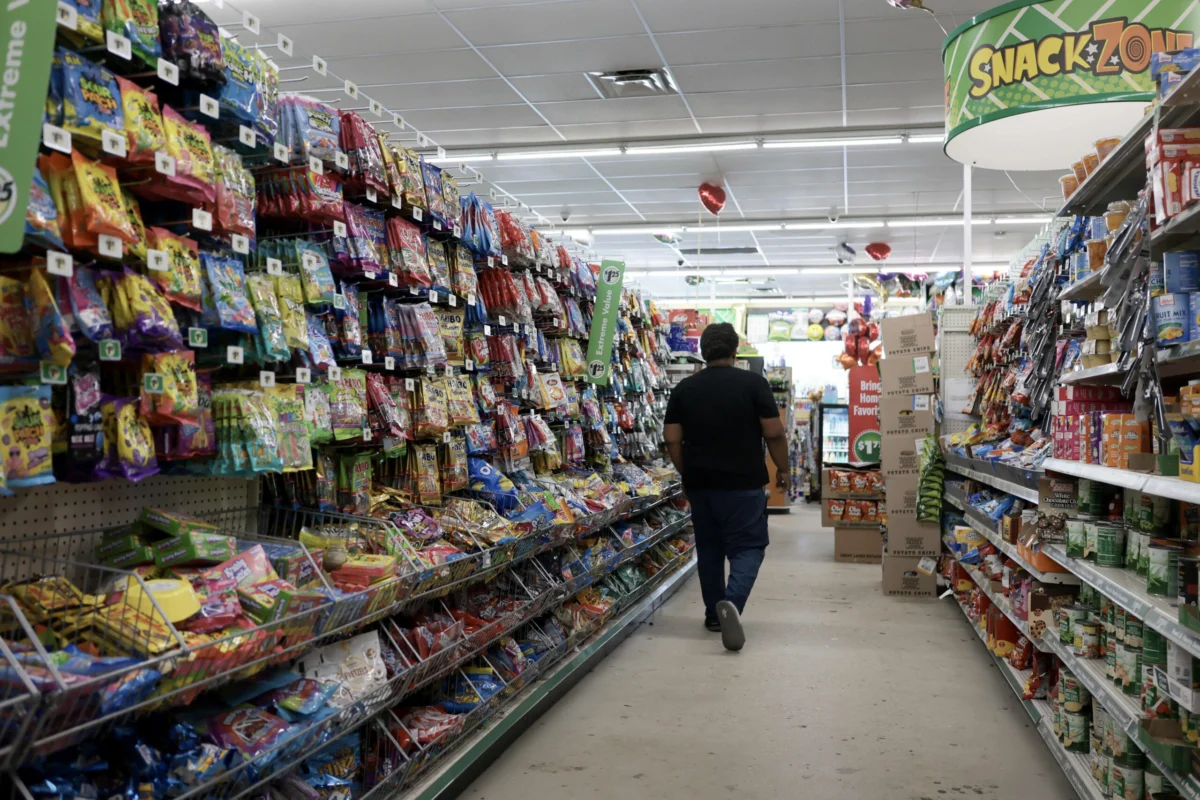
The trajectory of inflation and the Fed’s response have profound implications beyond the trading floors and central bank boardrooms. For American consumers, persistent high inflation erodes purchasing power, making everyday goods and services more expensive. A sustained period of inflation can force households to draw down savings, increase debt, and make difficult choices about their spending, impacting overall consumer confidence and economic growth. If the CPI report indeed shows a significant slowdown, it could offer a glimmer of hope for households that the worst of the price shocks may be behind them.
Businesses, particularly small and medium-sized enterprises, are also heavily affected by inflation. Rising input costs, from raw materials to labor, can squeeze profit margins and force companies to either absorb higher costs or pass them on to consumers, further fueling the inflationary cycle. Higher interest rates, a direct consequence of the Fed’s anti-inflationary measures, also increase borrowing costs for businesses looking to invest, expand, or manage their operations, potentially stifling economic dynamism and job creation.
Globally, the Federal Reserve’s actions ripple through international markets. As the world’s largest economy, changes in U.S. monetary policy can influence exchange rates, capital flows, and borrowing costs for other nations, especially those with dollar-denominated debt. A pause in Fed hikes could alleviate some pressure on emerging markets, while continued tightening might exacerbate global financial vulnerabilities.
In essence, Wednesday’s CPI report is not just a data point; it is a critical barometer for the health of the U.S. economy and a pivotal determinant for the Federal Reserve’s immediate policy direction. Its outcome will either reinforce the narrative of a gradually cooling economy, buying the Fed more time, or signal persistent inflationary pressures, compelling policymakers to maintain their hawkish stance, with significant consequences for all stakeholders. The coming days will reveal whether the much-anticipated breathing room for the Federal Reserve will materialize, or if the battle against inflation will require further, more aggressive measures.