Gilang Muhammad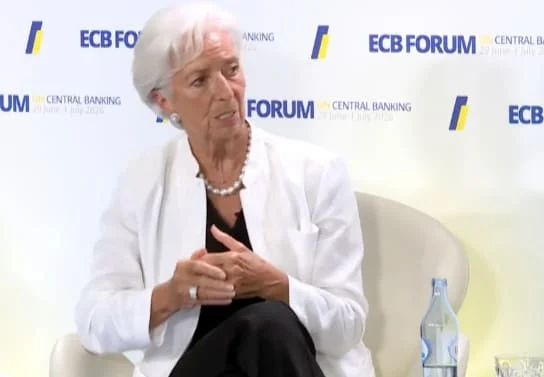
The European Central Bank (ECB) finds itself at a critical juncture, facing intensified pressure on its upcoming interest rate decision next week, as a renewed and escalating military conflict between the United States and Iran has sent global oil prices spiraling upwards. Investors on Wednesday were furiously repricing their expectations for the ECB’s pivotal July 22 monetary policy meeting, with the sudden surge in crude costs casting significant doubt on previous assumptions of an interest rate hold. The confluence of geopolitical instability, inflationary pressures, and a fragile economic outlook presents a formidable challenge to policymakers already grappling with a volatile economic landscape.
Geopolitical Tensions Reignite Oil Market Fears
The recent flare-up in the Middle East, characterized by several consecutive days of strikes exchanged between U.S. and Iranian forces, has once again thrust the region’s inherent volatility into the global economic spotlight. The latest hostilities, which escalated sharply in late June following a maritime incident in the Gulf of Oman and subsequent retaliatory actions targeting critical oil infrastructure, have revived acute fears over the security of oil supply, particularly through the strategically vital Strait of Hormuz. This narrow waterway, bordered by Iran and Oman, is a chokepoint through which approximately 20% of the world’s total petroleum liquids and a significant portion of global liquefied natural gas (LNG) transit daily. Any disruption or perceived threat to shipping in this strait immediately triggers a seismic reaction in international energy markets.
September Futures for international benchmark Brent crude traded higher again early on Wednesday, breaching the $85 per barrel mark. This represents a dramatic increase from just last week, when prices had settled closer to pre-war levels around $70 per barrel, reflecting a period of relative calm following initial concerns earlier in the year. The rapid ascent underscores the market’s extreme sensitivity to geopolitical risk, particularly when it threatens the arteries of global energy supply. "The renewed outbreak of military conflict in the Middle East and the fresh rise in oil prices underscore that the situation remains extremely volatile and the uncertainty is similarly high," Bundesbank President and ECB rate setter Joachim Nagel told Reuters on Wednesday, encapsulating the pervasive anxiety within central banking circles.
ECB’s Shifting Monetary Stance: A Tumultuous Path
The current predicament for the ECB is particularly acute given its recent and somewhat tumultuous monetary policy trajectory. The central bank had embarked on an aggressive easing cycle in the first half of 2025, slashing interest rates four times in rapid succession. This period saw its key deposit rate fall from 3% at the start of 2025 to a low of 2% by mid-June of that year. These cuts were largely a response to persistent below-target inflation, subdued economic growth across the eurozone, and a desire to stimulate investment and consumption in the wake of lingering post-pandemic recovery challenges.
However, this dovish stance was abruptly reversed last month. Faced with a resurgence of inflationary pressures, the ECB was compelled to change course, implementing a 25 basis point hike in June 2026, bringing the key deposit rate to its current level of 2.25%. This unexpected tightening marked a significant pivot, signaling the ECB’s commitment to its primary mandate of price stability, even at the risk of potentially dampening economic activity. The decision was made amidst initial concerns over energy costs and supply chain disruptions, which had begun to feed into broader price increases. The latest geopolitical shock now threatens to derail this carefully calibrated strategy, forcing the ECB to re-evaluate its options under even more challenging circumstances.
The Inflationary Conundrum: Headline vs. Core
Before the renewed escalation of the Iran conflict, eurozone headline inflation had been hovering tantalizingly close to the ECB’s 2% target. However, the initial outbreak of tensions and subsequent energy price volatility saw inflation accelerate sharply, peaking at 3.2% in May 2026. This surge was predominantly driven by soaring energy costs, which reverberated through the economy.
Encouragingly, initial estimates indicated that eurozone headline inflation had eased slightly to 2.8% in June, despite a substantial 8.7% year-on-year increase in energy costs for the month. A key factor in this moderation was the containment of core inflation, which excludes volatile energy and food prices, to a more manageable 2.4%. This suggested limited "second-round" inflation effects – where initial price shocks in one sector, like energy, spread to other parts of the economy through wage demands or broader price adjustments. Policymakers, including Austrian central bank chief Martin Kocher, had expressed cautious optimism regarding this trend. "We currently see no second-round effects, but must also align our monetary policy with inflation expectations," Kocher told German newspaper Börsen-Zeitung on Wednesday, highlighting the dual focus on current data and future expectations.
However, the recent dramatic rise in oil prices threatens to reignite these second-round concerns. The eurozone economy is particularly vulnerable to energy price shocks, having imported a significant 57% of its energy needs in 2024, according to the most recent available data from Eurostat. A sustained period of high crude prices will inevitably feed into higher production costs for businesses, increased transportation expenses, and ultimately, higher consumer prices across a wide range of goods and services, potentially undermining the recent progress in containing core inflation.
Eurozone Economy Navigates Precarious Waters
Compounding the ECB’s challenge is the precarious state of the eurozone economy. The bloc contracted by 0.2% year-on-year in the first quarter of 2026, signaling a delicate economic environment susceptible to external shocks. This contraction, though modest, raised concerns about a potential technical recession if economic activity were to decline further in the second quarter. Indicators such as manufacturing Purchasing Managers’ Indices (PMIs) have shown signs of stagnation, while consumer confidence remains subdued amidst persistent inflation and geopolitical uncertainties.
Policymakers are acutely aware that an overly restrictive monetary policy stance, particularly one implemented in response to supply-side shocks like surging oil prices, could inadvertently tip the eurozone economy into a deeper recession. The fine balance between taming inflation and supporting growth has never been more challenging. Raising interest rates to combat inflation driven by external factors might not address the root cause of the price increases, but could instead stifle domestic demand and investment, leading to a more severe economic downturn. The risk of "stagflation" – a period of high inflation combined with stagnant economic growth – looms large, echoing difficult periods in economic history.
Voices from the Governing Council
The debate within the ECB’s Governing Council is expected to be intense. While Bundesbank President Joachim Nagel has emphasized the need for caution, he also underscored the imperative to "act decisively if necessary" and for monetary policy to "maintain its vigilant stance." This suggests a leaning towards proactive measures if inflationary pressures become entrenched. Other members, however, may advocate for a more patient approach, arguing that the current oil price surge is a temporary, externally driven shock that may subside, and that the economy cannot withstand further tightening.
Sources close to the ECB suggest a divergence of views, with some "hawks" pushing for a pre-emptive hike to anchor inflation expectations, while "doves" might argue for waiting until the full economic impact of the conflict and the subsequent Q2 GDP and July inflation data are available. Christine Lagarde, speaking at the ECB Forum in Sintra, Portugal on July 1st, 2026, reiterated the ECB’s unwavering commitment to its 2% inflation target, emphasizing data dependency. However, the rapidly evolving geopolitical situation means that the "data" itself is highly dynamic and subject to immediate shifts. The challenge for President Lagarde will be to forge a consensus among a diverse council facing unprecedented uncertainty.
Market Repricing and Investor Uncertainty
The market’s reaction to the renewed Middle East crisis has been swift and telling. Just last month, the fall in oil prices had led investors to effectively rule out an ECB rate hike next week, with many anticipating a period of stability following the June adjustment. However, the landscape has dramatically shifted. While current market pricing still points to a roughly 20% chance of a hike at the July 22 meeting – a significant increase from near-zero odds just days ago – investors are increasingly factoring in future tightening. The consensus now leans towards expectations of two more 25 basis point rate hikes by next spring, which would take the ECB’s key deposit rate to 2.75%.
Eurozone bond yields have already risen sharply over the last year, reflecting heightened inflation expectations and the anticipation of tighter monetary policy. The latest geopolitical events have exacerbated this trend, with investors demanding higher yields to compensate for increased risk and the erosion of purchasing power. The euro currency has also experienced volatility, initially weakening against the U.S. dollar due to overall risk aversion and economic uncertainty, though a perceived hawkish stance by the ECB could offer some support. Equity markets, particularly those sensitive to energy prices and consumer spending, are bracing for potential headwinds.
The Road Ahead: Data Dependency Amidst Volatility
A significant challenge for the ECB policymakers is the timing of crucial economic data. Initial estimates for second-quarter GDP growth and July inflation will not be available until July 30 and July 31, respectively. This means that next week’s rates decision on July 22 will be made without access to the most recent, comprehensive economic picture. This data lag forces the ECB to make critical decisions based on incomplete information, relying heavily on forecasts and real-time market indicators.
ING rates strategists Michiel Tukker and Benjamin Schroeder highlighted this dilemma in a Wednesday note, stating that while eurozone inflation data "will be pivotal in challenging the hawkish market positioning," "even then, those numbers will not be enough to comfort markets about second-round risks." They further elaborated on the divergence between the eurozone and U.S. inflationary trajectories, noting that "the momentum in US inflation should be downwards, whereas for Europe the peak might not be in sight yet, especially if energy prices continue to drift higher again." This suggests that the ECB may find itself in a more protracted fight against inflation compared to its U.S. counterpart, the Federal Reserve.
The European Central Bank faces an unenviable task. It must navigate a treacherous path between containing inflation, which is now heavily influenced by external geopolitical forces, and preventing a deeper economic downturn in an already fragile eurozone. The decision on July 22 will not only set the immediate course for monetary policy but will also be a critical test of the ECB’s resolve and credibility in the face of escalating global instability. The world watches intently as the central bank prepares to make its move.