Gilang Muhammad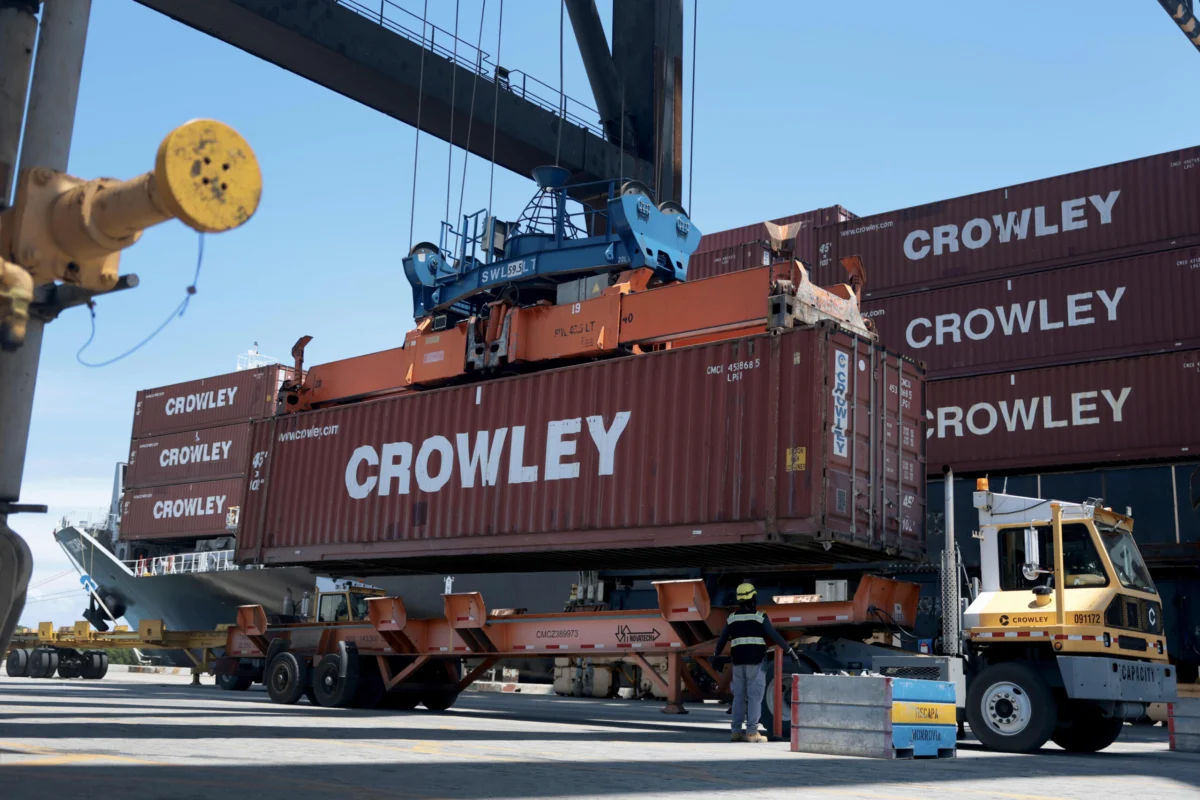
The cost of goods brought into the U.S. posted an unexpected increase in June, with import prices climbing 0.3% for the month, a stark contrast to economists’ expectations of a 0.8% decline. This unforeseen rise, reported Friday by the Bureau of Labor Statistics (BLS), was significantly propelled by the largest monthly surge in prices for goods from China in over 18 years, alongside escalating costs for key components fueling the artificial intelligence (AI) build-out. On an annual basis, import prices jumped a substantial 7.1%, marking the biggest year-over-year move higher since August 2022, signaling persistent inflationary pressures that extend beyond the volatile energy sector.
Unpacking the June Import Price Report
The 0.3% monthly increase in the U.S. Import Price Index in June defied widespread predictions, primarily driven by a robust rise in non-energy import costs that more than offset a 0.4% decrease in fuels and lubricants. This indicates a broadening of inflationary forces, challenging the narrative that a recent softening in energy prices would swiftly bring down overall inflation. The annual 7.1% increase underscores a sustained upward trend in the cost of foreign goods entering the U.S. economy, posing significant implications for consumer prices, corporate profitability, and the Federal Reserve’s monetary policy trajectory.
Economists surveyed by Dow Jones had largely anticipated a decrease, with some models forecasting a decline of up to 0.8% for June, largely on the back of recent drops in global crude oil prices. The actual outcome suggests a more complex inflationary landscape, where supply chain rigidities, geopolitical tensions, and robust demand in specific sectors are exerting upward pressure on prices. This unexpected resilience in import costs complicates the Federal Reserve’s efforts to steer inflation back to its 2% target.
The China Factor: A Significant Contributor
A particularly noteworthy element of the June report was the substantial increase in import prices from China, which rose by 0.9%. This represents the biggest monthly move since January 2008, a period characterized by commodity price spikes preceding the global financial crisis. The abruptness and magnitude of this increase have prompted analysts to consider multiple contributing factors, including the potential lingering impacts of existing U.S. tariffs on Chinese goods, which directly add to the cost of imports.
The U.S. currently imposes tariffs on hundreds of billions of dollars worth of Chinese products, initially implemented during trade disputes of the late 2010s. While some economists had hoped these costs might have been absorbed over time, the June data suggests that these tariff-related expenses are either being passed through more directly or are being exacerbated by other market dynamics. The 12-month increase in import prices from China reached 1.3%, marking the largest yearly gain since the period from November 2021 to November 2022, further illustrating a sustained upward trend.
Interestingly, export prices to China actually fell by 0.2% in June. However, on an annual basis, these export prices were up 7.4%, the biggest monthly increase dating back to August 2022. This divergence could indicate shifts in demand, supply chain optimizations by Chinese importers, or specific product categories where U.S. exporters hold pricing power. The overall picture points to an evolving and potentially imbalanced trade relationship where the cost of goods flowing into the U.S. from China is increasing at a faster pace than the cost of goods flowing out.
The AI Build-Out: A New Inflationary Driver
The BLS report indicated that the burgeoning artificial intelligence (AI) build-out is beginning to exert a discernible impact on prices. Costs rose significantly for computers, peripherals, and semiconductors – the foundational components of advanced AI systems and data centers. While specific percentage increases for these categories were not detailed in the summary, the explicit mention by the BLS highlights a growing demand-side pressure. The global race to develop and deploy AI technologies has led to unprecedented investment in high-performance computing infrastructure, driving up the cost of specialized processors, memory modules, and associated hardware.
Beyond these core AI components, the report also highlighted that industrial and service machinery costs drove overall import prices higher. This category, which posted a substantial 12.6% jump in May, continues to reflect robust global demand for capital goods, potentially linked to automation, digitalization, and the broader industrial expansion spurred by technological advancements. The interplay between the AI boom and increased machinery costs suggests that businesses are investing heavily in upgrading their operational capabilities, a trend that translates into higher input costs across various sectors.
Broader Inflationary Landscape and Energy Dynamics
While the headline import price increase was significant, it’s crucial to contextualize it within the broader inflationary environment. The BLS noted that a 0.4% decrease in fuels and lubricants provided a partial offset to rising costs elsewhere. This decline in energy prices aligns with other recent economic indicators and was largely attributed to a brief softening of geopolitical tensions between the U.S. and Iran earlier in the week, which temporarily eased concerns about global oil supply disruptions.
Despite this dip in energy costs, the report broadly showed that inflation is demonstrating signs of broadening beyond the energy sector. This implies that even if crude oil prices stabilize or decline further, other fundamental cost drivers – such as labor, raw materials, and the aforementioned specialized components – continue to push prices higher. Export prices broadly decreased by 0.6% in June, marking the first monthly drop since May 2025. However, similar to import prices, export prices rose a considerable 10.2% annually, suggesting that U.S. producers are also facing higher input costs and are passing some of those onto international buyers over the long term.
The Federal Reserve’s Unfinished Work
The June import price data arrives at a critical juncture for the Federal Reserve, which has been grappling with the persistent inflation question since prices spiked following the U.S. and Israel attacks on Iran that began in late February. These geopolitical events triggered widespread concerns about energy supply and broad market instability, contributing to a period of heightened inflation.
Earlier this week, the BLS had reported some seemingly positive news, indicating that both consumer and wholesale prices declined in June, largely on the back of sliding energy costs. The Consumer Price Index (CPI) and Producer Price Index (PPI) had shown month-over-month decreases, offering a glimmer of hope that inflation might be cooling. However, Fed Chairman Kevin Warsh, in congressional hearings earlier this week, cautioned against premature celebrations. He explicitly stated that he did not view the softer June inflation reports as an indication that the central bank’s work was finished in returning inflation back to its 2% goal.
Warsh’s cautious stance is well-founded when considering the year-over-year figures. Despite the monthly declines, the reports still showed consumer prices up 3.5% from a year ago and wholesale costs rising 5.5% annually. These figures remain significantly above the Fed’s target, highlighting the underlying stickiness of inflation. The unexpected surge in import prices in June further validates Warsh’s concerns, indicating that external cost pressures are still very much in play.
Adding to the chorus of hawkish sentiment, Federal Reserve officials have continued to advocate for a tighter monetary policy. On Thursday, Dallas Fed President Lorie Logan publicly stated her belief that benchmark interest rates should be "modestly higher" to adequately address the inflation problem. Her remarks emphasized the need for continued vigilance and a willingness to act decisively to curb price pressures.
Cleveland Fed President Beth Hammack echoed this sentiment on Friday, suggesting that policy needs to be tighter. In a LinkedIn post that quickly garnered attention, Hammack provided a stark illustration of the economic reality facing many Americans and businesses. "For the first time in my tenure, I’m hearing from businesses who say they think we need to take action to curb inflation, and from consumers who can’t make ends meet about a growing sense of despair," Hammack wrote. Her statement highlights the real-world impact of persistent inflation, affecting both the bottom lines of companies struggling with rising input costs and the household budgets of consumers facing diminishing purchasing power. Such direct feedback from constituents often plays a crucial role in shaping policymakers’ perspectives and decisions.
Chronology of Key Economic and Geopolitical Events
- Late February 2026: U.S. and Israel launch attacks on Iran, escalating geopolitical tensions and triggering concerns about global energy supply and market stability. This period marks the beginning of renewed inflationary pressures.
- May 2026: Industrial and service machinery import costs post a significant 12.6% jump, signaling robust demand for capital goods and contributing to rising input prices. Export prices broadly increased for the month.
- Early July 2026 (Pre-June Report): Tensions between the U.S. and Iran briefly soften, leading to a temporary easing of global energy prices.
- Mid-July 2026 (Early in the week): Bureau of Labor Statistics reports that both consumer (CPI) and wholesale (PPI) prices declined month-over-month for June, largely due to sliding energy costs. However, year-over-year figures remain elevated (CPI +3.5%, PPI +5.5%).
- Mid-July 2026 (Earlier this week): Fed Chairman Kevin Warsh testifies before Congress, stating that softer June inflation reports do not mean the Fed’s work is done in returning inflation to 2%.
- Mid-July 2026 (Thursday): Dallas Fed President Lorie Logan calls for "modestly higher" interest rates to address inflation.
- Mid-July 2026 (Friday): Bureau of Labor Statistics releases the June Import and Export Price Indexes. Import prices unexpectedly rise by 0.3% (7.1% annually), with a 0.9% surge from China. Cleveland Fed President Beth Hammack suggests tighter policy, citing business and consumer despair.
Implications for Consumers and Businesses
The unexpected rise in import prices carries significant implications for both consumers and businesses across the U.S. For consumers, higher import costs ultimately translate into more expensive goods on store shelves, from electronics and apparel to automobiles and household appliances. This erosion of purchasing power exacerbates the challenges highlighted by President Hammack, making it harder for households to "make ends meet" and contributing to a growing sense of economic unease. The persistent annual inflation rates, even with monthly dips, mean that the overall cost of living continues its upward trajectory.
Businesses, particularly those heavily reliant on imported raw materials, components, or finished goods, face a direct hit to their input costs. Manufacturers using imported semiconductors for their products, retailers sourcing goods from China, and tech companies building data centers with foreign-made machinery will all experience higher expenses. This pressure on profit margins can lead to several outcomes:
- Price Increases: Companies may pass these increased costs onto consumers, further fueling domestic inflation.
- Reduced Profitability: If businesses cannot fully pass on costs, their profit margins will shrink, potentially impacting investment, expansion plans, and even employment.
- Supply Chain Diversification: Some businesses may accelerate efforts to diversify their supply chains away from high-cost regions or countries like China, though this often involves significant upfront investment and can take years to implement.
- Innovation and Efficiency: Companies might be compelled to innovate more rapidly or seek greater operational efficiencies to offset rising import costs.
Outlook and Expert Perspectives
The June import price report serves as a stark reminder that the fight against inflation is far from over. While energy price fluctuations can create short-term volatility in headline inflation figures, the underlying structural pressures – including robust demand for AI infrastructure, persistent geopolitical risks, and the enduring impact of trade policies – continue to push prices higher.
Economists are now closely watching how the Federal Reserve will interpret this data. The unexpected import price surge, coupled with the hawkish remarks from Warsh, Logan, and Hammack, suggests that the central bank is unlikely to pivot towards interest rate cuts anytime soon. Instead, the possibility of further rate hikes, even "modest" ones, appears to be gaining traction as policymakers prioritize bringing inflation firmly back to target. The challenge for the Fed lies in navigating these complex crosscurrents – balancing the need to curb inflation without stifling economic growth, especially as consumer sentiment shows signs of strain.
Looking ahead, the trajectory of U.S. import prices will depend on a confluence of global factors: the stability of energy markets, the evolution of U.S.-China trade relations, the pace of global economic growth, and the intensity of demand for cutting-edge technologies like AI. For now, the latest data confirms that the path to price stability remains fraught with challenges, requiring vigilance from policymakers and resilience from consumers and businesses alike.