Gilang Muhammad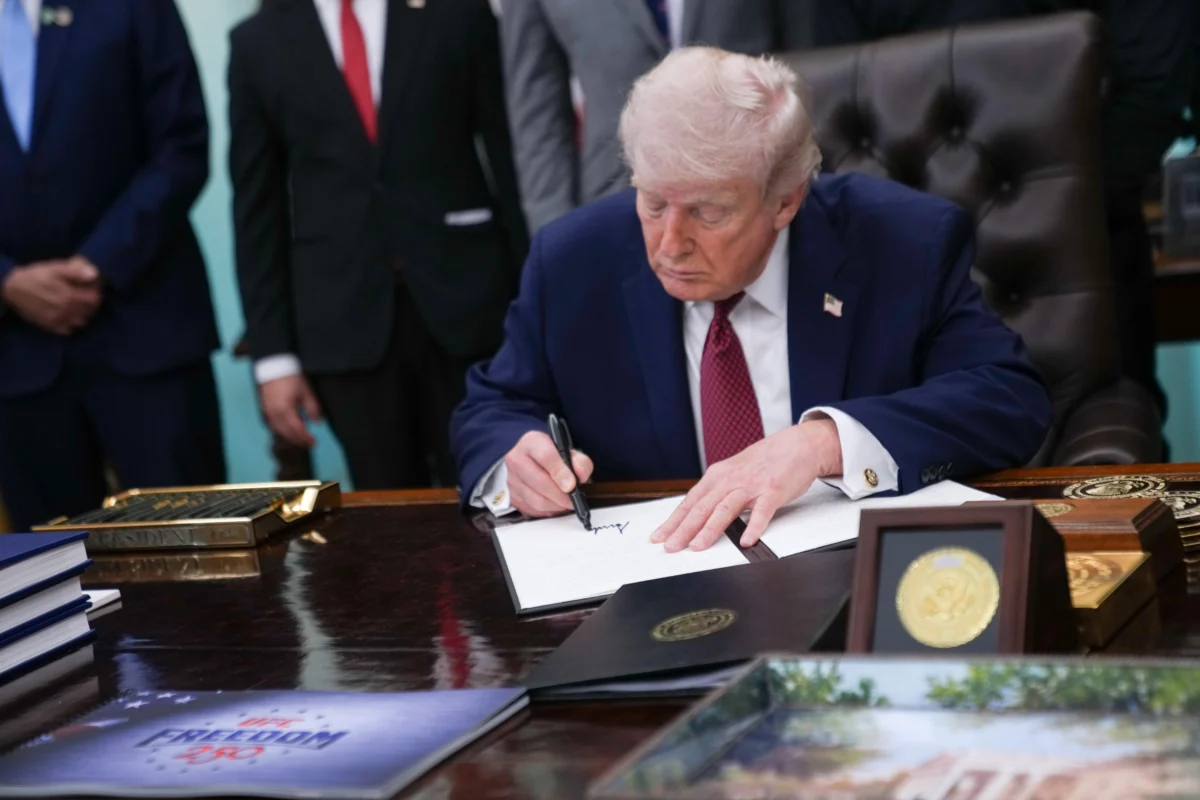
President Donald Trump announced a new, aggressive tariff schedule targeting imported generic drugs, commencing with a two-year period of zero tariffs before escalating to a 100% levy in August 2028 and a staggering 200% a year later. This phased approach, unveiled in a social media post on Tuesday, is explicitly designed to compel generic drug manufacturers to relocate their production facilities to the United States, with Trump describing the increasing tariffs as "a penalty" for companies that fail to establish plants and operations within U.S. borders during the grace period.
The move marks a significant escalation in the administration’s "America First" economic agenda, extending its protectionist measures to a critical sector of the healthcare industry. The White House’s rationale centers on bolstering national security, enhancing supply chain resilience, and fostering domestic job creation, particularly in the wake of lessons learned from global supply chain disruptions during recent public health crises.
A Deep Dive into the Tariff Structure and Strategic Intent
Starting August 1, 2026, generic drugs imported into the U.S. will enjoy a temporary reprieve with zero tariffs. This initial two-year window is intended to provide foreign generic drugmakers, and potentially domestic companies reliant on overseas components, sufficient time to plan and execute the transition of their manufacturing operations to the United States. However, this grace period is finite. On August 1, 2028, the tariff rate will jump to 100%, effectively doubling the cost of imported generic drugs for companies that have not complied with the administration’s reshoring directive. A year later, on August 1, 2029, the levy will double again to 200%, creating an almost insurmountable cost barrier for foreign-produced generics.
President Trump’s stated objective is unequivocal: to push generic drugmakers to move production onshore. This policy is rooted in the broader ambition to reduce America’s reliance on foreign supply chains for essential medicines. According to Legis1, a congressional intelligence platform, nearly all prescriptions in the U.S. are filled with generic drugs, a substantial portion of which originates from overseas manufacturing facilities, often involving intricate and opaque ownership structures. This reliance has long been a point of concern for policymakers and national security experts, who argue that it poses risks during geopolitical tensions or public health emergencies.
Broader Context: Trump’s Pharmaceutical Policy Landscape
This latest tariff salvo is not an isolated incident but rather a continuation of President Trump’s overarching strategy to reform the U.S. pharmaceutical market. His administration has consistently championed policies aimed at lowering drug prices for American consumers and incentivizing domestic production.
Earlier this year, on April 2, the President imposed a 100% levy on patented pharmaceutical products and ingredients under Section 232 of the Trade Expansion Act of 1962, citing national security concerns. This initial round of tariffs specifically exempted generic drugs, biosimilars, and related ingredients, a distinction that has now been removed with the new announcement. Larger drugmakers were granted 120 days before the 100% tariff rate for patented products took effect, while smaller drugmakers, often reliant on contract manufacturers, received a 180-day grace period.
Furthermore, the administration has actively pursued its "most favored nation" pricing policy, first introduced in May 2025. This policy ties U.S. drug prices to the lower prices found in other high-income countries, effectively compelling pharmaceutical companies to offer comparable rates to American patients. More than a dozen major drugmakers, including industry giants such as Eli Lilly, Pfizer, and Novo Nordisk, have reportedly struck deals with the Trump administration to lower the prices of new and existing medicines. These agreements have often come with a significant incentive: a three-year exemption from tariffs, a powerful negotiating tool wielded by the administration. The new generic drug tariffs indicate a broadening of this strategy, applying pressure across the entire spectrum of pharmaceutical products.
The Intricate Challenges of Reshoring Pharmaceutical Production
While the policy’s intent is clear, the practicalities of reshoring pharmaceutical production are fraught with complexity and significant costs. Deborah Elms, head of trade policy at the Hinrich Foundation, succinctly captured this sentiment, noting that "building pharmaceutical production in the U.S. is complex and costly – and nearly all the inputs would still come from abroad." She further expressed skepticism, stating, "I am not sure that even a potential 200% tariff will change the fundamental math."
Several factors contribute to this challenging environment:

- Capital Investment: Establishing new pharmaceutical manufacturing facilities requires immense capital outlay, encompassing advanced equipment, cleanroom technologies, and sophisticated quality control systems. The upfront investment can run into hundreds of millions, if not billions, of dollars.
- Regulatory Hurdles: The U.S. Food and Drug Administration (FDA) maintains stringent regulatory standards for drug manufacturing, which, while ensuring safety and efficacy, can be time-consuming and expensive to navigate for new facilities.
- Skilled Workforce: Pharmaceutical manufacturing demands a highly specialized and skilled workforce, including chemists, engineers, quality control specialists, and regulatory affairs experts. Building such a talent pool quickly can be a significant bottleneck.
- Environmental Regulations: U.S. environmental regulations are among the strictest globally, adding layers of complexity and cost to manufacturing processes, particularly those involving chemical synthesis.
- Upstream Supply Chain Dependence: Perhaps the most significant hurdle is the global nature of the active pharmaceutical ingredient (API) supply chain. While the final generic drug might be manufactured in the U.S., the raw materials and intermediate chemicals, particularly APIs, predominantly originate from countries like China. Chinese firms currently dominate the upstream supply of critical APIs, including common antibiotics like amoxicillin and anticoagulants like heparin. Moving finished drug production onshore does not automatically resolve this underlying dependency, potentially creating a scenario where U.S.-based generic drug manufacturers still rely heavily on foreign inputs, albeit with a domestic final assembly step.
Geopolitical and Economic Ramifications: Focus on India
The new tariff regime carries profound implications for key global pharmaceutical suppliers, particularly India. Renowned as the "pharmacy of the world," India’s pharmaceutical companies supply nearly 50% of all generic medicines consumed in America. The U.S. market accounts for approximately one-third of India’s total pharma exports annually, primarily comprising more affordable versions of popular drugs.
Arpit Chaturvedi, South Asia advisor at Teneo, warns that the announcement "substantially raises long-term risk for Indian drugmakers even with the two-year reprieve." The pharmaceutical sector is one of India’s largest net export earners, and the full implementation of Trump’s stated tariffs would deliver a severe blow to India’s trade balance and economic stability.
The financial model of generic drug manufacturing, especially for many ordinary generics, is characterized by razor-thin profit margins. Chaturvedi highlights that if wholesalers in the U.S. refuse to absorb or pass through the added cost imposed by tariffs, some manufacturers may find specific products no longer "commercially viable" and may choose to exit those markets entirely. This could lead to a reduction in the availability of certain generic drugs in the U.S., potentially impacting patient access and increasing healthcare costs if more expensive alternatives are sought.
However, Chaturvedi also notes that Washington will find it challenging to simply displace India as a supplier due to the sheer volume and cost-effectiveness of Indian generics. This mutual dependency creates a critical negotiating window. The two-year runway offers New Delhi a crucial opportunity to push for tariff relief in its ongoing trade talks with the U.S. This could involve pledging substantial corporate investment commitments in America, such as Indian pharmaceutical firms establishing manufacturing plants or R&D facilities within the U.S., thereby aligning with Trump’s reshoring objectives.
Anticipated Industry Responses and Future Outlook
In the interim, Chaturvedi anticipates a flurry of activity from Indian drugmakers. This will likely include intensified lobbying efforts in Washington for exemptions or special considerations, accelerated pursuit of Food and Drug Administration (FDA) approvals for new products or manufacturing processes, seeking contract-manufacturing deals with U.S.-based firms, and a strategic diversification into new international markets to reduce over-reliance on the U.S.
The timing of the full tariff implementation is also politically salient. With the stated tariffs not biting until 2028 – an election year in the U.S. – "New Delhi would hope that this rule will not be implemented," Chaturvedi remarked. This suggests a political calculus that the incoming administration, regardless of party, might reconsider or modify such a disruptive trade policy, especially if it threatens to raise drug costs for American consumers or lead to supply shortages.
Domestic Industry and Consumer Impact
For domestic pharmaceutical manufacturers, the tariffs present a dual-edged sword. While some may see an unprecedented opportunity to expand U.S.-based production and gain market share, others may face increased costs due to their own reliance on foreign APIs and intermediate components. The complexity of pharmaceutical supply chains means that even U.S.-based generic drug production might not be entirely insulated from global trade dynamics.
Consumers, ultimately, bear the brunt of such policy shifts. If foreign manufacturers are forced to absorb tariff costs, their profit margins, already slim, will erode further, potentially leading to market exits. If costs are passed on, American consumers could face higher prices for generic drugs, negating some of the affordability benefits these medications traditionally offer. The potential for supply shortages, especially for niche generics, also looms as a significant concern, which could push patients towards more expensive brand-name alternatives or create treatment gaps.
Conclusion: A High-Stakes Gamble
President Trump’s escalating tariffs on generic drugs represent a high-stakes gamble to fundamentally reshape the global pharmaceutical supply chain and prioritize domestic manufacturing. While the ambition to enhance national security and create jobs is clear, the path to achieving these goals is fraught with economic and geopolitical challenges. The two-year grace period offers a crucial window for affected nations, particularly India, and multinational pharmaceutical companies to adapt, negotiate, and potentially invest in U.S. facilities. However, the long-term effectiveness of these tariffs in truly reshoring a complex, capital-intensive, and globally interconnected industry, without significant repercussions for drug prices and availability, remains a subject of intense debate among economists, trade experts, and healthcare stakeholders worldwide. The coming years will reveal whether this aggressive protectionist stance yields the intended outcomes or introduces unforeseen disruptions to an already delicate global healthcare ecosystem.