Gilang Muhammad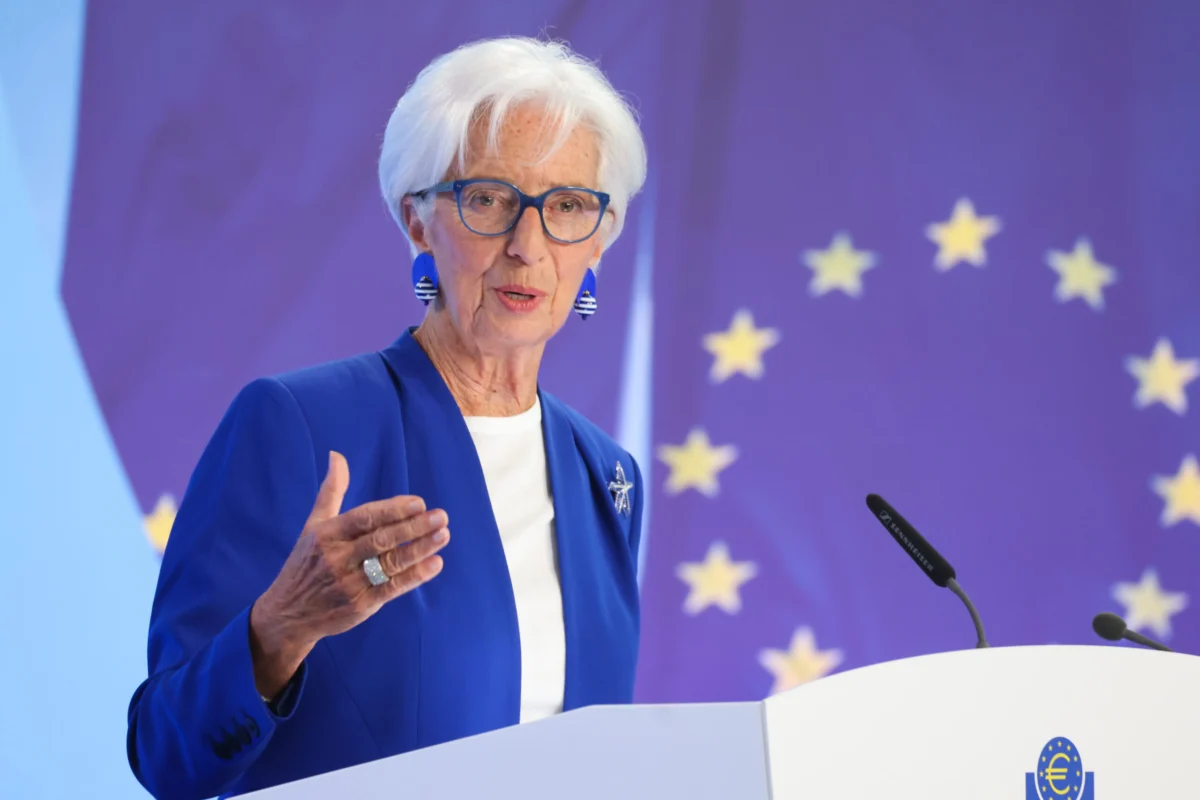
European Central Bank (ECB) President Christine Lagarde has openly acknowledged the possibility of an early departure from her influential role, signaling a potential pivot towards the tumultuous landscape of French politics ahead of the nation’s pivotal 2027 presidential elections. This revelation, made during an interview with French newspaper Les Echos, injects a new layer of uncertainty into both European monetary policy and the already complex French political scene, where the far-right is gaining significant traction. Lagarde’s current term as ECB President is slated to conclude in October 2027, precisely when France will be navigating its next electoral cycle.
The Balancing Act: ECB Leadership and Political Aspirations
Lagarde’s comments highlight a delicate tightrope walk between her commitment to the ECB’s mandate of price stability and a growing conviction that a "European voice must be heard in the French presidential debate." She articulated a clear concern that if the impending political discourse were to "present a perspective that diminishes France’s place within Europe," it would necessitate intervention to explain the "painful path" such a direction would entail for the country and its citizens. When directly questioned about personal involvement, either through supporting a candidate or a direct run for office, Lagarde indicated she would be "asking herself some questions." This suggests a careful calculation of her influence and potential impact, weighing institutional neutrality against perceived national interest.
The implications of an ECB President, even one nearing the end of their term, publicly considering national political office are considerable. The ECB, as the central bank for the Eurozone, prides itself on its independence from political interference, a cornerstone of its credibility and effectiveness in managing monetary policy across 20 member states. Any hint of political partisanship from its highest office-holder could potentially undermine this perceived neutrality, creating ripples across financial markets and among Eurozone governments. Indeed, earlier reports from the Financial Times in February suggesting Lagarde was contemplating an early exit led to a sell-off in the euro, underscoring market sensitivity to stability at the top of the European financial architecture. At the time, the ECB had declined to comment, stating no such decision had been made. Following Lagarde’s latest remarks, the ECB again maintained its silence when approached by CNBC, a stance that reinforces the institution’s desire to avoid direct engagement with political speculation concerning its leadership.
Despite her political considerations, Lagarde reaffirmed her immediate dedication to her current post. "My term ends in October 2027. And I believe my mission is to maintain price stability," she told Les Echos. "As we are once again in a period of turbulence, I believe the captain of the ECB ship must remain on board." This statement underscores the inherent tension in her position: a duty to steer the Eurozone economy through ongoing challenges, including persistent inflation and geopolitical instability, while simultaneously contemplating a future role that could be inherently political.
The French Political Crucible of 2027
The backdrop to Lagarde’s musings is a French political landscape poised for significant upheaval in 2027. President Emmanuel Macron, having served two consecutive terms since 2017, is constitutionally barred from seeking re-election. His tenure has been marked by ambitious reforms, periods of social unrest, and a consistent struggle against a rising tide of populist and far-right sentiment. In both the 2017 and 2022 presidential runoffs, Macron faced off against the National Rally (then Front National in 2017), led first by Marine Le Pen and now, increasingly, by her charismatic protégé, Jordan Bardella.
Bardella, currently the leader of the National Rally party, has emerged as the frontrunner in early polls for the 2027 election. His platform includes a significant "realignment of France’s place in the European Union," advocating for a vision where the European Commission and the EU are "back at the service of nations and no longer the other way around." This nationalist stance, often interpreted as eurosceptic or at least highly critical of deeper European integration, directly contrasts with Lagarde’s stated commitment to France’s "European environment and these European roots." The first round of voting for the French presidency is typically held in April, with a runoff between the top two candidates following shortly after if no candidate secures an absolute majority.
Macron’s second term has been characterized by a fragmented parliament, making the passage of key economic reforms increasingly challenging. Since his re-election in 2022, France has seen five different prime ministers, reflecting the difficulties in forging stable majorities and implementing a consistent legislative agenda. This political instability has direct implications for France’s economic health and its adherence to European fiscal rules.

France’s Fiscal Tightrope and European Demands
At the heart of France’s domestic political and economic challenges is its struggle to manage public finances. The French government is currently grappling with contentious budget cuts amounting to at least 4 billion euros ($4.6 billion) as it endeavors to rein in its national debt and reduce its public deficit. The ultimate goal is to bring the deficit down to the 3% of GDP benchmark required by the European Union by 2029, a target crucial for maintaining Eurozone stability and avoiding excessive deficit procedures from Brussels. French Finance Minister Roland Lescure recently reaffirmed the state’s commitment to a 5% deficit target in the short term as an interim step towards the 2029 goal.
Lescure, speaking to CNBC, emphasized the critical importance of passing the current year’s budget without it becoming a casualty of the escalating 2027 election debates. He outlined a "win-win" scenario where political parties prioritize budgetary responsibility, allowing for a compromise that ensures a functional budget, while simultaneously conducting the broader debates about the 2027 election. He warned against the budget becoming "the hostage of the campaign," underscoring the potential for gridlock to exacerbate France’s fiscal woes. "Hopefully reason will be well, we manage to decorrelate both. We’ll see," Lescure remarked, highlighting the fragility of the current political consensus.
An increase in borrowing costs, partly driven by global economic conditions and partly by market perceptions of French fiscal health, has made these budgetary reforms even more urgent. High public debt and persistent deficits can lead to higher interest rates on government bonds, increasing the cost of servicing debt and diverting funds from public services or investment. France’s debt-to-GDP ratio currently hovers around 110%, significantly above the EU’s 60% benchmark, further pressuring the government to demonstrate fiscal rectitude.
Lagarde’s Potential Role and Broader Implications
Even if Lagarde were to complete her term at the ECB, her influence could still be felt in the 2027 presidential debate. She indicated that a "frank discussion" with presidential candidates in the coming months is "very possible." Her stated intention to offer both a "French and a European voice" stems from her deep commitment to both. She would impress upon candidates that "in terms of the economic future of our continent, France must play a decisive role. And that without this European environment and these European roots, the economic outlook is, at the very least, clouded."
This perspective positions Lagarde as a potential bulwark against the eurosceptic tendencies of figures like Bardella. Her background as a former French Finance Minister (2007-2011) under President Nicolas Sarkozy, and her subsequent role as Managing Director of the International Monetary Fund (IMF) from 2011 to 2019, have provided her with unparalleled experience in both national and international economic governance. This extensive resume, coupled with her current leadership of the ECB, lends significant weight to any intervention she might make in the French political discourse.
Lagarde’s call for "courageous decisions on difficult issues" and a "discourse of truth and solutions" from presidential candidates reflects a broader frustration with political expediency often observed in highly charged election campaigns. She believes the French people are "perfectly aware of the situation and they expect a discourse of truth and solutions," suggesting that a clear, unvarnished presentation of France’s economic challenges and European commitments could resonate with the electorate.
The prospect of Lagarde’s political involvement carries significant implications for several key areas:
- ECB Independence and Succession: An early departure would necessitate an expedited search for her successor, potentially disrupting the ECB’s policy continuity during a critical period for inflation management. More broadly, the precedent of an ECB President eyeing national political office could raise questions about the institution’s long-term independence.
- French Economic Trajectory: A figure of Lagarde’s stature entering the political fray, even indirectly, could significantly shape the economic debate, potentially pushing candidates towards more fiscally responsible or pro-European stances. Her voice could counter narratives that propose a loosening of ties with the EU or a disregard for fiscal discipline.
- Future of European Integration: The 2027 French election is seen by many as a referendum on the future direction of the European Union. Should a eurosceptic candidate prevail, it could embolden similar movements across the continent and potentially lead to a weakening of EU cohesion. Lagarde’s intervention would be a strong defense of the existing European framework.
- Market Confidence: Any perceived instability in French politics or a significant shift in its European policy could trigger adverse reactions in financial markets, impacting the euro’s value and French borrowing costs. Lagarde’s engagement could either reassure markets, if she is seen as a force for stability, or add to uncertainty if her political ambitions become a distraction from her current role.
As the 2027 French presidential election draws closer, the potential involvement of Christine Lagarde adds an intriguing and high-stakes dimension. Her past experience, current position, and stated concerns about France’s European future position her as a potentially influential figure in shaping not just the discourse, but potentially the very outcome of an election that will have profound implications for France, the Eurozone, and the broader European project. The world will be watching closely to see how the "captain of the ECB ship" ultimately navigates these turbulent political waters.