Gilang Muhammad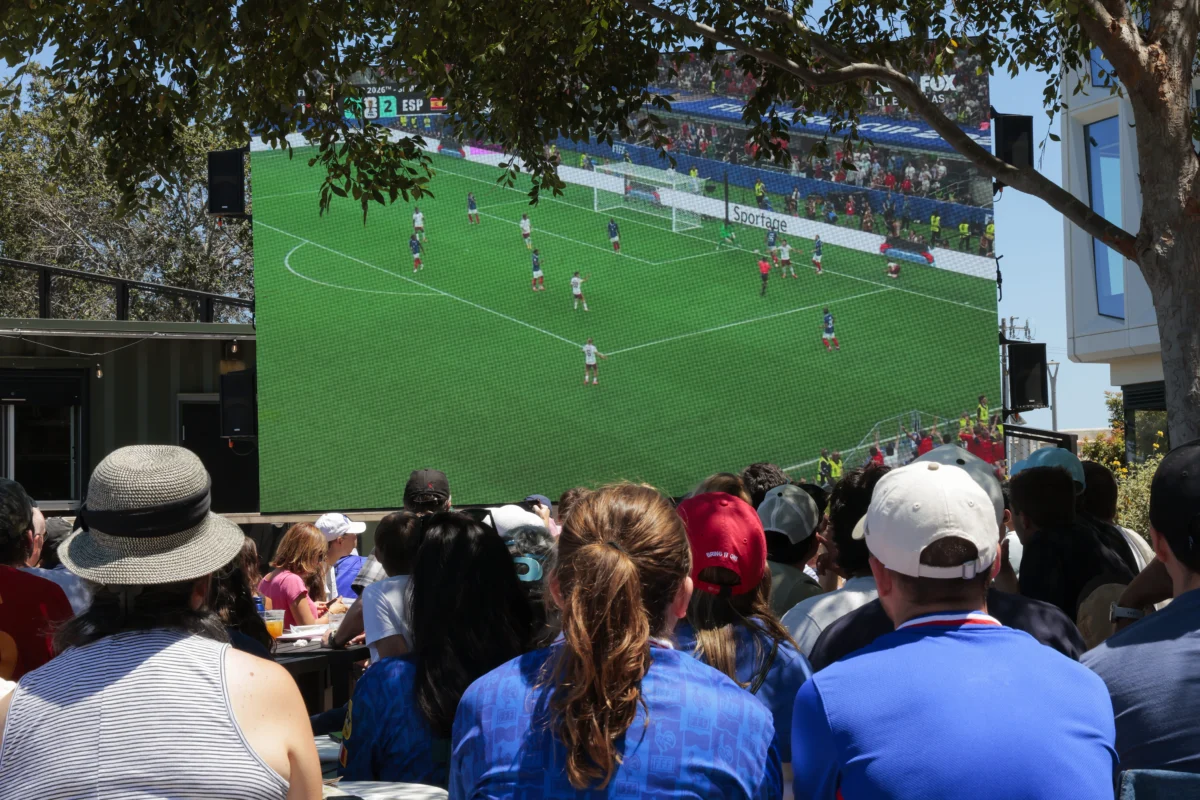
The spectacle of the FIFA World Cup 2026, a monumental event co-hosted by the United States, provided a discernible surge in tourism and localized economic activity for its host cities, yet its overall positive impact was significantly mitigated by pervasive economic weaknesses observed across other sectors and regions, according to a comprehensive Federal Reserve report released on Wednesday. While images of fervent soccer fans gathering for watch parties, like those witnessed at China Basin Park in San Francisco for the Spain-France semifinal or at Lion Sports Bar in Philadelphia for a France-Paraguay round of 16 clash, painted a picture of widespread enthusiasm and spending, the underlying economic data presented a more complex and nuanced reality. The tournament, which saw median admissions prices for matches soaring past $900, according to data from TicketData, failed to catalyze the broad-based economic growth many had anticipated, signaling that even mega-events operate within the constraints of larger economic forces.
The Grand Stage: Expectations vs. Economic Realities of FIFA World Cup 2026
The 2026 FIFA World Cup marked an unprecedented chapter in the tournament’s history, expanding to 48 teams and distributed across 16 cities in three North American nations: the United States, Canada, and Mexico. For the United States, which hosted the majority of the matches, the tournament was widely heralded as a transformative economic engine. Forecasts leading up to the event projected billions in economic output, job creation, and a substantial boost to the hospitality, retail, and transportation sectors. Cities like Seattle, which hosted a thrilling USA-Belgium round of 16 match where Folarin Balogun showcased his talent, prepared for an influx of international visitors, media, and domestic tourists eager to partake in the global soccer fiesta. Infrastructure investments, urban beautification projects, and extensive marketing campaigns were launched with the expectation of a significant return on investment. The optimism was palpable, rooted in the historical precedent of major sporting events stimulating local economies.
However, the latest edition of the Fed’s "Beige Book," a semiannual report detailing current economic conditions across the twelve Federal Reserve Districts, offered a sobering assessment. While specific pockets of the economy, particularly in direct proximity to stadiums and fan zones, experienced a boom, this localized success did not uniformly translate into a broader economic uplift. The report’s findings underscored a prevailing theme: the World Cup’s economic ripple effect was constrained by existing macro-economic pressures and evolving consumer behaviors.
Regional Snapshots: A Patchwork of Performance
The Beige Book detailed varied experiences across different Fed districts, painting a mosaic of economic performance rather than a uniform boom.
Northeast Corridor: Boston and New York City’s Mixed Fortunes
In the Boston Fed district, early optimism surrounding hotel bookings for World Cup-related travel was initially tempered. Reports indicated that initial reservation levels were softer than expected, prompting many establishments to adjust their pricing strategies. This flexibility proved crucial, as hotels that lowered their rates subsequently saw occupancy levels rise to meet original forecasts. The ability to adapt quickly to demand elasticity salvaged what could have been a significant shortfall. Beyond lodging, the hospitality sector reported notable gains, particularly in bars and pubs. Many watering holes across the Massachusetts city experienced substantially higher beer sales directly attributable to the tournament. A particularly memorable surge occurred when legions of Scottish fans descended upon Boston, leading some establishments to reportedly run out of beer entirely, a testament to the concentrated demand generated by specific fan bases.
Despite these localized successes, the Boston Fed’s coverage region also highlighted broader challenges. While it observed an increase in visitors from Canada compared to the previous summer, these levels remained significantly lower than historical averages. This trend was particularly detrimental to smaller, tourism-dependent towns in coastal Maine and northern Vermont, regions that typically rely heavily on Canadian cross-border traffic for their summer economies. The absence of a full recovery in Canadian tourism underscored a lingering vulnerability in these regional markets.
Further south, New York City’s experience echoed this mixed narrative. The New York Fed reported that certain restaurants and bars capitalizing on match-viewing events enjoyed "strong" sales, benefiting from the concentrated gatherings of fans. These venues, often equipped with large screens and special promotions, became hubs of activity during key matches. Conversely, other eateries across the city reported a noticeable decrease in international visitors, with Canadian foot traffic specifically cited as being down. This divergence suggested a shift in tourist behavior, where World Cup attendees prioritized specific match-related activities over general sightseeing and dining.
Hotels in New York City did report higher occupancy rates and increased prices per room, indicating a direct benefit from the tournament’s drawing power. However, the bank also noted softness in mid-tier attractions, suggesting that visitors might have been less inclined to spend on ancillary entertainment. A major department store in the city, despite observing an increase in foot traffic linked to the tournament, reported that this influx did not translate into higher sales, indicating a potential disconnect between event attendance and broader retail spending. This could be attributed to visitors having pre-allocated budgets focused primarily on match tickets, accommodation, and food/beverage directly associated with the games, leaving less disposable income for discretionary shopping.
The West Coast Perspective: San Francisco’s Paradox

On the opposite coast, the San Francisco Fed district reported high tourist volumes in cities hosting World Cup matches. The vibrancy around venues and designated fan zones was undeniable, leading to localized boosts for businesses directly serving these visitors. Yet, mirroring the experiences elsewhere, this positive impact was not uniformly distributed. In other markets within the district, and even within the host cities themselves but outside the immediate event radius, local residents reportedly pulled back their spending on restaurants, hotels, and entertainment.
Overall, the San Francisco Fed concluded that demand for consumer and business services "slowed somewhat on net." This suggests a potential "crowding out" effect, where locals either avoided areas congested by tourists or curtailed their own discretionary spending due to perceived higher prices or a broader sense of economic caution. The paradox of bustling tourist centers juxtaposed with subdued local economies highlighted the complex interplay of mega-events within existing economic landscapes.
Geopolitical Undercurrents and Consumer Prudence
A significant factor contributing to the uneven economic impact was the noticeable decline in Canadian cross-border travel to the U.S. The Canadian government had previously reported a sustained decrease in its citizens crossing the U.S. border, a trend that predated the World Cup but was exacerbated by President Donald Trump’s tariff policy rollout and broader sovereignty threats. This political friction fostered a growing sentiment among Canadian residents to prioritize spending money on services and products within their own country, thereby reducing discretionary travel and consumption in the United States. This "buy Canadian" movement, combined with the deterrent effect of geopolitical tensions, directly impacted the tourism sectors in border regions and major U.S. cities like New York and Boston that traditionally welcome a significant number of Canadian visitors.
Beyond geopolitical considerations, the Federal Reserve’s report identified a nationwide trend that capped overall consumer spending growth: rising oil prices. Higher fuel costs directly impact household budgets, reducing discretionary income available for other goods and services. Across several regions, the Fed observed consumers actively seeking cheaper alternatives for products or consciously decreasing their discretionary spending to save money. This heightened consumer prudence, driven by inflationary pressures and a general sense of economic uncertainty, meant that even with the excitement of the World Cup, households were more cautious with their expenditures. The collective impact of these individual spending adjustments created a formidable headwind against the potential economic uplift of the tournament.
Analysis and Broader Implications for Future Mega-Events
The 2026 FIFA World Cup serves as a critical case study for understanding the economic complexities of hosting mega-events in an era of fluctuating global and domestic economic conditions. While the tournament undeniably delivered on its promise of spectacle and localized economic surges, particularly in hospitality sectors directly catering to event attendees, its inability to catalyze broader economic growth offers several key insights.
Firstly, the report underscores that mega-events are not economic silver bullets capable of overriding fundamental macroeconomic pressures. Factors such as inflation, consumer confidence, geopolitical relations, and energy prices play a determinative role in shaping the ultimate economic footprint of such events. Cities and nations planning to host future large-scale events must develop more nuanced economic models that account for these broader variables, rather than relying solely on direct visitor spending projections.
Secondly, the divergence between direct event-related spending (e.g., ticket sales, hotel occupancy in host cities) and broader retail or mid-tier attraction performance suggests a shift in tourist behavior. Modern event tourists, possibly more budget-conscious or focused on specific experiences, may concentrate their spending within a narrow band of event-centric activities, leading to a "crowding out" effect for other local businesses. This implies a need for host cities to develop more integrated strategies that encourage broader exploration and spending beyond the immediate event footprint.
Thirdly, the impact of geopolitical factors on tourism, as evidenced by the decline in Canadian visitors, highlights the vulnerability of cross-border economies to international relations. For co-hosted events or those relying on specific international demographics, political stability and favorable diplomatic relations become crucial economic considerations.
Finally, the Federal Reserve’s Beige Book, acting as a real-time pulse of regional economic health, provided an invaluable ground-level perspective often missed by headline-grabbing statistics. Its detailed accounts from businesses and economic agents across various districts offer a granular understanding of how large-scale events interact with local economies, revealing both the successes and the limitations.
Looking ahead, the findings from the 2026 FIFA World Cup will undoubtedly inform future economic planning for major sporting and cultural events. They suggest a need for more resilient, diversified economic strategies that acknowledge the interplay of global economic trends, evolving consumer behavior, and geopolitical dynamics. The World Cup was a triumph of sport and spectacle, but its economic legacy, while positive in specific areas, remained firmly tethered to the broader, often challenging, economic landscape of 2026.