Gilang Muhammad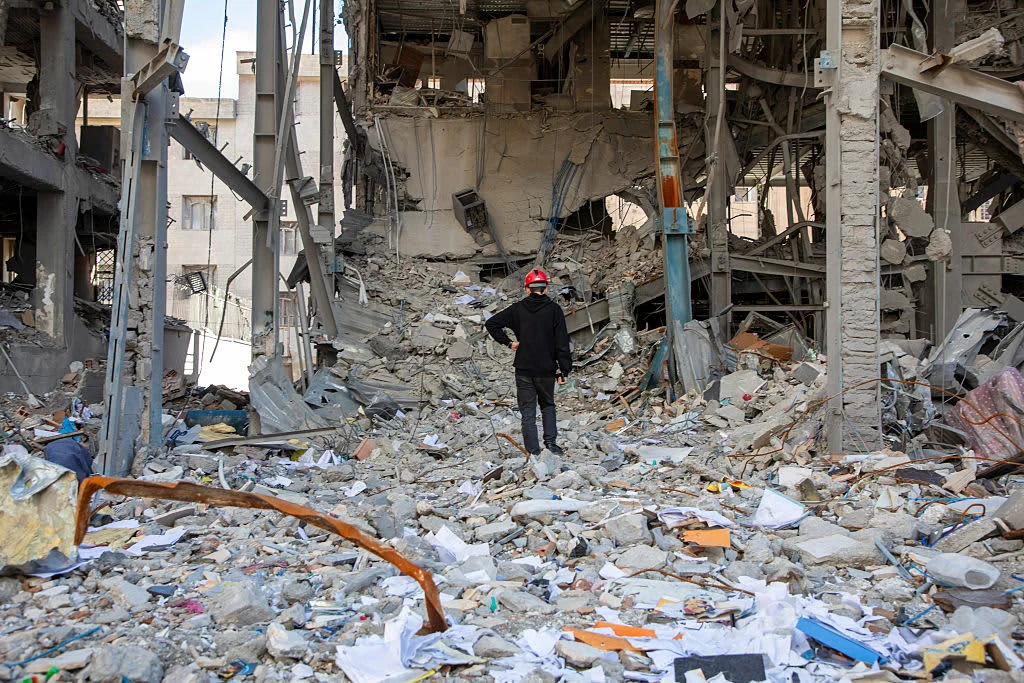
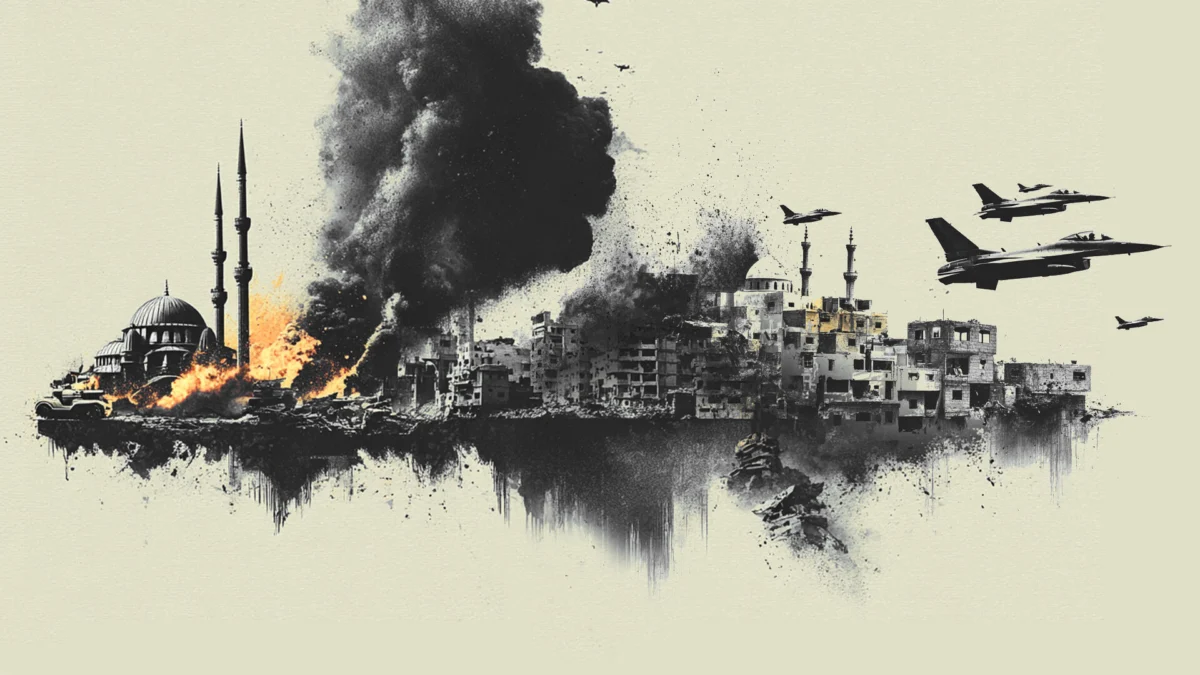
Policymakers worldwide are closely monitoring the escalating situation in the Middle East, diligently assessing the most prudent economic responses to the ongoing U.S.-Iran conflict. The latest developments, including Iran’s declaration regarding the Strait of Hormuz and President Trump’s subsequent response, have injected both a fleeting sense of relief and enduring uncertainty into global markets and diplomatic circles. At the recent International Monetary Fund (IMF) and World Bank Spring Meetings in Washington, D.C., a palpable sense of apprehension permeated discussions, as over 30 central bankers, politicians, and economic strategists weighed in on the war’s trajectory and its profound implications for global stability and prosperity.
Background to a Brewing Storm: The Road to 2026
The current crisis, marked by a joint U.S.-Israel attack on Tehran on April 6, 2026, is not an isolated incident but the culmination of years of simmering geopolitical tensions. Relations between Washington and Tehran had steadily deteriorated since the mid-2020s, fueled by disputes over Iran’s nuclear program, regional proxy conflicts, and naval incidents in the Persian Gulf. Economic sanctions, imposed and re-imposed by the U.S., had already strained Iran’s economy, leading to domestic unrest and a more assertive stance from Tehran on the international stage.
The Strait of Hormuz, a narrow choke point between the Persian Gulf and the Gulf of Oman, has long been a flashpoint. Carrying approximately one-fifth of the world’s total oil consumption and a significant portion of its liquefied natural gas, its security is paramount to global energy markets. Any disruption to this vital waterway has historically sent shockwaves through the global economy, reminding nations of their precarious reliance on Middle Eastern stability. Prior to the recent escalation, minor skirmishes and threats to shipping lanes had frequently prompted international warnings and naval deployments, underscoring the strait’s strategic importance.
The immediate backdrop to the current phase of the conflict includes an ongoing ceasefire between Israel and Lebanon, a fragile agreement brokered by international mediators. It was against this delicate regional context that Iran, on Friday, April 17, declared the Strait of Hormuz "completely open to commercial traffic" during the Israel-Lebanon ceasefire. U.S. President Donald Trump, in a social media post, acknowledged Iran’s move, stating, "I thank Iran for opening the Strait. A step towards peace." However, he quickly tempered any optimism by confirming that the U.S. naval blockade of Iran’s ports would remain in effect "until an agreement is reached with Tehran." This dual message – a gesture of de-escalation coupled with continued economic pressure – encapsulates the complex and unpredictable nature of the conflict.
The IMF/World Bank Meetings: A Global Reckoning

The IMF and World Bank Spring Meetings, held in Washington, D.C., served as an urgent forum for global financial leaders to confront the war’s economic fallout. Originally slated to focus on post-pandemic recovery and sustainable development, the agenda was swiftly overshadowed by the Middle East crisis. Discussions, initially centered on inflationary pressures and interest rate trajectories, shifted dramatically to scenarios of prolonged conflict, commodity shocks, and potential global recession. The tone was one of cautious alarm, with many officials admitting that their economic models and forecasting tools were struggling to keep pace with the rapidly evolving geopolitical landscape.
Kristalina Georgieva, Managing Director of the IMF, speaking generally on global challenges, emphasized the need for international cooperation and agile policy responses in times of "unprecedented uncertainty." While not directly addressing the U.S.-Iran conflict in her public remarks, her emphasis on resilience and diversification resonated deeply with attendees grappling with the implications of the war. Similarly, David Malpass, President of the World Bank Group, highlighted the increased risks to developing economies, particularly those reliant on imported energy and food, underscoring the potential for the conflict to exacerbate existing vulnerabilities.
Economic Concerns Take Center Stage
The conversations among policymakers at the meetings coalesced around several critical economic concerns, painting a grim picture of potential challenges ahead.
The Specter of a Protracted Conflict
The duration of the U.S.-Iran war remains the most significant unknown, dominating discussions and unsettling global markets. President Trump’s pronouncements have offered mixed signals, adding to the uncertainty. On April 1, he had predicted the war would conclude in "another two to three weeks." However, just days before the IMF meetings, on April 16, he stated at an event in Las Vegas that the war "should be ending pretty soon." Such conflicting messages from Washington, coupled with a lack of clear communication from Tehran regarding peace talks, have created a volatile environment for economic forecasting.
Pierre Gramegna, Managing Director of the European Stability Mechanism (ESM), articulated the immediate impact: "I’m being asked all the time now, is this war going to have a lot of impact? The first answer is, it has already had an impact. I mean, look at inflation rates in the last months. Look at what’s going on in our gas stations all over the world. The impact is obvious." Gramegna invoked the words of Colombian writer Gabriel García Márquez, stating, "it is easier to start a war than to end a war," highlighting the complex multilateral negotiations required for peace. "To start a war, you don’t need to ask anybody, you’re on your own. But to end it you need to agree, bilaterally, multilaterally, and this uncertainty is weighing, obviously, on how we look at the future."
The sentiment was echoed by Bank of France Governor François Villeroy de Galhau, who cautioned against overly optimistic projections. "Policymakers cannot bet only on the most favorable scenario," he told CNBC. "There is unprecedented uncertainty, even unknown. [The war] could be prolonged, there could be secondary effects, not only on energy, but also on some other products. So in our case, we expect higher inflation and we expect lower growth." Elisabeth Svantesson, Sweden’s Finance Minister, added a stark warning: "We haven’t seen all the facts of this crisis yet, [and] it could be pretty bad. It depends on, of course, the intensity and duration of the war, but it affects people around the world. Everyone is affected in one way or another, so I guess global demand will be lower, and so will growth."

Historically, regional conflicts in the Middle East have often spiraled beyond initial expectations, demonstrating the inherent difficulty in predicting their trajectory and resolution. The 1973 Yom Kippur War, for instance, led to an OPEC oil embargo that quadrupled crude prices and triggered a global recession, fundamentally reshaping the world economic order. While the current conflict has different dynamics, the underlying fragility of global supply chains and the interconnectedness of energy markets suggest that a prolonged war could have similarly far-reaching, albeit distinct, consequences.
The Threat of Stagflation
Perhaps the most potent fear voiced by many at the meetings was the looming threat of stagflation – a pernicious economic phenomenon characterized by stagnant economic growth combined with high inflation. This scenario is particularly challenging for central banks, as traditional monetary policy tools designed to combat inflation (raising interest rates) can further dampen growth, while measures to stimulate growth (lowering rates) can exacerbate inflation.
Pierre Gramegna of the ESM again emphasized this risk: "If [the war goes on] longer, the impact on inflation is what would worry me most. If it lasts a couple of months more, if the Strait of Hormuz is blocked or half-blocked, then we’re going to have inflation that goes up more than 1%, maybe 1.5% this year." He added, "If it’s even worse and it lasts longer [than that], inflation would go up 2.5% percent – that would trigger probably stagflation, and that’s bad news for the world."
Analysts at the IMF had previously projected global inflation to moderate in late 2025 and early 2026, albeit remaining above pre-pandemic levels in many economies. However, the U.S.-Iran conflict has forced a drastic revision of these forecasts. The additional inflationary pressure stemming from commodity price hikes, coupled with a potential slowdown in global trade and investment due to uncertainty, creates a fertile ground for stagflationary pressures. Central banks, many of whom were already navigating the complex withdrawal of post-pandemic stimulus, now face an even more delicate balancing act.
Global Energy Security Under Siege
The war has thrust energy security to the forefront of global economic anxieties, with officials warning of potentially unprecedented disruptions. Greek Finance Minister Kyriakos Pierrakakis issued a stark warning: "The world is potentially looking at the greatest energy crisis in history." He elaborated on the multifaceted risks, noting that "one third of fertilizers pass through the Strait [of Hormuz] – sulfur, helium, petrochemicals – collectively, it can potentially be a huge risk."
The impact of potential supply constraints is not theoretical but imminent. Pierrakakis highlighted that "April can be more problematic than March, because right now, the last ship cargoes that left on Feb. 28 are due to arrive by April 20. So, [supply constraints] will be felt in the markets more significantly." This timeline suggests that the full economic ramifications of the conflict’s early weeks are only now beginning to materialize in consumer prices and industrial supply chains.
New Zealand’s Finance Minister, Nicola Willis, underscored the geographic vulnerability, cautioning that a prolonged conflict could lead to a "worst-case scenario" where crude oil is trapped in the Middle East, unable to reach refineries in Southeast Asia. "We could [then] be looking at shortages for our part of the world," she told CNBC. "We’re preparing for those sorts of worst-case scenarios, and seeing inflation endure outside of the target band is something that we do have to anticipate could happen in a worst-case scenario."

Beyond oil and gas, the disruption to global supply chains for critical industrial inputs like fertilizers, sulfur, and petrochemicals could have cascading effects. A shortage of fertilizers, for instance, could lead to reduced agricultural yields in the coming harvest seasons, driving up food prices and potentially exacerbating food insecurity in vulnerable nations. The implications for industries ranging from agriculture to manufacturing are profound, suggesting a broader economic contagion.
In response to these threats, there was a strong consensus on the need for increased energy independence and diversification. French Finance Minister Roland Lescure emphasized Europe’s strategy: "We need to double down on electricity to build resilience in its energy markets. We’re going to invest in nuclear, we’re going to invest in renewables," he said of France. "This crisis is showing once again [that] we need more independence, we need to be more sovereign. We have to rethink climate change as an opportunity and not as a threat, and hopefully by the time the next crisis comes – because I’m afraid there will be more – we’ll be even more sheltered than we are today." Similarly, Krishna Srinivasan, head of the Asia department at the IMF, urged "every country in Asia" to consider diversifying their energy supply chains, recognizing the continent’s heavy reliance on Middle Eastern oil and gas.
Navigating the Fog of War: Challenges for Policymakers
The enduring uncertainty surrounding the conflict has created formidable challenges for policymakers, particularly central bankers responsible for steering monetary policy. The inability to accurately forecast the war’s duration or its full economic ramifications makes forward planning exceptionally difficult.
"It’s absolutely impossible to predict what will happen, forecasts are very uncertain," stated Sweden’s Svantesson, capturing the pervasive sentiment. Olli Rehn, Governor of Finland’s central bank and a member of the European Central Bank’s (ECB) Governing Council, stressed that ECB policymakers "have not pre-committed to any rate path," even as markets had begun to price in a series of hikes for the eurozone this year. "There is no clarity, no certainty about the key factors, [including] the duration of the conflict," he explained. "That depends very much on the negotiations, and it depends on how serious damage has been done to energy production and transport routes. The outlook is very foggy for the moment, so… the optional value of waiting is quite high."
Joachim Nagel, President of Germany’s Bundesbank and another ECB Governing Council member, described the situation as "very opaque, very cloudy." With news on Iran evolving daily, he confirmed that policymakers were adopting a "meeting-to-meeting approach." "In two weeks, we can see a lot of new things coming," he explained. "So I’m really cautious to give a proper indication what is the next step we have to do on the monetary policy side." This approach, while prudent in volatile times, highlights the lack of a clear long-term strategy, reflecting the profound unpredictability of the crisis.
Primoz Dolenc, Bank of Slovenia Governor and ECB Governing Council member, echoed these sentiments, admitting the war was making it "quite difficult to assess what monetary policy will have to do." He noted, "According to [our] baseline scenario, we will not have to act in monetary policy stance because we assumed that this supply shock will go as fast as it came. But I don’t know whether this scenario is realistic or not. Right now, I would say we are still lacking full availability of information in order to assess what kind of monetary policy we will have to use." The dilemma is clear: act decisively and risk overshooting, or wait and risk falling behind the curve of inflationary pressures.
Market Resilience Amidst Turmoil
Despite the severe economic warnings from policymakers, global equity markets have, somewhat surprisingly, displayed a degree of resilience. U.S. equities, for instance, notched fresh records in Thursday’s session, while the MSCI World Ex-U.S. index, though initially down roughly 1% since the conflict began, has regained more than 8% over the past month. This apparent disconnect between market performance and underlying economic fears prompted considerable discussion.

Verena Ross, chair of the EU regulator the European Securities and Markets Authority (ESMA), observed that "the markets have operated in quite an orderly way. Market players have been able to meet margin calls and things like that. So there has been quite some resilience in how the markets have operated. The question is, how will markets continue to cope with increased volatility that seems to be happening on a daily basis?"
Martins Kazaks, another ECB Governing Council member and head of Latvia’s central bank, expressed his surprise at the market’s trajectory. "Financial markets, which is surprising to me, are back where they were before the war started," he told CNBC. However, he cautioned that this resilience might be premature. "[But] only now will we see what’s going to be the impact on supply, because ships are just arriving, and [many] ships have not sailed yet, so there is going to be an interruption, and we’ll see how this will going to affect the real part of the economy." This suggests that current market valuations may not fully factor in the impending physical supply chain disruptions and the subsequent economic slowdown. Investors might be betting on a quick resolution or underestimating the long-term impact on corporate earnings and consumer demand.
International Response and Outlook
Beyond economic policy, the U.S.-Iran conflict has triggered a flurry of diplomatic activity, albeit with limited visible progress towards a lasting resolution. The United Nations Security Council convened emergency sessions, with several member states calling for immediate de-escalation and a return to dialogue. China and Russia, while expressing concern, have largely maintained a neutral stance, emphasizing the need for regional stability without directly condemning either party. European nations, particularly those heavily reliant on Middle Eastern energy, have urged all sides to exercise maximum restraint and prioritize humanitarian considerations.
The long-term implications of this conflict extend beyond immediate economic fallout. It could accelerate the global shift away from fossil fuels, as nations redouble efforts to secure energy independence through renewables and nuclear power. It may also lead to a reassessment of global supply chain vulnerabilities, prompting companies and governments to prioritize diversification and regionalization over cost efficiency. The geopolitical landscape of the Middle East itself could be irrevocably altered, potentially leading to new alliances, redefined spheres of influence, and a prolonged period of instability.
As the world watches, the economic and human costs of the U.S.-Iran war continue to mount. The fragile reprieve offered by the Strait of Hormuz declaration provides a momentary glimmer of hope, but the underlying tensions and uncertainties remain profound. Policymakers face an arduous task: to navigate an economic minefield while simultaneously encouraging a peaceful resolution to a conflict whose trajectory remains obscured by the "fog of war." The coming weeks will be critical in determining whether the global economy can weather this storm or if it is poised for a more severe and prolonged downturn.