Ena Muazin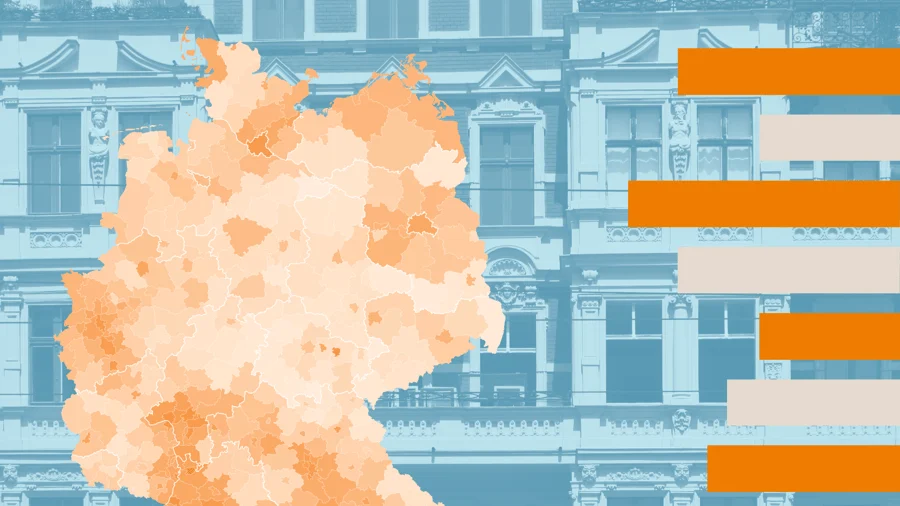
Düsseldorf – The German housing market is experiencing a significant upward trend in prices, with new construction costs rising by 0.2 percent in the first quarter of this year compared to the previous quarter. Year-on-year, these prices have increased by 1.6 percent, pushing the average cost of apartments to €5,175 per square meter. This data, exclusive to Handelsblatt, comes from the latest real estate price index by the analysis firm Empirica Regio.
While the cost of purchasing new properties has seen a slight increase, the prices for newly built houses have experienced a minor decline. Nationally, these prices dropped by 0.4 percent in the first quarter of 2026 compared to the fourth quarter of 2025, with a more pronounced decrease of 1.6 percent in the seven largest German cities. In stark contrast, asking rents for new apartments have surged by 3.5 percent over the past year, and for existing apartments, the increase is even more substantial at 9.4 percent.
This divergence in trends highlights the complex dynamics at play in Germany’s real estate sector. The rising costs of new construction, coupled with an accelerating rental market, suggest persistent demand and potential affordability challenges for many Germans. The data, sourced from over 100 real estate platforms including Immoscout24, Immowelt, and Immonet, provides a comprehensive overview of current market conditions, reflecting advertised prices and rents.
Empirica Regio has standardized these figures by converting various property types to a reference value. For condominiums, this reference is an apartment of 60 to 80 square meters with good amenities. This standardization allows for a clearer comparison across different regions and property types.
The report indicates that new construction apartment prices rose in 63 percent of the analyzed regions in the first quarter of 2026. Rental prices for new apartments saw even greater growth, increasing in 85 percent of regions over a one-year period. The market for newly built houses presents a more balanced picture, with prices increasing in 205 regions and decreasing in 195 regions compared to the previous year.
Munich Metropolitan Area Leads in Housing Price Surge
The greater Munich area continues to dominate the rankings for the highest prices of new build apartments. This trend is consistent with previous reporting, underscoring the enduring desirability and economic strength of this region. Notably, many of the most expensive districts are located within a 50-kilometer radius of the Bavarian capital. Cities like Garmisch-Partenkirchen, Landsberg, and Rosenheim, while not directly adjacent to Munich, are considered part of its extended economic sphere of influence, contributing to the elevated property values in their vicinities.
However, the accompanying data reveals a counterintuitive trend: in many of these previously high-priced regions, apartment prices have actually seen a decline. Reiner Braun, CEO of Empirica Regio, attributes this shift to a combination of factors. "Demand is still there, but the actual demand is decreasing," Braun stated. He points to rising market interest rates and increasing uncertainty regarding income and employment as key drivers behind this slowdown in demand.
Annika Steiner, Head of the Real Estate Market Research Competence Group at the Society for Real Estate Economics (GIF), offers a nuanced perspective on these price corrections. She argues that the price decreases in the most expensive regions do not signify market saturation but rather a "demand correction." Steiner explains, "Increased financing costs and stricter lending standards have noticeably reduced the willingness to pay." This suggests that while underlying demand might remain robust, the affordability of purchasing has been significantly impacted by macroeconomic shifts.
The data further reveals significant regional variations. While metropolitan areas like Munich remain at the top for overall price levels, the strongest price increases for new build apartments are being observed in more rural areas. Schmalkalden in Thuringia recorded a remarkable 31.6 percent increase in new build apartment prices over the past year. This is followed by Anhalt-Bitterfeld (up 30.9 percent) and Holzminden in Lower Saxony (up 29.1 percent). This trend could indicate a ripple effect, with buyers seeking more affordable options outside of the traditional hotspots, or it might reflect localized development and investment in these regions.
Conversely, the strongest declines in new build apartment prices were recorded in Brandenburg, with Prignitz experiencing a 23.7 percent decrease, followed by Cottbus (down 19.2 percent). Kronach in Upper Franconia also saw a significant drop of 17.2 percent. These declines in previously less expensive regions could be influenced by a variety of factors, including local economic conditions, demographic shifts, or a correction after a period of rapid growth.
Miesbach Leads in Most Expensive Houses, Rental Market Sees Broad Increases
When it comes to the price of newly built houses, Miesbach, located on the border with Austria, continues to hold the top spot. Newly constructed houses in this region now command an average of €10,530 per square meter. The cities and districts of Munich, Starnberg, Garmisch-Partenkirchen, and Heidelberg follow closely, indicating a strong premium for properties in these affluent Bavarian and Baden-Württemberg locations. The dominance of these southern German regions in the high-end housing market underscores their consistent appeal to high-net-worth individuals and the robust local economies that support these price levels.
The analysis of house prices reveals a strong concentration of the most expensive districts in Bavaria and Baden-Württemberg. Beyond the aforementioned Bavarian areas, Stuttgart, Freiburg, and Karlsruhe in Baden-Württemberg also feature prominently. Hessian cities like Wiesbaden and Frankfurt appear later in the ranking, at 14th and 15th positions respectively, highlighting the geographical disparities in property values across Germany.
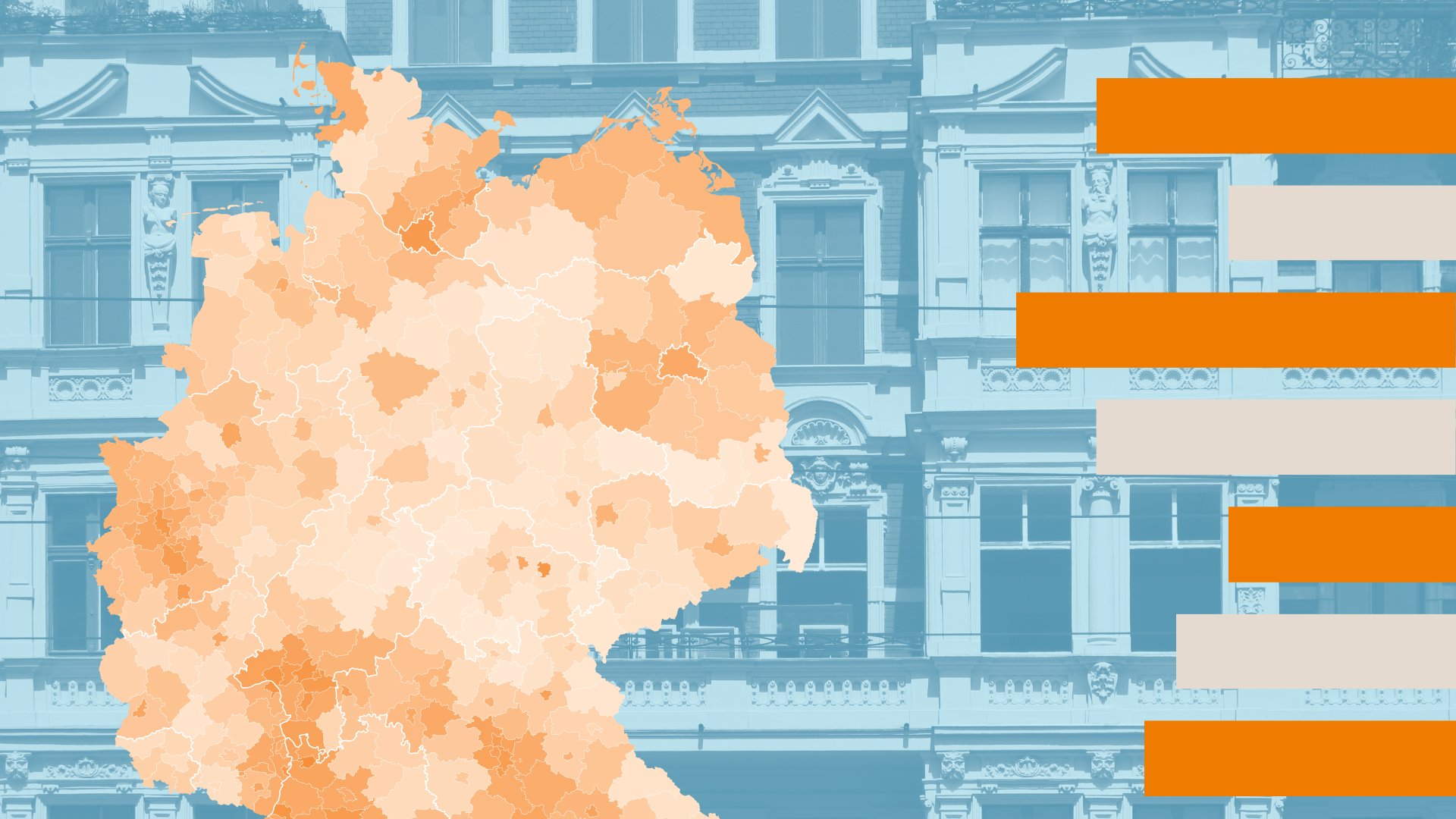
On the other end of the spectrum, the most affordable regions for new house purchases are predominantly found in structurally weaker areas. A map illustrating these price differences clearly demarcates the contrast between highly sought-after urban centers and their more peripheral counterparts. Currently, the most budget-friendly regions for house purchases include Sonneberg in Thuringia (€1,827 per square meter), Lüchow-Dannenberg in Lower Saxony (€1,908 per square meter), and Görlitz in Saxony, on the Polish border (€2,051 per square meter). These areas often face challenges related to economic development and outward migration, contributing to lower property values.
Rental Market Experiences Broad and Significant Increases
The data on rental prices paints a picture of widespread growth across Germany. In nearly all districts with the highest new build rents, levels have risen over the past year. Garmisch-Partenkirchen and Düsseldorf have seen the most substantial increases, exceeding 12 percent. The only notable exception among the top 20 districts with the highest new build rents is Berlin, where advertised rents for new apartments have decreased by 8.2 percent compared to the first quarter of 2025. This localized decrease in Berlin, despite the overall upward trend, might be attributed to specific market dynamics or a recent influx of new supply in certain areas of the capital.
As in previous quarters, Munich leads the rental market statistics by a significant margin, with average net cold rents in new build apartments reaching €25.03 per square meter. This figure reflects the city’s status as a major economic hub and a highly desirable place to live, driving up rental demand and prices.
Reiner Braun of Empirica Regio predicts that rents will continue to rise until the costs associated with constructing new housing stabilize and the gap between the demand for new builds and actual completions is bridged. He further explains that the stronger increase in rents for existing properties in many areas (e.g., Frankfurt up 24 percent, Hamburg up 22 percent) is also a consequence of rising new build prices. As new apartment rents escalate, demand naturally shifts towards existing stock, consequently driving up their rental prices as well.
Annika Steiner from GIF concurs, stating that "a short-term end to rent increases is currently not foreseeable." She attributes this to sustained high demand, while new construction permits and completions remain at low levels, and construction and financing costs are not declining significantly. Therefore, no immediate relief is expected from the supply side of the market.

The analysis of existing property rental prices also reveals significant price fluctuations. While Munich remains the most expensive, areas like Hamburg (up 12.5 percent year-on-year), Frankfurt (up 19.9 percent), and Potsdam (up 22.6 percent) have experienced particularly sharp increases in existing apartment prices. This suggests that the demand for rental properties is robust across various urban centers, pushing up prices even in established housing stock.
Expert Analysis and Future Outlook
The current real estate market trends are shaped by a confluence of economic factors. Rising interest rates, increased construction costs, and persistent demand in key urban areas are contributing to the overall upward pressure on prices and rents. The German Tenant Association (Deutscher Mieterbund) has voiced concerns about the increasing burden of housing costs on households. Melanie Weber-Moritz, President of the association, stated that "every third household" is currently "overburdened" by housing costs. She emphasized that isolated price decreases do not alter this fundamental structural problem.
Weber-Moritz highlighted the intense competition for affordable housing in many cities. "As long as this does not fundamentally change, rents will continue to rise," she warned. She also drew a parallel with government interventions in energy and fuel prices, noting a perceived lack of similar political urgency and action regarding the escalating rents. This sentiment suggests a call for greater policy intervention to address housing affordability.
Tobias Just, Professor of Real Estate Economics at the University of Regensburg, suggests that necessary property sales in some regions could be contributing to the observed fluctuations in quarterly data, leading to "jerks in quarterly data." He also noted that "the markets are still comparatively illiquid," implying that the ease with which properties can be bought and sold might be contributing to price volatility.
The data collection methodology employed by Value AG, aggregating information from over 100 real estate platforms, provides a comprehensive view of the advertised market. However, it’s important to acknowledge that these represent asking prices and rents, which may differ from actual transaction prices and achieved rents. The normalization by Empirica Regio, particularly the use of a reference apartment for condominiums, helps to standardize comparisons, but nuances in property features and exact locations can still influence individual price points.
The ongoing imbalance between housing supply and demand, exacerbated by rising construction and financing costs, points towards a continued challenging environment for prospective buyers and renters in Germany. While some regions may experience localized price corrections, the overarching trend suggests a sustained increase in housing expenses across the nation.
First Publication: April 16, 2026, 04:08 AM.