Clara Shinta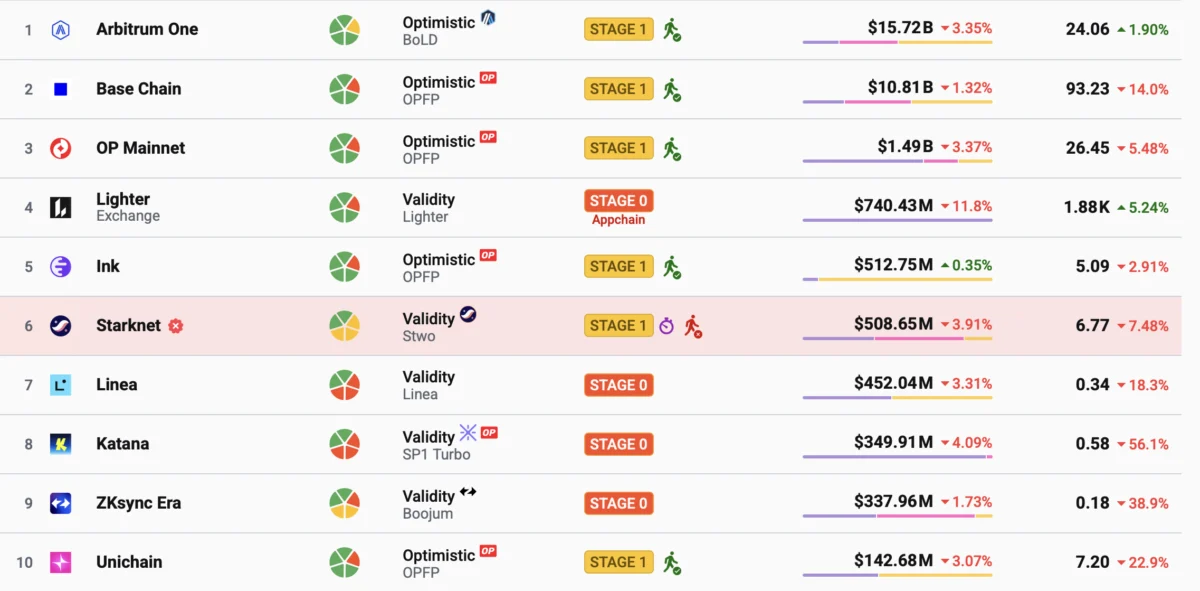
Today marks a pivotal juncture in the cryptocurrency landscape, with significant developments unfolding across core infrastructure, emerging financial markets, and regulatory fronts. Developers have unveiled a groundbreaking framework designed to address the persistent fragmentation within Ethereum’s burgeoning layer-2 ecosystem, aiming to foster seamless interoperability and enhance scalability. Concurrently, the burgeoning sector of onchain commodity trading is demonstrating robust, sustained growth, signaling its potential as a permanent fixture in the digital asset space, despite ongoing challenges related to liquidity. This positive momentum is contrasted by renewed legal scrutiny facing Kalshi, a prominent prediction market operator, which is now contending with a state-level lawsuit from Washington alleging violations of state gambling statutes.
A Unified Vision for Ethereum’s Layer-2 Ecosystem: The Ethereum Economic Zone
The architectural evolution of Ethereum has long grappled with the inherent trade-off between decentralization, security, and scalability. While the mainnet, or Layer 1 (L1), prioritizes the former two, its throughput limitations have necessitated the development of Layer 2 (L2) scaling solutions. These L2s, predominantly rollups, process transactions off-chain before batching and settling them on the mainnet, significantly increasing transaction capacity and reducing costs. However, the proliferation of dozens of independent L2 networks has inadvertently led to a fragmented user experience, liquidity silos, and complex interoperability challenges.
In response to this critical issue, developers from Gnosis and Zisk, with strategic backing from the Ethereum Foundation, have formally proposed a novel framework termed the "Ethereum Economic Zone" (EEZ). This ambitious initiative aims to fundamentally transform how L2s interact, enabling rollups to communicate and execute transactions seamlessly with each other and the Ethereum mainnet within a single, atomic transaction.
Addressing Fragmentation and Interoperability:
The core innovation of the EEZ lies in its ability to facilitate synchronous execution of smart contracts across disparate rollup networks without the traditional reliance on insecure and often slow cross-chain bridges. Bridges, while essential in the current fragmented landscape, introduce additional security risks, latency, and liquidity concerns, often acting as single points of failure susceptible to exploits. The EEZ seeks to circumvent these issues by providing a unified environment where applications can share underlying infrastructure across multiple rollups, all while ensuring final settlement back to the robust security of Ethereum L1. This approach promises to significantly reduce redundant infrastructure development, streamline user flows, and mitigate the need for complex, multi-step cross-chain transfers that often deter users.
Background of Ethereum’s Scaling Journey:
Ethereum’s journey toward scaling has been dynamic and iterative. Initially, solutions like sharding were explored for L1 directly. However, the community largely pivoted to a "rollup-centric roadmap," acknowledging the efficiency and flexibility of L2 solutions. The past few years have witnessed an explosion in L2 development, with various types of rollups, including Optimistic Rollups (e.g., Arbitrum, Optimism) and Zero-Knowledge (ZK) Rollups (e.g., zkSync, StarkNet), gaining significant traction. Each offers different trade-offs in terms of security, speed, and cost, leading to a diverse but often disconnected ecosystem.
According to L2BEAT.com, a leading analytics platform for the L2 ecosystem, the total value locked (TVL) across all Ethereum L2s has surged to tens of billions of dollars, illustrating their growing importance. However, this impressive TVL is distributed across numerous networks, creating distinct liquidity pools and user bases. For instance, a user with assets on Arbitrum might find it cumbersome and costly to interact with a DeFi protocol exclusively deployed on Optimism, necessitating bridging operations that can take minutes or even hours and incur additional fees. The EEZ directly targets this inefficiency.

Implications and Future Outlook:
If successfully implemented, the Ethereum Economic Zone could usher in a new era of cohesion for Ethereum. It promises to enhance the user experience by simplifying interactions, making the underlying L2 topology transparent to the end-user. For developers, it could unlock new possibilities for building complex, multi-chain applications that leverage the strengths of various rollups without being constrained by their individual boundaries. This could foster greater innovation, encourage more capital and talent inflow, and ultimately strengthen Ethereum’s position as the leading smart contract platform.
However, the path to implementation is not without its challenges. The technical complexity of achieving synchronous execution across heterogeneous rollups is substantial, requiring significant coordination among various L2 teams and the broader Ethereum community. Questions around governance, security guarantees, and potential new points of centralization within the EEZ framework will need to be meticulously addressed. Nevertheless, the proposal signals a maturing understanding of Ethereum’s scaling needs and a proactive step towards building a truly unified and highly scalable decentralized ecosystem.
Onchain Commodity Trading Proves Its Staying Power, But Liquidity Remains Key
Beyond the core infrastructure, a significant shift is underway in how traditional financial assets are accessed and traded within the crypto sphere. Onchain commodity trading, once viewed by some as a niche or speculative trend, is now unequivocally demonstrating its enduring appeal and utility. Recent data underscores a sustained surge in activity, firmly establishing it as more than a fleeting phenomenon, though the nascent market continues to grapple with the critical challenge of achieving deep, competitive liquidity against established traditional venues.
Surging Volumes and Diverse Assets:
The robust growth in this sector is perhaps best exemplified by Hyperliquid’s HIP-3 market, which recorded a new all-time high in perpetual futures volume on March 23. This milestone saw roughly $5.4 billion in trading activity across a diversified portfolio of commodities and macro assets. Leading the charge in this impressive volume was silver, registering $1.3 billion, closely followed by WTI crude oil at $1.2 billion, Brent crude at $940 million, and gold contributing $558 million. Beyond physical commodities, traditional equity indices such as the Nasdaq and S&P 500 also witnessed substantial trading volumes, indicating a broadening appetite for onchain exposure to global macro-economic indicators.
This data is not merely a testament to increased trading activity but reflects a fundamental shift in market participant demographics and motivations. Industry experts, such as Iggy Ioppe, Chief Investment Officer at Theo, emphasize that the narrative of onchain commodity futures being solely the domain of crypto-native investors is rapidly evolving. Ioppe notes, "The real tell is not just the volume, it’s when the volume shows up and who is showing up to trade."
The 24/7 Global Market Advantage:
A particularly compelling aspect of this trend is the significant volume processed by onchain oil futures markets over weekends, often exceeding $1 billion in daily trading. This stands in stark contrast to traditional exchanges, which typically cease operations on Fridays afternoon, leaving market participants exposed to overnight and weekend geopolitical events without immediate hedging or trading opportunities. Ioppe attributes this shift partly to individual traders from traditional finance (TradFi) who are increasingly leveraging personal accounts to access these always-on digital markets. He posits, "Geopolitics does not stop on Friday afternoon, and markets are starting to adapt to that fact." This highlights a clear advantage of decentralized, permissionless trading platforms: continuous market access that aligns with the global, uninterrupted flow of information and events.

Context and Implications:
The rise of onchain commodity trading is intrinsically linked to the broader trend of Real-World Asset (RWA) tokenization. Tokenizing commodities allows for fractional ownership, enhanced transparency, and significantly lower barriers to entry for a wider range of investors. It represents a critical bridge between the established multi-trillion-dollar traditional finance sector and the innovative, disintermediated world of decentralized finance (DeFi).
However, the journey towards full competitiveness with traditional venues like the CME or ICE is still nascent. The primary impediment remains liquidity. While $5.4 billion in volume is impressive for a relatively new market, it pales in comparison to the daily trading volumes of established commodity exchanges, which can run into hundreds of billions or even trillions of dollars. Achieving comparable liquidity will require greater institutional participation, clearer regulatory frameworks, and more sophisticated market-making infrastructure within the onchain ecosystem.
Despite these hurdles, the sustained growth signals a strong demand for macro exposure onchain, driven by efficiency, accessibility, and the inherent 24/7 nature of decentralized markets. This trend suggests a future where digital asset platforms will increasingly offer a full spectrum of financial instruments, blurring the lines between crypto and traditional finance and potentially reshaping how global markets operate. The evolution of onchain commodity trading will be a key indicator of DeFi’s capacity to truly disrupt and integrate with the global financial system.
Kalshi’s Expanding Legal Battles: Washington State Files Gambling Lawsuit
The innovative, yet often legally ambiguous, realm of prediction markets has once again found itself under intense regulatory scrutiny. Kalshi, a prominent U.S.-based prediction market operator, is now facing its latest legal challenge, with the state of Washington filing a lawsuit alleging that the company’s "event contracts" violate state gambling laws. This action marks a significant escalation in the ongoing debate surrounding the classification and legality of prediction markets, adding another layer of complexity to Kalshi’s operational landscape.
The Washington State Allegations:
Filed on Friday, the complaint from the Washington Attorney General’s office asserts that Kalshi’s products operate as illegal gambling under the state’s stringent legal framework. Washington has a long-standing ban on online gambling and maintains robust oversight of its gaming market, making it a particularly challenging jurisdiction for businesses that operate in this grey area. The lawsuit specifically claims that Kalshi has violated the Washington Consumer Protection Act, the state’s Gambling Act, and the Recovery of Money Lost at Gambling Act.
The Attorney General, Nick Brown, articulated the state’s position clearly: "Kalshi’s website and app show consumers a range of events that they can bet on and the odds for those various events, which dictate how much the bettor will be paid out if the event occurs." He added, "This is exactly how sportsbooks and other gambling operations function. Kalshi advertises that they allow consumers to ‘bet on anything’ by simply calling their service a ‘prediction market’ rather than ‘gambling.’" This statement encapsulates the core of the legal challenge: whether the semantic distinction between "event contracts" and "gambling" holds up against state consumer protection and gambling statutes.
Kalshi’s Defense and Broader Context:

Kalshi swiftly responded to the lawsuit by seeking to move the case to federal court. In its filing, the company argued that the issues raised by the Washington suit are not novel and are already being litigated in other federal courts, suggesting a desire to consolidate legal battles at a higher judicial level. Furthermore, Kalshi claimed a lack of "warning or dialogue" from Washington state authorities prior to the lawsuit, implying that the state bypassed an opportunity for pre-litigation resolution.
This legal skirmish is not an isolated incident for Kalshi. The company has previously faced similar challenges, most notably in New York, where it also encountered regulatory pushback regarding the nature of its offerings. The fundamental dispute revolves around the classification of prediction markets. Kalshi operates under the regulatory oversight of the Commodity Futures Trading Commission (CFTC) for certain markets, treating its "event contracts" as legitimate financial instruments for hedging or speculating on future events, similar to futures contracts. These contracts allow users to "buy" or "sell" shares corresponding to the probability of an event occurring, with payouts tied to the outcome.
However, many state-level authorities and consumer protection advocates argue that, from a practical standpoint, these markets function indistinguishably from sports betting or other forms of gambling, particularly when accessible to retail investors who may not fully grasp the financial instrument aspect. The key differentiator for Kalshi and similar platforms (like Polymarket, which operates decentralized) is often the focus on verifiable, objective future events (e.g., "Will the S&P 500 close above X on Y date?") rather than subjective outcomes.
Implications for Prediction Markets and Regulatory Clarity:
The Washington lawsuit carries significant implications not only for Kalshi but for the entire prediction market industry in the United States. A ruling in favor of Washington state could set a precedent that other states might follow, potentially fragmenting the operational landscape for prediction market operators and forcing them to navigate a complex patchwork of state-specific regulations. This could severely limit their ability to offer products nationwide and could even challenge the CFTC’s jurisdiction over certain types of event contracts.
For consumers, the outcome will influence access to these markets and the level of protection afforded to participants. Regulators, on the other hand, are tasked with balancing innovation in financial technology with consumer protection and the prevention of illegal gambling. The ongoing legal battles underscore the urgent need for clearer, more unified regulatory guidance on prediction markets at both federal and state levels. The resolution of this case will undoubtedly shape the future of how individuals can engage with and benefit from forecasting future events through financial contracts, and whether these innovative platforms can truly carve out a distinct legal and operational niche separate from traditional gambling.