Gilang Muhammad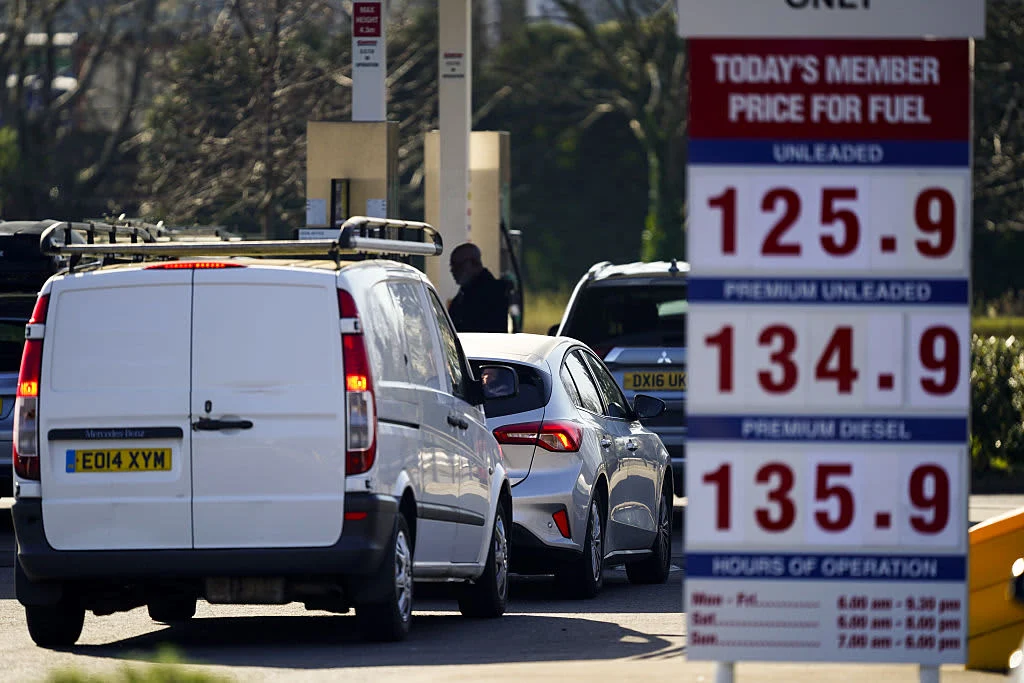
The United Kingdom’s inflation rate, as measured by the Consumer Price Index (CPI), remained steadfast at 3% in February, according to the latest figures released by the Office for National Statistics (ONS). This seemingly stable reading, however, represents a fleeting snapshot of the economic landscape, capturing the final period before the eruption of significant geopolitical conflict in the Middle East. Economists and policymakers alike are now bracing for an anticipated "brutal inflation surge" as the reverberations of the Iran war begin to impact global energy markets, fundamentally reshaping the UK’s economic outlook for the remainder of the year.
The February Snapshot: A Calm Before the Storm
The ONS data, published on Thursday, March 5, 2026, revealed that the headline inflation rate in February held firm, defying expectations from a Reuters poll of economists who had largely anticipated the consumer price index to remain unchanged from the preceding month. Core inflation, a key metric that strips out volatile components such as energy, food, alcohol, and tobacco, saw a slight uptick, rising to 3.2% in February from 3.1% in January. This modest increase in underlying price pressures offered an early indication of persistent domestic inflation, even prior to the external shock.
Grant Fitzner, the chief economist at the ONS, provided initial commentary on the figures via social media platform X. He noted, "After last month’s slowdown, annual inflation was unchanged. The largest upwards driver was the price of clothing, which rose this month but fell a year ago." Fitzner also highlighted a crucial offsetting factor: "This was offset by falls in petrol costs, with prices collected before the start of the conflict in the Middle East and subsequent rise in crude oil prices." This statement underscored the retrospective nature of the February data, effectively rendering it a historical marker rather than a forward-looking indicator of the prevailing economic climate. Following the data release, the British pound experienced a slight dip, trading down 0.17% against the dollar at $1.3385, as markets began to digest the implications of a data set already overshadowed by rapidly unfolding global events.
Escalation in the Middle East: A Geopolitical Earthquake
The tranquil inflation figures for February stand in stark contrast to the dramatic escalation of tensions in the Middle East during the latter part of the month. The period covered by the inflation print concludes just before the United States and Israel initiated a series of airstrikes on Iran, which were swiftly met with retaliatory strikes by the Iranian Republic. This sudden and intense flare-up of hostilities triggered immediate and profound concerns across global financial and commodity markets.
At the heart of these concerns lies the Strait of Hormuz, a narrow maritime chokepoint strategically located between the Persian Gulf and the Gulf of Oman. This vital passage is indispensable for global energy trade, through which approximately 20% of the world’s total petroleum consumption and a significant portion – estimated at around 25% – of global liquefied natural gas (LNG) transits daily. An ongoing and almost total blockade of this strait, whether de facto or de jure, has already sent global energy prices spiralling upwards. Crude oil benchmarks, such as Brent and WTI, saw significant jumps in trading, reflecting the profound supply risks introduced by the conflict.
The United Kingdom is particularly exposed to the volatility of rising energy prices. Its economy relies heavily on oil and gas imports to meet its domestic energy demand. Furthermore, a critical vulnerability for the UK stems from its limited gas storage facilities. Historically, the UK possessed significant gas storage capacity, including major sites like Rough. However, commercial decisions and policy shifts over the past decades led to a reduction in this capacity, leaving the nation more susceptible to short-term supply disruptions and price shocks compared to some of its European neighbours, who maintain larger strategic reserves. This structural dependence amplifies the economic repercussions of any prolonged disruption to global energy supplies originating from the Middle East.
Economists Sound the Alarm: The Impending Inflationary Wave

For many leading economists, the February inflation data is merely a "false flag," offering a misleading sense of stability before the onset of a profound economic shock. Sanjay Raja, Chief UK Economist at Deutsche Bank, issued a stark warning on Wednesday, stating, "Brace for impact. Inflation is poised for another unwelcome detour" from its previous downward trajectory. He emphasized the inevitability of a renewed inflationary surge.
Echoing this grave assessment, Suren Thiru, Chief Economist at ICAEW (Institute of Chartered Accountants in England and Wales), articulated his concerns in emailed comments. Thiru asserted, "February’s unchanged inflation is a false flag for the economy as these figures pre-date the eyewatering energy shock induced by the Middle East conflict and the subsequent financial pain facing consumers and businesses." He further elaborated on the projected trajectory, noting, "While inflation should fall next month as the cut to green levies temporarily lowers energy bills, a brutal inflation surge looms with skyrocketing oil and gas costs likely to lift the headline rate above 4% by the summer." The government’s planned reduction in "green levies" on household energy bills was expected to provide some temporary relief in April, but analysts universally agree that this will be a fleeting respite, quickly overshadowed by the sustained upward pressure from international commodity markets. The consensus among economic forecasters is that the conflict’s impact will rapidly translate into higher pump prices for petrol and diesel, increased utility bills for households, and elevated operational costs for businesses across all sectors.
The Bank of England’s Tightrope Walk: A Policy Conundrum
The geopolitical crisis has fundamentally rewritten the script for the Bank of England (BOE). Prior to the conflict, the UK, despite experiencing a stubbornly high inflation rate compared to many of its continental counterparts, had been on a path towards moderation. The expectation was that the rate of price rises would gradually slow towards the BOE’s symmetrical 2% target over the course of the year, potentially creating fiscal space for the central bank to begin cutting interest rates from their current level of 3.75%.
However, the war has effectively put an end to any immediate prospects of rate cuts. Instead, economists are now grappling with a significantly revised inflationary outlook, suggesting that the BOE will likely be compelled to maintain interest rates at their current level for longer than anticipated, or, in a more severe scenario, could even be forced to hike rates again to combat persistent price pressures.
Zara Nokes, a global market analyst at J.P. Morgan Asset Management, aptly summarized the situation, stating that UK inflation data for February "is in effect old news, with attention now firmly on what is coming down the tracks as a result of the conflict in the Middle East." Nokes acknowledged that the "upside surprise in core inflation today will be of concern for the Bank given it shows we are still contending with sticky price pressures even before accounting for the recent spike in energy prices."
Despite the immediate concerns, Nokes offered a nuanced perspective, suggesting that while the energy shock will undoubtedly exert upward pressure on inflation over the next couple of quarters, "we are very unlikely to see an inflation spike in the same magnitude as 2022" following Russia’s invasion of Ukraine. Her reasoning hinges on a critical difference in the domestic economic context: "We are in a very different world; the labour market is in a much weaker position, and this therefore makes it far less likely that workers – concerned about rising costs – feel able to push for higher wages and thus entrench price pressures more broadly." Based on this assessment, Nokes advocated for the BOE to hold rates, rather than pursue further hikes.
Last week, the Bank of England’s Monetary Policy Committee (MPC) unanimously voted to keep its benchmark interest rate on hold at 3.75%. In its official statement, the MPC explicitly addressed the unfolding crisis: "Conflict in the Middle East has caused a significant increase in global energy and other commodity prices, which will affect households’ fuel and utility prices and have indirect effects via businesses’ costs." The central bank acknowledged the pre-existing "continued disinflation in domestic prices and wages" but unequivocally warned, "CPI inflation will be higher in the near term as a result of the new shock to the economy." The BOE’s policymakers also signalled their vigilance, stating they are "alert to the increased risk of domestic inflationary pressures through second-round effects in wage and price-setting, the risk of which will be greater the longer higher energy prices persist." This indicates a keen awareness of the potential for the energy shock to filter through into broader price increases as businesses pass on higher costs and workers seek compensation for eroded purchasing power.
Deep Dive into Energy Market Dynamics and UK Exposure
The Strait of Hormuz, a 21-mile-wide channel, serves as the only sea passage from the Persian Gulf to the open ocean. Its strategic significance cannot be overstated; disruptions, even perceived ones, send shockwaves through global energy markets. With the ongoing conflict in the region, the threat of an almost total block, whether through direct military action or heightened security risks rendering transit uninsurable, has propelled crude oil prices to multi-year highs. The price of Brent Crude, the international benchmark, surged by over 10% in the immediate aftermath of the initial hostilities, reflecting the profound anxiety over potential supply shortages.

The UK’s vulnerability is compounded by a historical trajectory in its energy policy. While once a net energy exporter thanks to North Sea oil and gas, declining domestic production over the past two decades has shifted the nation towards increasing reliance on imports, particularly for natural gas. Furthermore, the decision to close the UK’s largest natural gas storage facility, Rough, in 2017 (though partially reopened since, albeit at reduced capacity) diminished the country’s ability to buffer against sudden price spikes or supply interruptions. This leaves the UK more exposed than many of its European neighbours, such as Germany or France, which have maintained or even expanded their strategic gas reserves, enabling them to absorb external shocks with greater resilience. The lack of extensive storage means that the volatility in global spot markets translates almost directly into domestic consumer prices with little lag.
Potential Economic Repercussions: Beyond Energy
The direct impact of soaring energy prices extends far beyond just utility bills and petrol costs. Across the UK economy, businesses face increased operational expenditures, ranging from higher transportation costs for logistics companies to elevated manufacturing expenses for industrial firms. These costs will inevitably be passed on to consumers, either directly through higher product prices or indirectly through reduced profit margins leading to less investment and potentially job losses.
For households, the impending inflation surge means a significant erosion of real incomes. With wages unlikely to keep pace with accelerating price rises, consumer spending power will diminish, leading to a contraction in discretionary expenditure. This could precipitate a broader slowdown in economic activity, potentially pushing the UK economy closer to, or even into, a recession. Sectors particularly reliant on consumer confidence, such as retail, hospitality, and leisure, are likely to bear the brunt of this contraction. The value of the British pound, already sensitive to economic uncertainty, could experience further volatility as international investors react to the deteriorating economic outlook and the BOE’s increasingly complex policy dilemma. A weaker pound, in turn, makes imports more expensive, creating a self-reinforcing inflationary cycle.
The Path Ahead: Forecasts and Uncertainties
Forecasting the precise trajectory of UK inflation in the coming months is fraught with unprecedented uncertainty, largely dependent on the duration and intensity of the Middle East conflict. ING Economist James Smith noted that the threshold for further rate hikes by the BOE remains unclear. He referenced past Bank research suggesting that "second-round effects tend to become more pronounced when headline inflation exceeds 3.5 – 4%. This is a helpful line in the sand."
Under ING’s analysis, if current high energy prices persist due to an ongoing blockade or heightened tensions, UK inflation could briefly peak at 4% in the autumn. Alternatively, if disruption begins to ease through the second quarter and energy prices gradually fall back, a peak of 3.5% could be hit in September. These projections, however, are highly sensitive to geopolitical developments that are inherently unpredictable. The government may also face increasing pressure to implement further support measures for households and businesses, potentially in the form of energy bill subsidies or tax cuts, though such interventions carry their own fiscal implications.
Conclusion
The February inflation figures, while numerically stable, represent the last vestiges of a pre-crisis economic reality for the United Kingdom. The eruption of conflict in the Middle East and its immediate, severe impact on global energy markets have dramatically altered the nation’s economic trajectory. What was once a gradual disinflationary path towards the Bank of England’s target has now transformed into a perilous journey towards an anticipated "brutal inflation surge." Households and businesses face significant financial pain, while the Bank of England grapples with an unenviable policy dilemma – balancing the need to contain inflation against the risks of stifling an already fragile economy. The coming months will be a critical test of the UK’s economic resilience, heavily influenced by the volatile geopolitical currents flowing from the Strait of Hormuz.