Gilang Muhammad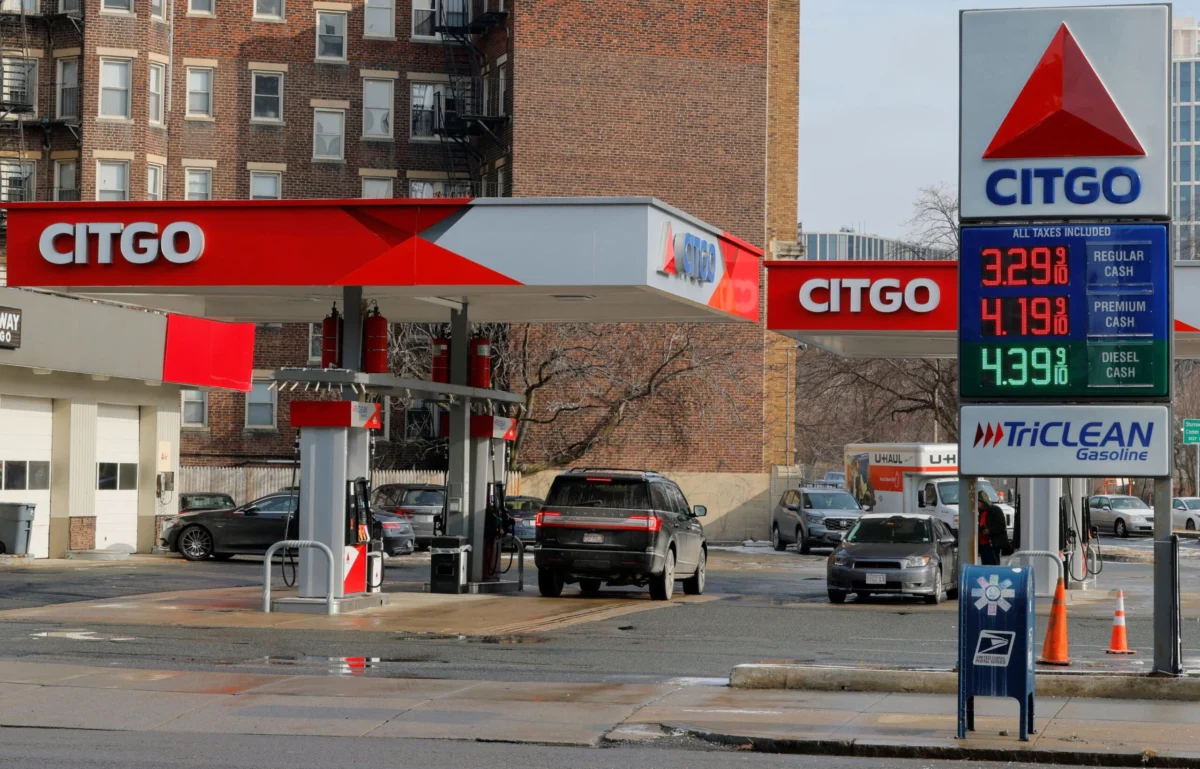
American motorists are currently contending with the highest gasoline prices seen in more than a year and a half, a direct consequence of the escalating U.S.-Iran war which has severely disrupted the intricate global oil trade. According to data compiled by AAA, the national average price for a gallon of unleaded gasoline in the United States surged to approximately $3.54 per gallon on Tuesday. This marks a significant milestone, representing the highest average price since mid-2024 and an alarming 21% increase from just a month prior, underscoring the rapid and profound impact of geopolitical instability on consumer costs.
The Genesis of the Surge: Geopolitical Tensions Erupt
The precipitous rise in gas prices commenced last week, immediately following a series of U.S.-Israeli strikes on Iran. This military action rapidly escalated into a full-blown conflict, critically crippling the Strait of Hormuz, a narrow yet profoundly vital passageway for global oil shipments. The disruption of this strategic chokepoint has been widely characterized as the "biggest oil supply disruption in history," sending shockwaves through international energy markets. The immediate aftermath saw gas prices experience their largest three-day jump since Hurricane Katrina devastated parts of the U.S. Gulf Coast in 2005, a comparison highlighted by an analysis from Bespoke Investment Group that underscores the severity and suddenness of the market’s reaction.
Prior to this month’s dramatic surge, the national average gas price had enjoyed a period of relative stability, even dipping to lows not seen since 2021, according to AAA records. While current prices remain below the record highs experienced in the tumultuous aftermath of Russia’s full-scale invasion of Ukraine in 2022, the rapid ascent presents a fresh and formidable challenge to household budgets and the broader economy.
The Strait of Hormuz: A Global Energy Lifeline Under Threat
The Strait of Hormuz is arguably the world’s most critical oil transit chokepoint, connecting the Persian Gulf with the Arabian Sea and beyond. Approximately one-fifth of the world’s total petroleum liquids consumption, and roughly one-third of all seaborne-traded oil, passes through this narrow waterway daily. Major oil producers such as Saudi Arabia, Iran, Iraq, Kuwait, Qatar, and the United Arab Emirates rely heavily on the Strait for their exports. Any disruption here has immediate and far-reaching implications for global energy supply and, consequently, for international oil prices. The current conflict, by directly impeding transit through this vital artery, has severely constrained the flow of crude oil to global markets, creating an acute supply shock that has reverberated from trading floors to gas pumps.
The U.S.-Iran conflict, a culmination of decades of strained relations and regional proxy skirmishes, has now spilled over into direct military confrontation. While the specific catalysts for the U.S.-Israeli strikes are complex and multifaceted, involving concerns over regional security, nuclear proliferation, and maritime safety, their immediate effect has been to ignite a major military conflict in a region already prone to volatility. This direct engagement has elevated the risk premium on oil to unprecedented levels, as traders and refiners scramble to secure supplies amidst profound uncertainty.
A Chronology of Escalation and Market Impact
The sequence of events unfolded rapidly, setting the stage for the current market turmoil. The initial U.S.-Israeli strikes on Iranian targets commenced in the early days of March 2026. These actions, reportedly in response to perceived threats or prior attacks, quickly triggered retaliatory measures from Iran, including direct or indirect actions that impacted shipping in the Strait of Hormuz.
- March 7, 2026: Reports emerge of U.S.-Israeli strikes on key infrastructure within Iran. Global oil benchmarks, including West Texas Intermediate (WTI) and Brent Crude, begin to tick upwards as initial concerns about regional stability mount.
- March 8, 2026: As the conflict intensifies, initial reports of disruptions to shipping in the Strait of Hormuz surface. Insurance premiums for tankers transiting the area skyrocket, and some shipping companies begin to reroute or delay voyages, signaling a tangible impact on supply chains. Crude oil prices experience a sharp upward acceleration.
- March 9, 2026: The conflict is officially acknowledged as having "crippled" the Strait of Hormuz, with significant impediments to oil tanker traffic. This day sees the largest single-day jump in crude oil prices, pushing WTI above the closely watched $100 per barrel mark. News of the "biggest oil supply disruption in history" begins to circulate among analysts. In the U.S., gas prices record their largest three-day jump since Hurricane Katrina, as observed by Bespoke Investment Group.
- March 10, 2026: President Donald Trump issues a statement expressing optimism that the war would end "very soon," an attempt to assuage market fears and consumer anxiety. However, Defense Secretary Pete Hegseth indicates that this day would be the "most intense day of strikes" in Iran, suggesting ongoing military operations rather than an immediate de-escalation.
- March 11, 2026 (Tuesday): The national average gas price climbs to $3.54 per gallon, solidifying the highest level since mid-2024. U.S. crude oil prices, while having briefly surpassed $100, are last reported hovering around $84 per barrel, reflecting continued volatility and market uncertainty, despite some slight moderation from their peak. Amin Nasser, CEO of Saudi Aramco, issues a stark warning about "catastrophic consequences" for the global oil market, describing it as the "biggest crisis the region’s oil and gas industry has faced."
Supporting Data and Market Dynamics
The current surge is not merely a knee-jerk reaction to conflict; it is underpinned by fundamental market dynamics exacerbated by the supply shock. The price of gasoline at the pump is primarily influenced by four main factors: the cost of crude oil, refining costs, distribution and marketing costs, and taxes. Crude oil typically accounts for 50-60% of the retail price of gasoline, making it the most significant determinant.
While crude oil prices have seen dramatic swings, their elevated baseline is the primary driver. Brent Crude, the international benchmark, and West Texas Intermediate (WTI), the U.S. benchmark, are both reflecting the heightened geopolitical risk. The brief breach of the $100 per barrel threshold for WTI earlier in the week underscores the market’s immediate assessment of the supply deficit. Even at $84 per barrel, crude remains significantly higher than the lows seen in recent years, when the national average gas price hovered near $2.50 per gallon or even less.
Adding to the upward pressure are seasonal factors. As AAA spokesperson Aixa Diaz explained, gas prices inherently tend to rise around this time of year with the commencement of the spring break travel season. This increased demand coincides with the annual transition from winter-blend gasoline to summer-blend gasoline. Summer-blend fuel, which is less volatile to prevent evaporation in warmer temperatures, is more expensive to produce due to a more complex refining process. "Those factors combined with elevated crude oil prices lead to higher pump prices," Diaz told CNBC. "No one knows how much higher gas prices will go. Oil is a volatile global commodity."
Furthermore, refinery utilization rates, inventory levels (both commercial and strategic reserves), and the strength of the U.S. dollar can all play roles. While the U.S. Strategic Petroleum Reserve (SPR) exists to mitigate severe supply shocks, decisions to tap into it are politically charged and typically reserved for extreme circumstances. The current situation is testing the limits of global oil market resilience.
Official Responses and Industry Perspectives
The U.S. administration, led by President Donald Trump, is acutely aware of the political and economic ramifications of soaring gas prices. Trump, whose re-election campaign has heavily focused on his perceived success in lowering the cost of living, reiterated his expectation that the war would end "very soon." This optimistic forecast, delivered amidst the escalating conflict, aims to provide a glimmer of hope to consumers facing financial strain. Earlier in the year, at the World Economic Forum in Davos, Switzerland, Trump had confidently declared that there was "virtually no inflation" in the U.S., citing falling energy costs as evidence that the nation had "defeated" inflation. He had asserted, "Grocery prices, energy prices, airfares, mortgage rates, rent and car payments are all coming down, and they’re coming down fast… We’ve done a hell of a job in 12 months." The current situation directly challenges this narrative, forcing the administration to navigate a complex geopolitical crisis with significant domestic economic fallout.
Defense Secretary Pete Hegseth’s statement on Tuesday, characterizing it as the "most intense day of strikes" in Iran, paints a more immediate and stark picture of the ongoing military engagement, potentially dampening hopes for an imminent resolution and further fueling market uncertainty.
Beyond U.S. officialdom, international bodies and industry leaders have voiced profound concern. Amin Nasser, the chief executive of Saudi Arabian oil giant Aramco, delivered a sobering assessment, warning that the war could have "catastrophic consequences" for the global oil market. His declaration that "While we have faced disruptions in the past, this one by far is the biggest crisis the region’s oil and gas industry has faced" underscores the unprecedented nature of the current disruption, coming from a leader of the world’s largest oil producer.
The International Energy Agency (IEA), which represents major energy-consuming nations, has likely been monitoring the situation closely, potentially convening emergency meetings or preparing contingency plans for coordinated releases from strategic reserves, though no official statements regarding such actions were immediately available. Oil-importing nations across Europe and Asia have also expressed deep concern over the stability of supply and the inflationary impact on their own economies.
Raymond James analyst Bobby Griffin provided insights into the immediate financial pressures on retailers. He explained that if crude oil prices continue their upward trajectory, retailers would be compelled to "chase" higher price tags to safeguard their profit margins. Conversely, if crude oil prices were to stabilize at current elevated levels, oil sellers would likely experience squeezed margins for several weeks. Griffin also cautioned that even if crude prices were to decline, consumers might not see an immediate corresponding drop at the pump, as retailers typically do not pass down cost savings to drivers as rapidly as they implement price increases.
Broader Impact and Implications
The soaring cost of gasoline carries significant economic, political, and social ramifications, extending far beyond the direct cost to motorists.
Economic Impact:
The immediate and most visible impact is on inflation. Higher energy costs ripple through the entire economy, increasing transportation costs for goods, raising manufacturing expenses, and ultimately contributing to higher prices for a wide array of consumer products. This erodes purchasing power, effectively acting as a tax on consumers and businesses alike. Consumer spending, a critical driver of economic growth, is likely to take a hit as households allocate a larger portion of their budgets to fuel, leaving less for discretionary purchases. Businesses, particularly those reliant on transportation and logistics, face increased operational costs, potentially leading to reduced profitability, delayed investments, or even job cuts in some sectors. Global economic growth forecasts, already subject to various headwinds, could be revised downwards if oil prices remain stubbornly high.
Political Implications:
The surge in gas prices directly undermines President Trump’s core campaign message of affordability and his claim of having "defeated inflation." As the U.S. heads into midterm elections in November, where control of Congress will be determined, gas prices are set to become a potent political issue. Historically, high gas prices have often been a flashpoint for voter discontent, capable of swaying election outcomes. The Republican party’s ability to retain control of Congress could hinge on how effectively the administration manages both the conflict and its economic fallout. The perception of economic stability and prosperity, central to any incumbent’s re-election bid, is now under severe threat.
Geopolitical Ramifications:
The conflict underscores the fragility of global energy security and the enduring reliance on fossil fuels, particularly from volatile regions. It will likely renew calls for diversification of energy sources and investments in renewable technologies, as well as a reassessment of strategic petroleum reserves by nations worldwide. The escalation in the Persian Gulf also destabilizes an already fragile region, potentially drawing in other regional and international actors, with long-term consequences for global peace and security. Diplomatic efforts will be crucial to de-escalate the conflict and restore stability to vital shipping lanes.
Consumer Behavior:
In the face of persistently high gas prices, consumers may be forced to adjust their behaviors. This could include reducing non-essential travel, opting for more fuel-efficient modes of transport, or delaying purchases of larger, less fuel-efficient vehicles. The spring break and upcoming summer travel seasons, typically periods of increased demand, could see a dampening effect as families reconsider their vacation plans to mitigate costs.
In conclusion, the current surge in U.S. gas prices is a stark reminder of the interconnectedness of global geopolitics and everyday economics. The U.S.-Iran conflict, by disrupting the world’s most critical oil chokepoint, has unleashed an unprecedented supply shock. While President Trump expresses hope for a swift resolution, the immediate outlook, as articulated by industry leaders and defense officials, suggests ongoing intensity. The duration of this conflict and the global response to the supply disruption will ultimately determine how much longer consumers endure pain at the pump, and the extent of its broader economic and political ramifications. The volatility of oil as a global commodity means that the path forward remains highly uncertain, with significant implications for households, businesses, and policymakers alike.
— CNBC’s Spencer Kimball and Dan Mangan contributed to this report.