Farhan Pambudi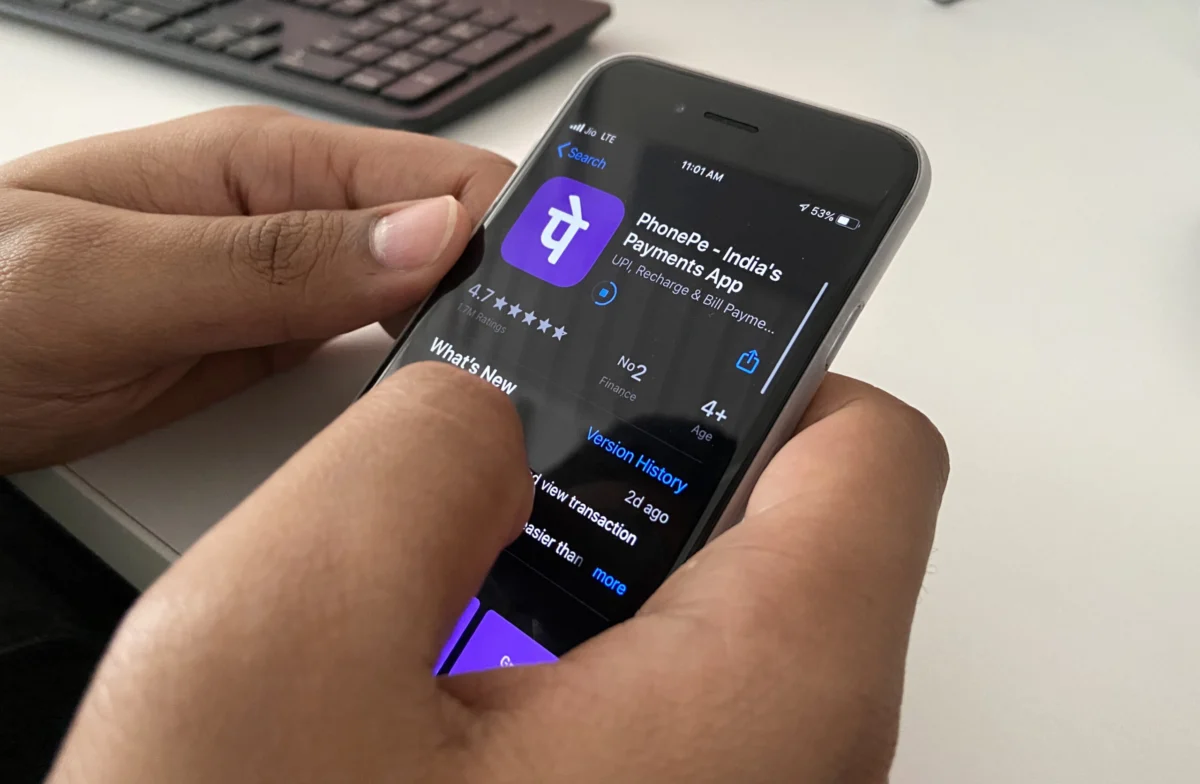
PhonePe, the Bengaluru-headquartered leader of India’s digital payments landscape, has officially announced the suspension of its highly anticipated Initial Public Offering (IPO), attributing the strategic delay to escalating geopolitical instability and a corresponding period of extreme volatility within global and domestic equity markets. The decision, communicated on Monday, represents a significant recalibration for the Walmart-backed fintech giant, which had only recently signaled its readiness to enter the public markets. While the company maintains its long-term commitment to a listing on Indian stock exchanges, the immediate postponement underscores the precarious nature of the current financial environment, which has been severely impacted by the onset of conflict in the Middle East and its subsequent ripple effects on investor sentiment.
The move to pause the IPO comes less than two months after PhonePe filed an updated prospectus, a document that had initially set the stage for a landmark listing later this year. The company’s decision to retreat from the immediate launch window highlights the broader challenges facing "new-age" technology firms in India as they navigate a landscape defined by "risk-off" sentiment among institutional investors. According to market analysts, the confluence of rising crude oil prices, fluctuating currency values, and a general retreat from emerging market equities has created a sub-optimal environment for high-valuation tech debuts.
A Volatile Macroeconomic Backdrop
The primary driver behind PhonePe’s decision is the deteriorating geopolitical climate in the Middle East, which has rattled financial nerve centers worldwide. Since the escalation of regional hostilities on February 28, global markets have been characterized by heightened sensitivity to energy supply disruptions and inflationary pressures. For India, a country heavily dependent on oil imports, these developments have a direct and immediate impact on fiscal stability and corporate profitability.
The repercussions have been clearly visible on India’s benchmark equity indexes. Both the Nifty 50 and the BSE Sensex have recorded declines of approximately 9% over the past thirty days. The broader market has suffered even more significant losses; data suggests that over 400 Indian stocks have witnessed double-digit percentage falls since the conflict began. In such an environment, the appetite for large-scale IPOs—particularly those involving significant secondary share sales by existing investors—has diminished significantly. PhonePe’s leadership appears to have concluded that proceeding with the listing under these conditions would risk a suboptimal debut and potential undervaluation.
The Valuation Debate and Company Response
Central to the discourse surrounding the IPO delay is the question of valuation. In January 2023, PhonePe achieved a valuation of approximately $12 billion following a successful funding round. For its public debut, the company was reportedly targeting a market capitalization in the vicinity of $15 billion, with plans to raise as much as $1.5 billion through the offering. This target would have positioned PhonePe as one of the most valuable fintech entities listed on Indian exchanges.
However, recent reports indicated a potential friction point between the company’s expectations and the reality of the current market. Sources familiar with the internal discussions suggested that investment bankers had advised PhonePe to consider a more conservative valuation of around $9 billion to ensure a successful subscription and post-listing performance. This proposed $6 billion "valuation gap" has led some industry observers to speculate that the IPO pause was as much about pricing as it was about market volatility.
PhonePe has moved swiftly to dismiss these claims. A company spokesperson characterized the suggestions that valuation concerns prompted the delay as "baseless," emphasizing that the decision was rooted entirely in external market conditions that are unrelated to the company’s fundamental health. The official statement reiterated that the process was paused solely to wait for a more stable economic window that would reflect the true value of the enterprise.
A Chronology of PhonePe’s Evolution
To understand the stakes of the current IPO delay, it is necessary to examine PhonePe’s rapid ascent within the Indian fintech ecosystem. Founded in 2015 by former Flipkart executives Sameer Nigam, Rahul Chari, and Burzin Engineer, the company was envisioned as a solution to the friction inherent in traditional Indian payment systems.
- 2015-2016: PhonePe was founded and shortly thereafter acquired by e-commerce titan Flipkart, providing the startup with the capital and user base needed for rapid scaling.
- 2016-2021: The company became a pioneer in the government-backed Unified Payments Interface (UPI) ecosystem. It leveraged Flipkart’s ecosystem to drive adoption, eventually surpassing competitors like Google Pay and Paytm in transaction volume.
- 2022: In a landmark corporate restructuring, Flipkart and PhonePe completed a full separation. This move was designed to allow PhonePe to operate as an independent entity, seek its own capital, and eventually pursue a public listing. Despite the spin-off, Walmart remained the majority shareholder.
- 2023: The company secured significant tranches of funding, reaching a $12 billion valuation and diversifying its service offerings beyond simple payments.
- 2025-2026: PhonePe filed its updated IPO prospectus, detailing its financial trajectory and setting a course for a 2026 listing, a plan that has now been put on hold.
Dominance in the UPI Ecosystem
PhonePe’s market position remains its strongest asset. According to data released by the National Payments Corporation of India (NPCI), the company continues to lead the UPI transaction charts by a significant margin. In February 2026 alone, PhonePe processed approximately 9.3 billion transactions, with a total value of roughly ₹13.1 trillion (approximately $141.9 billion).
By comparison, its nearest competitor, Google Pay, processed 6.8 billion transactions valued at around ₹9 trillion ($97.8 billion). This dominance in the UPI space provides PhonePe with a massive data moat and a high-frequency touchpoint with hundreds of millions of Indian consumers. The company has utilized this foundation to expand into high-margin financial services, including stockbroking, mutual fund distributions, and insurance products. Furthermore, its foray into the mobile app ecosystem with the "Indus Appstore" represents a strategic attempt to challenge the duopoly of Google and Apple in the Indian market.
Financial Performance and Operational Losses
The IPO prospectus filed prior to the delay offered a transparent look at the company’s financial health. For the six-month period ending September 2025, PhonePe reported a 22% year-on-year increase in revenue from operations, reaching ₹39.19 billion (approximately $424.4 million). This growth reflects the successful monetization of its vast user base through financial services and merchant lending.
However, the path to profitability remains a primary concern for potential public market investors. During the same six-month period, PhonePe’s losses widened to ₹14.44 billion (around $156.4 million), up from ₹12.03 billion in the previous year. The company has attributed these losses to continued aggressive investment in new product categories and the marketing spend required to maintain its market-leading position. In the context of an IPO, such widening losses often require a very stable market environment where investors are willing to prioritize long-term growth over immediate earnings—a condition that currently does not exist.
Implications for Investors and the Startup Ecosystem
The suspension of the IPO has direct implications for PhonePe’s early-stage and institutional backers. The listing was intended to serve as a primary exit vehicle for several high-profile investors. Tiger Global and Microsoft were slated to fully exit their positions through the IPO, while Walmart intended to offload approximately 45.9 million shares (roughly 9% of the company) while still maintaining majority control.
For the broader Indian startup ecosystem, PhonePe’s delay serves as a cautionary tale. It highlights the vulnerability of even the largest "unicorns" to global macroeconomic shifts. Following a period of relative stagnation in the Indian IPO market for tech firms—often referred to as an "IPO winter"—there were hopes that PhonePe’s debut would signal a definitive thaw. The postponement may lead other late-stage startups to reconsider their own listing timelines, potentially leading to a further drought of tech IPOs in the coming quarters.
Future Outlook and Market Requirements
Industry experts suggest that PhonePe is likely to revisit its IPO plans once the geopolitical situation in the Middle East stabilizes and the volatility in the Indian equity markets subsides. For a successful relaunch, several conditions will likely need to be met:
- Stabilization of Foreign Portfolio Investment (FPI) Flows: The Indian market needs to see a return of foreign capital, which has been exiting in favor of safer assets like US Treasuries during the current conflict.
- Clarity on Interest Rate Trajectories: Investors are seeking certainty regarding the Reserve Bank of India’s (RBI) stance on interest rates, as high rates typically discount the future cash flows of growth-oriented tech companies.
- Demonstrated Path to Profitability: PhonePe may use this delay to further optimize its operations and show a narrowing of losses in its next financial reporting cycle, which could help justify its $15 billion valuation target.
In conclusion, while the pause in PhonePe’s IPO is a setback for the company’s immediate capital-raising goals and its investors’ exit strategies, it is a move characterized by tactical caution. By refusing to list in a depressed market, the company is betting that its dominant market share and growing revenue streams will eventually command the premium valuation it seeks. For now, the fintech giant remains a private entity, continuing its expansion in the world’s fastest-growing digital payments market while waiting for the global economic storm to pass.