Gilang Muhammad
The United States’ Consumer Price Index (CPI) for February presented a picture of inflation largely consistent with economists’ forecasts, offering a momentary pause in price pressures before an unforeseen oil shock, stemming from escalating geopolitical tensions in the Middle East, rattled the global economic outlook. This report, released by the Bureau of Labor Statistics (BLS) on a Wednesday, provided a crucial snapshot of the economy’s health, closely watched by policymakers, investors, and consumers alike.
The February CPI Report: A Closer Look at the Numbers
For the month of February, the headline CPI advanced by a seasonally adjusted 0.3%, mirroring the consensus estimate from Dow Jones. This monthly increase translated into an annual inflation rate of 2.4%, precisely matching market expectations. This figure, while still above the Federal Reserve’s long-term 2% target, indicated a degree of stability in overall price movements.
A more granular examination of the report often involves stripping out the volatile components of food and energy prices to arrive at the core CPI. This metric, considered by many economists and central bankers as a more accurate gauge of underlying inflation trends, registered a modest 0.2% increase month-over-month. On an annual basis, the core CPI stood at 2.5%, aligning perfectly with forecasts. Notably, both the headline and core annual inflation rates remained unchanged from January, suggesting that while inflation continued to hover above the Fed’s target, it was not accelerating further into concerning territory prior to the geopolitical events.
Diving Deeper: Key Sectoral Performance
The stability in the overall inflation metrics belied a complex interplay of price movements across various goods and services categories. While prices for shelter and certain services continued their modest ascent, several goods categories, including used vehicles and auto insurance, experienced declines, contributing to the overall moderation.
Shelter Costs: As the single largest component of the CPI, accounting for approximately one-third of the overall index, shelter costs play a pivotal role in inflation dynamics. In February, the shelter index posted a 0.2% increase, pushing its annual rate to 3%. Within this critical category, rent of primary residence saw a notably subdued increase of just 0.1% for the month, marking the smallest monthly rise since January 2021. This deceleration in rent, a key component, suggests that the lagged effects of earlier moderation in housing markets may be beginning to filter through to official inflation statistics. Owner’s Equivalent Rent (OER), another significant sub-component that estimates the rental value of owner-occupied housing, also contributed to this trend. The overall slowdown in shelter inflation is a positive development, as persistent high housing costs have been a primary driver of sticky inflation in recent periods.
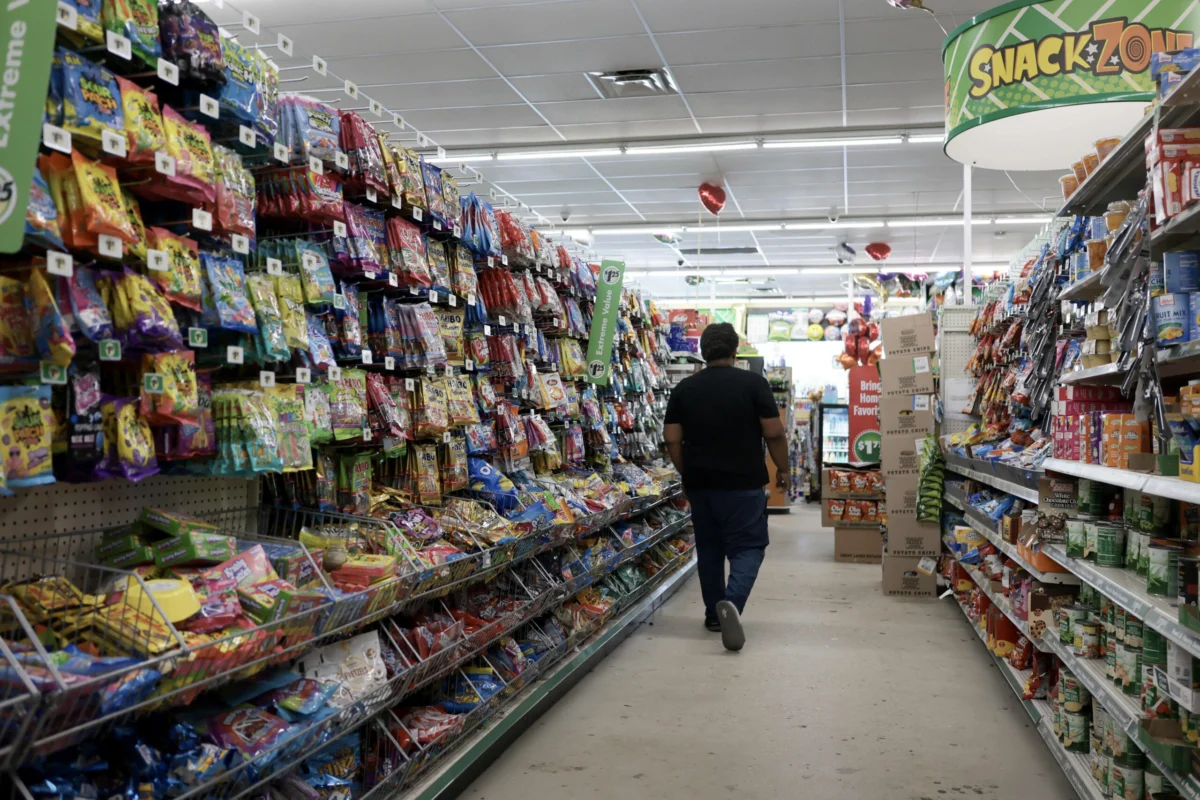
Food Prices: Food prices, which directly impact household budgets, saw an acceleration in February, rising by 0.4% for the month. This brought the annual increase in food prices to 3.1%. While some staples saw increases, egg prices stood out with a significant decline of 3.8% month-over-month, culminating in a dramatic 42.1% annual drop. This volatility in food prices is often influenced by factors such as weather patterns, supply chain disruptions, and global commodity markets.
Energy Sector: The energy index rose by 0.6% in February, contributing to a 0.5% annual increase. This pre-dates the dramatic surge in oil prices later in March, serving as a reminder of the inherent volatility and external dependencies of this sector. Components like gasoline, natural gas, and electricity all play a role in this index, influencing transportation costs and utility bills across the nation.
Goods vs. Services: A Shifting Landscape:
The report highlighted a continuation of the trend where goods inflation has largely receded from its pandemic-era peaks, while services inflation remains more persistent. Apparel prices, often sensitive to global trade dynamics and tariff pressures, experienced a significant 1.3% monthly gain, marking the largest jump since September 2018. New vehicle prices remained steady for the month and were up a modest 0.5% from a year ago, reflecting improvements in supply chains that had previously constrained inventory and driven up prices. Conversely, categories like used vehicles and auto insurance saw declines, indicating a normalization of prices in segments that had experienced sharp increases. The sustained, albeit modest, rise in services inflation, particularly outside of housing, for categories such as medical care, airline fares, and lodging, continues to be a focal point for economists and the Federal Reserve.
Understanding the Consumer Price Index
The Consumer Price Index (CPI) is a crucial economic indicator that measures the average change over time in the prices paid by urban consumers for a market basket of consumer goods and services. Compiled and released monthly by the Bureau of Labor Statistics (BLS), an agency within the U.S. Department of Labor, the CPI serves as a primary gauge of inflation. Its calculation involves tracking price changes for over 80,000 items from thousands of retail and service establishments, encompassing everything from food and housing to transportation, medical care, and recreation.
The CPI’s significance extends far beyond mere statistical reporting. It is widely used as an economic indicator of inflation and deflation, influencing policy decisions by the Federal Reserve. For businesses, it informs pricing strategies and wage negotiations. For consumers, it impacts purchasing power and the real value of wages and savings. Government agencies also use the CPI to adjust various payments, such as Social Security benefits, to account for changes in the cost of living. Understanding its components and movements is therefore vital for comprehending the broader economic environment.
The Federal Reserve’s Balancing Act
The February CPI report, while generally benign in its pre-geopolitical context, provided the Federal Reserve with little immediate impetus to alter its cautious stance on monetary policy. The central bank operates under a dual mandate: to foster maximum employment and maintain price stability, typically interpreted as a 2% average inflation target. Persistently high inflation erodes purchasing power, creates economic uncertainty, and can distort investment decisions. Conversely, deflation can lead to economic stagnation.

Following a series of aggressive interest rate hikes initiated in early 2022 to combat surging inflation, the Fed had paused its tightening cycle, holding the federal funds rate at a range of 5.25% to 5.50%. The February data, showing inflation holding above 2% but not worsening, likely reinforced the central bank’s "wait-and-see" approach. The Federal Open Market Committee (FOMC), the Fed’s primary policymaking body, was widely expected to keep interest rates unchanged at its upcoming meeting on March 18. Indeed, traders were assigning nearly 100% odds that the central bank would stay on hold, according to the CME Group’s FedWatch tool.
Looking ahead, market participants had been anticipating interest rate cuts later in the year. Prior to the geopolitical escalation, traders were assigning about a 43% chance of a second rate reduction before the end of the year, with the first cut widely expected in September. The Fed’s future decisions will hinge not only on incoming economic data, including subsequent inflation reports, but also on the evolving geopolitical landscape and its potential implications for energy markets and the broader economy. The central bank’s officials will carefully analyze whether any future inflation spikes are temporary, supply-side shocks or indicative of more persistent, demand-driven pressures.
Geopolitical Tensions Cast a Shadow: The Oil Shock
The calm reflected in the February CPI data was quickly overshadowed by a dramatic shift in global geopolitics that occurred shortly after the reporting period. Escalating tensions in the Middle East, specifically following reports of an attack attributed to the U.S. and Israel on Iranian targets, sent shockwaves through the international oil markets.
Timeline and Impact:
The immediate aftermath of these reports saw crude oil prices climb sharply amid fears of supply disruptions in the strategically vital Middle East region. This surge in prices happened outside the February reporting window but dramatically altered the inflation outlook for subsequent months. Global benchmark Brent crude briefly spiked above $100 a barrel, a psychological threshold that typically signals heightened market anxiety and can have significant economic repercussions. While prices later retreated from their absolute highs, crude oil was still up approximately 4% in Wednesday trading following the CPI release, underscoring the market’s sensitivity to geopolitical developments.
Mechanism of Impact:
Higher oil prices have a multifaceted impact on inflation. Increases in gasoline prices are immediately felt by consumers at the pump, directly impacting household budgets and reducing discretionary spending. Beyond direct energy costs, higher crude prices filter through the economy by increasing transportation and shipping costs for businesses. This, in turn, can lead to higher prices for a wide range of consumer goods, from groceries to manufactured products, as producers pass on their increased input costs. Sustained gains in crude prices can quickly manifest in headline inflation readings, even if underlying core price pressures remain stable. This creates a challenging scenario for central banks, as such supply-side shocks are often beyond the direct influence of monetary policy tools like interest rate adjustments.
Market Response and Investor Outlook
Markets reacted with a degree of ambivalence immediately following the release of the February CPI report, with stock market futures mixed and Treasury yields initially higher. However, the sentiment quickly shifted later in the session. Stocks slumped, and Treasury yields spiked, signaling that traders were largely looking through the backward-looking February CPI data. Instead, their focus pivoted to the burgeoning increase in oil prices and the potential for headline inflation to accelerate in the coming months due to geopolitical factors.
The rise in Treasury yields reflected investor concerns about future inflation and the possibility that the Federal Reserve might be forced to maintain higher interest rates for longer, or even reconsider its easing trajectory if the oil shock proves more persistent. Higher yields make borrowing more expensive for businesses and consumers, and can weigh on equity valuations by increasing the discount rate applied to future earnings. The market’s reaction underscored the primacy of forward-looking expectations, especially regarding inflation and central bank policy, over historical data. Commodity markets, particularly oil and gas, remained highly volatile, reflecting the ongoing uncertainty surrounding the Middle East situation.
Expert Perspectives and Future Outlook
Economists generally view energy price shocks stemming from geopolitical events as temporary phenomena, assuming the underlying situation eventually cools down. Sonu Varghese, chief macro strategist for the Carson Group, articulated this sentiment clearly: "CPI inflation for February was along expectations but this is the calm before the storm that will show up due to surging gasoline prices in March."
However, Varghese also highlighted a crucial point: "Still, this report does show that the Fed has an inflation problem even if you set aside the energy shock. Tariff-impacts are still hitting core goods inflation, while services inflation outside housing remains hot." This perspective underscores that even without the recent oil shock, persistent inflationary pressures exist within the economy, particularly in certain services sectors and due to lingering effects of trade policies. The challenge for the Federal Reserve will be to differentiate between these temporary, externally driven shocks and more entrenched domestic inflation dynamics when formulating its policy response. Should the geopolitical situation stabilize and oil prices recede, the underlying trends highlighted in the February report – stable core inflation, moderating rent, but persistent services inflation – would likely regain prominence in the Fed’s deliberations.
Broader Economic Implications
The dual narrative presented by the February CPI report and the subsequent geopolitical oil shock has significant implications across the economy. For consumers, the stability in February’s inflation offered a brief respite, but the looming threat of higher gasoline prices and potentially broader cost increases from the oil shock means household budgets could come under renewed pressure. This could dampen consumer confidence and spending, a critical engine of economic growth.
For businesses, the uncertainty surrounding energy prices complicates operational planning, supply chain management, and pricing strategies. Industries reliant on transportation and energy-intensive manufacturing will face increased costs, which may either be absorbed, impacting profitability, or passed on to consumers, further fueling inflation.
From a broader macroeconomic perspective, the sudden injection of geopolitical risk adds another layer of complexity to the global economic outlook. While economists generally anticipate the direct impact of an oil shock to be temporary, a prolonged period of elevated energy prices could weigh on global growth, potentially increasing the risk of stagflation – a combination of high inflation and slow economic growth. Central banks worldwide will be watching closely, navigating the delicate balance between controlling inflation and supporting economic activity in an increasingly unpredictable global environment. The February CPI report, therefore, serves as a testament to the fact that while domestic economic fundamentals might be aligning, external shocks remain a potent force capable of rapidly reshaping the economic landscape.