Gilang Muhammad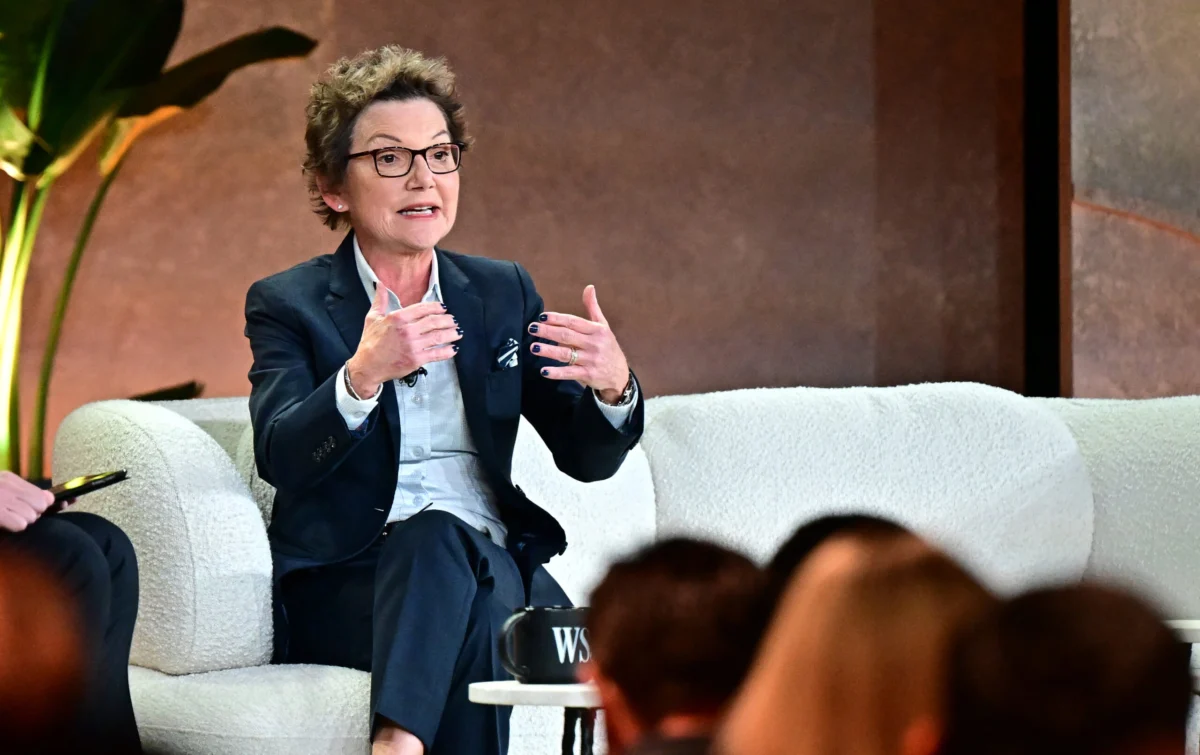
San Francisco Federal Reserve President Mary Daly on Friday voiced significant concern regarding the unexpectedly weak February jobs report, emphasizing that the data intensifies an already intricate policymaking landscape for the U.S. central bank. Speaking in an exclusive interview with CNBC, Daly highlighted the growing tension between a softening labor market and inflation rates that persistently hover above the Fed’s mandated 2% target, a combination she described as significantly complicating future interest rate decisions.
A Challenging Economic Crossroads
The Bureau of Labor Statistics delivered a sobering economic update on Friday, reporting a decline of 92,000 nonfarm payrolls in February. This figure starkly contrasted with consensus economist expectations for a gain of 50,000 jobs and marked the third instance of job contraction within the past five months, signaling a potential deceleration in the nation’s labor market momentum. The unemployment rate, while not explicitly mentioned in Daly’s direct comments, is implicitly under scrutiny given the payroll decline, and typically such a drop in payrolls, if sustained, would either cause the unemployment rate to tick up or at least prevent it from falling further. Other key labor market indicators, such as average hourly earnings growth and the labor force participation rate, would also be critical in painting a complete picture of the labor market’s health, which analysts would invariably assess alongside the headline payroll numbers.
"This jobs market report has certainly captured my attention," Daly stated during her "Squawk Box" appearance. "I don’t believe we can simply overlook this report, but equally, we must be cautious not to overstate the significance of a single month’s data." Her nuanced stance underscores the Federal Reserve’s dilemma: balancing the need to achieve full employment with its primary objective of price stability, a challenge known as its "dual mandate."
The Fed’s Recent Policy Trajectory and Current Predicament
The Federal Reserve has navigated a turbulent economic period characterized by rapid post-pandemic recovery, followed by an unprecedented surge in inflation. In response to mounting concerns about a cooling labor market and potential economic slowdowns, the Fed implemented three benchmark interest rate cuts in the latter half of 2025. These preemptive easing measures aimed to provide support to the economy amidst evolving global and domestic conditions.

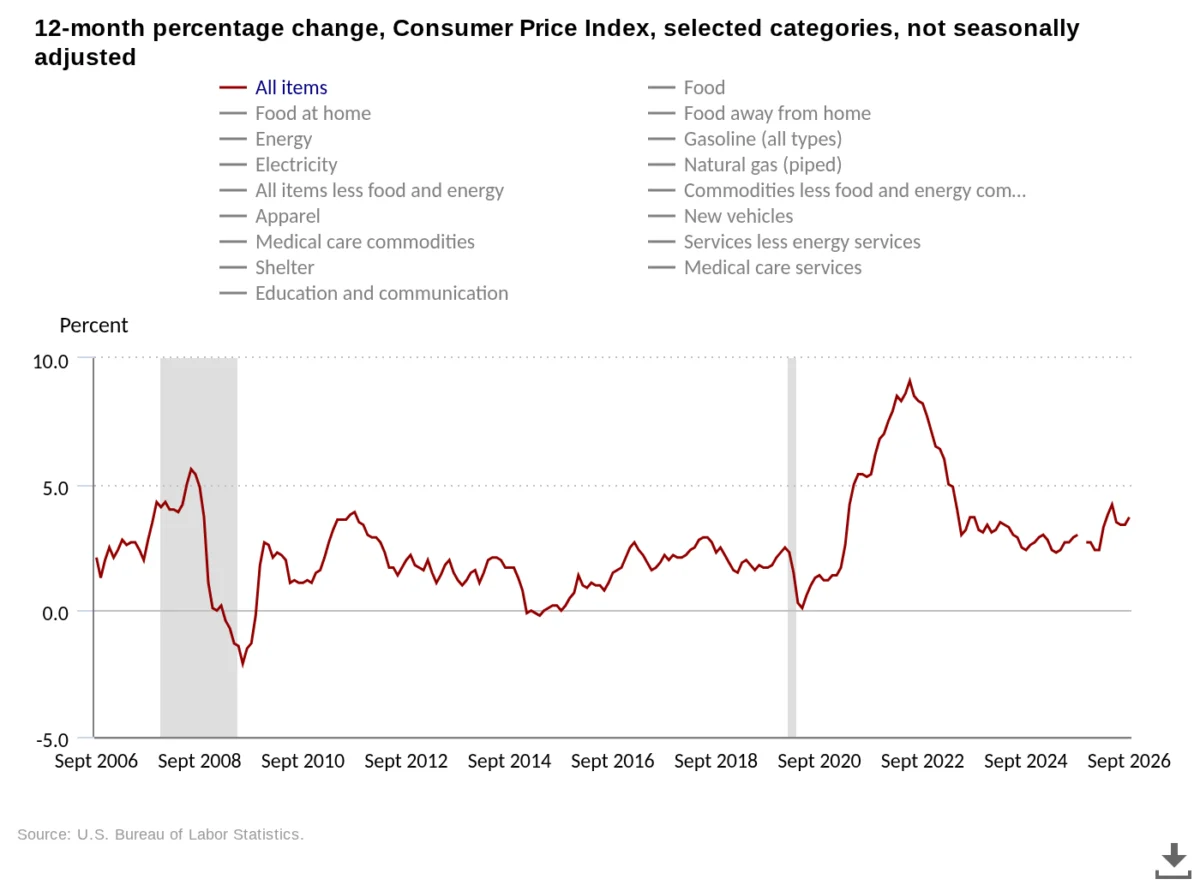
However, the current environment presents a markedly different challenge. Unlike previous periods where the Fed might have had more latitude to cut rates in response to labor market weakness, current inflation figures remain stubbornly elevated. While specific figures were not provided in Daly’s original remarks, broader economic data would typically show the Consumer Price Index (CPI) or Personal Consumption Expenditures (PCE) index running in the range of 3.5% to 4.5% annually, well above the central bank’s 2% target. Compounding this domestic challenge is the ongoing geopolitical instability, particularly the Iran war, which poses a significant threat to global energy markets and supply chains, potentially reigniting inflationary pressures.
"It’s a fundamentally different economic universe compared to when we’ve had inflation below our target," Daly explained, drawing a contrast with the rate cuts of 2019 when price pressures were considerably more subdued. "Right now, we are seeing inflation persistently above target. It has been printing above target for a considerable period, making this truly a balance of risks calculation. My hope is that the 75 basis points we delivered last year would provide a crucial floor underneath the labor market, preventing a more severe deterioration." This reference to a "75 basis points" move implies a significant policy adjustment, likely a cumulative total or a single large cut in the earlier part of the rate-cutting cycle in late 2025, designed to inject liquidity and confidence into the economy.
Market Reactions and Forward-Looking Expectations
The unexpected weakness in the February jobs report sent immediate ripples through financial markets. Futures traders, who actively price in expectations for future Fed policy moves, reacted swiftly by increasing the perceived odds of upcoming rate cuts. This shift pulled forward the market’s expectation for the next rate reduction, with many now anticipating it as early as July, and significantly raised the probability for at least two reductions by the close of the year. This market sentiment was reflected in various financial indicators; for instance, short-term Treasury bond yields, which are highly sensitive to monetary policy expectations, likely saw a decline as investors priced in lower future borrowing costs. The U.S. Dollar Index (DXY) might have also weakened against a basket of major currencies, reflecting a diminished interest rate differential compared to other economies.
Economists and market strategists quickly weighed in on the implications. Analysts from major investment banks, such as Goldman Sachs and JPMorgan, began revising their rate cut forecasts, with some suggesting the Fed might be compelled to act sooner than previously anticipated if subsequent data continues to show labor market weakening. Others, however, cautioned against an overreaction to a single report, emphasizing the Fed’s stated data-dependent approach and the persistent inflation challenge. "While the jobs report is certainly a dovish signal, the Fed’s commitment to fighting inflation remains paramount," commented one leading market strategist, preferring to remain anonymous due to proprietary forecasting models. "The ‘balance of risks’ Daly mentioned is precisely the tightrope the FOMC must walk."
Daly further articulated the difficulty of the current environment for monetary tightening. "I believe the crucial point is that it’s exceedingly challenging to contemplate hiking rates right now in a world where we lack clear evidence that the labor market is quite steady. Therefore, I think we simply require more time to assess the incoming data." Her comments suggest a preference for a patient, wait-and-see approach, allowing the cumulative effects of past policy actions to materialize and carefully evaluating forthcoming economic indicators before committing to any significant policy shift.
The Broader Economic Picture: Inflation, Geopolitics, and the Dual Mandate

The Federal Reserve’s dual mandate requires it to foster maximum employment and maintain price stability. These two objectives are often complementary but can, at times, become conflicting, as is currently the case. The February jobs report signals potential challenges to the "maximum employment" leg of the mandate, while inflation stubbornly resists falling to the 2% target, jeopardizing "price stability."
Inflation, which surged dramatically in 2021 and 2022 due to supply chain disruptions, robust consumer demand, and fiscal stimulus, has moderated but remains elevated. Core inflation measures, which strip out volatile food and energy prices, are also closely watched by the Fed as they are considered better indicators of underlying price trends. If core inflation also remains sticky, it suggests broader price pressures are embedded in the economy, making the Fed’s job even harder.
The geopolitical dimension, specifically the Iran war, adds another layer of complexity. Escalations in the Middle East can directly impact global oil prices, as the region is a critical source of crude oil. Higher oil prices translate into increased energy costs for businesses and consumers, feeding directly into inflationary pressures across various sectors, from transportation to manufacturing. Furthermore, disruptions to shipping lanes or trade routes due to conflict can exacerbate existing supply chain vulnerabilities, leading to higher costs for imported goods and materials. The Fed must factor these external, unpredictable variables into its economic projections and policy decisions, making the "balance of risks" calculation even more precarious.
Daly’s Influence and the Path Forward
While San Francisco Fed President Mary Daly does not hold a voting position on the rate-setting Federal Open Market Committee (FOMC) this year—her next voting turn is scheduled for 2027—her views carry significant weight within the institution. As a seasoned policymaker and a prominent voice among regional Fed presidents, her public statements often provide crucial insights into the internal deliberations and evolving consensus within the FOMC. Her emphasis on the "balance of risks" and the need for "more time" reflects a broader cautious sentiment that likely permeates much of the committee.
The path forward for the Federal Reserve is fraught with uncertainty. Policymakers will be closely scrutinizing a barrage of upcoming economic data, including subsequent jobs reports, inflation readings (CPI, PCE), retail sales, and manufacturing surveys, to gauge the economy’s trajectory. The challenge will be to discern whether the February jobs report represents an isolated anomaly or the harbinger of a more sustained downturn in the labor market. Simultaneously, they must remain vigilant against resurgent inflationary pressures, particularly those stemming from geopolitical events. The decision to either hold rates steady, initiate cuts, or even contemplate a hike (though Daly suggested this is highly unlikely in the current climate) will hinge on a delicate calibration of these competing forces, aiming to steer the U.S. economy towards both price stability and maximum sustainable employment. The coming months are set to be a critical test of the Fed’s adaptability and resolve in an increasingly complex global economic environment.