Gilang Muhammad
Wholesale prices experienced a significant and unexpected increase in February, providing a fresh indication that inflationary pressures remain entrenched across the U.S. economy, extending beyond the volatile fluctuations of energy costs. The Producer Price Index (PPI), a critical barometer measuring the average change over time in the selling prices received by domestic producers for their output, rose a seasonally adjusted 0.7% for the month, according to a report released Wednesday by the Bureau of Labor Statistics (BLS). This figure considerably surpassed the 0.3% increase anticipated by economists surveyed by Dow Jones, underscoring the ongoing challenge in taming inflation.
Excluding the often-volatile categories of food and energy, the so-called core PPI also climbed by 0.5%, similarly exceeding the consensus forecast of 0.3%. These elevated figures suggest that producers are continuing to face higher input costs, a trend that typically portends future increases in consumer prices as businesses pass on these expenses down the supply chain. The report landed amid an already heightened sense of vigilance regarding inflation, reinforcing concerns that the "last mile" in achieving the Federal Reserve’s target of 2% inflation may prove more arduous than previously hoped.
Understanding the Producer Price Index: A Key Economic Indicator
The Producer Price Index serves as an essential forward-looking indicator for economists, policymakers, and businesses. Unlike the Consumer Price Index (CPI), which tracks the prices consumers pay, the PPI measures what producers receive for their goods and services. It provides a glimpse into the cost pressures building up at the wholesale level before they fully manifest in retail prices. A sustained rise in PPI often signals that companies will eventually pass these increased costs onto consumers, contributing to higher CPI figures in subsequent months.
The PPI is meticulously compiled from surveys of thousands of businesses across various sectors of the U.S. economy. It covers a vast array of commodities and services, categorized to provide a detailed breakdown of where price increases or decreases are occurring. This allows analysts to pinpoint specific sectors driving inflationary trends, whether it be raw materials, intermediate goods, or finished products and services. The distinction between headline PPI (all items) and core PPI (excluding food and energy) is crucial because food and energy prices are notoriously susceptible to short-term shocks, such as weather events or geopolitical developments, which can obscure underlying inflationary trends. The persistence of core inflation is particularly concerning for the Federal Reserve, as it often reflects more systemic and demand-driven price pressures.
A Detailed Look at February’s PPI Data
February’s PPI data painted a picture of broad-based price increases, with significant contributions from both the goods and services sectors, though services emerged as a primary driver.
- Overall and Core Figures: The 0.7% month-over-month increase for the all-items index represented an acceleration from the 0.5% pace recorded in January. While the core PPI’s 0.5% increase was less than January’s 0.8% rise, it still comfortably outstripped expectations, indicating that underlying cost pressures remain robust.
- Annualized Inflation Rates: On a 12-month basis, headline PPI inflation reached 3.4%, marking its highest level in over a year. Core PPI inflation, a figure closely watched by central bankers, stood at 3.9% year-over-year. Both measures remain substantially above the Federal Reserve’s long-term inflation target of 2%, signaling that the journey back to price stability is far from complete.
- Services Sector Dominance: The surge in the overall PPI was largely attributable to a notable 0.5% increase in services costs during February. This development is particularly unwelcome for the Federal Reserve, as policymakers have increasingly focused on sticky services inflation as a key impediment to achieving their target. Services inflation is often more resistant to supply-side improvements and can be more directly linked to robust consumer demand and wage growth. Within the services category, specific areas saw substantial increases:
- Portfolio Management Fees: These fees, a significant component of services costs within the PPI measurement, climbed by 1% in February. This reflects increased demand for investment services or higher operating costs for financial firms.
- Securities Brokerage, Dealing, Investment Advice, and Related Services: Prices for these financial services accelerated dramatically, rising by 4.2% for the month. This sharp increase could be indicative of strong market activity, higher operational expenses for financial institutions, or increased demand for expert advice in a complex economic environment.
- Goods Sector Contributions: Prices for goods also saw a substantial increase of 1.1% on the month, contributing to the overall inflationary trend.
- Food Prices: A significant driver within goods, food prices rose by 2.4% in February.
- Energy Prices: Energy costs were up 2.3% for the month, reflecting ongoing volatility in global commodity markets.
- Fresh and Dry Vegetables: A particularly striking increase was observed in the index for fresh and dry vegetables, which soared by an astonishing 48.9%. Such sharp increases in specific food categories can often be attributed to adverse weather conditions affecting harvests, supply chain disruptions, or increased demand. While these spikes can be temporary, they contribute directly to the cost burden faced by food producers and, eventually, consumers.
Broader Inflation Landscape and the Federal Reserve’s Stance

The latest PPI report arrives at a critical juncture for U.S. economic policy, following a series of inflation readings that have tempered expectations for imminent interest rate cuts.
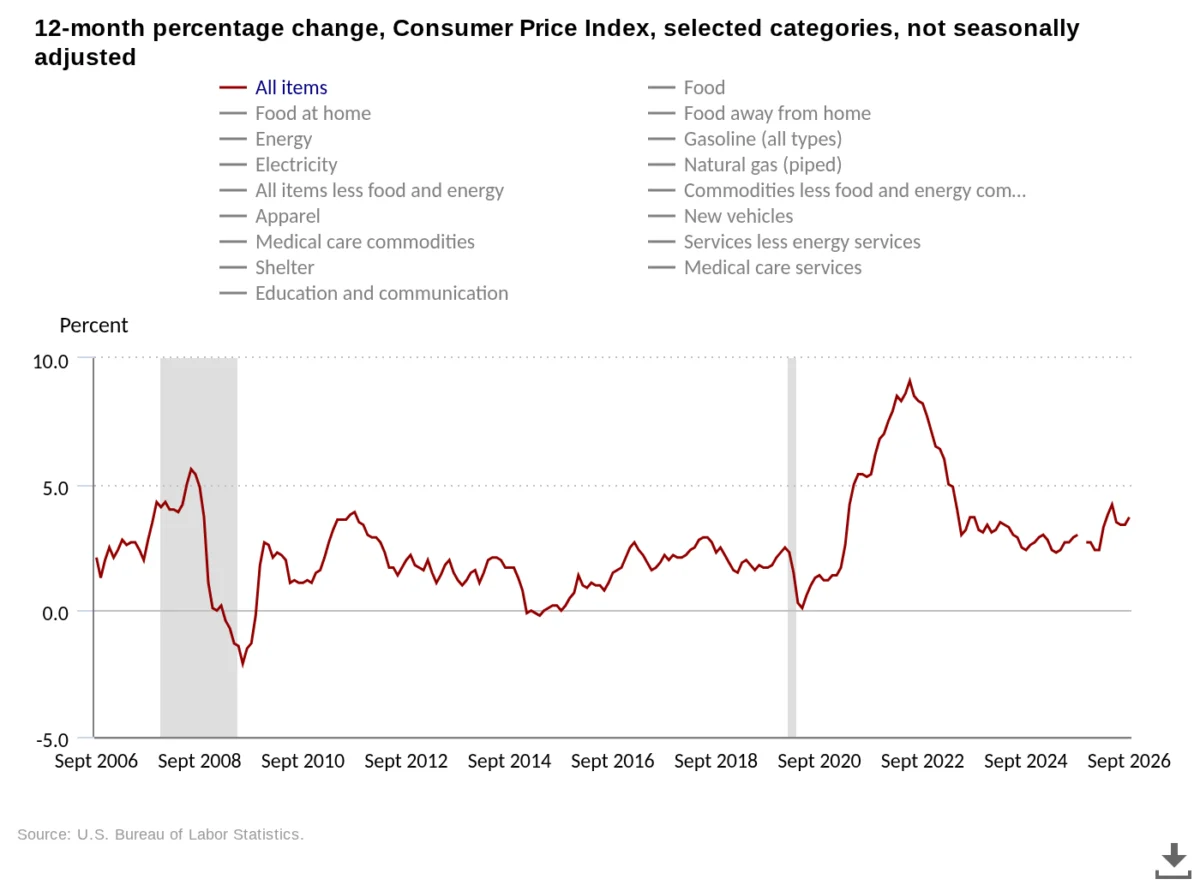
- Consumer Price Index (CPI): Just last week, the Bureau of Labor Statistics reported that the Consumer Price Index (CPI) rose at a 2.4% annual rate in February, a figure that, while lower than PPI, still reflects persistent price increases at the retail level. The relationship between PPI and CPI is direct: higher input costs for producers often translate into higher prices for consumers.
- Personal Consumption Expenditures (PCE) Index: The Commerce Department’s main inflation gauge, the Personal Consumption Expenditures (PCE) price index, which is the Federal Reserve’s preferred forecasting tool, has also shown stubbornness. The latest available data indicated that core PCE was at 3.1% year-over-year, with headline PCE at 2.8%. The Fed favors the PCE index because it captures a broader range of goods and services and accounts for changes in consumer spending patterns more dynamically than the CPI.
- The Federal Reserve’s Dual Mandate: The U.S. central bank operates under a dual mandate: to achieve maximum sustainable employment and to maintain price stability, which it defines as a 2% annual inflation rate. For nearly two years, the Fed has aggressively raised interest rates from near-zero levels to their current range of 5.25%-5.50% in an effort to cool the economy and bring inflation under control. These rates have been held steady since July 2023, as the Fed monitors incoming data to assess the impact of its restrictive monetary policy.
- The "Last Mile" Challenge: Federal Reserve officials have repeatedly acknowledged the difficulty of bringing inflation down from above 3% to their 2% target, often referring to it as the "last mile" challenge. The February PPI report underscores this challenge, particularly the stickiness of services inflation, which is less susceptible to quick fixes from easing supply chains and more intertwined with wage growth and robust consumer demand. Policymakers have attributed some recent inflation to tariffs, which primarily affect goods, but the services surge suggests a more domestic and demand-driven component at play.
Market Reactions and Economic Implications
The unexpected acceleration in wholesale prices immediately reverberated through financial markets, altering investor expectations regarding the Federal Reserve’s future monetary policy decisions.
- Financial Market Response: Following the PPI report, stock market futures slipped, reflecting investor apprehension about the implications for corporate earnings and economic growth. Simultaneously, Treasury yields, which move inversely to bond prices, rose sharply. Higher yields indicate that investors are demanding greater compensation for holding government debt, often due to expectations of higher inflation or a more restrictive monetary policy from the central bank.
- Interest Rate Cut Expectations: The most significant immediate impact was on the futures market for federal funds rates. Traders, who previously had priced in several interest rate cuts for the current year, pushed out the expected timing of the next Fed interest rate reduction, with some now anticipating it no earlier than December. This shift reflects the market’s assessment that persistent inflation will compel the Fed to maintain its elevated interest rates for a longer duration than previously forecast.
- Implications for Businesses: Higher producer prices mean increased input costs for businesses across various sectors. Companies might face pressure on their profit margins if they cannot fully pass these costs onto consumers. Alternatively, if they do pass on the costs, it fuels consumer inflation. This dynamic creates a delicate balancing act for corporate strategies, influencing pricing decisions, investment plans, and hiring.
- Impact on Consumers: Ultimately, persistent wholesale price inflation tends to filter down to consumers. Higher prices for goods and services erode purchasing power, meaning households can buy less with the same amount of money. This can lead to reduced consumer spending, which is a major driver of economic growth, or force households to dip into savings or take on more debt.
- Economic Outlook: The sustained inflationary pressures complicate the narrative of a potential "soft landing" for the U.S. economy—a scenario where inflation returns to target without triggering a recession. If the Fed is forced to keep interest rates high for longer, it increases the risk of a "hard landing" or a more significant economic slowdown, as borrowing costs remain elevated for businesses and consumers alike, potentially stifling investment and job creation.
Geopolitical Undercurrents and Future Outlook
The current inflation landscape is not solely driven by domestic economic factors but is also significantly influenced by global geopolitical developments.
- Middle East Conflict: Inflation worries have been accelerating amid the ongoing conflict in the Middle East. The escalating tensions, including the U.S. and Israel reportedly striking targets in Iran, have injected significant uncertainty into global energy markets.
- Energy Price Volatility: Oil prices have reacted sharply to the geopolitical instability, with crude oil trading around $100 a barrel, marking an increase of more than 70% year-to-date since the conflict intensified. While none of the inflation data released so far fully captures the full impact of these recent spikes in energy prices, the existing reports already indicate that inflation was a problem even before the most recent attacks. Elevated energy costs feed into producer prices across nearly all sectors, from transportation and manufacturing to agriculture, eventually impacting consumer wallets.
- Tariffs and Trade: While the original article noted that policymakers attribute some recent inflation to tariffs, which would primarily affect goods rather than services, the current surge in services PPI suggests a different, more domestic dynamic. However, the potential for new or increased tariffs, perhaps in response to geopolitical shifts or trade disputes, remains a background risk that could further exacerbate goods inflation.
- Supply Chain Resilience: While global supply chains have largely recovered from the extreme disruptions experienced during the pandemic, geopolitical events and regional conflicts continue to pose risks. Any significant impediment to shipping lanes, raw material access, or manufacturing hubs could quickly reignite supply-side inflationary pressures, adding another layer of complexity to the Fed’s inflation fight.
- Labor Market Dynamics: A tight labor market, characterized by low unemployment and robust wage growth, is another factor contributing to services inflation. As businesses compete for talent, they often incur higher labor costs, which are then passed on through higher prices for their services. This wage-price spiral is a persistent concern for central bankers.
Expert Analysis and the Path Forward
Economists and market analysts broadly agree that the February PPI report strengthens the case for the Federal Reserve to maintain its cautious, data-dependent approach to monetary policy. Analysts suggest that the Fed will likely emphasize the need for more conclusive evidence of disinflation—a sustained slowdown in the rate of price increases—before contemplating any rate cuts.
Later Wednesday, the Federal Reserve is scheduled to release its latest interest rate decision. Market participants consider it a near certainty that central bankers will vote unanimously to keep their benchmark overnight interest rate anchored in the current range of 5.25%-5.50%. The accompanying statement and the subsequent press conference by the Fed Chair will be scrutinized for any shifts in language or projections that might signal a change in the central bank’s outlook on inflation, economic growth, and the future trajectory of interest rates.
The path forward for the U.S. economy remains a delicate balancing act. While the labor market has shown resilience, persistent inflation, particularly in the services sector, continues to complicate the Federal Reserve’s efforts to steer the economy toward a sustainable 2% inflation target without triggering a recession. The February PPI report serves as a stark reminder that inflationary pressures are far from subdued, suggesting that the era of elevated interest rates may extend further into the future than many had initially hoped, impacting everything from corporate investment to household budgets.