Ena Muazin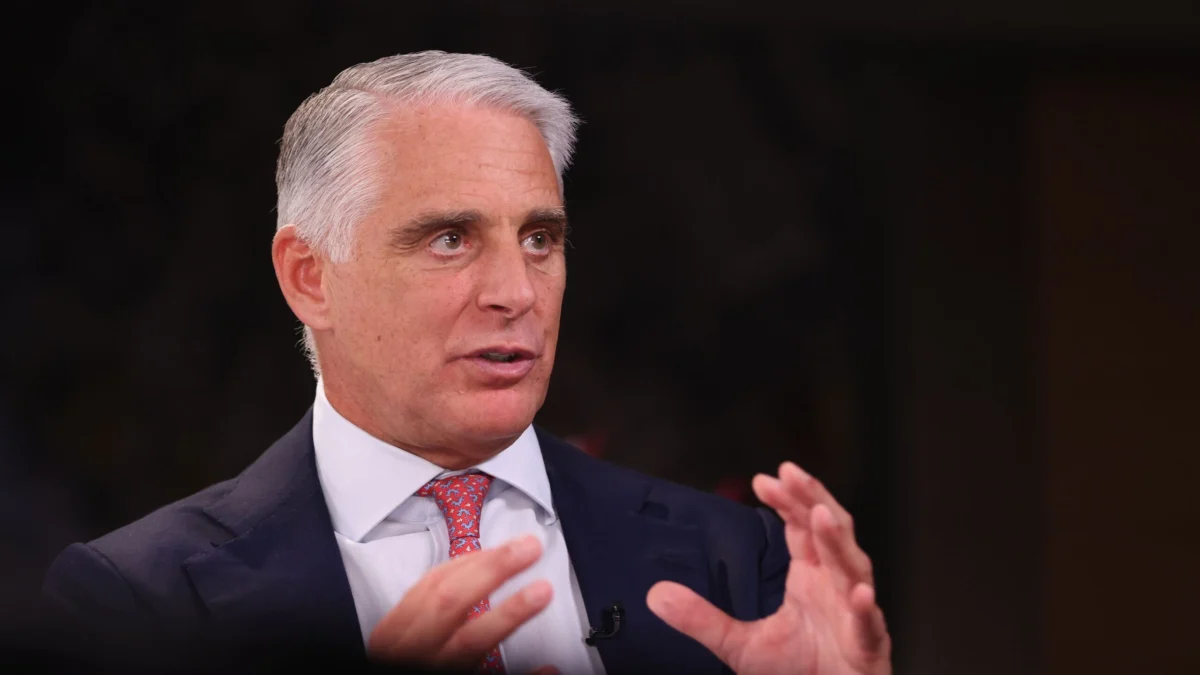
The current situation is described as "difficult," with the CEO emphasizing that the "only way" to resolve it is through "constructive personal commitment." Talks are hoped to lead to a "common plan" among all parties involved. However, should negotiations and an agreement with Commerzbank remain elusive, UniCredit CEO Andrea Orcel has not ruled out a hostile takeover bid for the German competitor. This statement signals a significant escalation in the ongoing strategic discussions between the two European banking giants and highlights the complex dynamics at play in the international financial landscape.
The remarks, made by Andrea Orcel, CEO of UniCredit, underscore the increasingly assertive stance being adopted by the Italian banking powerhouse in its pursuit of strategic objectives within the European market. While the specific details of the ongoing discussions with Commerzbank remain undisclosed, Orcel’s acknowledgement of a "difficult" situation and the imperative for "constructive personal commitment" suggests that negotiations have encountered significant hurdles. The potential for a "common plan" implies a desire for a mutually beneficial agreement, likely involving integration or strategic partnership, which would aim to leverage the strengths of both institutions.
However, the stark warning of a potential hostile bid introduces a layer of high-stakes maneuvering. This threat, if realized, would represent a departure from the preferred path of amicable negotiation and could trigger a protracted and potentially contentious corporate battle. The implications of such a scenario are far-reaching, not only for UniCredit and Commerzbank but also for the broader European banking sector, regulatory bodies, and shareholder interests.
Background and Context: A Shifting European Banking Landscape
The European banking sector has been undergoing a period of significant consolidation and strategic realignment for over a decade, driven by a confluence of factors including regulatory pressures, the pursuit of greater economies of scale, and the need to adapt to evolving technological landscapes and customer expectations. The low-interest-rate environment that has prevailed for much of this period has put pressure on traditional banking profitability, compelling institutions to seek out synergies and efficiencies through mergers and acquisitions.
Commerzbank, Germany’s second-largest lender, has itself been the subject of strategic reviews and restructuring efforts. Historically, it has faced challenges in fully realizing its potential and has been a target of speculation regarding its future ownership structure. Its strong position within the German market, particularly in corporate banking and Mittelstand financing, makes it an attractive asset for any potential acquirer seeking to bolster its presence in Europe’s largest economy.
UniCredit, on the other hand, has been on a clear path of strategic repositioning under Orcel’s leadership. The bank has been divesting non-core assets and focusing on strengthening its core operations, particularly in its key markets. A successful acquisition or integration of Commerzbank would represent a significant step in this strategy, potentially creating a pan-European banking powerhouse with a formidable presence across key economic zones.
The initial speculation regarding UniCredit’s interest in Commerzbank surfaced in late 2022 and early 2023, fueled by reports of preliminary discussions. These discussions were understood to be exploratory, aimed at assessing the feasibility and potential benefits of a strategic combination. However, the protracted nature of these talks, coupled with the current pronouncements from Orcel, suggests that the parties have yet to find common ground on key issues such as valuation, integration strategy, and future governance.
Timeline of Key Developments (Inferred)
While a precise timeline of the negotiations is not publicly available, the following is a plausible chronology based on public reporting and the nature of such strategic discussions:
- Late 2022/Early 2023: Initial exploratory discussions commence between UniCredit and Commerzbank management, likely at a senior executive level. These discussions are characterized as preliminary and aimed at gauging mutual interest and potential synergies.
- Mid-2023: Reports emerge in financial media detailing UniCredit’s potential interest in Commerzbank, leading to increased market speculation and investor scrutiny. Both companies remain largely tight-lipped, adhering to standard practice during such sensitive discussions.
- Late 2023/Early 2024: Negotiations reportedly intensify, with detailed due diligence and valuation discussions taking place. However, significant differences are believed to emerge, hindering progress. The "difficult" situation acknowledged by Orcel likely refers to this phase.
- Present Day: Andrea Orcel, CEO of UniCredit, publicly acknowledges the challenges in the negotiations and issues a veiled threat of a hostile bid if a mutually agreeable solution cannot be reached through continued "constructive personal commitment." This statement marks a potential turning point in the public discourse surrounding the potential transaction.
Supporting Data and Market Dynamics
The strategic rationale behind a potential UniCredit-Commerzbank combination is rooted in several key market dynamics:
- Economies of Scale and Cost Synergies: Merging the two entities would create significant opportunities for cost rationalization through the elimination of redundant back-office functions, IT systems, and branch networks. Analysts often estimate potential cost savings in the hundreds of millions of euros annually for large-scale European bank mergers.
- Enhanced Market Position: A combined entity would possess a stronger footprint in key European markets, particularly in Germany, where Commerzbank holds a significant position. This would allow UniCredit to compete more effectively with larger, established players and tap into new customer segments.
- Diversification of Revenue Streams: The combination could lead to a more diversified revenue base, reducing reliance on any single market or business line. Commerzbank’s strength in corporate and investment banking, coupled with UniCredit’s retail and wealth management capabilities, could create a well-rounded financial services offering.
- Capital Efficiency: A larger, more efficient entity could potentially achieve better capital allocation and a higher return on equity, provided the integration is executed successfully.
However, the challenges are equally significant:
- Integration Complexity: Merging two large, complex organizations with different corporate cultures, IT systems, and regulatory frameworks is an enormous undertaking. Past large-scale bank mergers in Europe have often been plagued by integration challenges, leading to delays, cost overruns, and failure to fully realize projected synergies.
- Regulatory Hurdles: Any significant cross-border banking merger in Europe requires approval from multiple national and supranational regulatory bodies, including the European Central Bank (ECB) and national competition authorities. These reviews can be lengthy and may impose conditions that dilute the strategic benefits of the merger.
- Valuation Disagreements: As Orcel’s statement implies, reaching an agreement on valuation is often a major stumbling block. Sellers typically seek a premium for their business, while buyers aim to acquire at a price that reflects realistic synergies and future earnings potential.
Official Responses and Stakeholder Reactions (Inferred)
While official statements from Commerzbank have been scarce and non-committal, it is reasonable to infer potential reactions from various stakeholders:
- Commerzbank Management and Board: The board of Commerzbank would be under immense pressure to secure the best possible outcome for its shareholders. While a negotiated merger might be preferred to avoid the uncertainty and cost of a hostile bid, they would also be obligated to consider any offer that maximizes shareholder value. The "difficult" nature of negotiations could stem from disagreements on strategic direction or valuation.
- Commerzbank Shareholders: Investors would be closely watching the developments. A potential hostile bid could lead to a significant uplift in Commerzbank’s share price, reflecting the premium typically offered in such scenarios. However, they would also weigh the risks associated with a prolonged takeover battle and the potential for integration challenges.
- UniCredit Shareholders: UniCredit investors would likely be divided. Some might view the aggressive stance as a sign of decisive leadership and a strategic move to accelerate growth. Others might express concerns about the potential financial strain and execution risks associated with a hostile takeover.
- Regulators (ECB, National Authorities): European banking regulators would be scrutinizing any potential merger or takeover very closely. Their primary concern would be financial stability, the impact on competition within the banking sector, and the ability of the combined entity to meet capital requirements and serve the real economy. A hostile bid would likely trigger heightened regulatory scrutiny.
- German Government and Public: The German government, as a former significant shareholder in Commerzbank, would likely have a keen interest in the outcome. There could be concerns about the impact on German jobs, the provision of credit to the German Mittelstand, and the national banking landscape.
Broader Impact and Implications
Andrea Orcel’s statement about potentially launching a hostile bid for Commerzbank has significant implications for the European financial sector:
- Reshaping the European Banking Landscape: If successful, a UniCredit-Commerzbank merger would create one of the largest banking groups in Europe, altering the competitive dynamics and potentially triggering further consolidation. This could lead to a more concentrated banking market, with fewer, larger players dominating.
- Precedent for Future Takeovers: A successful hostile bid, or even a prolonged and aggressive pursuit, could set a precedent for future cross-border M&A activity in the European banking sector. It might signal a shift towards more assertive tactics in pursuing strategic goals.
- Impact on Corporate Governance and Shareholder Activism: The threat of a hostile bid highlights the power of activist investors and assertive CEOs in pushing for strategic changes. It could encourage other institutional investors and management teams to consider more aggressive approaches to unlocking shareholder value.
- Economic Implications: The consolidation of financial institutions can have broader economic implications. A stronger, more efficient banking sector could potentially lead to better access to credit for businesses and consumers, and contribute to economic growth. Conversely, a poorly executed merger or a prolonged takeover battle could create instability and uncertainty.
- Focus on Strategic Value Creation: Orcel’s remarks underscore the ongoing pressure on bank CEOs to demonstrate clear strategies for value creation in a challenging economic environment. The pursuit of Commerzbank, whether through negotiation or a more forceful approach, is a testament to UniCredit’s ambition to significantly enhance its European standing.
The coming weeks and months will be crucial in determining the trajectory of these developments. The emphasis on "constructive personal commitment" suggests that UniCredit is still open to a negotiated solution. However, the explicit mention of a hostile bid as a fallback option signals that the bank is prepared to escalate its efforts if its strategic objectives cannot be met through amicable means. The outcome will be closely watched by investors, regulators, and the broader financial community as a bellwether for the future of European banking consolidation.