Gilang Muhammad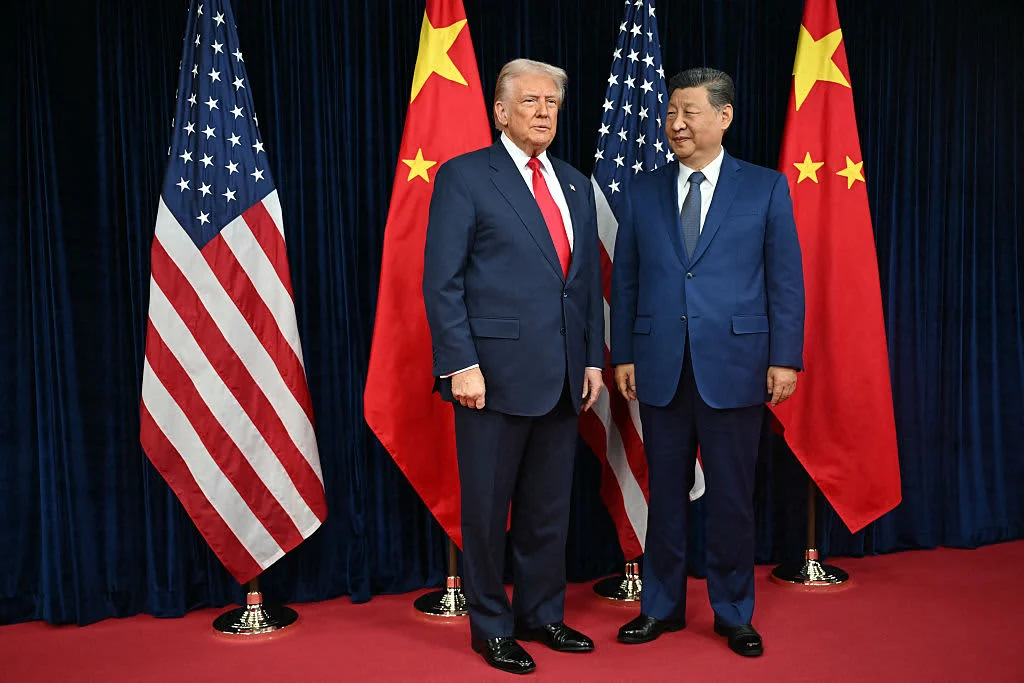
Less than three weeks before a pivotal summit in Beijing, the United States has launched a series of sweeping trade investigations, with China squarely in its crosshairs, injecting a fresh layer of friction into an already intricate bilateral relationship. These probes, initiated under Section 301 of the Trade Act of 1974, aim to identify and address what Washington alleges are unfair trade practices, particularly structural excess capacity and production across key manufacturing sectors. While ostensibly casting a wide net over a dozen trading partners, the move is widely interpreted as a direct challenge to Beijing, given its well-documented issues concerning overcapacity and state-backed industrial policies. This aggressive posture comes at a moment when U.S. President Donald Trump’s negotiating leverage has been perceived as weakened by recent domestic legal setbacks and escalating military aggression in Iran, prompting analysts to view the tariff threats as a strategic maneuver to regain ground.
The Shadow of Section 301: New Trade Probes Target Beijing
The U.S. Trade Representative (USTR) announced the initiation of these Section 301 investigations on March 11, 2026, marking a significant escalation in the ongoing economic rivalry between the world’s two largest economies. Section 301 is a potent tool within U.S. trade law, empowering the President to unilaterally impose tariffs or other trade remedies against countries found to be engaging in unfair trade practices that harm American commerce. President Trump famously invoked Section 301 during his first term to levy billions of dollars in tariffs on Chinese goods, initiating a protracted trade war that reverberated across global supply chains. The current investigations specifically target structural excess capacity and production, a concern that U.S. Treasury Secretary Janet Yellen has repeatedly highlighted, particularly in burgeoning sectors such as solar panels, electric vehicles, and lithium-ion batteries.
Analysts contend that despite the USTR’s broad language, the primary target is unmistakably China. Dan Wang, China director at the political consultancy Eurasia Group, articulated this view, stating, "While casting a wide net over a dozen trading partners, the move takes a clear aim at China, given its well-documented issues such as overcapacity and forced labor." The concept of "structural excess capacity" refers to a situation where a country’s production capabilities far outstrip its domestic demand, often fueled by state subsidies and industrial policies, leading to a flood of cheap exports that can distort global markets and harm foreign competitors. U.S. officials argue that China’s policies in these sectors not only create an uneven playing field but also threaten the long-term viability of industries in the United States and other developed nations. Furthermore, the inclusion of "forced labor" concerns in the broader scope of unfair trade practices signals a potential expansion beyond purely economic grievances, touching upon human rights issues that could further complicate diplomatic efforts. The USTR’s press release on March 11, 2026, explicitly stated the probes aim to "identify unfair trade practices relating to structural excess capacity and production," laying the groundwork for potential future retaliatory measures.
A Chess Game of Leverage: Post-Supreme Court Dynamics

The timing of these new investigations is crucial, unfolding less than three weeks before President Trump’s scheduled visit to Beijing from March 31 to April 2, 2026, for talks with Chinese President Xi Jinping. This pre-summit escalation is seen by many as a strategic move to bolster Washington’s negotiating position, which recently suffered a setback from a U.S. Supreme Court decision. Last month, the Supreme Court struck down Trump’s "reciprocal" tariffs, a unilateral tariff mechanism that curtailed his ability to deploy tariffs at will without specific statutory authority or congressional approval. This ruling was perceived as a boost to China’s leverage ahead of the April summit.
"As Trump’s negotiating position has been weakened by the military aggression in Iran," Wang observed, "U.S. needs to establish credible threat on tariffs as it remains Trump’s top pressure tool." The implication is that the administration is "pivoting to its other tools to continue its tariff agenda," as Lynn Song, chief economist at ING Bank, commented. Song further elaborated that tariffs are "clearly a card that Trump wishes to have in his pocket for negotiations." The Section 301 mechanism, which allows the president to impose levies without direct congressional approval once unfair practices are identified, offers a powerful alternative to the "reciprocal" tariffs, restoring a critical piece of the administration’s trade arsenal. Beijing, however, was likely unsurprised by the escalation, with Wang noting, "Maximizing leverage before major bilateral meetings seems to be a standard move now." This tit-for-tat dynamic has become a predictable feature of US-China diplomatic engagements, where both sides jockey for strategic advantage leading up to high-level discussions.
China’s Export Juggernaut Amidst Global Scrutiny
Despite mounting international criticism, including from the United States, regarding its over-reliance on external demand and its vast industrial overcapacity, China’s export machine continues to run at full throttle. Recent economic data underscored this trend, with Chinese exports surging an impressive 21.8% in the first two months of 2026 compared to the same period last year. This robust export performance boosted China’s trade surplus to a record high of $213.6 billion, highlighting the continued strength of its manufacturing sector and its pivotal role in the global economy. For context, this figure represents a significant increase from the roughly $120 billion recorded in the same period of 2025, demonstrating an accelerated pace of export growth.
This sustained export prowess, however, comes with a caveat. Critics argue that this growth is often driven by heavily subsidized industries, which can lead to unfair competition and global market imbalances. The Atlantic Council, for instance, has published extensive analyses on U.S. Treasury Secretary Janet Yellen’s concerns regarding Chinese overcapacity, particularly in nascent green technologies. The U.S. and its allies contend that China’s domestic consumption has not kept pace with its industrial output, forcing it to offload excess goods onto international markets at artificially low prices. This practice, often referred to as "dumping," can stifle innovation and production in other countries, leading to job losses and economic destabilization. The record trade surplus, while economically beneficial for China in the short term, exacerbates these international tensions and provides further impetus for investigations such as those launched under Section 301.
The Geopolitical Quagmire: Iran and the Strait of Hormuz

Adding another layer of complexity to the already fragile US-China relationship and the upcoming summit is the escalating geopolitical crisis in the Middle East. Recent U.S. and Israeli strikes that tragically resulted in the death of Iranian Supreme Leader Ayatollah Ali Khamenei have drawn swift and sweeping retaliation from Tehran. In response, Iran has moved to choke off the Strait of Hormuz, a critical maritime chokepoint through which roughly one-fifth of the world’s oil supply passes daily. This strategic waterway is indispensable for global energy markets, and any prolonged disruption could send shockwaves through the world economy.
For China, a major buyer of Iranian crude oil and the world’s largest energy importer, the crisis poses a significant threat to its energy security. While Beijing is temporarily insulated by substantial strategic oil and gas reserves, it is by no means immune to the consequences of prolonged supply chain disruptions emanating from the Strait of Hormuz. Alfredo Montufar-Helu, managing director at Ankura Consulting in Beijing, underscored this vulnerability: "A volatile external environment is the exact opposite of what policymakers in Beijing need right now." The potential for skyrocketing oil prices, coupled with broader instability in a crucial energy-producing region, could severely impact China’s economic growth and domestic stability. In response to the crisis, China has dispatched a special envoy to the region, urging an immediate ceasefire and a return to diplomatic negotiations, signaling its deep concern and desire to de-escalate the conflict. This unforeseen geopolitical entanglement further complicates Beijing’s calculus for the bilateral talks with the U.S., potentially diverting its focus and shaping its negotiating priorities. The crisis also weakens China’s broader diplomatic bandwidth, as it must now contend with a volatile Middle East alongside its trade disputes.
Setting the Stage for Beijing: A Summit Under Strain
The upcoming summit between President Trump and President Xi Jinping in Beijing, scheduled from March 31 to April 2, 2026, marks the first visit by an American president to China since Trump’s initial trip in 2017. While high-level meetings are crucial for managing the complex relationship, the current backdrop of new trade probes and the Iran crisis has cast a long shadow over expectations. Trade negotiators from both sides are reportedly slated to meet in mid-March to lay the essential groundwork for the leaders’ summit, a standard practice aimed at identifying potential areas of agreement and narrowing differences before the presidents engage.
However, the prevailing sentiment among analysts is that the summit is likely to yield only limited breakthroughs. The primary objective, according to many, will be to maintain the fragile stability that has characterized bilateral relations since the "truce" reached at the G20 summit in Busan on October 30, 2025, where both leaders sought to de-escalate tensions. "We should not expect a fundamental reframing of the bilateral relationship," stated Montufar-Helu. He added, "Maintaining the stability achieved in Busan is, in itself, an excellent result." This reflects a pragmatic outlook, acknowledging the deep-seated disagreements and the challenging global environment. Chinese Foreign Minister Wang Yi echoed a conciliatory tone during a press briefing on Sunday, emphasizing the need for both sides to "create a suitable environment" for the summit and "remove unnecessary disruptions," underscoring Beijing’s desire to manage expectations and avoid further confrontation.
Divergent Agendas: Limited Hopes for a Grand Bargain

The agendas for the upcoming summit appear increasingly divergent, narrowing the scope for any "grand bargain" or comprehensive agreement. Washington is expected to push for extended commitments on commercial purchases, particularly in agricultural goods such as soybeans and aircraft, as well as assurances that China will not restrict its rare earth exports. Rare earths are a group of 17 chemically similar metallic elements critical for a wide range of high-tech applications, including electric vehicles, wind turbines, and military equipment. China currently dominates the global supply chain for these materials, giving it significant leverage. The U.S. has long sought to diversify its rare earth supply to reduce dependency on China.
Deborah Elms, head of trade policy at Hinrich Foundation, suggested that deliverables have likely narrowed to these commercial purchases rather than any sweeping policy changes. She anticipates the two leaders will frame the meeting as merely the "opening of a longer conversation set to unfold across the rest of 2026." On the other side, China will likely seek clarity on the trajectory of U.S. technology export restrictions. As Montufar-Helu put it, "Beijing will essentially be asking how high the fence will get and how big the yard will be," referring to the scope and intensity of U.S. controls on critical technologies, particularly semiconductors and advanced computing, which have been a significant point of contention.
Further signaling the scaled-back expectations for the summit is the fading possibility of American executives accompanying President Trump on his trip to Beijing. "With each passing day, the chances of a formal CEO delegation joining the president’s trip are fading," Han Lin, China Country Director at The Asia Group, told CNBC on Thursday. "Few CEOs have been invited, and even fewer have likely agreed to come given how little time remains." The absence of a robust business delegation often indicates that significant commercial deals or groundbreaking agreements are not anticipated, suggesting that the summit’s focus will be more on de-escalation and managing the existing tensions rather than forging new economic partnerships.
Beyond the Summit: Long-Term Implications for Global Trade
The confluence of new Section 301 investigations, the Supreme Court’s tariff ruling, and the volatile situation in the Strait of Hormuz adds fresh uncertainty to an already complicated diplomatic backdrop and a fragile trade truce. The gap between both sides’ agendas for the summit appears to be widening, making substantive breakthroughs increasingly challenging.
The long-term implications of these developments are profound. The re-invocation of Section 301 underscores a persistent U.S. determination to address perceived unfair trade practices by China, signaling that tariffs remain a potent, albeit controversial, tool in Washington’s arsenal. This will likely lead to continued pressure on China to reform its industrial policies, reduce subsidies, and enhance market access for foreign firms. For China, the investigations, coupled with geopolitical instability, reinforce its strategic imperative to bolster domestic demand, innovate independently in critical technologies, and diversify its energy sources and trade partners to mitigate external vulnerabilities. The global economy, still navigating the aftershocks of previous trade disputes and supply chain disruptions, now faces renewed uncertainty. Businesses operating internationally will need to adapt to a potentially more protectionist environment, with increased scrutiny on supply chain origins and greater pressure to localize production. The Beijing summit, while unlikely to resolve all outstanding issues, will be a crucial barometer for the future trajectory of US-China relations, shaping not only bilateral trade but also global economic stability for the foreseeable future.