Farhan Pambudi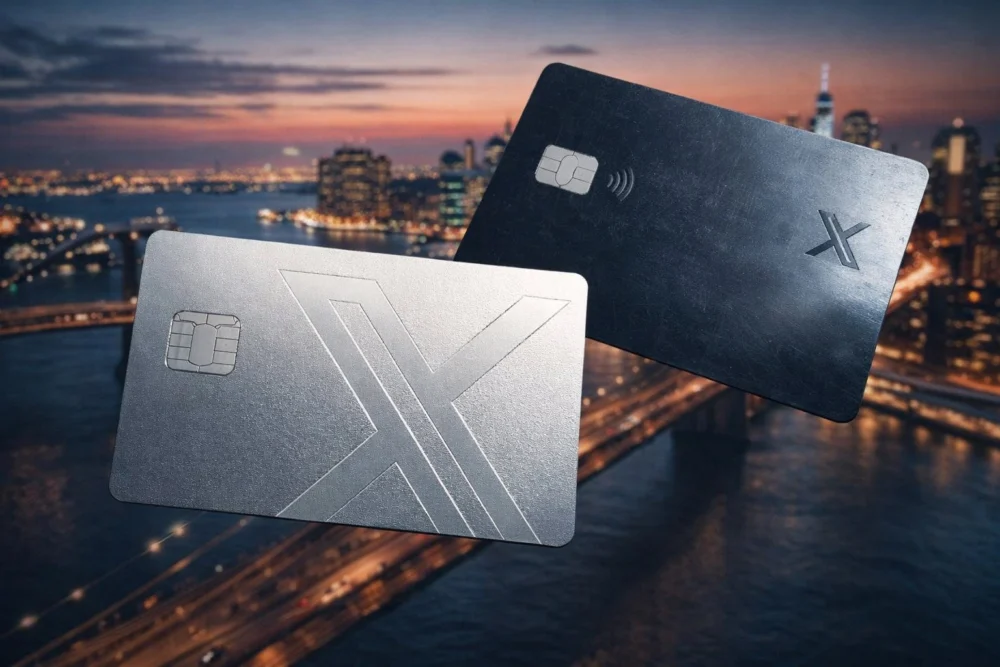
The social media platform X, formerly known as Twitter, has officially transitioned its internal financial services testing into a limited public beta, marking a significant milestone in Elon Musk’s long-standing ambition to transform the platform into a comprehensive "everything app." This week, the company began extending invitations to its new X Money payments service through an unconventional promotional campaign involving veteran actor William Shatner. The rollout, which follows months of internal testing among X employees, utilizes a philanthropic auction model to grant early access to a select group of users, signaling the beginning of X’s formal entry into the competitive peer-to-peer (P2P) and digital banking sector.
The partnership with Shatner, best known for his role as Captain James T. Kirk in the "Star Trek" franchise, involved a digital auction where users could secure one of 42 exclusive beta invites in exchange for a $1,000 donation to the Hollywood Charity Horse Show. This organization, founded by Shatner, provides financial support to various children’s and veterans’ charities. The move combines high-profile celebrity endorsement with a scarcity-driven marketing strategy, a hallmark of Musk’s product launches. Musk himself amplified the initiative on the platform, resharing Shatner’s posts with brief but emphatic endorsements such as "X Money" and "This will be big."
The Mechanics of the X Money Beta Launch
The integration of X Money into the platform’s interface represents a shift from a purely social networking environment to a transactional ecosystem. According to screenshots and details shared by Shatner and other early participants, the service is currently appearing for beta testers as a dedicated link within the X mobile application, positioned prominently below the "Premium" subscription tab.
The initial cohort of 42 winners—a number chosen as a tribute to Douglas Adams’ "The Hitchhiker’s Guide to the Galaxy," where 42 is the "Answer to the Ultimate Question of Life, the Universe, and Everything"—will be the first to receive physical manifestations of the service. These include a personalized metal X Money debit card, produced in partnership with Visa. The collaboration with Visa is central to X’s strategy, as it provides the necessary infrastructure to facilitate person-to-person payments and ensures the card is accepted at millions of global merchant locations.
To initiate the beta, Musk reportedly sent Shatner a symbolic payment of $42 via the app to demonstrate its functionality. Shatner confirmed that the auction winners would gain access to the service’s full suite of features, which include the ability to send and request funds, deposit capital, and manage a digital wallet directly through the X interface.
Technical Infrastructure and Financial Features
The X Money interface is designed around three primary navigational pillars: Account, Rewards, and Activity. The "Account" tab serves as the central hub for balance management and deposit settings, while "Activity" provides a ledger of historical transactions. Most notably, the "Rewards" section and the platform’s deposit features suggest a direct challenge to traditional high-yield savings accounts.
Early screenshots indicate that X Money is offering an Annual Percentage Yield (APY) of up to 6.00% for users who set up direct deposits. This rate significantly exceeds the national average for savings accounts in the United States, which typically hovers below 0.50%, and even surpasses many high-yield offerings from established fintech firms like SoFi or Ally Bank. This aggressive interest rate is viewed by industry analysts as a customer acquisition strategy intended to lure capital away from traditional financial institutions.
Regarding security and regulatory compliance, X Money has partnered with Cross River Bank, a New Jersey-based financial institution known for providing backend services to fintech companies. Deposits made into X Money accounts are held by Cross River Bank and are insured by the Federal Deposit Insurance Corporation (Corporation (FDIC)) up to the standard limit of $250,000 per individual. While X itself is not a chartered bank, its role as a technology layer on top of a regulated bank allows it to offer banking-like services without the full regulatory burden of a traditional bank charter.
Regulatory Progress and National Licensing
A critical component of X’s financial roadmap is the acquisition of money transmitter licenses (MTLs) across the United States. For a platform to facilitate the movement of money between users across state lines, it must receive approval from individual state regulators. As of March 2026, X has successfully secured licenses in over 40 U.S. states.
During a public all-hands meeting held in February 2026, Musk informed staff that the company’s regulatory trajectory was ahead of schedule. He indicated that the limited external beta—currently represented by the Shatner auction—would serve as a final "stress test" before a wider domestic rollout. The company’s ultimate goal is to achieve a global footprint, allowing for international remittances and multi-currency support, although this will require a complex web of international licenses and compliance with diverse anti-money laundering (AML) and "know your customer" (KYC) regulations.
The Strategic Vision: From Social Media to the "Everything App"
The launch of X Money is the latest piece in Musk’s "everything app" puzzle, a concept inspired by super-apps like China’s WeChat. In such ecosystems, a single application serves as the gateway for messaging, social media, e-commerce, transportation, and finance. By integrating payments, X seeks to close the loop between content consumption and commerce.
This strategy is being executed through a dual-track approach. While X Money is being integrated into the main app, X is also testing standalone applications for specific services, such as "X Chat," a dedicated messaging app. This suggests that while the "everything app" remains the core vision, the company recognizes that some users may prefer specialized, lightweight applications for specific tasks like messaging or financial management. A standalone X Money app would allow the company to compete more directly with established fintech giants such as PayPal, Venmo, and Block’s Cash App.
Historical Context: Returning to the Roots of X.com
The branding of "X Money" and the "X" ecosystem is the culmination of a vision Musk has held for over a quarter of a century. In 1999, Musk co-founded X.com, an online financial services and e-mail payment company. Following a merger with Confinity, the company became PayPal, which was eventually sold to eBay for $1.5 billion in 2002.
Musk’s reacquisition of the X.com domain in 2017 and his subsequent purchase of Twitter in 2022 for $44 billion were driven by the desire to finish what he started with the original X.com. By rebranding Twitter to X, he signaled that the platform’s future would not be defined by 280-character posts, but by its ability to facilitate the entirety of a user’s digital life. The launch of X Money is effectively the rebirth of the 1999 vision, updated for the modern era of mobile-first, blockchain-aware, and AI-driven finance.
Industry Implications and Market Reaction
The entry of X into the financial services market has drawn mixed reactions from the banking and tech sectors. Proponents argue that X’s massive user base—estimated to be in the hundreds of millions—provides an immediate scale that most fintech startups cannot achieve. By offering high APY and low-friction P2P payments, X could rapidly become a major player in the "shadow banking" sector.
However, critics point to the platform’s recent history of volatility and the challenges of content moderation as potential hurdles for a financial service. Trust is the primary currency of banking, and X will need to demonstrate rigorous data security and consistent uptime to convince users to deposit significant portions of their wealth. Furthermore, the 6.00% APY, while attractive, raises questions about long-term sustainability and whether the platform will eventually have to lower rates once the initial growth phase concludes.
The partnership with Visa and Cross River Bank provides X with a degree of institutional legitimacy, but the company still faces the daunting task of navigating the SEC, FINRA, and other federal regulators as it expands into more complex financial products, such as stock trading or cryptocurrency integration.
Chronology of Recent Developments
The path to the X Money beta has been marked by several key milestones over the past year:
- January 2025: X announces a strategic partnership with Visa to power the "X Money Wallet" and issue debit cards.
- February 2026: During a public all-hands meeting, Musk outlines "interplanetary ambitions" for X’s technology stack and confirms the timeline for the payments beta.
- Late February 2026: Internal testing among X employees concludes, with the service moving to a stable build.
- March 2, 2026: X begins testing a standalone "X Chat" app on iOS to decouple messaging from the main feed.
- March 3, 2026: William Shatner announces the charity auction for X Money beta invites.
- March 4, 2026: The first 42 beta testers are officially onboarded, and the X Money link begins appearing in the app for selected users.
Conclusion and Future Outlook
As the X Money beta progresses, the industry will be watching closely to see how the platform handles real-world transaction volumes and regulatory scrutiny. If successful, X Money could redefine the role of social media in the global economy, turning a platform for public discourse into a powerful engine for private commerce.
Musk’s "everything app" is no longer a theoretical concept; it is a functioning ecosystem that is actively enrolling its first public users. With a high-yield savings component, a physical debit card, and the backing of a major payment network, X Money is positioned to be one of the most disruptive financial products of the decade. Whether it can maintain the trust of its users and the approval of regulators remains the final frontier for Musk’s ambitious digital transformation.