Gilang Muhammad
The United Kingdom’s annual inflation rate climbed to 3.6% in the 12 months leading up to October, marking its highest level in a year and exceeding September’s 3.5% print. This latest figure, which aligns with the consensus expectations of economists polled by Reuters, underscores the persistent inflationary pressures gripping the British economy, primarily driven by a significant uptick in motor fuel prices exacerbated by global energy market volatility and ongoing geopolitical conflicts. The reading puts renewed focus on the cost of living crisis affecting millions of households and sets a challenging backdrop for the Bank of England’s upcoming monetary policy decisions.
The Anatomy of the Surge: Fuel as the Primary Driver
According to data released by the Office for National Statistics (ONS) on Wednesday, the single largest contributor to the accelerating inflation rate was motor fuel costs, which registered a staggering 33.2% year-on-year increase. This represents the most substantial one-year rise in motor fuel prices since July 2022, a period when energy markets were severely disrupted in the immediate aftermath of Russia’s full-scale invasion of Ukraine. The ONS elaborated that the average price of petrol escalated by 5.2 pence (approximately 7 U.S. cents) per liter between September and October this year, a stark contrast to the modest 0.7 pence per liter increase observed during the same period a year prior. By October, the average petrol price had reached 174.7 pence per liter, its highest point since August 2022.
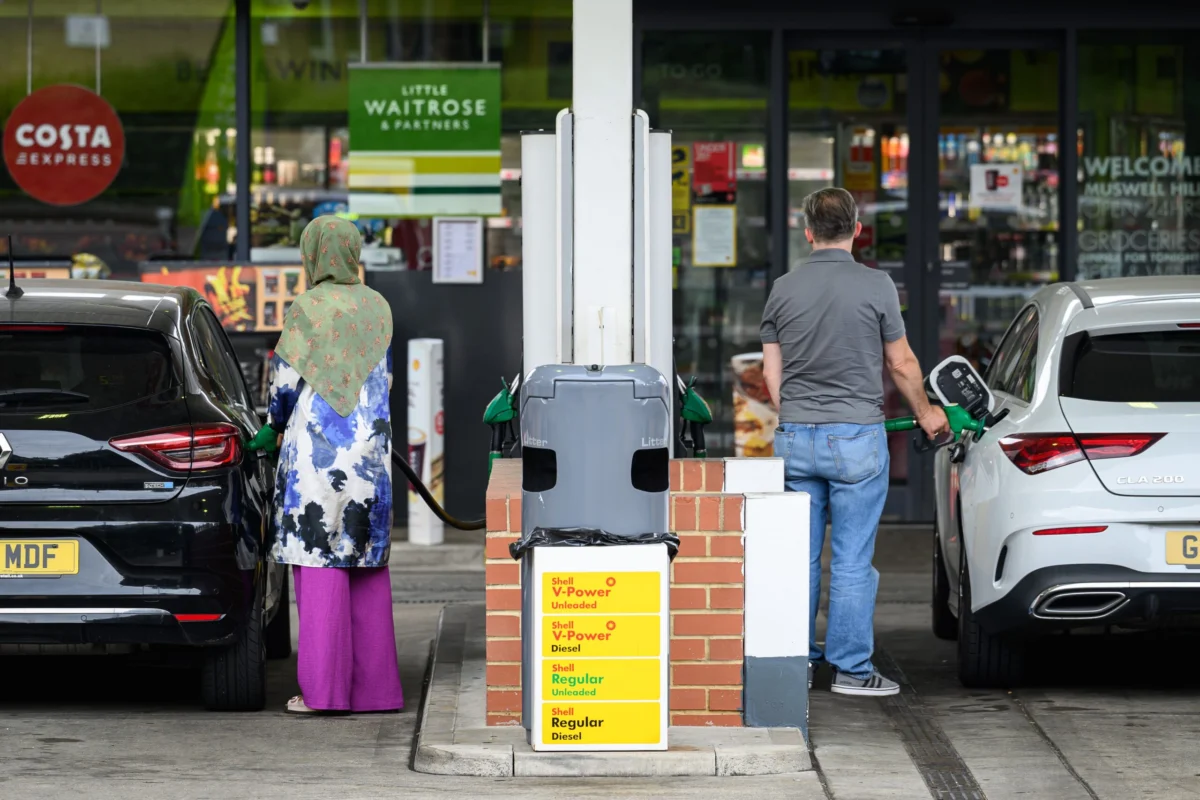
Diesel prices experienced an even more pronounced jump, rising by 7 pence per liter in October. This pushed the average diesel price to an unprecedented 199.5 pence per liter, the highest recorded since the ONS began tracking these figures in 1996. The relentless ascent of fuel costs is a direct reflection of heightened global crude oil prices, which have seen Brent crude — the international benchmark — breach the $100 per barrel mark for the first time since May on July 23, 2026. This significant milestone was captured as customers refueled their vehicles at petrol stations across London, a tangible representation of the mounting financial burden on consumers.
Geopolitical Undercurrents: The Iran War and Global Energy Shocks
The UK’s vulnerability to external energy shocks is particularly acute given its status as a net energy importer. The current inflationary environment is heavily influenced by the ongoing conflict involving Iran, which commenced in late February. This geopolitical event has triggered widespread concern across global energy markets, particularly regarding the security of vital shipping lanes such as the Strait of Hormuz. This narrow waterway, situated between the Persian Gulf and the Gulf of Oman, is a critical chokepoint through which a significant portion of the world’s seaborne oil and liquefied natural gas (LNG) transits. Any disruption or perceived threat to trade through this strait inevitably sends ripples of uncertainty through global supply chains, leading to elevated commodity prices.
The US-Iran war has seen energy costs surge not just in the UK but across various major economies. For instance, U.S. diesel prices hit an unprecedented $6 per gallon for the first time ever in September, a clear indicator of the conflict’s far-reaching impact. Since the outbreak of hostilities in late February, global inflation rates have generally risen sharply, following a brief dip that was partly attributable to an energy price cap in the UK that was subsequently revised upward in July. This revision, while intended to manage consumer costs, also reflected the underlying upward trajectory of wholesale energy prices. Although oil prices have retreated somewhat from their wartime highs of well above $100 a barrel, a brief respite noted after the U.S. midterm elections, they remain significantly elevated, preventing any substantial easing of cost pressures.
Bank of England’s Tightrope Walk: Monetary Policy Responses
The escalating inflation figures present a formidable challenge for the Bank of England, which is tasked with maintaining price stability. Earlier this month, the central bank took decisive action, hiking interest rates for the first time in three years. This move signaled a strong commitment to taming inflation, even as the economy faces headwinds. Following the rate hike, Governor Andrew Bailey issued a stark warning in the bank’s November Monetary Policy Report, projecting that inflation could potentially reach 5% by mid-2027 if current trends persist.
Governor Bailey underscored the precariousness of the situation, stating that without "real progress towards settling the conflict in the Middle East… risks to energy prices, and so to inflation, are to the upside." This statement highlights the Bank’s acknowledgment that a significant portion of the current inflationary pressure is supply-side driven, originating from external geopolitical factors beyond its direct control. Nevertheless, the Bank’s primary tool remains interest rate adjustments, aimed at dampening demand and preventing a wage-price spiral from taking hold. Financial markets are keenly observing the Bank’s posture, with current pricing suggesting approximately an 80% chance of another rate hike at the Bank of England’s final monetary policy meeting of the year, scheduled for December.
The Bank of England’s decision-making process is a delicate balancing act. While higher interest rates can cool an overheating economy and curb inflation, they also increase borrowing costs for businesses and households, potentially stifling investment and consumer spending, and risking a slowdown in economic growth. The persistence of high inflation, particularly from essential goods like fuel, erodes real wages and disposable income, making it harder for families to meet their daily expenses. This creates a difficult policy dilemma for the central bank: prioritize inflation control, or risk exacerbating a looming recession.

Broader Economic and Societal Implications
The sustained surge in inflation, particularly in energy costs, carries profound implications across the UK economy and society.
Household Finances: For millions of British households, the rising cost of fuel translates directly into higher commuting costs, increased prices for goods and services (as transport costs feed into supply chains), and a reduction in discretionary spending power. This further strains household budgets already under pressure from rising food prices and housing costs. Data from various consumer surveys indicate a growing sense of financial insecurity and a reduction in consumer confidence. Low-income households are disproportionately affected, as essential items like fuel and food constitute a larger proportion of their expenditure.
Business Environment: Businesses, particularly those reliant on transportation and energy-intensive operations, face escalating input costs. Haulage companies, logistics firms, and manufacturing sectors are experiencing squeezed profit margins, which can lead to price increases for consumers, reduced investment, or even business closures. Small and medium-sized enterprises (SMEs), often with less capacity to absorb higher costs, are particularly vulnerable. The uncertainty surrounding future energy prices also complicates long-term business planning and investment decisions.
Government Policy and Fiscal Headwinds: The government faces increasing pressure to address the cost of living crisis. While direct interventions in energy markets can be costly and complex, there may be calls for targeted support packages for vulnerable households, or even a review of fuel duty. However, any significant fiscal intervention could strain public finances, especially in an environment where borrowing costs are rising due to higher interest rates. The government also has an eye on its broader economic agenda, including achieving sustainable growth and improving productivity, which can be undermined by persistent inflation.
Global Context: The UK’s inflationary woes are not isolated. The global nature of the energy crisis, driven by factors like the US-Iran conflict and the lingering effects of the Russia-Ukraine war, means that many advanced economies are grappling with similar challenges. This interconnectedness complicates the task of individual central banks, as domestic policy actions can be overshadowed by international developments. The broader slowdown in global trade and economic growth due to geopolitical instability and inflationary pressures adds another layer of complexity to the UK’s economic outlook.
Expert Outlook and Future Considerations
Investment strategists are closely monitoring the situation. Scott Gardner, an investment strategist at JPMorgan Personal Investing, offered a nuanced perspective following the inflation data release. He suggested that a recent, albeit temporary, climb down in oil prices in the wake of the U.S. midterm elections could offer some reprieve in future inflation readings. This sentiment reflects the market’s sensitivity to political developments and potential shifts in global energy supply dynamics.
However, Gardner cautioned against over-optimism, stating: "While this may be a short-term reprieve for motorists, the broader outlook for UK inflation remains challenging as we approach 2027. After hiking interest rates at the start of the month, the Bank will be wary of a sustained uptick in inflation that could be here to stay." This perspective highlights the ongoing battle against entrenched inflationary expectations and the potential for a more persistent inflationary environment than initially anticipated.
Looking ahead, several factors will be crucial in shaping the UK’s inflation trajectory. The resolution or de-escalation of the US-Iran conflict and the stability of the Strait of Hormuz will be paramount for global oil prices. Any further escalation could trigger another significant spike. Domestically, the Bank of England’s future monetary policy decisions, including potential further rate hikes, will play a critical role in anchoring inflation expectations. Furthermore, government policies aimed at supporting households and businesses, while managing fiscal responsibility, will also be under intense scrutiny. The UK economy appears poised for a challenging period, where the interplay of global geopolitical events and domestic policy responses will determine the ultimate path of inflation and its broader impact on national prosperity.