Gilang Muhammad
The Trump administration has launched a significant new round of tariffs targeting over a dozen key trading partners, with China, Vietnam, and India facing some of the steepest potential rates, escalating pressure on these nations to finalize trade agreements with Washington. This latest salvo, unveiled by the U.S. Trade Representative’s Office (USTR) on Wednesday, is framed as a measure to curb "excess industrial capacity" across various sectors globally, reflecting a persistent focus on what the administration deems unfair trade practices.
The proposed duties are structured with varying rates and conditionalities. For the European Union, South Korea, Switzerland, and Taiwan, initial tariffs are set at 15%. However, the rates escalate significantly for other nations, with Vietnam facing potential duties as high as 35%. A critical component of the USTR’s strategy is the explicit offer to cap these new duties at lower levels for countries that have already concluded trade deals with Washington or are actively engaged in ongoing negotiations. This mechanism creates a clear incentive for accelerated diplomatic efforts to secure more favorable trade terms.
U.S. Trade Representative Jamieson Greer indicated that the new policy is unlikely to take immediate effect, suggesting an implementation timeline stretching "months." However, a senior U.S. official offered a more precise window, noting the duties could be imposed as early as January. This impending deadline adds urgency to the trade talks, particularly for countries facing the highest potential tariff hikes. Mark Williams, chief Asia economist at Capital Economics, noted that while the overall immediate impact on the region might appear limited – effectively returning some targeted countries to their pre-February positions after the Supreme Court struck down Trump’s emergency tariffs earlier in the year – the long-term implications for trade negotiations are substantial. Analysts largely agree that the conditional nature of these tariffs serves as a powerful inducement for nations to expedite trade agreements, thereby locking in lower rates and mitigating economic disruption.
The Rationale: Curbing "Excess Industrial Capacity"
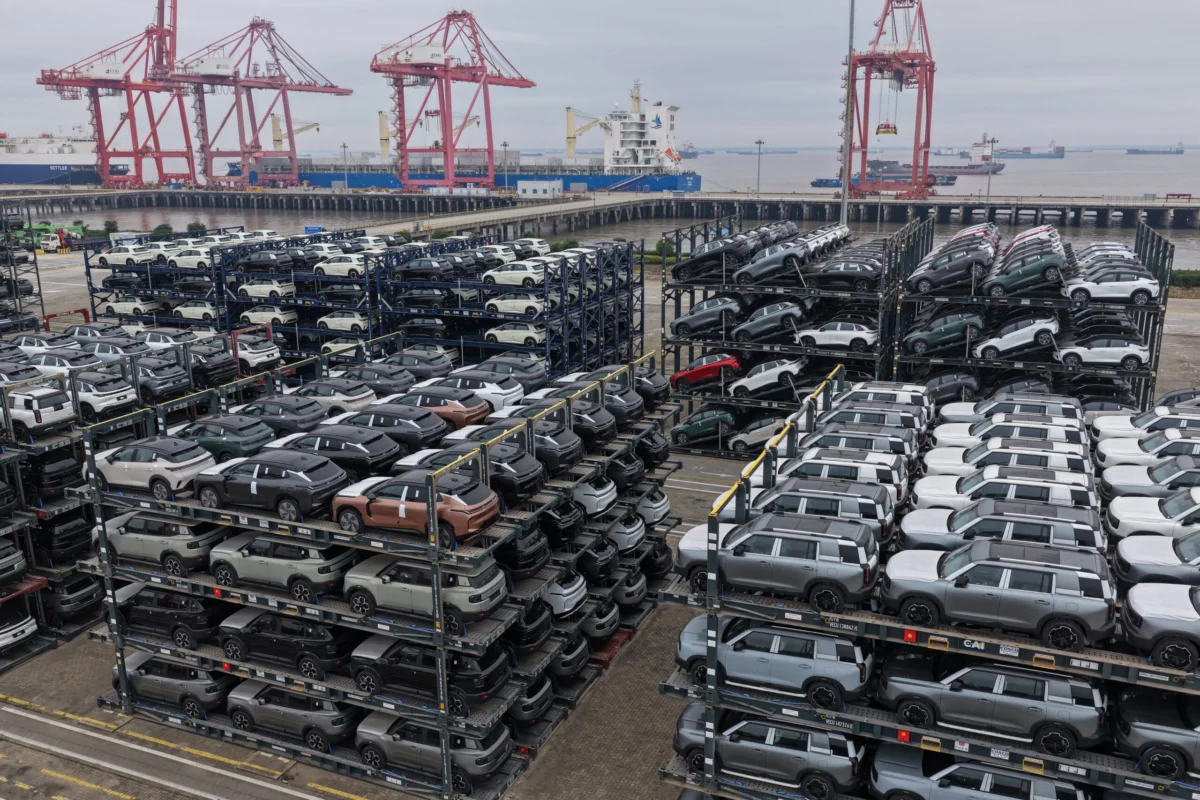
The USTR’s decision stems from a series of Section 301 investigations, a trade enforcement tool under U.S. law that allows the President to take action against foreign countries that engage in unfair trade practices. The stated focus of these latest investigations is "structural excess capacity," a broad term referring to a situation where a country’s industrial production capability significantly outstrips domestic demand, leading to a surplus of goods that are then often exported at suppressed prices. While the USTR’s reports specifically cite concerns across various sectors and countries, the underlying narrative frequently points to China’s industrial policies as a primary driver of global overcapacity, particularly in areas like steel, aluminum, and more recently, advanced manufacturing and new energy technologies.
Critics of the policy argue that defining and measuring "excess capacity" is complex and often subjective, potentially serving as a pretext for broader protectionist measures. Nevertheless, the administration maintains that such capacity distorts global markets, harms U.S. industries, and necessitates a strong response to level the playing field. The strategic deployment of tariffs, coupled with the carrot of reduced rates for cooperative partners, signifies a calculated effort to reshape global trade dynamics and assert U.S. economic interests.
China: Navigating Escalating Tariffs and a Precarious Truce
China, the focal point of many of the Trump administration’s trade grievances, faces a particularly complex situation. The proposed new tariffs would cap at 20% on top of an existing 25% tariff already imposed on a wide range of Chinese goods during President Donald Trump’s first term. This means that, should the new measures take full effect, some Chinese exports could face cumulative duties of up to 45%. Furthermore, the USTR has explicitly warned that this rate could surge to 40% if the delicate trade truce established with Beijing in South Korea last October is not extended beyond its January expiration. This potential escalation to a staggering 65% total tariff (40% new + 25% existing) underscores the high stakes involved in the ongoing U.S.-China economic relationship.
Beijing has vehemently rejected Washington’s assertions of widespread excess capacity, viewing them as thinly veiled protectionism. On Thursday, Chinese Commerce Ministry spokesperson He Yadong issued a stern rebuke, calling on Washington to "rectify its wrongdoing and return to the right track of resolving issues through dialogue." He Yadong also urged the U.S. to honor commitments made in late September, specifically the implementation of $30 billion in reciprocal tariff cuts that were reportedly agreed upon by both sides. These demands highlight China’s consistent stance that trade disputes should be addressed through negotiation rather than unilateral punitive measures.
Despite these renewed tensions, the year has seen several high-level, ostensibly conciliatory meetings between President Trump and Chinese President Xi Jinping. This diplomatic engagement, alongside what Mark Williams described as Trump’s "apparent lack of concern" regarding allegations of Chinese technology firms circumventing U.S. chip export controls, had previously offered glimmers of hope for de-escalation. The two leaders are, in fact, anticipated to hold their fourth meeting of the year at the Group of 20 (G20) leaders’ summit in Miami in December, a critical juncture for potentially defusing the current tariff standoff.
Wendy Cutler, senior vice president at the Asia Society Policy Institute, observes that "while not happy, Beijing seems prepared to live with the new rates provided that they don’t exceed 20%." This suggests a degree of strategic tolerance from China, perhaps preferring a manageable increase over a full-blown trade war. However, Cutler also emphasizes Washington’s intent to use the tariffs as leverage. By retaining the option to double levies if bilateral talks falter, the U.S. aims to "secure expected shipments of critical minerals and rare earths, and further purchases of U.S. agricultural goods," she explained. This indicates a multi-faceted approach, seeking not only to address industrial overcapacity but also to extract concessions on other key economic and strategic fronts. Indeed, Williams cautions that "if the trade war did start up again, today’s measures provide the U.S. with some ammunition," underscoring the precarious balance of power.

Interestingly, Williams also points out that the sweeping actions against the other 13 trading partners appear to be indirectly aimed at China. He meticulously tallied the word "China" appearing 253 times in the USTR’s report on Vietnam and a striking 315 times in the document pertaining to the European Union. "Foremost among the ‘unreasonable acts, policies, and practices’ that these countries are criticised for is being slow to restrict imports and FDI from China," Williams highlighted. This analysis suggests a broader strategy to isolate China and pressure its trading partners to align more closely with U.S. trade policy, even if it means imposing tariffs on those partners directly.
Vietnam, India, and Singapore: The Incentive to Deal
While the proposed tariffs generally result in modest average rate increases for many nations, India and Vietnam stand out due to the substantial difference between the rates they face with and without a trade deal. India faces a proposed tariff of 25%, which could drop sharply to 17% if ongoing talks with the U.S. culminate in a reciprocal trade agreement. Similarly, Vietnam, facing the highest potential rate of 35%, could see that figure reduced significantly to 20% upon reaching an agreement.
This stark contrast creates a compelling "strong incentive" for both countries to conclude deals with Washington, as noted by Wendy Cutler. Vietnam’s trade ministry quickly responded on Thursday, stating its commitment to working with the U.S. to complete a trade deal "as soon as possible," according to Reuters. This proactive stance reflects a clear understanding of the economic implications and the desire to secure a more favorable tariff environment. For India, a successful conclusion to its long-pending trade deal with Washington could provide a competitive edge over some Asian rivals, benefiting from comparatively lower levies and potentially redirecting supply chains.
Singapore also finds itself in a challenging position. The USTR proposal sets a maximum potential rate of 20% on its exports, net of existing Section 301 tariffs. However, this could fall to 10% if the city-state reaches an agreement on reciprocal trade with the U.S. or concludes other negotiations addressing the USTR’s findings, as detailed by Singapore’s Ministry of Energy, Trade and Industry (METI). The METI expressed strong disagreement with the findings and "very disappointed" with the proposed action, arguing that the USTR’s analysis failed to account for the unique structure of Singapore’s highly open and services-oriented economy.
Singapore’s argument is rooted in its existing trade relationship with the U.S. Under the U.S.-Singapore Free Trade Agreement (FTA), Singapore already imposes zero tariffs on U.S. goods. Furthermore, the U.S. has consistently run a significant trade surplus with the city-state for over two decades, a surplus that grew from $27 billion in 2024 to $33 billion in 2025. This historical context and existing favorable trade balance led Singapore to assert that it should not be targeted by measures aimed at addressing structural imbalances or unfair trade practices. Singapore has indicated it will submit further comments during the public consultation period and strongly urge the USTR to reconsider its proposed actions, highlighting the potential for diplomatic pushback from allies caught in the crossfire of broader trade disputes.
Exemptions and Broader Economic Implications
For certain economies, strategic exemptions built into the USTR’s proposal are expected to cushion the impact. South Korea and Taiwan, whose economies are heavily concentrated in critical technology sectors, are among these beneficiaries. The USTR singled out South Korea for its dominance in memory-chip production and what it described as outsized government support. Yet, crucially, the country’s highly sensitive semiconductor exports were explicitly excluded from the proposed excess-capacity tariffs. This strategic carve-out acknowledges the global reliance on South Korean chip manufacturing and seeks to avoid disrupting vital supply chains, particularly for U.S. technology companies.
Similarly, Taiwan, which faces an excess-capacity tariff cap of 15%, also benefits from exemptions for other key electronics, including mobile phones and networking equipment. Mark Williams estimates that despite the new measures, Taiwan’s effective tariff rate would rise only modestly, from about 6% to approximately 9%. These exemptions suggest a nuanced approach by the USTR, aiming to pressure certain sectors while protecting strategic industries and supply chains deemed essential for U.S. economic and national security interests.
The broader implications of this new tariff wave extend beyond the immediate economic costs. The policy reinforces the Trump administration’s "America First" trade agenda, prioritizing domestic industries and leveraging market access as a tool for diplomatic influence. For countries like Vietnam and India, the incentive to sign trade deals could lead to greater alignment with U.S. trade standards and practices. However, it also raises concerns about trade fragmentation and the potential for a more protectionist global economic environment.
Businesses and supply chain managers worldwide will be closely monitoring the progress of these negotiations and the actual implementation of tariffs. The potential for a 40% tariff hike on Chinese goods in January, for instance, could trigger significant re-evaluation of sourcing strategies and further accelerate the diversification of supply chains away from China. The G20 summit in December looms as a critical moment, where leaders will have a final opportunity to de-escalate tensions and perhaps forge new pathways for dialogue before these proposed tariffs take full effect, shaping the trajectory of global trade into the new year.