Lina Wu
TOKYO — Asian governments have largely dismissed the justifications underpinning President Donald Trump’s renewed efforts to erect a tariff wall, particularly concerning measures aimed at penalizing industrial overcapacity and other alleged "nonmarket" practices. While some nations have sought to downplay the immediate economic repercussions and pledged continued engagement with Washington, the underlying sentiment reflects a deep skepticism regarding the U.S. administration’s approach to international trade. This multifaceted reaction underscores a growing divide in global trade philosophy, with significant implications for supply chains, economic growth, and geopolitical stability across the Asia-Pacific region.
The Trump administration’s renewed focus on tariffs, a policy hallmark of its previous term, signals a significant shift in U.S. trade strategy. The current approach appears designed to address what Washington perceives as unfair trade practices that disadvantage American industries and workers. Central to this strategy is the concept of "nonmarket" economies and the issue of industrial overcapacity, particularly prevalent in sectors like steel, solar panels, and semiconductors. The administration argues that the dumping of surplus goods from countries with state-subsidized industries distorts global markets and undermines fair competition. This renewed tariff push comes as the U.S. continues to grapple with persistent trade deficits and aims to incentivize domestic production and job creation. The Supreme Court’s earlier dismantling of certain tariff-related executive actions has prompted the administration to seek alternative legal and policy pathways to re-establish its trade enforcement mechanisms, as exemplified by the ongoing efforts to rebuild a "tariff wall."
Historical Context and Escalation of Trade Disputes
The current trade tensions are not an isolated incident but rather a continuation and evolution of trade disputes that began to escalate significantly during President Trump’s first term. In 2018, the U.S. initiated a series of broad tariffs on goods from various countries, including major Asian trading partners like China, South Korea, and Vietnam. These initial measures were often justified under Section 232 of the Trade Expansion Act of 1962, which allows tariffs to be imposed on imports that threaten national security, and Section 301 of the Trade Act of 1974, targeting intellectual property theft and forced technology transfer.
The imposition of these tariffs led to retaliatory measures from affected nations, triggering a tit-for-tat escalation that disrupted global supply chains and created significant uncertainty for businesses. For instance, China responded with tariffs on a wide range of U.S. agricultural products and manufactured goods, impacting American farmers and manufacturers. South Korea, a key ally and trading partner, also faced U.S. tariffs on steel, prompting Seoul to negotiate quotas and exemptions.
The legal challenges to these tariffs, particularly those related to national security justifications, proved to be a significant hurdle for the Trump administration. The Supreme Court’s rulings, while not entirely invalidating all tariff powers, did impose limitations on how broad tariffs could be implemented without more specific congressional authorization or clearer national security threats. The current administration’s efforts to "rebuild the tariff wall" suggest a strategic recalibration, aiming to navigate these legal constraints while pursuing similar protectionist objectives. This involves a renewed focus on specific industries and practices deemed to be market-distorting, moving beyond the more generalized national security arguments of the past.
The backdrop for these renewed tariff actions includes a complex global economic landscape. The COVID-19 pandemic exposed vulnerabilities in extended supply chains, leading to calls for reshoring and diversification. Geopolitical tensions, particularly between the U.S. and China, have further intensified, with trade policy increasingly weaponized as a tool of foreign policy. Furthermore, technological competition, especially in areas like artificial intelligence, 5G, and advanced manufacturing, has become a central battleground, with tariffs and trade restrictions employed to gain a strategic advantage.
Asian Governments’ Reactions and Perspectives
The diverse reactions from Asian governments reflect a nuanced understanding of the economic realities and diplomatic implications of the U.S. tariff policy.
China, a primary target of U.S. trade actions, has consistently refuted claims of "nonmarket" practices and industrial overcapacity. Beijing argues that its economic model, which includes significant state-owned enterprises and strategic industrial planning, is a legitimate form of economic development and not inherently unfair. Chinese officials have often characterized U.S. tariffs as protectionist measures designed to stifle China’s economic rise. Retaliatory tariffs have been a consistent response, aimed at leveling the playing field and signaling displeasure. Beijing has also emphasized its commitment to multilateral trade rules and has been an active participant in the World Trade Organization (WTO), often criticizing unilateral U.S. actions as undermining the global trading system. The long-term strategy from Beijing involves fostering domestic consumption, strengthening its own technological capabilities, and deepening trade ties with other regions, such as Southeast Asia and the Belt and Road Initiative countries, to reduce reliance on the U.S. market.
South Korea, a technologically advanced economy heavily reliant on exports, has expressed concerns about the potential impact of U.S. tariffs on its key industries, particularly semiconductors and automobiles. While South Korea has sought to maintain strong diplomatic ties with the U.S., its government has also voiced its opposition to unilateral trade restrictions. Seoul has advocated for dialogue and consultation to resolve trade disputes, emphasizing the importance of stable supply chains and fair competition. In response to past tariff threats, South Korea has engaged in bilateral negotiations, sometimes agreeing to export quotas or voluntary restraint agreements to avoid more severe measures. The Korean government’s stance is often characterized by a pragmatic approach, seeking to mitigate damage while preserving its economic interests and its alliance with the United States.
Japan, another major trading partner of the U.S., has generally adopted a more diplomatic approach. While Tokyo has its own concerns about global industrial overcapacity and unfair trade practices, it has often preferred to address these issues through multilateral forums like the WTO and bilateral agreements. Japan’s government has stressed the importance of a rules-based international trading system and has expressed reservations about the broad application of tariffs. However, Japan also recognizes the strategic importance of its relationship with the U.S. and has engaged in discussions with Washington on trade matters, seeking to ensure that its industries are not unduly harmed. The administration’s focus on "nonmarket" practices could potentially align with some of Japan’s own long-standing concerns about state intervention in other economies.
Southeast Asian nations, such as Vietnam, Thailand, and Malaysia, have seen an increase in manufacturing and exports as companies reroute supply chains to avoid U.S. tariffs on Chinese goods. However, these nations are also vulnerable to potential future U.S. tariffs, particularly if they are perceived as benefiting unfairly from trade diversion or engaging in similar practices that the U.S. seeks to penalize. Their reactions often involve a balancing act: welcoming new investment and trade opportunities while also seeking to avoid becoming embroiled in larger trade disputes. These countries often emphasize their commitment to free trade principles and their desire for stable and predictable trade relations. They are also keen to diversify their own export markets and attract investment beyond the U.S. and China.
Supporting Data and Economic Indicators
The economic rationale behind the U.S. administration’s tariff policy often hinges on data related to trade deficits, industrial production, and the impact of imports on domestic employment.
- Trade Deficits: The U.S. has historically run significant trade deficits with many Asian countries, particularly China. In 2023, the U.S. trade deficit in goods with China alone was estimated to be in the hundreds of billions of dollars. While the current administration argues these deficits are a symptom of unfair trade practices, economists offer various perspectives, including the role of currency valuations, consumer demand, and the global division of labor.
- Industrial Overcapacity: Data on industrial overcapacity, especially in sectors like steel and aluminum, is a key justification for tariffs. For example, global steel overcapacity has been a persistent issue, with many countries having production capacity significantly exceeding domestic demand. This excess capacity often leads to a glut of exports at lower prices, impacting producers in countries that do not engage in similar levels of state support or overproduction. Reports from organizations like the OECD have highlighted the extent of this overcapacity and its distorting effects on global markets.
- Sector-Specific Data: The impact of tariffs can be analyzed through sector-specific data. For instance, the U.S. solar panel industry has argued that it has been hampered by imports from countries with heavily subsidized manufacturing, leading to job losses and a dependence on foreign supply chains. Similarly, the semiconductor industry, crucial for national security and economic competitiveness, is a focal point for trade policy, with concerns about concentrated manufacturing in certain regions.
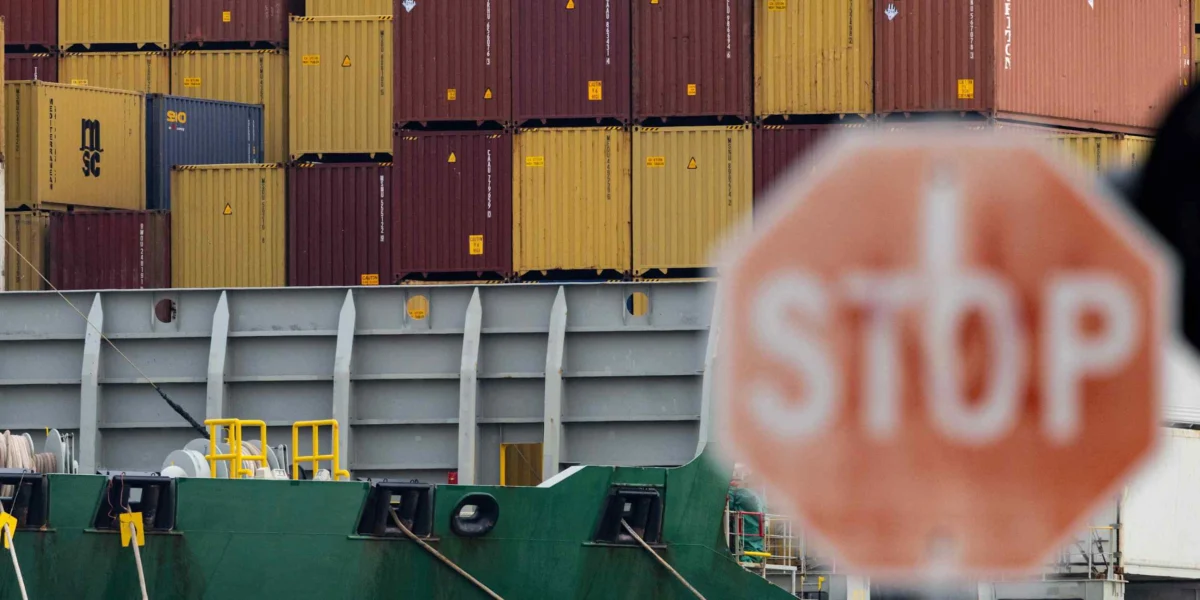
- Impact on Supply Chains: The reconfiguration of global supply chains is a tangible outcome of trade disputes. Data from shipping and logistics companies often show shifts in trade routes and volumes. For example, the Port of Oakland, as depicted in the accompanying image, has seen its activity influenced by the ebb and flow of international trade, including the movement of containers subject to tariffs and trade restrictions. Disruptions to these flows can lead to increased shipping costs, delays, and a reassessment of manufacturing locations.
- Foreign Direct Investment (FDI): The imposition of tariffs can influence foreign direct investment patterns. Countries seeking to circumvent tariffs may invest in new production facilities in third countries. Conversely, uncertainty created by trade disputes can deter investment in countries perceived as being at risk of future trade actions.
Broader Implications and Analysis
The renewed push for tariffs by the U.S. administration carries significant implications that extend beyond immediate trade figures.
- Global Trade System: A sustained period of escalating tariffs and trade disputes could further weaken the multilateral trading system, particularly the World Trade Organization (WTO). If major economies increasingly resort to unilateral actions and bilateral agreements, the principles of non-discrimination and predictable trade rules could be eroded. This could lead to a more fragmented and protectionist global economy.
- Supply Chain Resilience: While tariffs are intended to boost domestic production, they can also disrupt existing supply chains, leading to higher costs for consumers and businesses. The long-term effect could be a more diversified but potentially less efficient global production network. Companies are increasingly focused on building resilience, which may involve near-shoring, friend-shoring, or maintaining higher inventory levels, all of which can add to costs.
- Geopolitical Realignment: Trade policy is increasingly intertwined with geopolitical strategy. The U.S. tariff policy, particularly its focus on China, reflects a broader strategic competition. This can lead to a recalibration of international alliances and partnerships, as countries navigate their relationships with both the U.S. and China. Asian nations, in particular, are often caught in the middle, seeking to maintain economic ties with both superpowers.
- Economic Growth: The impact on global economic growth is a significant concern. While proponents of tariffs argue they protect domestic industries, critics contend that they lead to higher prices, reduced consumer choice, and retaliatory measures that harm export sectors. The uncertainty generated by trade disputes can also dampen business investment and slow down economic expansion.
- Technological Decoupling: The emphasis on "nonmarket" practices and industrial overcapacity can also be seen as part of a broader trend towards technological decoupling, where countries seek to reduce their reliance on foreign technologies and establish independent capabilities. Tariffs can be a tool in this process, aimed at protecting nascent domestic industries or preventing the transfer of advanced technologies.
In conclusion, the Asian governments’ broad rejection of the rationale behind President Trump’s renewed tariff policy underscores a fundamental disagreement on trade principles and practices. While the U.S. administration frames its actions as a necessary measure to address unfair competition and protect domestic interests, many Asian nations view these tariffs as protectionist and detrimental to the global trading system. The ongoing trade friction, characterized by a complex interplay of economic, political, and strategic considerations, is likely to continue shaping global trade dynamics, supply chains, and international relations for the foreseeable future. The effectiveness and long-term consequences of this resurgent tariff strategy remain a subject of intense scrutiny and debate among policymakers and economists worldwide.