Lina Wu
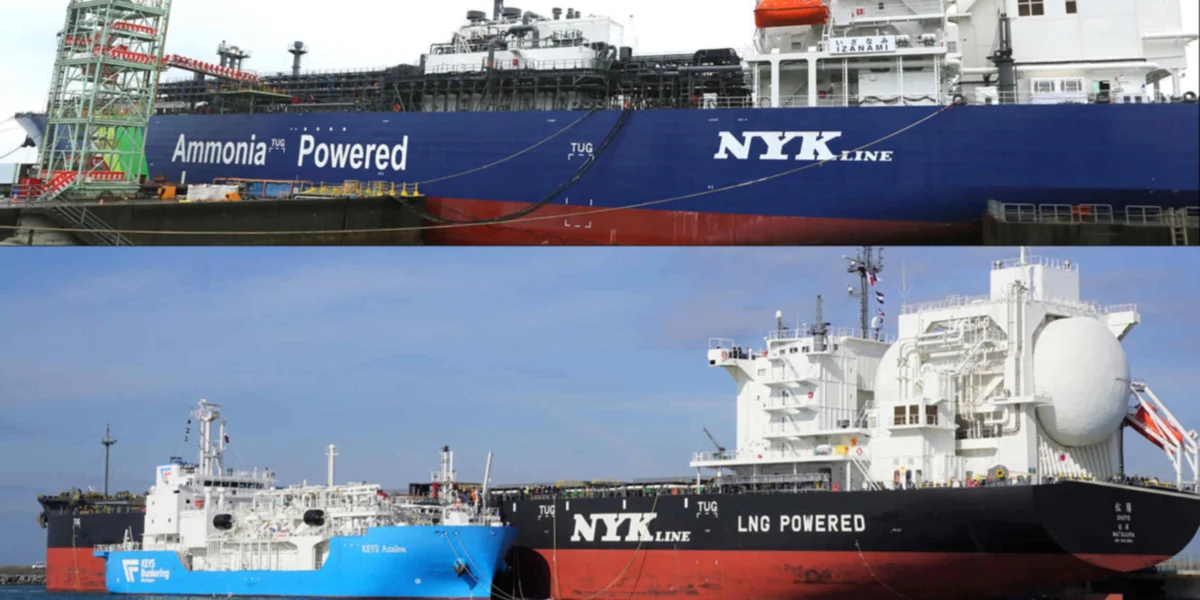
The global maritime industry is facing a significant crossroads in its decarbonization journey, with a stark division between major economic blocs over the preferred pathway for cleaner fuels creating a stalemate in international rule-setting. This divergence is particularly impacting Japanese shipping and shipbuilding giants like Mitsui O.S.K. Lines (MOL) and Nippon Yusen Kaisha (NYK), who find themselves in a strategic quandary, caught between the promise of environmentally superior but more costly ammonia and the readily available, less expensive option of liquefied natural gas (LNG). The lack of a unified international regulatory framework is not only slowing down the development of crucial decarbonization technologies but also creating uncertainty for significant investments in future vessel fleets.
The core of the disagreement lies in the differing priorities and perspectives of key players in the International Maritime Organization (IMO), the United Nations agency responsible for regulating shipping. European nations, driven by ambitious climate targets and a strong push for green energy initiatives, are leaning heavily towards fuels like ammonia and methanol, which, when produced from renewable sources, offer the potential for near-zero greenhouse gas emissions at the point of combustion. The U.S., on the other hand, appears more receptive to the role of LNG as a transitional fuel. While not entirely emissions-free, LNG produces significantly lower sulfur dioxide and nitrogen oxide emissions compared to traditional heavy fuel oil and offers a more immediate, scalable, and economically viable solution for reducing the industry’s carbon footprint.
This geopolitical and strategic friction is directly impeding the IMO’s progress in establishing concrete regulations for the maritime sector’s transition away from fossil fuels. For companies like MOL and NYK, which operate vast fleets of vessels and are deeply integrated into global supply chains, this uncertainty translates into significant challenges. Decisions about the next generation of ships – their fuel types, engine technologies, and associated infrastructure – require long-term planning and substantial capital expenditure. Without clear international standards and a predictable regulatory environment, these companies are hesitant to commit to massive investments that could become obsolete or unviable if international rules shift dramatically.
The Ammonia vs. LNG Debate: A Deeper Dive
Ammonia (NH3) has emerged as a leading contender for a truly zero-emission maritime fuel. When produced using renewable electricity for electrolysis (known as "green ammonia"), it can be burned in internal combustion engines or used in fuel cells with minimal to no CO2 emissions. Proponents highlight its potential to meet stringent climate goals and its relative ease of transport and storage compared to hydrogen, as it can be liquefied at higher temperatures.
However, the widespread adoption of ammonia faces several hurdles. The current production of ammonia is largely reliant on natural gas, making it a "grey ammonia" with a significant carbon footprint. The infrastructure for producing and bunkering (refueling) green ammonia at scale is still in its nascent stages and requires massive investment. Furthermore, the combustion of ammonia can produce nitrous oxide (N2O), a potent greenhouse gas, and requires advanced engine technology and stringent safety protocols due to its toxicity and corrosive nature.
Liquefied Natural Gas (LNG), conversely, presents a more immediate and pragmatic solution for many shipping operators. It is a readily available fuel with an established global supply chain and bunkering infrastructure. When compared to heavy fuel oil, LNG offers substantial reductions in sulfur oxides (SOx) and nitrogen oxides (NOx), as well as a reduction in CO2 emissions, estimated to be around 20-25%. This makes it an attractive "bridge fuel" for many, allowing for immediate emissions reductions while longer-term zero-emission solutions are developed.
The economic argument for LNG is also compelling. Historically, LNG has been more cost-effective than alternative low-carbon fuels, especially considering the current development costs and infrastructure build-out required for ammonia. For large shipping companies with tight margins, the cost differential can be a deciding factor in fleet modernization plans.
Timeline of Uncertainty and Emerging Strategies
The debate over maritime decarbonization fuels has been ongoing for several years, but it has intensified as international climate commitments, such as those under the Paris Agreement, have become more pressing. The IMO has set ambitious targets for reducing greenhouse gas emissions from international shipping, aiming for at least a 50% reduction by 2050 compared to 2008 levels, with a view to achieving net-zero emissions.
In recent years, the IMO’s Intersessional Working Group on Reduction of GHG Emissions from Ships has been the primary forum for these discussions. While progress has been made on various fronts, including efficiency measures and the development of a global carbon pricing mechanism, the specific fuel choices and regulatory pathways have remained contentious.
- Early 2020s: Initial discussions focused on a broad spectrum of potential alternative fuels, including LNG, methanol, ammonia, hydrogen, and biofuels. This period saw significant research and development initiatives by major players, including Japanese shipping companies, often in collaboration with engine manufacturers and fuel providers.
- Mid-2020s (leading up to the current article’s timeframe): The divide between proponents of different fuel pathways became more pronounced. The U.S. and some other nations began advocating more strongly for LNG as a realistic transitional fuel, emphasizing its immediate benefits and existing infrastructure. Meanwhile, a coalition of European countries and environmental groups pushed for a more aggressive transition to truly zero-emission fuels like green ammonia and methanol, arguing that delaying this transition would make it harder to meet climate goals.
- Present Day (as suggested by the article’s date of November 25, 2026): The stalemate continues. The lack of consensus at the IMO is leading to a fragmented approach globally, with some regions or companies forging ahead with specific fuel strategies while others wait for clearer international guidance. This is the environment in which MOL and NYK find themselves, facing difficult strategic decisions.
Japanese Companies Navigating the Divide
Japanese shipping and shipbuilding companies have historically been at the forefront of technological innovation in the maritime sector. Both MOL and NYK have been actively involved in exploring and testing various alternative fuel solutions.
NYK, for instance, has been a pioneer in LNG-powered vessels, having introduced some of the world’s first LNG-fueled tugboats and car carriers. They have also been exploring ammonia and methanol as future fuel options, investing in research and pilot projects. MOL has similarly invested in LNG, but has also placed a significant emphasis on ammonia, recognizing its long-term zero-emission potential. The company has been a key player in initiatives aimed at developing ammonia-fueled vessels and the necessary supply chains.
The current impasse means that these companies must make strategic bets without full certainty. They are likely engaging in a dual approach:
- Investing in LNG: To maintain competitiveness and meet near-term emissions reduction targets, they are likely continuing to invest in LNG-powered vessels and the associated infrastructure. This provides a pragmatic solution for many trade routes.
- Developing Ammonia Capabilities: Simultaneously, they are likely continuing to invest in research, development, and pilot projects for ammonia-fueled ships and the production of green ammonia. This is crucial for positioning themselves for the future if ammonia indeed becomes the dominant zero-emission fuel.
- Flexibility and Dual-Fuel Technology: A key strategy for many is the development of dual-fuel engines that can operate on multiple fuel types, offering greater flexibility as the regulatory landscape and fuel availability evolve.
Broader Impact and Implications
The lack of international consensus on maritime fuels has far-reaching consequences:
- Investment Uncertainty: Shipowners and operators are hesitant to commit to building new fleets without clear regulatory signals. This can lead to delays in fleet renewal, potentially impacting the efficiency and environmental performance of global trade.
- Infrastructure Development: The development of bunkering infrastructure for new fuels requires massive investment. Without a clear fuel pathway, it is difficult for ports and fuel suppliers to justify these investments, creating a chicken-and-egg problem.
- Technological Development: The competition between different fuel pathways can spur innovation. However, a fragmented approach can also lead to a dissipation of resources and a slower pace of overall technological advancement.
- Economic Competitiveness: Companies and nations that adopt less expensive or more readily available fuels may gain a competitive advantage in the short to medium term. However, those that invest heavily in emerging technologies could be at the forefront of a future low-carbon economy.
- Environmental Goals: The primary concern is the impact on global decarbonization efforts. A prolonged stalemate at the IMO risks delaying the necessary transition away from fossil fuels, making it harder to meet climate targets.
Official Responses and Industry Reactions
While specific public statements from MOL and NYK regarding this precise dilemma in late 2026 are not detailed in the provided snippet, their actions and past pronouncements offer insight. Japanese industry bodies, such as the Japan Ship Exporters’ Association and the Japan Maritime Center, have consistently advocated for a pragmatic and multi-pronged approach to decarbonization, emphasizing the need for viable and economically feasible solutions. They have often expressed concerns about the pace of technological development and the availability of green fuels at scale.
Globally, the IMO secretariat has been urging member states to find common ground, emphasizing the urgency of the situation. Various shipping industry associations, such as the International Chamber of Shipping (ICS), have been actively participating in IMO discussions, calling for clear, predictable, and globally consistent regulations to facilitate investment and innovation.
Looking Ahead: The Path to Decarbonization
The current divide between Europe and the U.S. over maritime fuels highlights the complex interplay of environmental ambition, economic realities, and technological development. For Japanese companies like MOL and NYK, the challenge is to balance immediate operational needs and cost efficiencies with long-term strategic positioning for a decarbonized future.
The resolution of this impasse at the IMO will likely require significant compromise and a recognition that a single "silver bullet" fuel may not be the answer. A diversified approach, which accommodates transitional fuels like LNG while aggressively investing in the development and scaling of zero-emission technologies like green ammonia and methanol, may ultimately prove to be the most effective strategy. The decisions made in the coming years at international forums and within the boardrooms of companies like MOL and NYK will shape the future of global trade and the industry’s contribution to combating climate change. The ongoing strategic balancing act undertaken by these Japanese maritime leaders underscores the immense complexity and high stakes involved in ushering in a new era of sustainable shipping.