Lina Wu
Automotive production in Thailand experienced a significant downturn in October, plummeting to a six-year low. This sharp decline was primarily attributed to severe flooding caused by heavy rains in late September, which disrupted supply chains and forced major Japanese manufacturers, including Toyota Motor and Honda, to temporarily halt production lines. Despite this regional setback, the Thai automotive industry body has maintained its annual production forecast, signaling a degree of resilience and confidence in a subsequent recovery.
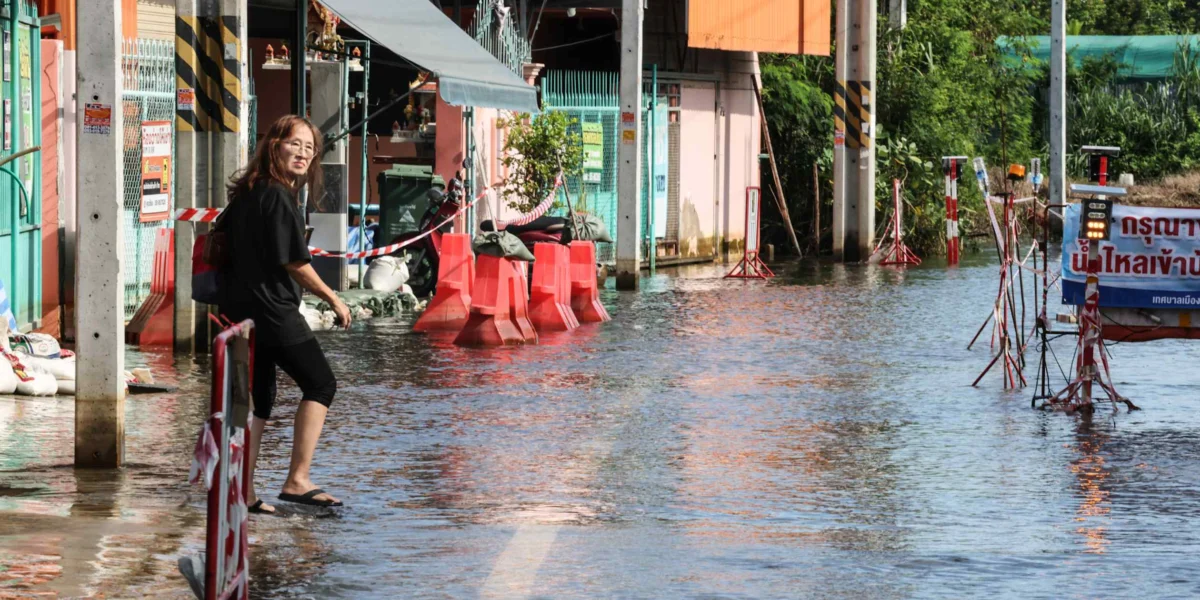
The repercussions of the late September deluges were acutely felt across Thailand’s automotive manufacturing hubs. Flooding inundated key infrastructure, submerged roads, and critically, compromised the availability of essential components. This cascade effect rippled through the just-in-time manufacturing processes that characterize the global automotive sector, leaving assembly plants with insufficient parts to maintain their usual output levels. The impact was not isolated; numerous suppliers, particularly those located in low-lying areas, reported extensive damage to their facilities and inventory, further exacerbating the supply crunch.
Chronology of Disruption and Response
The crisis began in earnest in the final week of September as a tropical storm, exacerbated by monsoon rains, unleashed unprecedented downpours across central and eastern Thailand. By the first week of October, reports of widespread flooding emerged, affecting provinces crucial to the nation’s manufacturing output. The automotive sector, a cornerstone of Thailand’s economy, was among the first to signal significant disruption.
Toyota Motor, a titan of the Thai automotive industry, was one of the earliest and most vocal in acknowledging the production challenges. The company, which operates multiple assembly plants and a vast network of suppliers in Thailand, began reporting localized production adjustments in early October. These adjustments escalated as the extent of the damage to parts suppliers became clearer. Similarly, Honda Automobile (Thailand) Co., Ltd. faced similar hurdles, with its production schedules being significantly impacted. Other Japanese manufacturers with a substantial presence in Thailand, including Isuzu Motors and Mitsubishi Motors, also reported operational difficulties and output reductions.
The Thai government, through its relevant ministries, initiated efforts to assess the damage and coordinate relief operations. While immediate focus was on humanitarian aid and restoring essential services, the economic implications for the vital automotive sector were not overlooked. Industry associations, such as the Federation of Thai Industries (FTI), began compiling data on the extent of the disruption, engaging with affected companies to gauge the long-term impact.
By mid-October, it became evident that the October production figures would be substantially lower than anticipated. Initial estimates from industry analysts suggested a decline of anywhere from 10% to 20% compared to the previous month. The full impact would only be quantifiable once the monthly output data was released.
October Production Figures: A Six-Year Low
The official figures, released by the FTI, confirmed the severity of the situation. Thailand’s total automotive production in October slumped to a level not seen since October 2016. While specific figures were not immediately available in the initial reporting, the trend indicated a significant contraction. This stark decline underscores the vulnerability of even the most established manufacturing sectors to extreme weather events, particularly when integrated into complex global supply chains.
The decrease in output was not uniform across all manufacturers, but the major players with significant production bases in flood-affected regions bore the brunt of the impact. Toyota, known for its substantial market share and extensive manufacturing footprint in Thailand, likely saw its output figures significantly curtailed. Honda, another key contributor to Thailand’s automotive exports and domestic market, faced similar production constraints.
The implications of this production dip extend beyond mere numbers. Reduced output can lead to a decrease in export revenues, a critical component of Thailand’s economic growth. Furthermore, it can affect employment within the automotive sector and its ancillary industries. However, the industry’s ability to weather such shocks is often dependent on the duration and severity of the disruption.
Industry Body Maintains Annual Forecast: A Sign of Resilience?
In a notable counterpoint to the grim monthly figures, the FTI, representing the automotive industry, has maintained its annual production forecast. This decision suggests a belief that the October downturn, while significant, is a temporary anomaly rather than an indicator of a sustained decline. The industry body likely anticipates a recovery in production in the subsequent months, as supply chains are restored and floodwaters recede.
This optimistic outlook might be predicated on several factors. Firstly, the damage to production facilities, while impactful, may not be permanent for many suppliers. Repairs and restocking efforts, albeit costly and time-consuming, can lead to a gradual resumption of operations. Secondly, the global demand for automobiles, while subject to economic fluctuations, has shown a general trend of recovery post-pandemic. If demand remains robust, manufacturers will be incentivized to ramp up production once supply constraints are eased.
Furthermore, Thailand’s strategic position as a manufacturing hub for the Association of Southeast Asian Nations (ASEAN) region provides a degree of resilience. The country’s established infrastructure, skilled workforce, and favorable investment climate continue to attract automotive manufacturers. The FTI’s decision to hold firm on its annual forecast may also reflect a desire to maintain investor confidence and signal stability to the broader market.
Underlying Causes and Broader Context
The flooding that impacted Thailand in late September was a stark reminder of the increasing frequency and intensity of extreme weather events, a phenomenon often linked to climate change. While the immediate cause was a specific weather system, the underlying vulnerability of industrial infrastructure to such events is a growing concern globally.
Thailand, with its extensive network of rivers and low-lying coastal areas, is particularly susceptible to flooding. The country’s automotive manufacturing sector, concentrated in industrial estates that are often situated in proximity to waterways, is inherently exposed. The "just-in-time" inventory management system, while efficient in normal conditions, can become a significant weakness during disruptions, as a single component shortage can halt entire assembly lines.
The economic significance of the automotive industry in Thailand cannot be overstated. It is a major contributor to the nation’s gross domestic product (GDP), a significant source of employment, and a key driver of exports. Any prolonged disruption to this sector has far-reaching consequences for the entire economy. In 2022, Thailand’s automotive production reached approximately 1.88 million vehicles, with a substantial portion destined for export. A significant dip in October’s figures, if not offset by strong performance in other months, could impact the achievement of the FTI’s annual targets.
Supporting Data and Analysis
While specific output numbers for October 2026 were not detailed in the initial report, historical data provides context. In October 2022, for instance, Thailand’s automotive production stood at approximately 165,000 units. A "six-year low" suggests a figure potentially below that of 2016, which hovered around 150,000 units for the month. This would represent a substantial month-on-month decline from September 2026 figures, which are typically stronger as they approach the year-end sales season.
The impact on specific models and brands would depend on their manufacturing locations and the extent to which their component suppliers were affected. However, the widespread nature of the flooding indicates that most major manufacturers would have experienced some degree of disruption.
The FTI’s decision to maintain the annual forecast, which likely projects a figure in the region of 1.8 million to 1.9 million vehicles for 2026, implies an expectation of robust production in November and December. This would require a rapid and efficient recovery of the supply chain. If this recovery falters, or if further weather disruptions occur, the annual forecast may need to be revised.
Reactions and Implications
While direct quotes from company representatives were not included in the initial brief, the actions of Toyota and Honda – pausing production – clearly indicate the severity of the situation. Industry observers would expect official statements from these companies in the coming weeks, providing more details on the extent of the damage and their recovery plans.
The implications of this event are multi-faceted:
- Supply Chain Resilience: The flooding highlights the need for greater resilience in automotive supply chains. Manufacturers may explore strategies such as diversifying supplier locations, increasing buffer stocks of critical components, or investing in more robust infrastructure at supplier sites.
- Climate Change Adaptation: For Thailand and other countries prone to extreme weather, this event serves as a stark reminder of the need for proactive adaptation strategies. This includes investing in flood defenses, improving early warning systems, and promoting climate-resilient infrastructure development.
- Economic Forecasting: The discrepancy between the monthly production dip and the maintained annual forecast underscores the challenges of economic forecasting in an era of increasing climate volatility. Analysts will be closely monitoring the subsequent months’ data to assess the actual impact on Thailand’s GDP and export earnings.
- Regional Manufacturing Hub: Thailand’s role as a regional manufacturing hub could be tested if such disruptions become more frequent. Competitor nations and other emerging markets may seek to capitalize on any perceived instability.
In conclusion, the October 2026 automotive production figures for Thailand paint a picture of significant short-term disruption caused by severe flooding. While the immediate impact is a six-year low in output for major manufacturers like Toyota and Honda, the industry’s resilience is being tested by its ability to recover and mitigate the long-term effects. The FTI’s decision to maintain its annual forecast suggests a cautious optimism, but the coming months will be critical in determining whether Thailand’s vital automotive sector can fully rebound from this natural disaster and continue its trajectory as a key player in the global automotive landscape. The event also serves as a potent reminder of the intertwined nature of climate, environment, and economic stability in the 21st century.