Gilang Muhammad
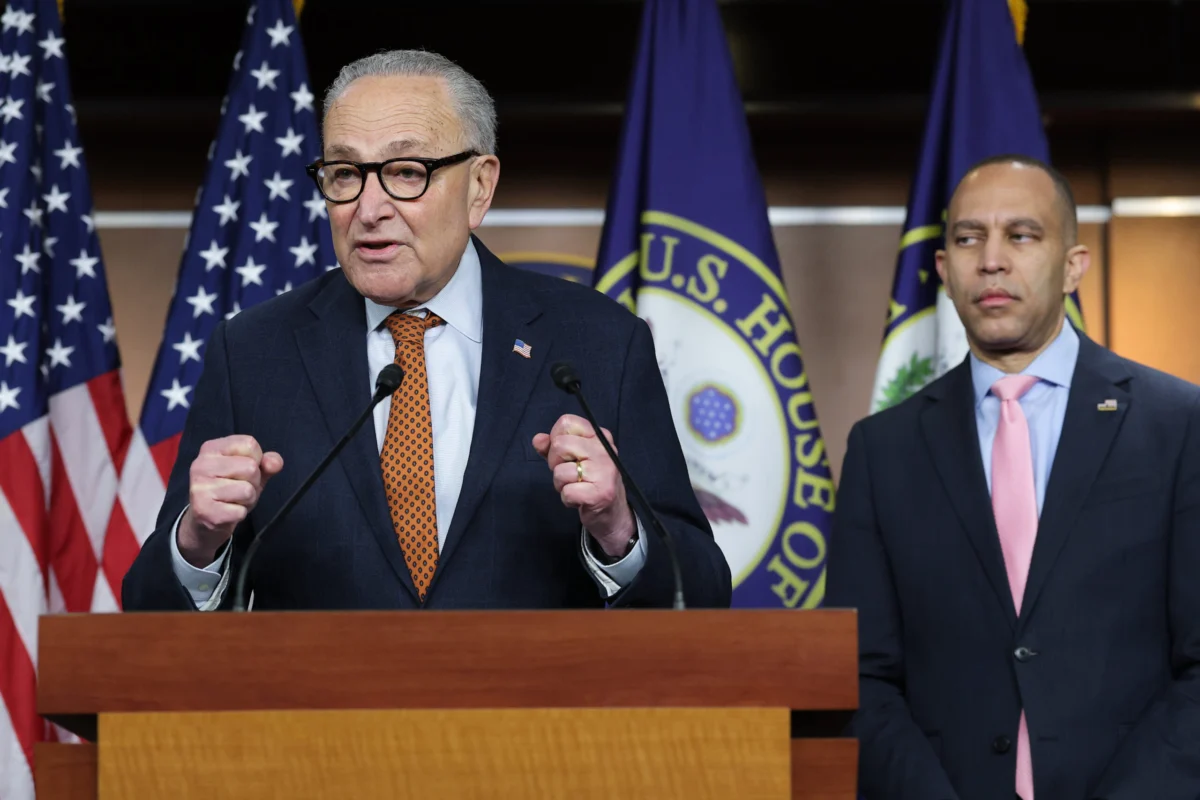
The dramatic electoral sweep by Democrats on Tuesday night has fundamentally reshaped the political landscape, injecting a new and profoundly unstable dynamic into what is widely regarded as the single biggest political risk to financial markets in the coming year: the national debt limit. Unless a defeated Republican Party demonstrates an unlikely and swift show of unity to address the issue in its final weeks wielding power, the protracted and potentially nastier fight that is set to unfold will undoubtedly add significant volatility to an already shaky bond market. This confrontation is poised to redefine the traditional playbook, with the newly empowered Democratic majority now holding the leverage, a stark reversal from previous episodes of fiscal brinkmanship.
The New Political Calculus: Democrats Seize Leverage
Historically, episodes of brinkmanship surrounding the government’s borrowing limit have seen Republicans in Congress demanding budget cuts from a Democratic president as the price for their votes to raise the debt ceiling. This time, the tables have turned decisively. It will almost certainly be the newly empowered left seeking substantial concessions from the sitting right-wing President. This shift in power dynamics means the ultimate agreement, unlike past episodes, is more likely to result in increased government spending rather than reductions. With high bond yields already exerting pressure on the economy and an American populace expecting decisive action from a newly invigorated Democratic opposition, this particular fight could prove to be especially damaging, both economically and politically.
The debt limit, a peculiar quirk of the congressional budgeting process, essentially prevents the U.S. government from borrowing funds that Congress has already legally authorized federal agencies to spend. Because Congress has operated with deficits for decades—this year alone projected at a staggering $1.99 trillion—the total pile of national debt periodically bumps against this statutory ceiling. The implications of failing to raise it are catastrophic, making it, by definition, a must-pass bill—even more critical than routine issues like funding the government or the defense budget. This inherent necessity makes it potentially the one real opportunity the incoming Democratic majority in Congress has to extract significant policy concessions from a President who has already pledged to veto their legislative agenda. Financial markets will undoubtedly detest the entire, drawn-out process, even if—as many analysts expect—it ultimately concludes in a compromise.
Understanding the Debt Limit: A Perennial Crisis Mechanism
To fully grasp the gravity of the impending confrontation, it is crucial to understand the origins and mechanics of the U.S. debt limit. Established by the Second Liberty Bond Act of 1917 and later consolidated in 1939, the debt ceiling was intended to streamline the government’s borrowing process, allowing the Treasury to issue bonds as needed, up to a certain aggregate limit, rather than seeking congressional approval for each individual bond issuance. Ironically, this administrative tool has evolved into a potent political weapon, capable of bringing the nation to the brink of financial disaster.
The current limit was set in 2025, granting the Treasury Department the authority to borrow up to $41.1 trillion. According to projections from the Bipartisan Policy Center, a non-profit organization that meticulously tracks this issue, the Treasury is likely to hit its maximum borrowing capacity by mid-summer of the coming year. When this occurs, the Treasury Secretary typically employs a series of "extraordinary measures" – accounting maneuvers that temporarily free up borrowing capacity without technically exceeding the limit. These measures, such as suspending investments in certain government employee retirement funds, can buy the government several months. Wall Street estimates suggest that these techniques could extend the so-called "X-date"—the point at which the U.S. would no longer be able to meet all its financial obligations—to sometime in the fourth quarter of 2027.
A History of Brinkmanship: Lessons from Past Crises
The U.S. has never meaningfully breached the debt limit, but the nation has come perilously close on several occasions, leaving a trail of economic and market volatility.
- 1995-1996: Under President Bill Clinton, a Republican-controlled Congress led by Speaker Newt Gingrich demanded deep spending cuts, leading to two government shutdowns and a tense standoff over the debt ceiling. While a default was averted, the political battles were fierce.
- 2011: This episode under President Barack Obama saw House Republicans, emboldened by the Tea Party movement, demand significant deficit reduction. The brinkmanship led to Standard & Poor’s downgrading the U.S. sovereign credit rating from AAA to AA+, citing political dysfunction. The downgrade sent shockwaves through global markets, illustrating the tangible costs of political posturing.
- 2013: Another showdown during the Obama administration resulted in a 16-day government shutdown as Republicans sought to defund the Affordable Care Act, once again intertwined with the debt ceiling debate.
- 2023: More recently, President Joe Biden faced off against a Republican-led House under Speaker Kevin McCarthy. The negotiations were protracted, eventually leading to the Fiscal Responsibility Act, which suspended the debt limit until January 2025 in exchange for spending caps.
The 2025 debt limit increase was less contentious because Republicans held both Congress and the presidency, allowing it to pass largely along party lines, often tied to a package of tax cuts and other policy changes that unified the party, despite complaints from some Republican debt hawks. Still, the risk-taking in these previous episodes contributed to credit ratings firms’ decisions to downgrade U.S. debt – and could very well do so again, especially given the current political fragmentation.
The Current Fiscal Landscape: Debt and Deficits
The backdrop for this impending confrontation is a U.S. national debt that recently surpassed the $40 trillion mark for the first time, a figure that has grown substantially over the past two decades due to a combination of tax cuts, increased spending on defense and social programs, and emergency outlays during economic crises like the 2008 financial crisis and the COVID-19 pandemic. The federal budget deficit, which reached $1.99 trillion this year, continues to add to this burden. High bond yields, driven by persistent inflation and the Federal Reserve’s monetary policy, are already weighing heavily on the economy, increasing the cost of borrowing for the government, businesses, and consumers alike. Any additional uncertainty stemming from a debt limit crisis would exacerbate these pressures, potentially hindering economic growth and increasing the likelihood of a recession.
The Road Ahead: Timeline to the X-Date
The immediate political calendar will be dominated by the "lame-duck" session of Congress, the period between the November election and the seating of the new Congress in January. President Donald Trump has publicly called for Republicans to resolve the debt limit issue in these few weeks, before the new Democratic-majority Congress is seated. However, this scenario is highly improbable. Success would require extraordinary unity among a fractured, fleeting Republican majority that also faces several other more pressing priorities, including appropriations bills to fund the government and potentially confirming judicial nominees.
Republicans might attempt to raise the limit during the lame-duck session using a budgeting procedure called "reconciliation," which would allow them to bypass the need for Democratic votes by avoiding the Senate filibuster. However, reconciliation is a complex, time-consuming process with strict rules (like the Byrd Rule, which limits extraneous provisions) and is typically reserved for major budget-related legislation. Executing such a maneuver successfully in a lame-duck session, with a lame-duck Speaker and a party reeling from electoral defeat, presents formidable logistical and political hurdles.
The most likely path toward raising the debt limit remains negotiation between the incoming Democratic majority and the sitting President. However, as analysts at Jefferies noted, markets may be underestimating the assertiveness of the new Democratic leadership. Aniket Shah, head of the Washington policy team at Jefferies, stated, "Many in the markets are stuck on the outdated idea that Democrats are less assertive than Republicans. They have this sort of mental image of Biden-Harris 2024. I don’t think they realize how aggressively Democrats plan to take 2027."
Democratic Demands: A Hostage Negotiation with New Terms
Unlike past standoffs where Republicans sought spending cuts, the new Democratic majority will likely broaden the debt limit negotiation into an "all-purpose hostage" situation, as described by Robert Sockin, chief U.S. economist at PGIM. Their goal will be to leverage this must-pass bill to achieve policy objectives that would otherwise face a presidential veto.
Potential Democratic demands could include:
- Reversing spending cuts: Shah suggests Democrats will push to reverse cuts to Medicaid spending passed in 2025 and seek to restore healthcare spending more broadly.
- Corporate tax rate increase: George Pollack, senior U.S. analyst with Signum Global Advisors, noted that tying an increase in the corporate tax rate to a debt limit raise is a compromise being considered in some Washington circles. Pollack also highlighted that President Trump has shown surprising flexibility on similar issues in the past.
- Restraining signature Trump policies: Analysts at Goldman Sachs suggested in a recent research note that Democrats could seek to tie the debt limit to limiting the war with Iran or rolling back tariffs, signaling a willingness to use fiscal leverage for foreign policy and trade objectives.
This pivot means the ultimate outcome is far more likely to raise overall government spending than to cut it. "There’s a very weird irony here," Sockin remarked, observing the reversal of historical roles.
Market Implications: Volatility, Downgrades, and Economic Tailspin
The results of the U.S. missing payments would be catastrophic, unleashing chaos across the financial system and rippling out into the global economy. U.S. default would immediately call into question trillions in Treasury securities, which serve as the bedrock of the global financial system. Damaging their perceived safety and liquidity could send the U.S. and global economies into an unprecedented economic tailspin with no obvious means of recovery.
While most analysts, including Shah, believe that the episode will ultimately be resolved through compromise due to the extremely high stakes, the path to that resolution will likely be exceedingly rocky. Sockin believes it could resemble the 2025 government shutdown—the longest government-wide shutdown in history, even though Democrats did not control either chamber of Congress at the time. This time, with more power, Democrats may be willing to push closer to the precipice.
If the fight extends beyond the X-date, even a "technical default"—where the U.S. misses a payment, even if the government eventually makes it up—could inflict serious and lasting damage. "It’s not our base case, but we think the risk is higher than ever that you could get a technical default from the government," Sockin warned. Such an event would almost certainly trigger further downgrades to the U.S. sovereign credit rating, and these might "bite more this time," he added, given the existing economic vulnerabilities. Yields on longer-term Treasurys would rise significantly to account for the added uncertainty and perceived risk, increasing the cost of borrowing for everyone. Crossing this red line, Sockin concluded, would also prompt a "very negative reaction in equity markets," potentially triggering a sharp and sustained downturn.
Analyst Perspectives: Underestimating the New Majority
The consensus among market participants, though evolving, still carries a degree of underestimation regarding the incoming Democratic majority’s strategic intent. Aniket Shah’s observation about the "mental image of Biden-Harris 2024" highlights a crucial disconnect. The 2026 election results indicate a mandate for a more aggressive, activist approach, not a continuation of the previous administration’s often cautious legislative strategy. This newly empowered majority, hungry for legislative victories and keen to demonstrate its effectiveness ahead of the 2028 presidential election, will view the debt limit as a prime opportunity to advance its agenda.
Goldman Sachs analysts’ insights into potential Democratic demands, such as tying the debt limit to foreign policy or trade issues, underscore the breadth of objectives the Democrats might pursue. This suggests a more expansive definition of "concessions" than typically seen in past debt limit negotiations, moving beyond purely fiscal matters. Similarly, George Pollack’s point about the corporate tax rate and Trump’s past flexibility hints at complex, multi-faceted negotiations that could catch markets off guard.
The Stakes: Unprecedented Risks in a Polarized Era
The coming months will serve as a critical test of how close Democrats are willing to push the nation to the brink. The risks are arguably higher than ever before. In a deeply polarized political environment, where both sides face strong incentives to "dig in" ahead of the next presidential election, the path to compromise will be fraught with peril. The potential for miscalculation or an unforeseen escalation is substantial.
The debt limit, once a relatively obscure administrative procedure, has morphed into a recurring symbol of America’s political dysfunction. This upcoming confrontation, characterized by a reversal of traditional negotiating roles and a newly assertive Democratic majority, promises to be one of the most contentious and economically significant in recent memory. Navigating this perilous path will require extraordinary political skill and a willingness to compromise, qualities that have often been in short supply in Washington’s recent history. The global financial system, deeply reliant on the stability and solvency of the U.S. government, will watch with bated breath.