Farhan Pambudi
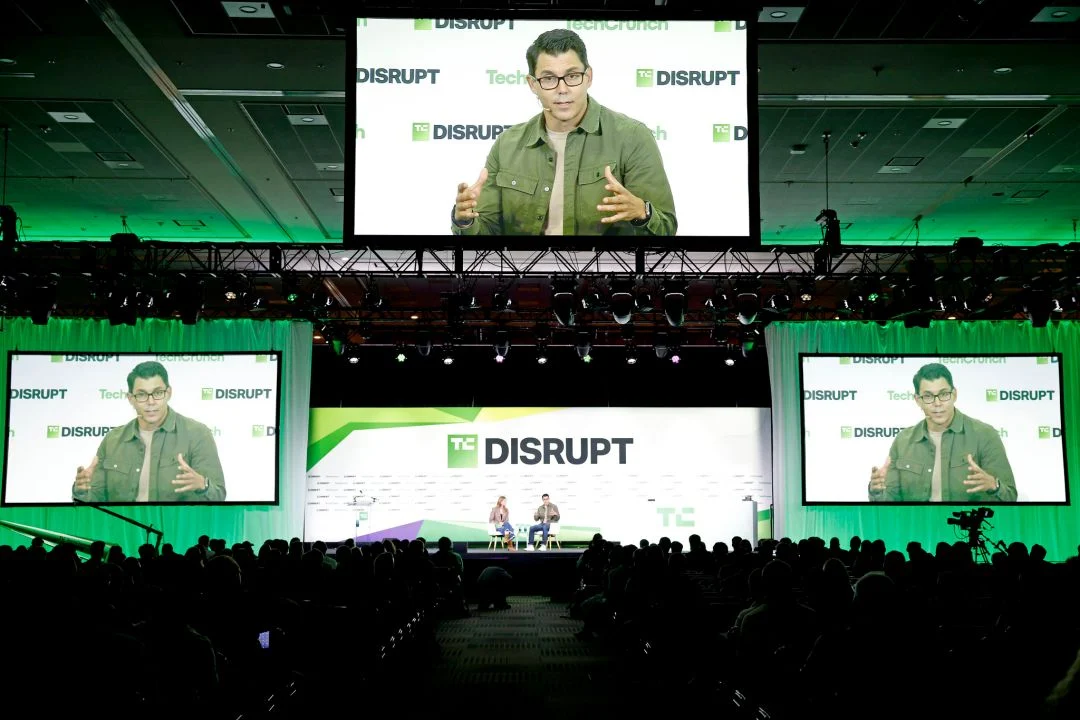
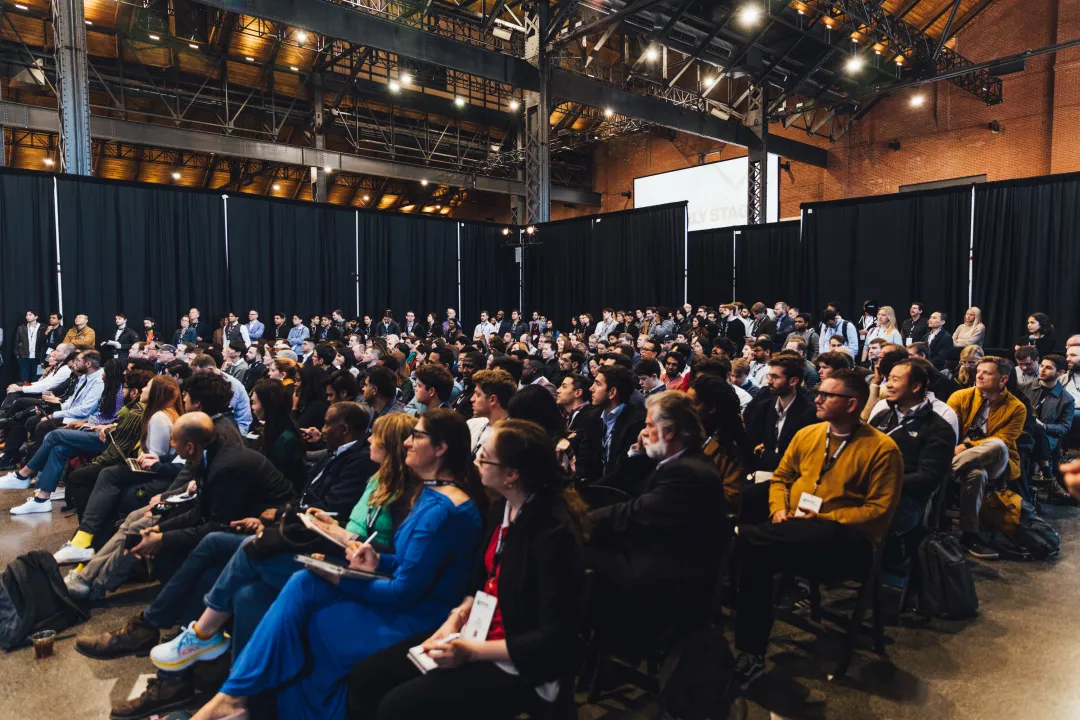
The second day of TechCrunch Disrupt 2026 convened at San Francisco’s Moscone West, drawing a global assembly of over 10,000 founders, investors, and technology leaders to the heart of the world’s premier innovation hub. Following a high-energy opening day, the Wednesday schedule pivoted toward the practical integration of artificial intelligence into the physical world, the shifting dynamics of venture capital, and the next generation of enterprise security. As the tech industry navigates a transformative era defined by the maturation of generative AI and the resurgence of hardware-centric solutions, Day 2 provided a roadmap for the "post-hype" era of silicon valley innovation.
A Legacy of Innovation: The Context of Disrupt 2026
Since its inception, TechCrunch Disrupt has served as a primary barometer for the health and direction of the global startup ecosystem. Historically known for launching companies like Dropbox, Fitbit, and Cloudflare through its Startup Battlefield competition, the 2026 edition reflects a significant pivot in the industry. While previous years focused heavily on software-as-a-service (SaaS) and consumer applications, the 2026 agenda underscores a fundamental shift toward "hard tech"—robotics, orbital infrastructure, and AI hardware. This transition comes at a time when the San Francisco Bay Area is seeing a renewed influx of talent and capital, reaffirming its status as the "AI Capital of the World" despite several years of debate regarding the decentralization of tech talent.

The event’s location at Moscone West is symbolic, situated in a district that has become the ground zero for the AI revolution. With 300+ startups populating the Expo Hall on Level 2, the event demonstrates the sheer scale of the current entrepreneurial wave. Analysts at the event noted that the 2026 cohort of startups displays a markedly different profile than those of the early 2020s, with a heavy emphasis on sovereign AI, agentic workflows, and the "Series A in 2027" planning cycle, suggesting a more disciplined approach to scaling in a higher-interest-rate environment.
The Intersection of AI, Surveillance, and Public Safety
The morning sessions on the Disrupt Stage opened with a critical examination of the role of technology in civic life. Garrett Langley, CEO of Flock Safety, led a discussion titled "AI, Surveillance, and the Future of Public Safety." As urban centers grapple with evolving security challenges, Langley detailed how AI-driven license plate recognition and gunshot detection systems are moving from experimental tools to essential infrastructure. The conversation touched upon the delicate balance between public safety and individual privacy—a debate that has intensified as AI capabilities allow for real-time data processing across vast urban networks.
Following the public safety discourse, the focus shifted to the core of Silicon Valley’s financial engine: venture capital. In a rare "full partnership" appearance, Benchmark—represented by Jack Altman, Peter Fenton, Chetan Puttagunta, Everett Randle, and Eric Vishria—shared their current investment thesis. Titled "What We Believe Now," the session provided a deep dive into why the firm remains committed to its lean, concentrated investment model in an era where multi-billion-dollar "megafunds" have become common. The partners emphasized that while AI is the dominant theme, the most sustainable value is being created by founders who can bridge the gap between "frontier models" and specific, high-friction industrial problems.

Real World AI: The Robotics Frontier
One of the most anticipated segments of Day 2 took place on the Real World AI Stage, where the theoretical gave way to the tangible. The day featured live demonstrations of robotic systems designed for environments far more complex than a controlled laboratory. Aaron Edsinger of Hello Robot introduced "Stretch 4," a mobile manipulator designed for residential and workplace assistance. Unlike traditional industrial robots, Stretch 4 emphasizes affordability and human-centric design, signaling a move toward robots that can coexist with humans in unmapped environments.
The hardware discussion was further enriched by Ricursive Intelligence’s Anna Goldie and Azalia Mirhoseini, who explored the concept of "When AI Starts Designing Its Own Hardware." This recursive loop—where AI models optimize the architecture of the very chips and systems they run on—is viewed by many industry experts as the key to overcoming the current bottlenecks in compute power and energy efficiency.
Nvidia’s Les Karpas also addressed the crowd, providing a sobering yet optimistic take on the "ChatGPT moment" for robotics. Karpas argued that while large language models have mastered digital communication, the "physical intelligence" required for robots to navigate the world with human-like dexterity is still several breakthroughs away. This sentiment was echoed in sessions featuring Agility Robotics’ humanoid robot, Digit, which performed live on stage to demonstrate its capabilities in logistics and warehouse management.

Startup Battlefield 200: Competition and Capital
The centerpiece of the Disrupt experience remains the Startup Battlefield 200. On Day 2, the competition intensified with a focus on two critical sectors: Health Tech/Life Sciences and Enterprise/Security. Contenders are vying for the prestigious Disrupt Cup and a $100,000 equity-free grand prize.
In the Health Tech sessions, startups presented innovations ranging from AI-assisted organ preservation to new orbital labs for pharmaceutical research. The judges, comprising top-tier VCs from firms like Index Ventures and Bessemer Venture Partners, interrogated founders on their regulatory pathways and clinical validation—reflecting a market that now demands more than just a "minimum viable product" in the life sciences space.
The Enterprise and Security track highlighted the growing concern over "agentic AI"—autonomous software agents that can execute tasks without human intervention. Startups in this category are focusing on "Agent Security," addressing the vulnerabilities inherent in giving AI systems the authority to move money, access sensitive databases, or manage critical infrastructure.

Strategies for Growth: The Builders Stage
For the founders in attendance, the Builders Stage offered a masterclass in navigating the 2026-2027 economic landscape. A standout session, "The Series A in 2027," featured Jahanvi Sardana (Index Ventures), Shailendra Singh (Peak XV), and Janelle Teng Wade (Bessemer Venture Partners). The panel discussed the "normalization" of the venture market, where the frantic pace of 2021 has been replaced by a focus on sustainable unit economics and "burn-to-growth" ratios.
Another pivotal discussion, "How to Win When You’re Not Building AI," offered a counter-narrative to the prevailing trend. Mark Crane (General Catalyst) and others argued that massive opportunities still exist in "un-glamorous" sectors like supply chain logistics, waste management, and traditional manufacturing, provided these companies can demonstrate superior operational efficiency.
The afternoon also saw the reveal of the "AI Disruptors 60," a curated list of the most promising AI startups. Leaders like Parag Agrawal (Parallel Web Systems) and Anand Kannappan (Patronus) discussed what comes after the initial wave of chatbots, pointing toward a future of "sovereign AI" where every enterprise builds and maintains its own proprietary models rather than relying solely on third-party providers like OpenAI or Anthropic.

Networking and the Investor Ecosystem
Beyond the stages, the networking infrastructure of Disrupt 2026 leveraged the very technology being discussed. The TechCrunch Events app utilized AI-powered matchmaking to connect founders with investors based on specific funding stages, industry sectors, and geographical interests. The Networking Lounge, powered by Signify Business Cash from Wells Fargo, remained a hub of activity from 9 a.m. to 5 p.m., facilitating hundreds of "speed-dating" style meetings.
For high-level stakeholders, the StrictlyVC track provided an exclusive environment for Investor Pass holders to discuss the macro-economic factors affecting the industry. Sessions focused on the "New Rules of Going Public," analyzing the IPO window which has begun to crack open after a prolonged period of stagnation. Conversations also delved into the rising influence of family offices, which are increasingly bypassing traditional VC funds to invest directly in startups, fundamentally changing the capital stack for late-stage companies.
Analysis: The Broader Implications of Day 2
The themes of Day 2 at TechCrunch Disrupt 2026 suggest an industry that is maturing rapidly. The transition from "digital-only" AI to "physical" AI (robotics and hardware) represents a massive increase in the capital requirements and technical complexity of the startup world. However, it also suggests a more profound impact on the global economy.

- The End of the "Chatbot" Era: The consensus among speakers is that the novelty of conversational AI has peaked. The next phase of value creation lies in "Agentic AI" and "Physical AI," where systems do not just talk, but act.
- The Resurgence of San Francisco: The concentration of hardware, software, and capital at Disrupt 2026 reinforces the "network effect" of the Bay Area. Despite high costs, the proximity to Nvidia’s chips, Stanford’s research, and Sand Hill Road’s capital remains an unparalleled advantage.
- Sovereign Infrastructure: The sessions on "Sovereign AI" and "Orbital Infrastructure" point toward a future where tech companies are increasingly building their own foundational stacks—from energy and chips to satellites—to avoid dependence on a few giant incumbents.
As the sun set over Moscone West, the conversations moved to various "Side Events" across the city, from the Peak XV Ecosystem Mixer to the "Afterburn" hosted by Backblaze. These informal gatherings are often where the most significant deals of the week are initiated, bridging the gap between the formal presentations of the day and the execution of the year ahead.
Day 2 has successfully moved the needle from "what is possible" to "how we build it." With one day remaining, the focus of TechCrunch Disrupt 2026 now turns toward the final Battlefield competition and the long-term vision for a world where AI is as ubiquitous and invisible as electricity. The 10,000 attendees leave Moscone West today not just with business cards, but with a clearer understanding of the rigorous demands and massive opportunities that define the 2026 tech frontier.