Reynand Wu
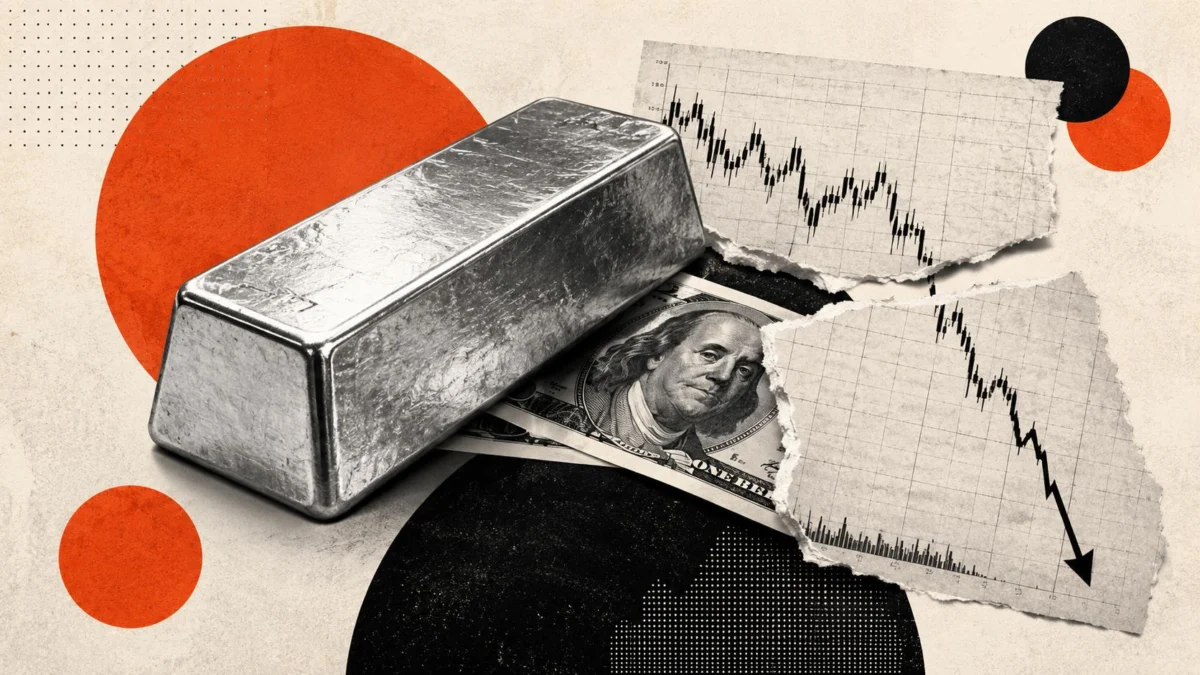
The global precious metals market witnessed a significant downturn this week, with Silver (XAG/USD) extending its slide below the critical $50 mark on Friday, poised for a weekly loss exceeding 5%. This sharp depreciation is largely attributed to escalating market expectations of more aggressive monetary tightening by the Federal Reserve (Fed) in the coming months. As trading concluded for the week, Silver hovered around $49 per troy ounce, perilously close to its year-to-date low of $48.62 recorded on November 3, signaling profound bearish sentiment across commodity markets.
The Hawkish Shift: Inflation Data Fuels Fed’s Stance
The catalysts for this market recalibration were a series of robust economic indicators released throughout the week, particularly the US consumer and producer inflation reports. Both the Consumer Price Index (CPI) and Producer Price Index (PPI) data indicated persistent inflationary pressures, surpassing economists’ expectations and reinforcing the narrative that inflation is proving more stubborn than initially anticipated. These reports, coupled with increasingly hawkish remarks from various Federal Reserve officials, solidified market conviction that the central bank is firmly committed to its inflation-fighting mandate, even at the risk of economic deceleration.
Following these developments, the CME FedWatch Tool, a widely referenced barometer of market expectations for Fed policy, showed traders fully pricing in a rate hike in December. While a quarter-point (25 basis points) increase is currently favored by the majority, a non-negligible probability of a more aggressive half-point (50 basis points) hike has also emerged, reflecting the heightened uncertainty and the Fed’s data-dependent approach. This shift in sentiment underscores a significant pivot from earlier predictions of a more dovish stance, catching many market participants off guard.
Dollar’s Ascent and Yield Surge: The Double Whammy for Precious Metals
The implications of these aggressive tightening expectations rippled swiftly through global financial markets, most notably manifesting in a surge in the US Dollar and US Treasury yields. The US Dollar Index (DXY), which measures the dollar’s strength against a basket of six major currencies, climbed to trade near 103.40, reaching a multi-year peak and levels not seen in decades. A stronger US Dollar inherently makes dollar-denominated commodities like Silver more expensive for international buyers holding other currencies, thereby dampening demand and exerting downward pressure on prices.
Concurrently, the yield on the benchmark 10-year US Treasury bond soared back above 5%, marking an increase of approximately 30 basis points over the week. This significant rise in Treasury yields presents a formidable challenge for non-yielding assets such as Silver. As government bonds offer increasingly attractive returns, the opportunity cost of holding precious metals – which do not provide interest or dividends – substantially increases. Investors are thus incentivized to shift capital from precious metals into higher-yielding fixed-income instruments, further exacerbating Silver’s decline.
Chronology of Events Leading to Silver’s Slide
The narrative of Silver’s recent struggles can be traced through a clear sequence of economic releases and market responses:
- Early Week: Initial inflation concerns linger from previous periods, but some market participants hoped for signs of cooling.
- Mid-Week: Release of US consumer and producer inflation data reveals hotter-than-expected price pressures. This shatters hopes for an imminent Fed pivot or pause.
- Concurrent/Post-Release: Federal Reserve officials issue hawkish statements, reiterating their commitment to bringing inflation down to the 2% target, signaling willingness for further rate hikes.
- Immediate Market Reaction: Traders rapidly adjust their expectations, fully pricing in a December rate hike according to the CME FedWatch Tool.
- Financial Market Impact: The US Dollar Index (DXY) strengthens considerably, reaching multi-year highs. US Treasury yields, particularly the 10-year, surge past key psychological barriers.
- Commodity Market Fallout: Precious metals, particularly Silver and Gold, come under intense selling pressure as the dual forces of a stronger dollar and higher yields erode their appeal. Silver breaks key support levels, accelerating its weekly loss.
This timeline illustrates a rapid and decisive market reaction to fundamental economic data and central bank communication, highlighting the sensitivity of commodity prices to shifts in monetary policy expectations.
Broader Implications: Beyond Silver
The aggressive stance adopted by the Federal Reserve and the resulting market dynamics have far-reaching implications beyond just the Silver market. For investors, the environment of rising interest rates and a strong dollar creates a challenging landscape. Capital flows are redirected towards assets perceived as offering better risk-adjusted returns, often at the expense of non-yielding commodities and potentially riskier growth assets. This shift could signal broader market volatility and a re-evaluation of investment portfolios.
For industries heavily reliant on Silver, such as electronics, solar energy, and jewelry, the price volatility introduces uncertainty. While a lower price might initially seem beneficial for industrial buyers, the underlying economic conditions (e.g., potential recessionary fears linked to aggressive tightening) could simultaneously dampen overall demand for finished products, creating a complex operating environment. The dynamics in major industrial economies like the US and China, along with consumer demand in regions like India (a significant jewelry market), play a crucial role in setting industrial demand for the metal.
Silver’s Dual Nature: Industrial Workhorse and Monetary Metal
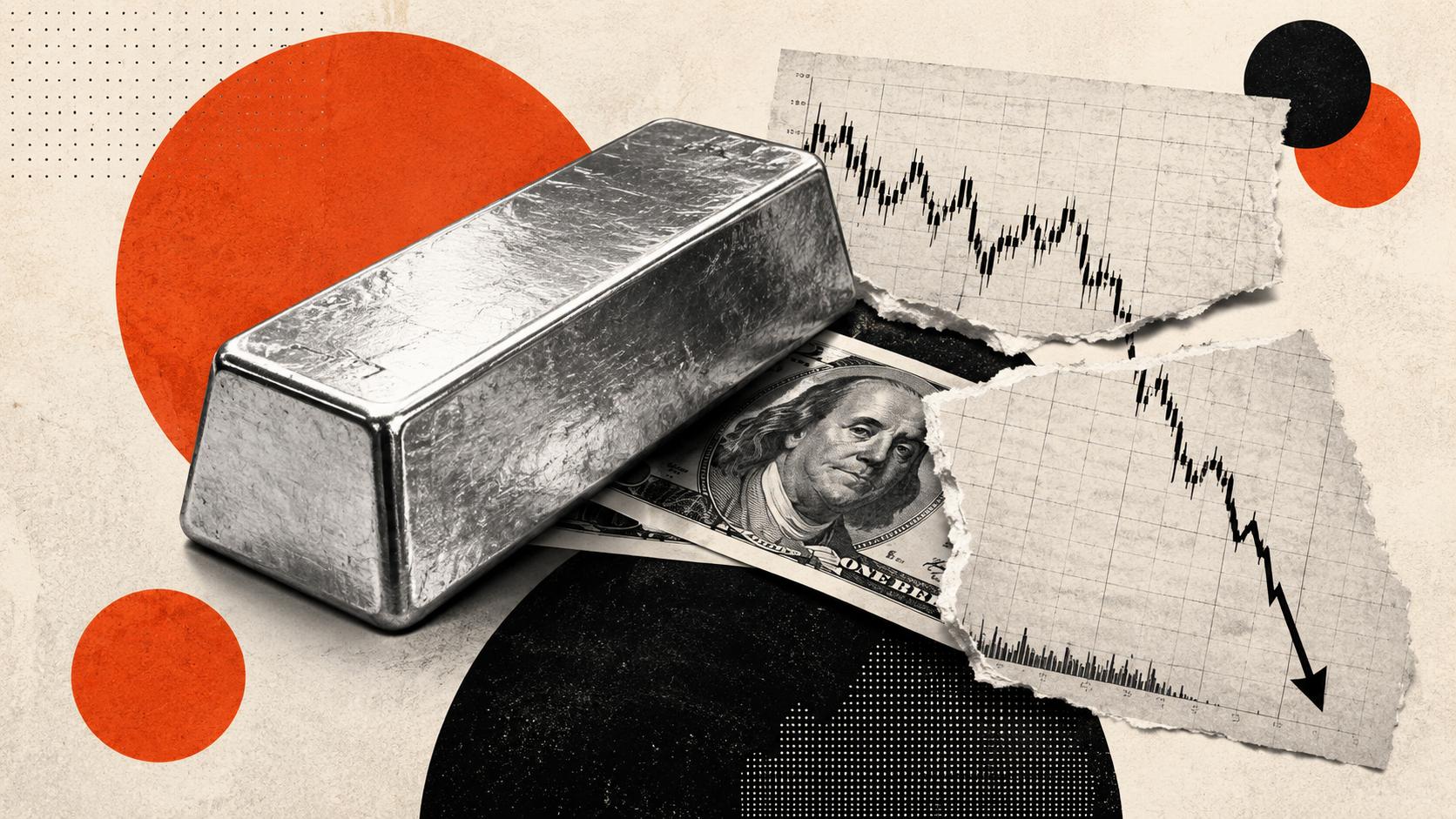
Understanding Silver’s price movements requires acknowledging its dual role as both an industrial metal and a precious monetary asset. Historically used as a store of value and a medium of exchange, Silver remains a significant component in investment portfolios, often sought for its intrinsic value or as a potential hedge against inflation, albeit to a lesser extent than Gold. Investors can access Silver through physical holdings (coins, bars) or via Exchange Traded Funds (ETFs) that track its market price.
However, a substantial portion of Silver’s demand stems from its industrial applications. Silver boasts the highest electrical conductivity of all metals, surpassing even Copper and Gold, making it indispensable in sectors like electronics (e.g., switches, contacts, conductors), solar energy (photovoltaic cells), and even medical applications. A surge in global industrial activity typically translates to increased Silver demand, pushing prices higher. Conversely, a slowdown in these sectors, perhaps triggered by economic contraction or technological shifts, can depress prices.
The supply side is also critical. Silver is considerably more abundant than Gold, and its mining supply, along with recycling rates, significantly influences market availability and price. Geopolitical instability or fears of a deep recession can enhance its safe-haven appeal, but its industrial demand profile often means it is more susceptible to economic cycles than Gold.
The Gold/Silver Ratio: A Relative Value Indicator
The relationship between Gold and Silver is often analyzed through the Gold/Silver ratio, which indicates how many ounces of Silver are needed to purchase one ounce of Gold. This ratio provides insights into the relative valuation of the two metals. A high ratio might suggest that Silver is undervalued relative to Gold, or that Gold is overvalued. Conversely, a low ratio could imply that Gold is undervalued compared to Silver. While Silver generally tends to follow Gold’s price movements due to their shared status as safe-haven assets, their differing industrial demand profiles can cause divergences in this ratio, offering potential trading opportunities for savvy investors.
Technical Analysis: Bearish Momentum Dominates XAG/USD
From a technical perspective, the outlook for XAG/USD remains decidedly bearish, reinforcing the fundamental pressures observed this week. On the daily chart, Silver is firmly entrenched in a well-defined downward parallel channel, extending its slide and consistently trading below all major moving averages. The 21-day Simple Moving Average (SMA), the 100-day SMA, and the 200-day SMA are all situated overhead, forming a layered resistance structure that consistently caps any upward price movements and reinforces the prevailing bearish near-term bias.
Momentum indicators further underscore this weakness. The 14-day Relative Strength Index (RSI) is hovering near 33, teetering just above the oversold territory. While not yet signaling an immediate bounce, its proximity to oversold levels suggests that selling pressure has been intense. Meanwhile, the Moving Average Convergence Divergence (MACD) indicator, though still marginally positive, shows fading green histogram bars, indicating that any recent recovery in upward momentum is losing steam and potentially signaling a shift towards bearish momentum.
Key Technical Levels to Watch:
-
Resistance Levels:
- Initial Resistance: The psychological $50.00 mark, which Silver struggled to hold this week, now acts as immediate resistance.
- Channel Boundary & Short-Term SMA: Above $50.00, the upper boundary of the descending channel near $52.17 and the 21-day SMA at $53.06 form a dense supply zone, representing a significant hurdle for buyers.
- Mid-Term Hurdles: Further up, $55.00 represents another key psychological and technical barrier. The 100-day SMA at $60.27 and a horizontal barrier at $62.50 define stronger resistance levels.
- Long-Term Cap: The overarching bearish structure is anchored by the long-term cap from the 200-day SMA at $68.13, which would require a substantial shift in sentiment to overcome.
-
Support Levels:
- Channel Floor: On the downside, the primary support rests at the channel floor, currently estimated around $45. This level is critical for preventing a deeper decline.
- Downtrend Extension: A clear and sustained break beneath the $45 channel floor would be a significant bearish signal, opening the way for an extension of the prevailing downtrend and potentially targeting lower historical lows.
The technical setup clearly aligns with the fundamental narrative, suggesting that Silver is likely to face continued headwinds in the short to medium term unless there is a dramatic shift in Federal Reserve policy expectations or broader economic conditions.
Outlook and Future Considerations
Looking ahead, the trajectory of Silver prices will remain intricately linked to the Federal Reserve’s monetary policy decisions and the overall health of the global economy. Any signs of a pivot from the Fed, perhaps prompted by a significant deterioration in economic data or a clear and sustained decline in inflation, could provide a much-needed reprieve for Silver and other precious metals. Conversely, continued hawkishness and persistent inflationary pressures would likely maintain the current bearish environment.
Furthermore, the performance of the US Dollar and US Treasury yields will continue to be crucial barometers. A weakening dollar or a retreat in bond yields could reduce the opportunity cost of holding Silver and make it more attractive to international buyers. Beyond monetary policy, global industrial demand trends, particularly from key consuming nations like China and India, will play a vital role in determining Silver’s long-term fundamental strength. Investors will closely monitor these interconnected factors as they navigate the evolving landscape of the precious metals market.