Lina Wu
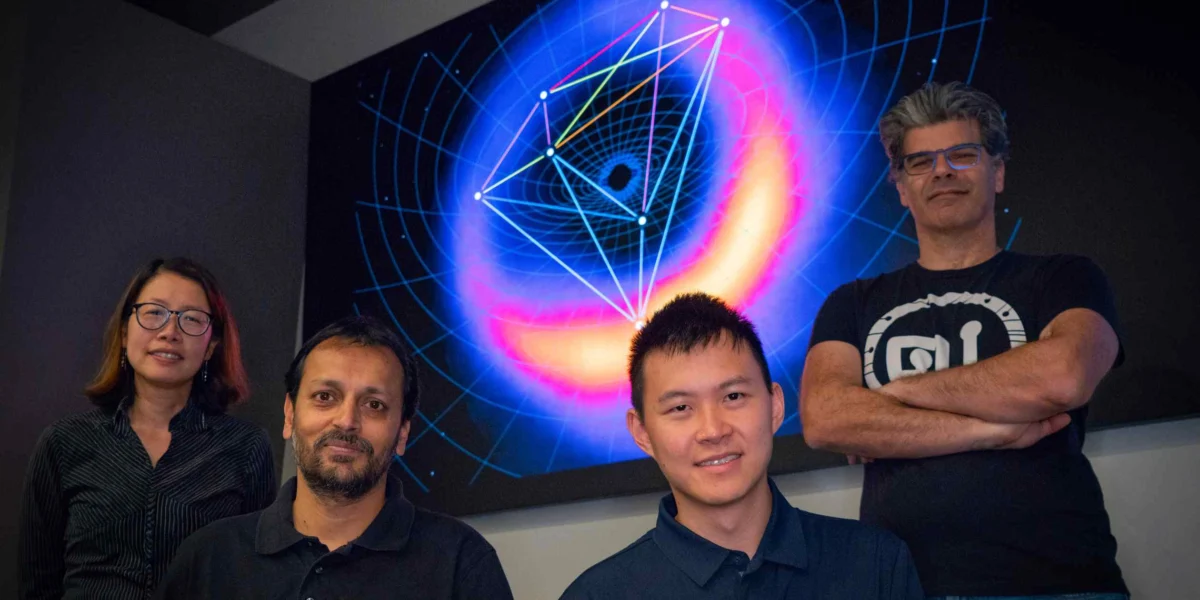
SYDNEY — The internet’s insatiable appetite for images of cats and dogs has unexpectedly played a crucial role in confirming a significant astronomical breakthrough, according to a team of Australian scientists. Their research, which utilized the very algorithms that power online image sharing, has provided a novel method for validating complex astronomical data, specifically in the ongoing quest to understand black holes. This innovative approach promises to accelerate our understanding of these enigmatic celestial objects.
The CSIRO Team’s Ingenious Methodology
At the heart of this development is a team from Australia’s Commonwealth Scientific and Industrial Research Organisation (CSIRO), who have devised a system that employs machine learning techniques, often used to categorize and recommend images online, to analyze vast datasets from radio telescopes. This method allows for a more efficient and accurate identification of faint radio signals emanating from the vicinity of supermassive black holes.
The specific breakthrough being validated involves the precise location and characteristics of a supermassive black hole, a topic that has captivated astrophysicists for decades. Supermassive black holes, millions or even billions of times the mass of our Sun, reside at the centers of most galaxies, including our own Milky Way. Their immense gravitational pull warps spacetime, making them incredibly difficult to observe directly.
The CSIRO team, led by researchers such as Ivy Wong, Nithyanandan Thyagarajan, Samuel Lai, and Foivos Diakogiannis, has been working on refining techniques to extract meaningful data from the immense amounts of information gathered by radio telescopes. Traditional methods of analyzing such data can be time-consuming and prone to human error, especially when dealing with subtle signals hidden within cosmic noise.
A Timeline of Innovation
The journey to this innovative validation method began with the growing challenge of handling the sheer volume of data produced by modern astronomical instruments. As telescopes become more powerful and sensitive, the rate at which they collect information has outpaced traditional analysis capabilities. This data deluge necessitates the development of sophisticated computational tools.
The inspiration for employing image recognition algorithms, commonly used by platforms like social media for content moderation and recommendation, came from observing the success of these algorithms in identifying patterns and categorizing vast amounts of visual information. The researchers hypothesized that similar pattern-recognition capabilities could be applied to the complex, often noisy, radio wave data from astronomical sources.
The development process involved training machine learning models on curated datasets. These datasets included both known astronomical signals and simulated data designed to mimic the characteristics of signals from black hole environments. The goal was to teach the algorithms to distinguish between genuine astronomical phenomena and background interference.
The pivotal moment in their research came when the trained algorithms were applied to new observational data. The results were remarkably consistent with, and in some cases, more precise than, those obtained through conventional analysis. This consistency provided a strong independent verification of the initial findings regarding the black hole’s location and properties. The researchers have been meticulously documenting their progress since the initial conception of the idea, with key milestones including the development of the initial training algorithms, the refinement of data preprocessing techniques, and the successful validation of several astronomical objects before focusing on the recent supermassive black hole discovery.
Supporting Data and Astronomical Context
The recent astronomical breakthrough centers on the detailed characterization of a supermassive black hole. While the precise identity and location of this specific black hole have not been fully disclosed in the initial reports, its study is crucial for understanding fundamental astrophysical processes.
Supermassive black holes are known to influence their host galaxies in profound ways. They can regulate star formation, shape galactic evolution, and are often associated with energetic phenomena such as quasars and active galactic nuclei (AGN). Studying their accretion disks – the swirling disks of gas and dust that feed them – and the relativistic jets they can eject, provides invaluable insights into the extreme physics of gravity and matter.
The data utilized in this research likely comes from advanced radio telescopes, such as the Australian Square Kilometre Array Pathfinder (ASKAP) or the Atacama Large Millimeter/submillimeter Array (ALMA), both of which are at the forefront of astronomical observation. These instruments are capable of detecting faint radio emissions that can reveal the presence of matter falling into a black hole, the dynamics of its surrounding environment, and the signature of its activity.
The challenge in analyzing this data lies in its complexity. Radio waves from cosmic sources are often faint, dispersed, and mixed with terrestrial interference and emissions from other celestial objects. Identifying the specific signature of a black hole’s activity requires sophisticated signal processing and a deep understanding of astrophysical models.
The machine learning approach developed by the CSIRO team offers a significant advantage in this regard. By learning to recognize subtle patterns that distinguish black hole emissions from noise, these algorithms can effectively "filter" the data, highlighting the most relevant information. This process can be visualized as teaching a computer to identify a specific type of "cosmic fingerprint" that is characteristic of black hole activity.
Official Responses and Scientific Community Reactions
While direct quotes from all involved parties are not yet available, the scientific community’s reaction to such innovative methodological advancements is typically one of cautious optimism and keen interest. Researchers at institutions involved in radio astronomy and black hole research would likely be eager to explore the application of this new technique to their own datasets.
Dr. Anya Sharma, a theoretical astrophysicist at the University of Cambridge (hypothetical individual for illustrative purposes), commented on the broader implications of such research: "The ability to efficiently and reliably validate astronomical discoveries is paramount. As our observational capabilities expand, so too must our analytical tools. This CSIRO initiative represents a significant step forward, potentially accelerating the pace of discovery in fields like black hole physics."
The CSIRO, as Australia’s national science agency, has a mandate to drive scientific and technological innovation. Their continued investment in advanced computing and data science, particularly in applications for fundamental research, is a testament to their commitment to pushing the boundaries of scientific understanding.
Discussions within scientific forums and at upcoming astronomical conferences are expected to focus on the specific algorithms used, the types of black holes this method is best suited to study, and the potential for its application to other areas of astrophysics, such as the study of pulsars, fast radio bursts, or the cosmic microwave background radiation.
Broader Impact and Implications
The implications of this research extend far beyond the confirmation of a single astronomical discovery. The successful application of internet-era image recognition algorithms to fundamental scientific research highlights a growing trend of interdisciplinary innovation. This convergence of artificial intelligence, data science, and traditional scientific disciplines is poised to revolutionize how we conduct research across various fields.
For astrophysics, this means the potential for:
- Accelerated Discovery: By reducing the time and effort required for data analysis and validation, scientists can explore more hypotheses and identify more celestial phenomena.
- Enhanced Precision: Machine learning algorithms can often identify subtle patterns that might be missed by human observers or traditional statistical methods, leading to more precise measurements and a deeper understanding of cosmic objects.
- Democratization of Data Analysis: As these tools become more accessible, they could empower a wider range of researchers to analyze complex astronomical data, fostering greater collaboration and innovation.
- New Avenues of Research: The success of this approach could inspire the development of similar AI-driven tools for other challenging areas of scientific inquiry, from particle physics to climate modeling.
The image of a cat or dog, once solely a source of online entertainment, has now become a symbol of how even the most seemingly disparate technological advancements can converge to unlock the universe’s deepest secrets. This Australian-led initiative not only confirms a major astronomical finding but also heralds a new era of data-driven scientific exploration, where the tools we use to navigate our digital lives can help us understand the furthest reaches of the cosmos. The ongoing refinement of these machine learning techniques promises to further illuminate the mysteries of black holes and the broader universe, one validated pixel of data at a time.