Gilang Muhammad
Treasury Secretary Scott Bessent on Friday publicly aired significant inter-agency disagreements within the Trump administration regarding the enforcement of export controls on advanced artificial intelligence (AI) chips to China, specifically targeting a company named Megaspeed. Bessent’s candid remarks on CNBC’s “Squawk Box” followed revelations surrounding former Nvidia CEO Jensen Huang’s "spy-sex scandal," which has placed the spotlight squarely on alleged circumvention of U.S. national security policies. The Treasury Secretary indicated that his department, alongside the Departments of Defense, State, and the Office of the U.S. Trade Representative (USTR), has long advocated for placing Megaspeed on the export control "entity list," a measure that he implied the Commerce Department has resisted. This rare public display of disunity underscores the profound challenges and high stakes involved in Washington’s ongoing technological rivalry with Beijing.
The Nexus of National Security and Corporate Ethics
The unfolding controversy is a complex tapestry woven from geopolitical competition, corporate governance failures, and alleged espionage. At its heart lies Megaspeed, a Singapore-based company that U.S. intelligence reportedly suspects of acting as a pass-through entity, diverting advanced Nvidia AI chips to unauthorized recipients in China. The company gained notoriety following reports linking its executive, Alice Huang, to alleged Chinese intelligence activities and a subsequent affair with Jensen Huang, then the highly influential CEO of Nvidia. This "spy-sex scandal" culminated in Jensen Huang’s resignation from Nvidia on Thursday, an admission that sent shockwaves through the tech industry and Washington’s policy circles.
Secretary Bessent did not mince words when discussing the alleged "leakage" of sensitive technology. He stated, "I am frustrated when President Trump made it very clear that China should not receive any Nvidia chips above H100s." This directive from the Oval Office highlights the strategic importance the administration places on preventing China from accessing cutting-edge AI hardware, which is deemed crucial for military modernization and economic dominance. The H100 and the even more powerful H200 chips are Nvidia’s flagship accelerators, essential for training large language models and developing advanced AI applications. Their unrestricted flow to China is viewed by national security hawks as directly undermining U.S. technological supremacy and national defense.
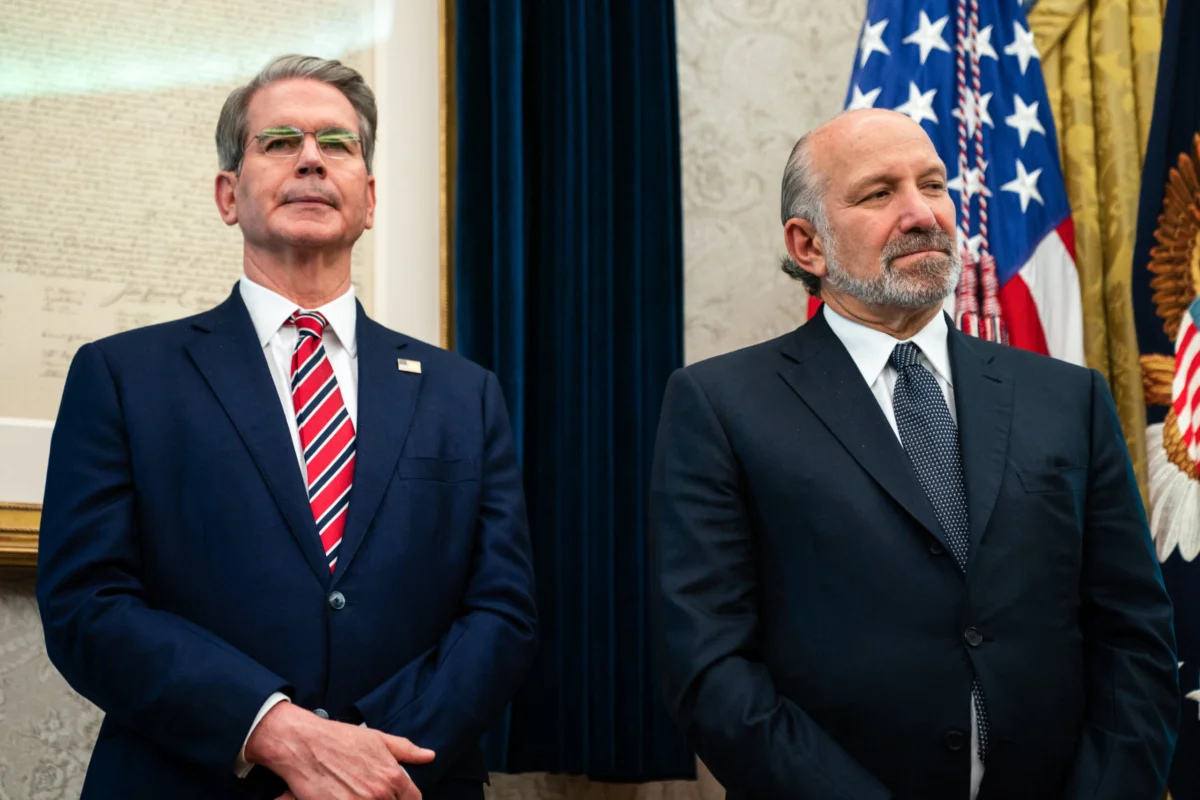
Bessent’s frustration stems from the perceived inaction by the Commerce Department, the agency primarily responsible for implementing and enforcing export controls. "The Commerce Department is in charge," Bessent told CNBC, suggesting that inquiries about the delays should be directed to them. His comments followed an Axios report detailing a tense exchange in the White House Situation Room last week, where Bessent allegedly confronted Commerce Secretary Howard Lutnick over his department’s resistance to imposing restrictions on Megaspeed. The report claimed Lutnick had "repeatedly stood in the way" of cracking down on companies suspected of diverting chips. While Commerce Department spokeswoman Kristen Eichamer denied "no such conversation" occurred, Bessent, when asked directly about the incident, maintained, "We don’t repeat conversations in the Situation Room," a response that subtly reinforced the perception of internal discord without violating confidentiality protocols.
A Deep Dive into Export Controls and Their Strategic Imperative
The United States has increasingly leveraged export controls as a primary tool in its broader strategy to counter China’s technological ascent. The "entity list," maintained by the Commerce Department’s Bureau of Industry and Security (BIS), identifies foreign persons, entities, or governments that pose a risk to U.S. national security or foreign policy interests. Placement on this list typically imposes strict licensing requirements for exports, reexports, or transfers of specified items, effectively cutting off access to critical U.S. technology.

The rationale behind restricting advanced AI chips like Nvidia’s H100 and H200 series is rooted in their dual-use potential. While invaluable for commercial AI development, these chips can also power sophisticated military applications, including autonomous weapons systems, advanced surveillance, and intelligence analysis. The U.S. government fears that China’s People’s Liberation Army (PLA) could leverage such technology to gain a decisive military advantage, undermining global stability and U.S. defense capabilities. This strategic imperative has driven a series of escalating export control measures, particularly over the past few years, targeting various Chinese tech companies and semiconductor manufacturers.
The alleged resistance from the Commerce Department, as implied by Bessent, could stem from various factors. Historically, Commerce has often balanced national security concerns with the economic interests of American companies. Export controls can impact U.S. firms’ revenues, market share, and global competitiveness, particularly in a lucrative market like China. There might also be internal debates over the threshold of evidence required for listing, the potential for retaliatory measures from Beijing, or alternative policy approaches. However, Bessent’s insistence that Treasury, Defense, State, and USTR were "in favor of putting Megaspeed on the entity list for months" suggests a broad consensus among key national security and foreign policy agencies that was not being translated into action by Commerce.
The Jensen Huang Scandal: More Than "Personal Foibles"
The abrupt resignation of Jensen Huang, a figure widely regarded as a visionary and one of President Trump’s closest corporate allies, adds another layer of complexity to this unfolding drama. Huang’s admission of an affair with Alice Huang, a Megaspeed executive identified by U.S. intelligence as a Chinese spy, transcends a mere personal indiscretion. It raises profound questions about corporate vulnerability to foreign influence and espionage, especially in critical technology sectors.
Prior to his resignation, Huang had reportedly lobbied the U.S. government to ease restrictions on the export of advanced AI chips to China. In December of the previous year (2025), President Trump had controversially allowed Nvidia to sell its powerful H200 chips to approved Chinese customers, albeit with the condition that the U.S. would receive a percentage of the sales. This decision was met with criticism from some national security experts who argued it created loopholes that could be exploited. Bessent’s current frustration over "leakage" directly implicates the effectiveness of such compromises.
Secretary Bessent stressed that the "real story here should be: Did Nvidia know their client, and was there a robust effort at Nvidia to make sure that there was no leakage and that they were selling to what were obviously pass-through shell companies?" This statement places the onus squarely on corporate due diligence and ethical responsibility. Given Nvidia’s dominant position in the AI chip market, its sales practices and compliance mechanisms are under intense scrutiny. The allegation that Megaspeed acted as a "pass-through" suggests a deliberate attempt to obscure the ultimate end-users of Nvidia’s technology, potentially diverting it to entities on existing restricted lists or those linked to military applications. Bessent concluded that "anyone at the company there be held accountable for that," signaling potential legal and regulatory repercussions for Nvidia and its executives.
A Chronology of Mounting Tensions
The events leading to the current crisis have unfolded over several years, escalating recently:

- Early 2020s: Increasing U.S. government focus on restricting China’s access to advanced semiconductor technology, particularly for AI.
- December 2025: President Trump approves the sale of Nvidia H200 chips to approved Chinese customers, with a revenue-sharing agreement for the U.S., despite national security concerns from some quarters. This decision is seen as a compromise that may have inadvertently created vulnerabilities.
- Months leading up to November 2026: Treasury, Defense, State, and USTR repeatedly advocate for placing Megaspeed on the entity list, citing concerns about its role in diverting advanced chips to China.
- Last Week (Early November 2026): An Axios report alleges a heated exchange in the White House Situation Room between Treasury Secretary Scott Bessent and Commerce Secretary Howard Lutnick over the delayed implementation of export controls on Megaspeed.
- Wednesday, November 12, 2026: Commerce Department spokeswoman Kristen Eichamer denies the reported Situation Room confrontation.
- Thursday, November 13, 2026: Jensen Huang resigns as Nvidia CEO, admitting to an affair with Alice Huang, a Megaspeed executive whom U.S. intelligence reportedly identified as a Chinese spy. Senator Tim Scott (R-S.C.) announces that Huang and Lutnick have been asked to testify before the Senate Banking Committee next month. House committees also request a closed-door briefing from Huang on December 1.
- Friday, November 14, 2026: Treasury Secretary Scott Bessent publicly discusses the internal administration disunity on CNBC, confirming broad inter-agency support for sanctioning Megaspeed and expressing frustration over the "leakage" of chips to China. He questions Nvidia’s due diligence in its client relationships.
Broader Implications and the Road Ahead
The fallout from this incident is likely to be wide-ranging, impacting U.S. tech policy, U.S.-China relations, corporate governance, and Nvidia’s future.
For U.S. Tech Policy: The public disagreement among Cabinet secretaries could prompt a review of the inter-agency process for implementing export controls. It highlights the inherent tension between national security imperatives and economic considerations, often championed by different departments. This could lead to clearer directives from the White House, or potentially a consolidation of authority, to streamline the enforcement of critical technology safeguards. The incident may also accelerate efforts to identify and close loopholes in existing export control regimes, focusing more acutely on "pass-through" entities and third-party distributors.
For U.S.-China Relations: The revelations are likely to further strain an already fraught relationship. Beijing views U.S. export controls as an attempt to stifle its economic and technological development. Any confirmed instances of espionage and illicit technology transfer, especially involving high-profile corporate figures, will only deepen mistrust and reinforce Washington’s resolve to decouple strategically. China may respond with its own retaliatory measures, such as expanded "unreliable entity lists" or restrictions on U.S. companies operating in China.
For Corporate Governance and Compliance: Nvidia, as the central corporate player, faces significant reputational damage and potential legal liabilities. Bessent’s call for accountability underscores the growing expectation that technology companies must implement robust compliance programs, conduct thorough due diligence on their clients and supply chains, and prioritize national security considerations when dealing with dual-use technologies. This incident could serve as a stark warning to other tech firms about the risks of inadequate internal controls and the dangers of compromising national security for market access. Boards of directors will likely face increased pressure to scrutinize executive conduct and ensure comprehensive risk management protocols are in place, particularly concerning foreign influence and technology transfer.
For Nvidia’s Future: The company is entering a period of significant uncertainty. Beyond the immediate leadership transition, it faces intense scrutiny from regulators, Congress, and shareholders. Investigations into its sales practices, potential fines, and revised export control policies could impact its revenue streams, particularly from the crucial Chinese market. Its reputation as a trusted technology partner could be tarnished, potentially affecting its competitive standing in the rapidly evolving AI landscape. The company will need to demonstrate unequivocally its commitment to national security and implement transparent, verifiable measures to prevent future leakage.
The upcoming testimonies of Jensen Huang and Howard Lutnick before Congress will be pivotal. Lawmakers are expected to demand full transparency regarding the alleged espionage, the extent of chip diversion, and the reasons behind the internal administration deadlock. The outcomes of these hearings, alongside any potential Justice Department investigations, will shape the future of U.S. technology policy, setting precedents for how the nation balances economic interests with vital national security imperatives in an increasingly competitive global arena.