Gilang Muhammad
China’s foreign trade demonstrated surprising resilience in October, with both exports and imports significantly surpassing analyst expectations, according to official data released on Tuesday. This robust performance comes as Beijing navigates persistent economic pressures and growing calls from international partners to rebalance its economy by boosting domestic consumption. While the headline figures painted a picture of strong trade activity, the monthly trade surplus experienced a notable contraction, falling short of projections and underscoring complex dynamics within the world’s second-largest economy.
October Trade Performance: A Closer Look at the Numbers
Goods exports from China recorded a substantial 35.2% surge last month compared to a year earlier. This figure comfortably exceeded the 33.5% jump anticipated by economists polled by Reuters, although it represented a slight deceleration from the 36.3% growth witnessed in September. The sustained strength in exports has been a critical pillar for China’s economic stability, offering a buffer against internal challenges such as a struggling property sector and subdued household spending.
Even more striking was the performance of imports, which climbed by an impressive 41.6% in October. This marked a significant acceleration from September’s 31% increase and sharply beat Reuters’ analyst estimates of a 32% rise. This import growth was the strongest recorded since May 2021, signaling robust domestic demand for key commodities and advanced technologies.
However, the rapid growth in imports outpaced exports, leading to a sharp contraction in China’s monthly trade surplus. The surplus dropped to $105.3 billion in October, its lowest level since April, according to LSEG data. This figure undershot expectations and brought the year-to-date surplus to $1.04 trillion, placing it on track to potentially fall short of the record $1.2 trillion achieved in the full year of 2025. This narrowing surplus is particularly noteworthy as it comes amidst increasing international pressure, particularly from Western trading partners, for Beijing to stimulate its domestic economy and reduce its reliance on export-led growth.
Drivers of Growth: Tech, Energy, and Global Demand
The surge in both export and import figures can be attributed to several key factors. On the export front, a significant portion of the momentum derived from robust global demand for advanced technologies, particularly chips and other artificial intelligence (AI)-related hardware. As the global AI buildout continues apace, Chinese manufacturers have capitalized on their established supply chains and manufacturing capabilities to meet this burgeoning demand. This focus on high-value-added exports reflects a broader strategic shift within China’s industrial policy towards more technologically sophisticated products.
On the import side, the strong growth was primarily driven by a voracious appetite for tech-related goods, critical minerals, and energy supplies. Tianchen Xu, a senior economist at Economist Intelligence Unit, highlighted that demand for crucial resources such as copper, alongside energy commodities like liquefied natural gas (LNG), oil, and coal, played a pivotal role. Delving into the specifics, CNBC’s calculations based on official figures revealed that imports of high-tech products soared by 72% in value terms in October from a year ago. Similarly, imports of crude oil, LNG, and coal registered substantial value increases of approximately 41%, 50%, and 60%, respectively. This indicates a strong industrial recovery and pre-winter stocking, as well as continued investment in strategic sectors. The robust import of critical minerals also points to China’s ongoing efforts to secure raw materials for its advanced manufacturing industries and maintain its dominant position in global supply chains for electric vehicles, batteries, and electronics.
Economic Rebalancing and Policy Implications
The dual narrative of strong trade growth and a shrinking surplus carries significant implications for China’s economic policymakers. The sustained strength in exports has provided crucial leeway, enabling policymakers to continue relying on moderate policy support to meet the country’s annual growth target, which currently stands at a modest 4.5%-5%. This reliance on external demand, however, underscores a persistent structural imbalance within the Chinese economy. Household consumption has remained stubbornly soft, with retail sales growing a modest 1.1% in September, far below pre-pandemic levels and aspirations. This disparity between robust external trade and weak internal demand highlights the urgent need for structural reforms aimed at boosting domestic spending and fostering a more balanced economic model.
The calls from trading partners for Beijing to boost domestic demand are not new but have grown louder, reflecting global concerns about trade imbalances and the potential for increased protectionism. A reorientation towards greater domestic consumption would not only address internal imbalances but also potentially alleviate some of the trade tensions China faces with major economic blocs.

Navigating Global Trade Tensions: U.S. and Europe
China’s trade relations, particularly with the United States and the European Union, remain a complex web of cooperation and contention.
-
The U.S. Dynamic: Trade figures with the U.S. showed China’s exports to the U.S. soaring 32.9% in value from a year earlier in October, while imports grew nearly 35%, resulting in a surplus of $32.7 billion. Year-to-date, U.S.-bound shipments grew 12.1% as of October, partly benefiting from a low base effect stemming from a 20% plunge in shipments during the previous year due to dramatic tariff hikes. In a diplomatic gesture aimed at stabilizing relations, Washington and Beijing had agreed in September to extend a broader trade truce by two months, pushing its expiry to January. This truce encompassed a slew of other trade measures, including export-control waivers for certain critical minerals and special port fees for each other’s vessels. This temporary détente provides a window for high-level dialogue, with Chinese President Xi Jinping and President Donald Trump expected to meet for a third time this year at the APEC leaders’ summit in Shenzhen, China, scheduled for the following week. The outcome of such discussions will be closely watched for signals on the future trajectory of U.S.-China trade relations, which have been fraught with tariffs, technology restrictions, and geopolitical competition in recent years.
-
Europe’s Stance: The European Union, another major trading partner, also reached an agreement with Beijing last month aimed at limiting the imports of Chinese hybrid vehicles over the next few years. This measure is part of the EU’s broader effort to reduce its significant trade deficit with China. In October, China’s shipments to the bloc grew 24.4%, while imports from the EU dropped more than 4%, further widening the surplus to $33.4 billion. However, analysts are skeptical about the immediate impact of the auto import curbs, which are set to take effect on December 1. Brad Setser, a senior fellow at the Council on Foreign Relations and a former U.S. Treasury official specializing in global trade and capital flows, noted that the cap of 350,000 imported cars per year is actually above the 300,000 hybrids China exported to Europe last year. While it is well below the annualized pace of 800,000 units observed over the last three months, Setser critically remarked, "Europe still is a long way from a coherent trade and industrial policy with respect to autos, let alone a coherent economic policy towards overall trade with China." This observation highlights the challenges European policymakers face in crafting effective strategies to address trade imbalances and industrial competition with China, given the complexities of global supply chains and economic interdependence.
Underlying Pressures and Future Outlook
Despite the impressive headline trade figures, underlying economic pressures persist, casting a shadow on the long-term sustainability of China’s current growth model. The momentum, though strong in October, appears to be slowing. Nguyen Hoang Nam, China economist at Capital Economics, estimated a seasonally adjusted 2% month-on-month fall in exports, suggesting that the year-on-year growth rates might be flattered by base effects or specific one-off factors.
Further evidence of a potential slowdown comes from a separate survey by China Beige Book, a New York-headquartered research firm, which indicated that new domestic and export orders for goods decelerated in October compared to a year earlier. This aligns with official Purchasing Managers’ Index (PMI) data, which unexpectedly showed factory activity shrinking last month, primarily due to cooling overseas orders. "The stronger side of the economy got weaker," the China Beige Book noted in an October 30 report, referring to the export sector.
The dependence on global AI buildout for export growth also presents a potential vulnerability. Any significant slowdown in the worldwide investment in AI infrastructure and hardware could dent the momentum of Chinese exporters and squeeze their profit margins. Moreover, the ongoing geopolitical tensions, supply chain fragmentation, and rising protectionist sentiments globally pose significant risks to China’s export-oriented economy.
Chronology of Key Economic and Diplomatic Events
The October trade data is situated within a series of recent economic releases and diplomatic engagements that underscore China’s current trajectory:
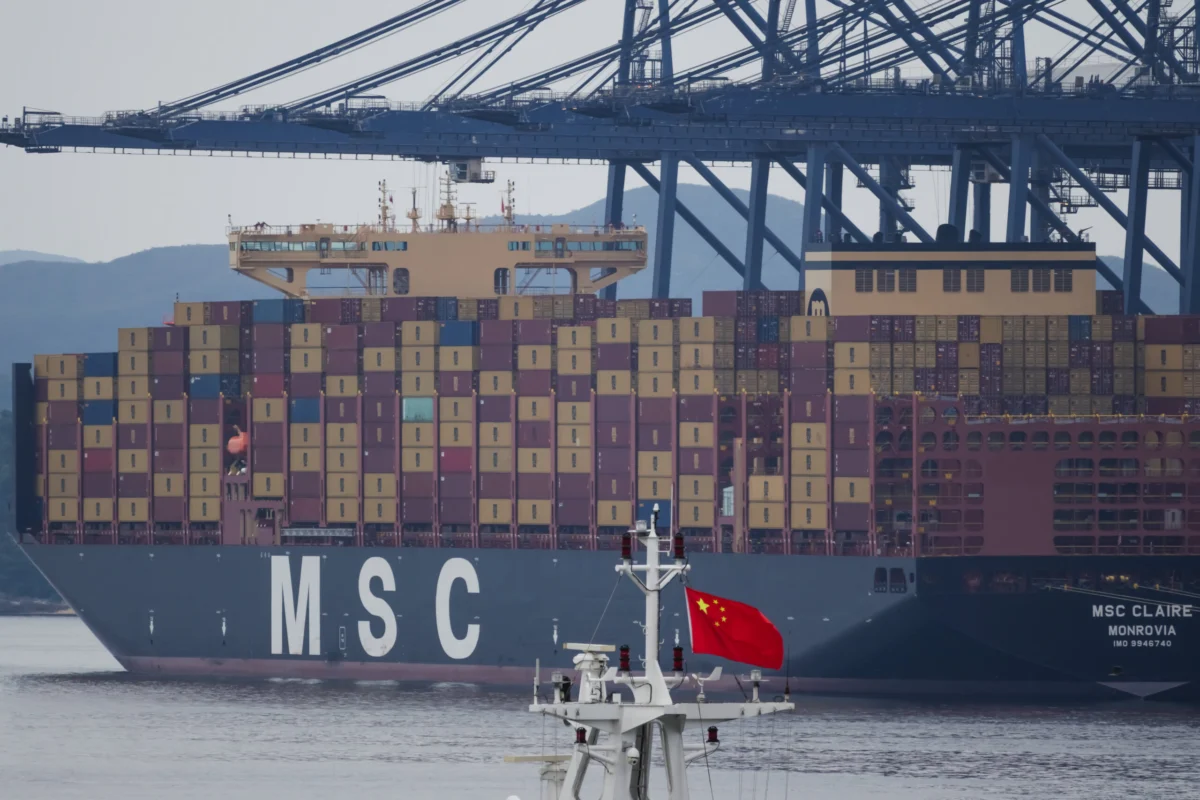
- August 30, 2026: A Chinese national flag flies from a vessel in front of the MSC Claire container ship at Yantian Port, Shenzhen. At this time, investors were keenly awaiting China’s latest official manufacturing purchasing managers’ index, assessing the outlook for factory activity, domestic demand, and exports amid persistent pressure on the economy.
- September 2026: Washington and Beijing agree to extend a broader trade truce by two months to January, along with other trade measures, aiming to de-escalate tensions.
- October 2026: China’s exports and imports surge more than expected, though the surplus shrinks. The EU reaches an agreement with Beijing to limit imports of Chinese hybrid vehicles, part of efforts to reduce its trade deficit.
- October 30, 2026: China Beige Book reports a slowdown in new domestic and export orders for goods, and official PMI data unexpectedly shows factory activity shrinking.
- Tuesday, November 2026: Official October trade data is released, revealing the strong export and import figures but a shrinking surplus.
- Next Week: Chinese President Xi Jinping and President Donald Trump are expected to meet for a third time this year at the APEC leaders’ summit in Shenzhen, China, with trade and economic relations likely to be high on the agenda.
- December 1, 2026: The European Union’s cap on Chinese hybrid vehicle imports officially takes effect.
Conclusion: China’s Dual Challenge
In summary, China’s October trade data presents a complex picture of resilience and vulnerability. The robust performance of both exports and imports, particularly in high-tech and energy sectors, demonstrates the economy’s capacity to leverage global demand and secure vital resources. This strength provides immediate relief and helps maintain the country’s annual growth targets. However, the significantly shrinking trade surplus and persistently weak domestic consumption highlight deep-seated structural imbalances. As calls for economic rebalancing grow louder from both within and outside China, Beijing faces the dual challenge of sustaining its export momentum while simultaneously nurturing a stronger, more self-reliant domestic market. The effectiveness of its policy responses, combined with the unpredictable dynamics of global trade relations and geopolitical shifts, will ultimately determine the trajectory of the world’s second-largest economy in the coming months and years.