Lina Wu
Paul Nadeau
November 10, 2026 17:05 JST
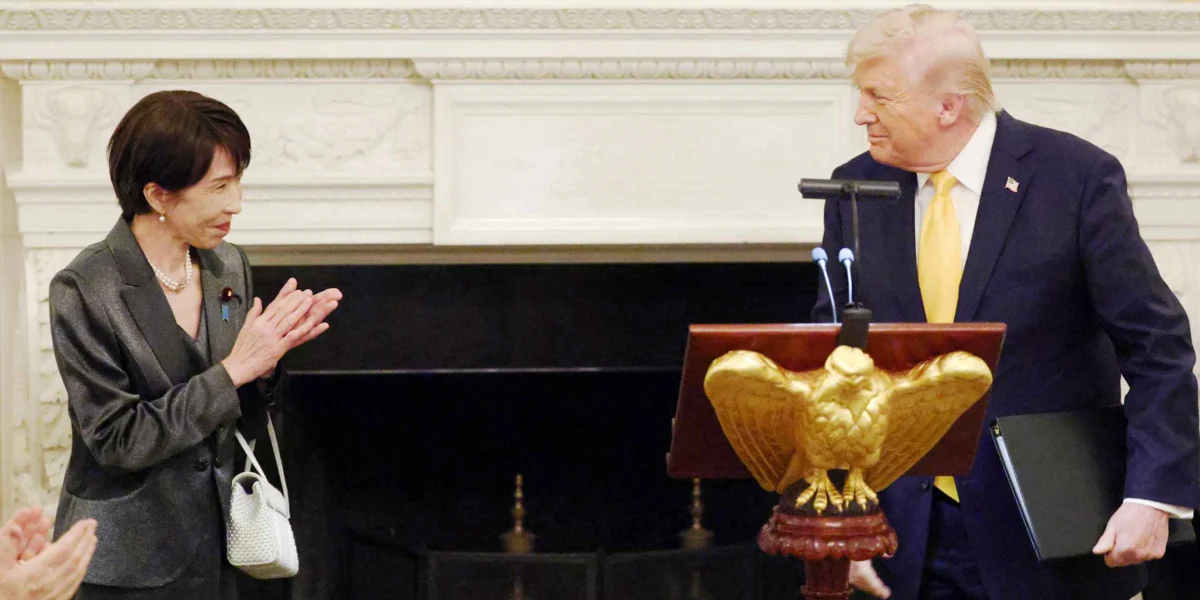
Japan’s recent diplomatic overtures towards the incumbent U.S. President, Donald Trump, have yielded significant tactical victories, solidifying key aspects of the bilateral relationship and securing immediate economic and security benefits. However, a closer examination reveals that while Tokyo has adeptly navigated the immediate challenges posed by the Trump administration, the long-term strategic implications of this approach remain a subject of considerable debate and uncertainty, particularly concerning the evolving geopolitical landscape of the Indo-Pacific. The close engagement, highlighted by a high-profile dinner at the White House on March 19, 2026, underscores Japan’s pragmatic, albeit potentially short-sighted, strategy in adapting to a shifting global order.

The Diplomatic Offensive: A Timeline of Engagement
The intensified engagement between Japan and the Trump administration can be traced back to early 2025, following President Trump’s re-election. Recognizing the potential for a more transactional and less alliance-centric foreign policy, Tokyo initiated a series of high-level dialogues and cultural exchanges aimed at fostering a strong personal rapport with the U.S. President and his key advisors.
- Early 2025: Initial outreach efforts focused on economic cooperation, with Japanese business leaders and government officials emphasizing the substantial trade surplus with the United States and the significant Japanese investment in the U.S. economy. This was a strategic move to preempt potential trade disputes that had characterized Trump’s first term.
- Late 2025: As tensions in the Indo-Pacific region began to escalate, particularly concerning China’s assertive posture in the South China Sea and its growing military capabilities, Japan pivoted to underscore the critical importance of the U.S.-Japan security alliance. This involved joint military exercises and a renewed emphasis on burden-sharing within the alliance.
- Early 2026: The diplomatic push culminated in a series of high-level meetings, including the March 19 dinner at the White House. Prime Minister Sanae Takaichi’s presence and her visible engagement with President Trump were designed to project an image of unwavering solidarity and to secure tangible commitments on security and trade.
This carefully orchestrated courtship aimed to achieve several key objectives: to insulate Japan from potential U.S. trade protectionism, to reaffirm the U.S. security commitment to the region, and to leverage the personal relationship with President Trump to achieve specific policy outcomes.

Tactical Gains: Immediate Benefits Secured
The immediate benefits of Japan’s courtship are undeniable. The administration’s willingness to engage directly with Prime Minister Takaichi and her delegation facilitated several crucial developments.
Economic Concessions and Trade Stability
One of the primary successes of Japan’s diplomatic strategy was its ability to navigate the choppy waters of U.S. trade policy. Facing the threat of tariffs and trade restrictions, Tokyo proactively highlighted the significant contributions of Japanese companies to the U.S. economy. Japanese automakers, for instance, have invested billions of dollars in U.S. manufacturing plants, creating tens of thousands of jobs. Data from the U.S. Department of Commerce in 2025 indicated that Japanese companies were among the largest foreign employers in the United States, a fact that was strategically leveraged in bilateral discussions.

Furthermore, Japan secured assurances that it would not be subject to the same punitive tariffs imposed on certain other trading partners. This was achieved through a combination of intensive lobbying, emphasizing the symbiotic nature of the economic relationship, and the strategic timing of significant new Japanese investments in U.S. infrastructure projects and advanced manufacturing. The perception that Japan was a reliable economic partner, contributing to American prosperity, proved effective in mitigating protectionist impulses.
Reaffirmation of Security Commitments
In an era of rising geopolitical uncertainties, particularly from a resurgent China and a volatile North Korea, Japan’s primary concern has been the steadfastness of the U.S. security umbrella. The Trump administration, while often expressing skepticism about traditional alliances, has consistently prioritized a strong U.S. military presence in the Indo-Pacific, albeit framed through a lens of burden-sharing.

Japan’s engagement successfully reinforced the U.S. commitment to the bilateral security treaty and the deployment of U.S. forces in the region. Joint military exercises, such as the annual "Keen Sword" and "Iron Fist" drills, were not only maintained but, in some instances, expanded in scope, signaling continued operational readiness and interoperability. Tokyo also secured tacit approval for its increased defense spending and its more assertive role in regional security, a significant shift from previous Japanese policy which had been constrained by constitutional limitations. This tacit approval allows Japan to develop capabilities necessary to deter potential aggressors and to contribute more effectively to regional stability, under the broader umbrella of the alliance.
Strategic Questions: Unresolved Puzzles and Future Vulnerabilities
While the tactical victories are evident, the strategic questions loom large. Japan’s strategy of direct engagement with President Trump, while effective in the short term, carries inherent risks and leaves several critical strategic questions unresolved.

The Volatility of Presidential Diplomacy
The Trump administration’s foreign policy has been characterized by its transactional nature and a significant degree of personalization. Decisions can be heavily influenced by the President’s personal relationships and immediate perceptions. Japan’s success in securing concessions was contingent on cultivating a positive personal relationship with President Trump. However, this reliance on personal diplomacy creates a vulnerability. A shift in the President’s mood, a change in his advisors, or an unforeseen geopolitical event could rapidly alter the landscape, potentially undoing months of diplomatic effort.
The history of the Trump presidency is replete with instances where previously agreed-upon policies were re-evaluated or discarded based on the President’s evolving views. This inherent unpredictability makes long-term strategic planning for Japan exceptionally challenging. While the current engagement might provide a sense of security, it does not guarantee future stability or predictable policy continuity.

The Erosion of Traditional Alliances and Norms
President Trump’s rhetoric and actions have, at times, strained long-standing alliances and challenged the multilateral international order. While Japan has benefited from specific engagements, the broader impact of U.S. policy under his administration on the global system of alliances and international norms remains a concern.
The weakening of established multilateral institutions and the rise of bilateral, often transactional, relationships could create a more fragmented and unstable global environment. Japan, as a nation deeply reliant on international trade and stability, is particularly vulnerable to such shifts. Its success in securing bilateral gains might inadvertently come at the cost of a more robust and predictable international framework that has historically served its interests.

The China Factor: A Balancing Act Under Strain
Japan’s strategic calculus is inextricably linked to the rise of China. While Tokyo has sought to de-escalate tensions with Beijing through dialogue, its security posture is increasingly defensive. The U.S.-Japan alliance is the cornerstone of Japan’s strategy to counter China’s growing assertiveness. However, the nature of President Trump’s relationship with China has been complex and often contradictory.
At times, President Trump has expressed a desire for closer ties with China on certain economic issues, while at others, he has engaged in direct confrontation. This inconsistency creates a difficult balancing act for Japan. Tokyo needs a predictable and robust U.S. commitment to counter China, but the potential for U.S.-China détente on terms that might not align with Japanese interests poses a significant strategic challenge. The courtship of President Trump, while securing immediate U.S. support, does not resolve the fundamental strategic dilemma posed by China’s regional ambitions.

Broader Implications and Future Outlook
The long-term implications of Japan’s current diplomatic strategy are multifaceted. On one hand, Tokyo has demonstrated remarkable agility in adapting to the prevailing political winds in Washington, securing immediate economic and security benefits that are crucial for its national interests. This pragmatic approach has likely averted significant economic disruptions and reinforced its security posture in the short to medium term.
However, the reliance on personal diplomacy and the potential for policy reversals create a precarious foundation for long-term strategic planning. Japan’s future prosperity and security are deeply intertwined with the stability of the Indo-Pacific region and the broader international order. A strategy that prioritizes short-term gains through personalized engagement might, in the long run, undermine the very foundations of that stability.

As the geopolitical landscape continues to evolve, Japan will need to carefully weigh the benefits of its current courtship against the risks of an unpredictable U.S. foreign policy. The ultimate success of its strategy will depend not only on its ability to maintain positive relationships with the current U.S. administration but also on its capacity to foster a more resilient and predictable international environment that transcends the vagaries of individual leadership. The strategic questions surrounding the enduring nature of alliances, the future of the multilateral order, and the long-term trajectory of Sino-American relations remain, and will continue to demand Japan’s careful consideration and strategic foresight. The tactical gains secured in Washington, while significant, may prove ephemeral if the underlying strategic challenges are not addressed with a more enduring and comprehensive vision.