Gilang Muhammad
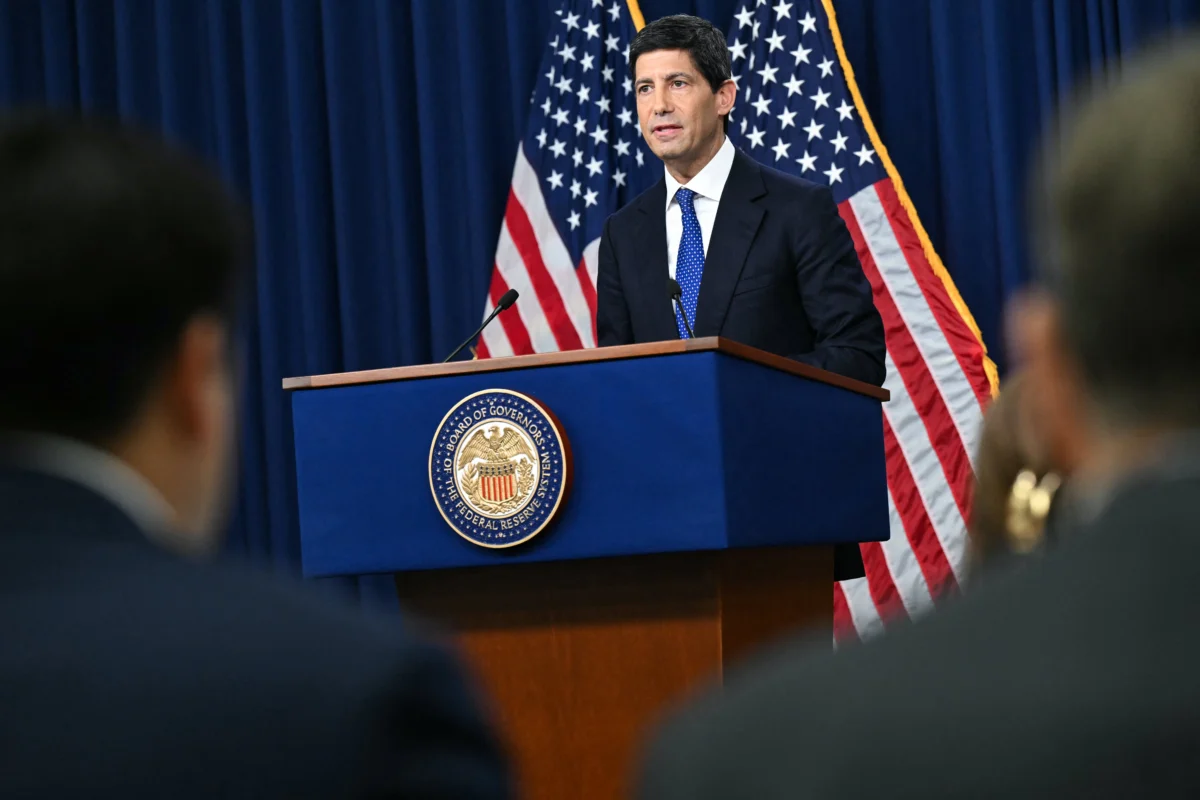
Washington, D.C. – The U.S. Federal Reserve, under the leadership of Chair Kevin Warsh, is widely expected to hold interest rates steady at its upcoming October meeting, despite persistent inflation and robust economic indicators. This consensus emerges from CNBC’s latest Fed Survey, a comprehensive poll of 30 leading fund managers, strategists, and economists, which underscores the central bank’s cautious approach amidst a complex economic landscape. The survey, conducted biannually ahead of each Federal Open Market Committee (FOMC) meeting, offers a critical barometer of market sentiment regarding the Fed’s monetary policy trajectory.
The Immediate Outlook: A Pause Before Further Action
The overwhelming majority of respondents, a striking 93%, anticipate a pause in rate hikes at the current FOMC meeting scheduled for this week. This expectation signals a desire among market participants for the Fed to assess the cumulative impact of its previous tightening cycle and the most recent economic data before making further moves. However, this anticipated pause is largely viewed as temporary. A significant 76% of those surveyed foresee a rate hike at the subsequent FOMC meeting in December, indicating a belief that the underlying inflationary pressures will necessitate continued monetary tightening. Looking further ahead into 2027, more than half of the experts predict approximately two additional rate hikes, reinforcing the notion of a sustained, albeit measured, battle against inflation.
This cautious yet hawkish outlook reflects a tension within the market. On one hand, there’s an acknowledgment of the considerable work the Fed still needs to do to bring inflation back to its target. On the other, there’s a recognition of the risks associated with overtightening, particularly given emerging global uncertainties. Richard Bernstein, global head of macro investing at Janus Henderson Investors, expressed a sentiment shared by several hawkish analysts: "Their hesitancy to raise rates is unfathomable after an extended period of monetary and fiscal generosity, with nominal GDP running 6-8%, and when the leading indicators of inflation are uniformly warm to hot." This perspective highlights a concern that the Fed might be falling behind the curve, risking a more entrenched inflationary environment.
Inflation: A Broader Challenge Beyond Energy
A key finding of the survey is the broadening nature of the inflation problem. A substantial 70% of respondents view inflation as a systemic issue extending far beyond just the rising price of energy. While energy prices, particularly crude oil, remain a significant component of headline inflation, the survey indicates that underlying price pressures are becoming more widespread across goods and services. The U.S. crude oil benchmark, for instance, is forecast to reach $88 a barrel six months from now, an increase from $82 in the September survey, though still below its current level of $101. This suggests that while energy inflation might moderate slightly, other sectors are likely to continue exerting upward pressure on prices.
The Federal Reserve’s primary tool for combating inflation is the manipulation of the federal funds rate, which influences borrowing costs throughout the economy. Higher rates aim to cool demand, thereby easing price pressures. However, the debate intensifies over how aggressively the Fed should act. Thirty percent of respondents advocate for an immediate rate hike at the current meeting, signaling their conviction that urgent action is required. This aggressive stance is mirrored by expectations of dissent within the FOMC, with at least two Fed voters anticipated to break ranks from a decision to keep rates unchanged. John Ryding, chief economic advisor for Brean Capital, LLC, articulated this viewpoint, stating, "The aggregate demand data (probably north of 7%…) and the inflation data point to the strong need to hike rates." This suggests that for some, the evidence of robust demand and persistent inflation is compelling enough to warrant immediate, decisive action.
Economic Growth Versus Inflation Control: A Delicate Balancing Act
The path to taming inflation is fraught with the risk of stifling economic growth, a challenge often referred to as engineering a "soft landing." The survey reveals a divided opinion on the necessity of slowing growth to achieve price stability. A plurality of 40% believe the Fed must actively slow economic growth below its potential rate to resolve the inflation problem. This perspective implies that a period of slower economic expansion, potentially even a mild recession, might be an unavoidable consequence of bringing inflation under control. Conversely, 27% argue that the Fed does not need to deliberately slow the economy, while 23% suggest only a modest deceleration is required.
This divergence underscores the inherent difficulty in the Fed’s dual mandate of achieving maximum employment and price stability. Historically, the Fed has aimed for a "potential growth" rate, typically considered around 2-2.5%, which is sustainable without triggering inflationary or deflationary spirals. The current economic forecasts suggest growth remains above this potential. GDP forecasts for the current year have risen to 2.4%, and while they ticked down slightly since the last survey, they still hover above potential at 2.2% for 2027. This follows a 2.05% growth rate in 2025. Such robust growth figures, particularly when coupled with low unemployment, often fuel concerns about overheating and persistent inflation.
However, not all economists agree on the need for aggressive tightening. Mark Zandi, chief economist at Moody’s Analytics, voiced concerns about a weakening economy and argued against further rate hikes. "The Iran War is intensifying, real wages are falling, interest rates are rising, and the AI-fueled stock market looks shaky," Zandi wrote. "Inflation is high, but there’s little sign it is becoming entrenched. This isn’t the time for more Fed rate hikes." This perspective highlights the complex interplay of various economic headwinds and the risk of the Fed overreacting to what might be temporary inflationary pressures, potentially pushing the economy into an unnecessary downturn.
Key Economic Indicators and Market Sentiment
Despite numerous shocks and challenges—including high inflation, expected Fed rate hikes, and a continuation of high oil prices—respondents still largely see economic growth remaining above potential. This resilience, however, comes with a cautious outlook on other key indicators.
- Recession Risk: The risk of the U.S. entering a recession in the next year has slightly decreased to 26%, down from 29% in the prior survey. While still a notable risk, this marginal improvement suggests a slightly more optimistic outlook regarding the economy’s ability to navigate current challenges without a significant downturn.
- Unemployment: The labor market is projected to remain relatively stable. Unemployment is forecast to hold steady at 4.2% through the remainder of the year before rising slightly to 4.4% in 2027. This anticipated rise, while modest, could reflect the impact of higher interest rates on business hiring and expansion plans.
- Consumer Price Index (CPI): Inflation, as measured by the CPI, is seen ticking down to 3.6% from its current pace of 3.7% in September. More significantly, it is forecast to fall meaningfully next year to 2.6%. This projection suggests that while inflation remains elevated in the short term, market participants anticipate a gradual deceleration toward the Fed’s 2% target by the latter half of 2027, provided monetary policy remains restrictive.
- S&P 500: The outlook for the S&P 500 remained stable for this year at approximately 7,600, closely aligning with its closing level of 7,676 on Monday. However, the forecast for next year moved down to 8,033 from 8,274 in the previous survey. This downward revision for 2027 suggests growing caution among investors regarding future corporate earnings and overall market performance, possibly due to higher interest rates and geopolitical uncertainties.
Bond Yields and Fiscal Pressures
The rise in benchmark U.S. Treasury bond yields has become a central concern for policymakers and investors alike. The survey explored the multifaceted reasons behind these elevated yields. Respondents attributed the culprits almost equally to high inflation, robust economic growth, large amounts of government debt issuance, and expectations for a higher federal funds rate. This indicates a complex interplay of factors rather than a single dominant driver.
When pressed specifically on which supply-side factor contributed more, 50% pointed to government debt, while 13% cited debt issued to fund the burgeoning artificial intelligence (AI) buildout. However, a significant one-third of respondents believed both factors contributed equally to the rise in yields. This highlights the fiscal challenges facing the U.S., with growing national debt requiring increased issuance of government bonds, which in turn can push yields higher. On average, respondents expect the 10-year Treasury yield to remain above 5% this year, dropping only slightly to 4.8% in 2027. Subodh Kumar, president of Subodh Kumar & Associates, articulated the new reality: "With stubborn inflation amid energy and trade pressures… benchmark U.S. Treasury bond yields above 5% represent a new band, not an anomaly." This implies a structural shift in the interest rate environment, moving away from the ultra-low yields seen in previous decades.
Geopolitical and Technological Risks
Beyond traditional economic metrics, the survey identified two major risks that could significantly impact the U.S. economy and financial markets: a continuation of the Iran War and the potential bursting of the artificial-intelligence (AI) bubble. The intensifying Iran War, with its implications for global energy supplies and trade routes like the Strait of Hormuz, poses a significant threat to economic stability. Any escalation could lead to further spikes in oil prices, supply chain disruptions, and increased geopolitical uncertainty, all of which would complicate the Fed’s inflation fight.
The AI bubble, fueled by massive investment and speculative fervor in technology stocks, is another area of concern. While AI promises transformative economic benefits, a rapid correction in highly valued AI-related companies could trigger broader market instability, echoing previous tech-driven downturns. Rob Morgan, senior vice president and market strategist at MOSAIC, offered a pointed recommendation for the Fed Chair: "Fed Chair Warsh, in all of his future conversations with President Trump, need to repeat this mantra: the quickest way to bring down inflation in the U.S. is to end tariffs and end the war in Iran." This statement underscores the interconnectedness of monetary policy with fiscal and foreign policy, suggesting that external factors beyond the Fed’s direct control play a crucial role in the inflation narrative.
The Political Landscape: Congressional Elections and Fiscal Uncertainty
Adding another layer of complexity, the upcoming congressional elections are seen as a significant market risk. A substantial 63% of respondents believe there is some market risk stemming from potential legal challenges that could prolong uncertainty over which party controls Congress. John Donaldson, director of fixed income at Haverford Trust Co., emphasized this point: "The potential for prolonged election uncertainty is one of the largest near-term risks to the markets, and we all know how much markets hate uncertainty." Political instability or a prolonged period of electoral contestation can deter investment, dampen consumer confidence, and create policy paralysis, all detrimental to economic growth.
More than half of the respondents (51%) predict Democratic control of both houses of Congress as the most likely outcome, a notable increase from 29% in the last survey. Forty percent, however, anticipate Democrats securing control of the House but not the Senate, resulting in a divided Congress. Despite these varying predictions for partisan control, most respondents foresee little change to individual or corporate tax policies as a direct result of the election. However, a significant 41% expect higher deficits, indicating a widespread concern about the nation’s fiscal trajectory regardless of which party holds the legislative reins. Interestingly, individual growth forecasts did not differ significantly based on respondents’ expectations for congressional control, suggesting that the underlying economic momentum and the Fed’s actions are viewed as more dominant drivers than immediate post-election policy shifts.
In conclusion, the Federal Reserve stands at a critical juncture, navigating a complex economic environment characterized by persistent inflation, robust but potentially slowing growth, and significant geopolitical and technological risks. The anticipated October pause reflects a measured approach, but the widespread expectation of further rate hikes underscores the Fed’s unwavering commitment to price stability. As Chair Warsh and the FOMC weigh their next steps, they must balance the imperative to control inflation with the delicate task of preserving economic growth, all while contending with external shocks and an uncertain political landscape. The coming months will be crucial in determining whether the Fed can achieve its elusive "soft landing" or if more forceful measures will be required to steer the economy toward stability.