Gilang Muhammad
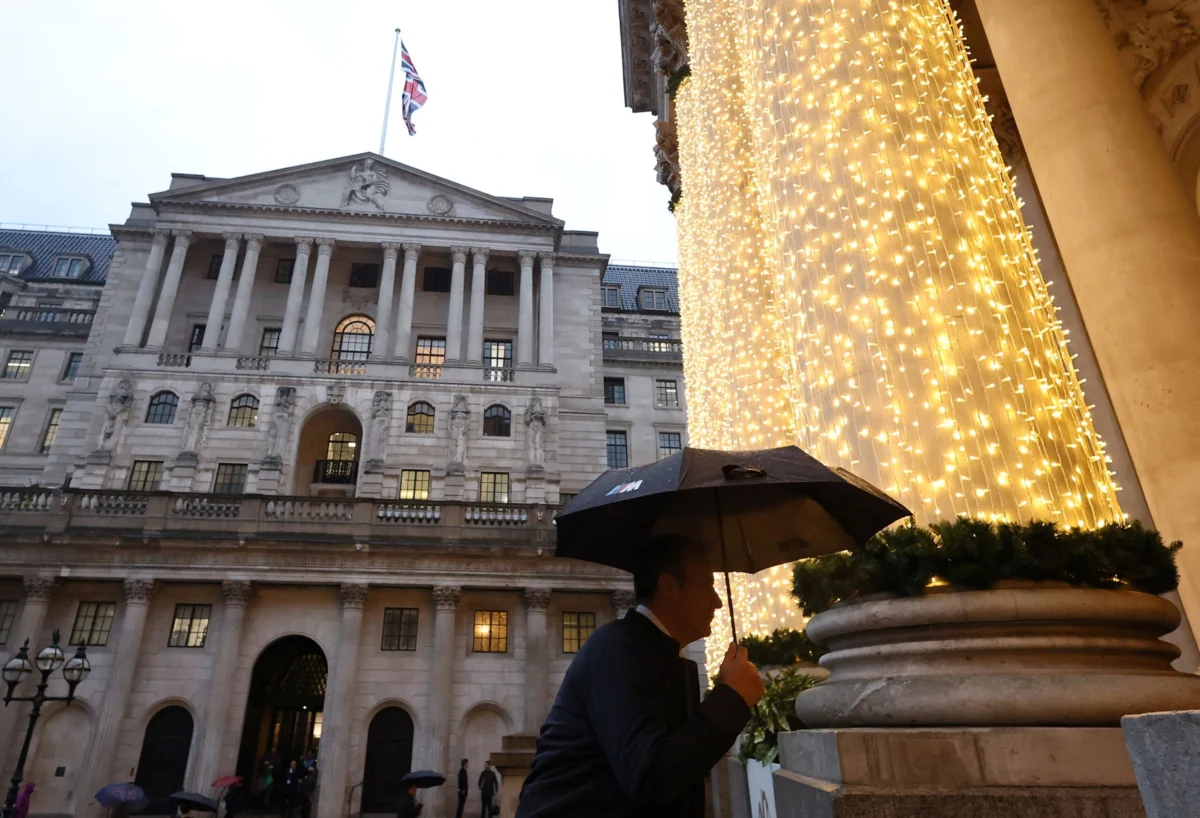
Britain’s economic landscape has been jolted by a hotter-than-expected surge in inflation, which climbed to 3.5% in the 12 months to September, marking its highest annual rate in almost a year. This significant acceleration, primarily fueled by soaring motor fuel costs, places immense pressure on the Bank of England’s Monetary Policy Committee (MPC) to tighten its stance further and complicates the already precarious fiscal balancing act for Chancellor of the Exchequer John Healey ahead of his inaugural Autumn Budget next week. The data, released on a Wednesday, immediately sent ripples through financial markets, even as the British pound and government bond yields remained relatively stable, indicating that much of the hawkish sentiment was already priced in. However, the underlying economic challenges presented by persistent inflationary pressures, exacerbated by global geopolitical events, signal a turbulent period ahead for UK households and businesses alike.
A Deeper Dive into September’s Inflationary Surge
The 3.5% Consumer Price Index (CPI) reading for September surpassed Reuters’ economists’ consensus forecast of 3.4%, signaling a more entrenched inflationary trend than anticipated. This print represents a notable continuation of the upward trajectory observed throughout the summer, following 3.1% in August and 2.9% in July. The accelerating pace underscores the difficulty faced by policymakers in bringing inflation back towards the Bank of England’s 2% target.
The Office for National Statistics (ONS) highlighted motor fuels as the primary driver behind this latest surge. The inflation rate for motor fuels hit an astonishing 29.8% in the year to September, reaching its highest level since August 2022. This particular component’s volatility is a stark reminder of the UK’s vulnerability to global energy market fluctuations. While the ONS typically details a broad basket of goods and services, the outsized contribution of transport costs, encompassing not only petrol and diesel but also indirectly affecting supply chains and logistics, paints a clear picture of the immediate financial burden on consumers and businesses. Other categories, such as food and non-alcoholic beverages, which have seen sustained increases over recent months, likely continued to contribute to the broad inflationary base, though motor fuel was the standout factor in this particular release. Housing and utility costs, although perhaps not the primary driver of this specific September rise, also remain a persistent upward pressure on household budgets, contributing to the overall inflationary environment.
Global Geopolitics and Britain’s Energy Vulnerability
The sharp rise in motor fuel prices cannot be understood in isolation; it is intricately linked to broader global geopolitical instability. The ONS explicitly cited the U.S.-Iran war and the subsequent struggle to move oil through the strategically vital Strait of Hormuz as a significant factor. This chokepoint, through which a substantial portion of the world’s seaborne oil passes, becomes a flashpoint during regional conflicts, leading to supply anxieties and upward pressure on crude oil prices. Disruptions, or even the threat of disruptions, can trigger rapid price increases in international oil markets.
Britain’s position as a net energy importer makes its economy inherently susceptible to such external shocks. Unlike energy-rich nations that can buffer their domestic markets, the UK must procure a significant portion of its oil and gas from international markets, priced in U.S. dollars. This exposes the economy to both the volatility of global commodity prices and currency fluctuations. The current scenario echoes the challenges faced in August 2022, when fuel costs surged dramatically in the wake of Russia’s full-scale invasion of Ukraine. That event triggered a global energy crisis, sending gas and oil prices to multi-year highs and contributing significantly to the cost-of-living crisis that has since gripped the UK. The recurring pattern of energy-driven inflation highlights a structural vulnerability that policymakers are continuously grappling with, seeking long-term solutions for energy security and diversification. The impact extends beyond the petrol pump, filtering through the economy as transportation costs rise for goods, manufacturing, and services.
The Bank of England’s Tightrope Walk: Monetary Policy Implications
The latest inflation data places the Bank of England’s Monetary Policy Committee in an increasingly difficult position. Their primary mandate is to maintain price stability, aiming for a 2% CPI inflation target. With inflation stubbornly refusing to fall significantly and now even accelerating, the case for further monetary tightening strengthens considerably. Scott Gardner, investment strategist at J.P. Morgan Personal Investing, articulated this challenge, stating that recent growth in headline inflation had "undone the progress we saw in the spring." This sentiment reflects a broader frustration among economists and policymakers who had hoped to see a more decisive downward trend in inflation after a period of aggressive rate hikes.
Gardner also pointed to a critical concern for the MPC: "Bank of England policymakers will be looking beyond the headline figure. Services inflation, in particular, has accelerated in recent months which will create concern that we are starting to see second-round inflationary effects beyond energy prices." Second-round effects occur when initial price shocks (like energy) feed into broader wage demands and subsequently higher prices for services, making inflation more persistent and embedded in the economy. This phenomenon is particularly challenging to combat with monetary policy alone, as it suggests a broader inflationary impulse rather than just transient external shocks.
Financial markets have swiftly reacted to this evolving picture. According to LSEG data, traders are now pricing in a 98% chance that the Bank of England will raise its key interest rate by 25 basis points at its next meeting, pushing the rate to 4%. Furthermore, the majority of traders are also anticipating an additional hike of the same magnitude at the central bank’s final meeting of the year in December. This aggressive pricing reflects the market’s conviction that the Bank of England has little choice but to act decisively to curb inflation, even if it risks dampening economic growth. The implications of higher interest rates are far-reaching: they increase borrowing costs for businesses, potentially stifling investment; they raise mortgage payments for homeowners, squeezing household disposable incomes; and they make government debt servicing more expensive. Despite these pressures, the British pound remained largely flat against both the euro and the U.S. dollar following the data release, and yields on U.K. government bonds were also little changed, suggesting that market participants had largely anticipated the hawkish response from the BoE. This "priced-in" reaction offers a degree of stability but does not alleviate the underlying economic strain.
Chancellor Healey’s Autumn Budget Headache: A Fiscal Reckoning
Beyond the monetary policy challenges, Wednesday’s inflation figures create a significant headache for the UK government and its finance minister. Chancellor of the Exchequer John Healey is poised to unveil his first fiscal shakeup next week during the highly anticipated Autumn Budget. He inherits the unenviable task of adhering to the previous government’s "fiscal rules," which aim to rein in the national debt while simultaneously delivering on promises to alleviate the burden of surging consumer costs on households and businesses. This dual objective is now made considerably more difficult by the accelerating inflation.
The scale of the fiscal challenge was starkly underscored by separate data published on Wednesday, which revealed that the UK’s national debt was estimated to have exceeded a staggering £3 trillion ($4 trillion) in September for the first time in history. The cost of servicing this colossal debt has risen drastically over the past year, primarily due to the Bank of England’s continuous interest rate hikes. Each incremental increase in rates translates into billions more required to pay interest on government bonds, effectively shrinking the "fiscal headroom" available for public spending or tax cuts. Compounding this, the British economy is struggling to grow, with recent GDP figures indicating a sluggish performance that further constrains the government’s revenue-generating capacity.
Following the data release, Chancellor Healey issued a statement reaffirming his commitment to "maintaining our fiscal discipline" in the upcoming budget. He also emphasized his intention to "drive for growth [and give] businesses and families some breathing space." However, the path to achieving these seemingly contradictory goals is fraught with difficulty. Suren Thiru, chief economist at the Institute of Chartered Accountants in England and Wales, aptly described the Autumn Budget as "a perilous high-wire act for the Chancellor." He elaborated that surging prices were "increasing pressure for cost-of-living support while pushing up government borrowing costs, which is shrinking fiscal headroom and narrowing his policy options." This predicament leaves Healey with limited room for maneuver, forcing him to make difficult choices between austerity measures, targeted support, and growth-boosting investments, all while ensuring market confidence in the UK’s financial stability.
The Consumer and Business Landscape: Broader Economic Impact
The relentless rise in inflation has profound implications for the everyday lives of UK citizens and the operational viability of businesses. For households, particularly those on fixed incomes or with limited savings, the erosion of purchasing power is a critical concern. Surging motor fuel prices directly impact commuting costs and the price of goods delivered, further squeezing disposable incomes. This often leads to difficult choices, forcing families to cut back on discretionary spending, impacting sectors such as retail, hospitality, and leisure. The ongoing cost-of-living crisis, exacerbated by the latest inflation figures, contributes to a palpable sense of economic insecurity among a significant portion of the population.
Businesses, too, face a formidable challenge. Increased energy and fuel costs translate directly into higher input costs, which must either be absorbed, impacting profit margins, or passed on to consumers, further fueling inflation. Wage demands, as employees seek to maintain their real incomes in the face of rising prices, add another layer of cost pressure. Small and medium-sized enterprises (SMEs), often with thinner margins and less access to capital, are particularly vulnerable. The struggle for economic growth, highlighted by recent GDP figures, compounds these issues, creating an environment where businesses find it harder to expand, invest, and create jobs. The potential for stagflationary pressures – high inflation coupled with low or negative economic growth – looms large, presenting a worst-case scenario for both policymakers and the wider economy. Consumer confidence, a crucial barometer of future economic activity, is likely to remain subdued in this uncertain climate.
Expert Perspectives and Forward Outlook
The consensus among economic analysts is that the UK economy is navigating a complex and challenging period. Scott Gardner’s observation that recent progress against inflation has been "undone" underscores the persistent nature of the current inflationary environment. The interplay of external energy shocks, domestic wage pressures, and supply chain disruptions creates a multifaceted challenge that no single policy tool can easily resolve.
Suren Thiru’s call for Chancellor Healey to deliver a "credible, fiscally disciplined Budget" is a clear signal from the economic community that fiscal policy must complement, rather than contradict, monetary policy efforts. Any perception of excessive spending or unfunded tax cuts could undermine the Bank of England’s efforts to control inflation, potentially leading to further market instability and even higher borrowing costs for the government. The "pieces are falling firmly into place for a November rate rise," Thiru noted, highlighting the inevitability of further monetary tightening given the current data.
Looking ahead, the UK economy faces several critical junctures. The Bank of England’s upcoming MPC meetings will be closely watched for signs of further rate hikes and any shifts in their forward guidance. The Autumn Budget will reveal the government’s strategy for navigating its fiscal tightrope, with significant implications for public services, taxation, and economic growth incentives. The global energy market remains a wild card, with ongoing geopolitical tensions threatening further price volatility. For consumers and businesses, the immediate future promises continued vigilance and adaptation to an environment of elevated costs and economic uncertainty. The long-term implications for the UK’s competitiveness and living standards hinge on the effectiveness of both monetary and fiscal authorities in restoring price stability and fostering sustainable economic growth.