Farhan Pambudi

In a move reflecting the growing tension between financial security and the rapid proliferation of autonomous technology, Bank of America has issued a formal warning to its customer base regarding the use of artificial intelligence agents. In an extensive email campaign titled “Protecting your finances in the AI World,” the financial institution urged its millions of account holders to exercise extreme caution, specifically advising against the sharing of usernames and passwords with third-party AI tools. The warning underscores a burgeoning crisis in the financial sector as consumers increasingly turn to personal AI assistants to manage their daily tasks, including financial planning and transaction execution.
The communication from Bank of America clarifies that customers should never share their sensitive banking credentials with another person or an outside service. Crucially, the bank expanded this definition to include “an AI-enabled tool or agent that offers to act on your behalf.” This directive highlights a significant shift in the cybersecurity landscape, where the primary threat is no longer just traditional phishing or malware, but the voluntary surrender of access to sophisticated, yet potentially insecure, autonomous software.
The Evolution of Agentic AI in Personal Finance
The rise of "agentic" AI represents a departure from the conversational chatbots that dominated the early 2020s. Unlike standard Large Language Models (LLMs) that simply provide information, AI agents are designed to perform actions. These tools can navigate websites, interact with APIs, and execute complex workflows such as booking travel, managing subscriptions, or, increasingly, handling financial transactions. As these tools become more integrated into consumer operating systems—such as Meta’s Muse or Apple’s enhanced Intelligence frameworks—the temptation for users to grant these agents direct access to their bank accounts has grown.
Financial institutions are currently grappling with the dual nature of this technology. While banks utilize AI internally to enhance fraud detection and customer service, the emergence of external, consumer-facing AI agents creates a "shadow" layer of access that bypasses traditional security protocols. When a customer provides their login credentials to an AI agent, they are essentially creating a proxy user. This proxy may not be subject to the same multi-factor authentication (MFA) rigors as a human user, or it may store credentials in a manner that is vulnerable to data breaches.
Security Risks and the Threat of Credential Leakage
The security implications of sharing credentials with AI agents are multi-faceted. Security experts point to three primary areas of concern: unauthorized autonomous activity, account lockouts, and secondary data breaches.
First, there is the risk of "hallucination" or logic errors within the AI agent itself. If an agent is tasked with "optimizing savings," it might autonomously move funds between accounts or execute payments based on a misunderstood prompt. Because the agent possesses the user’s credentials, the bank’s internal systems view these actions as legitimate, authorized transactions.
Second, the behavioral patterns of AI agents often trigger automated fraud detection systems. Banks use sophisticated algorithms to monitor the speed, location, and device metadata of logins. An AI agent accessing an account from a cloud server in a different geographic location, or attempting to perform dozens of queries in a matter of seconds, can appear to the bank as a credential-stuffing attack or a botnet intrusion. This frequently results in the customer being locked out of their own account, requiring a manual and often lengthy verification process to restore access.
Third, and perhaps most critically, is the risk of a security flaw within the AI provider’s infrastructure. If an AI agent stores a user’s banking credentials to facilitate future logins, that database becomes a high-value target for financially motivated hackers. A single vulnerability in an AI startup’s security could lead to the exposure of thousands of bank logins, providing attackers with direct access to consumer wealth without the need for traditional phishing techniques.
The Legal Landscape and Consumer Liability
One of the most significant aspects of Bank of America’s warning pertains to the legal and financial liability of the account holder. Most modern banking agreements, including those of major institutions like JPMorgan Chase, Wells Fargo, and U.S. Bank, contain specific clauses regarding the "authorized" use of credentials.
Bank of America’s email was explicit on this point: “If you do share your credentials, keep in mind that you’re responsible for activity resulting from that access.” Under existing frameworks such as the Electronic Fund Transfer Act (Regulation E) in the United States, consumers are generally protected against "unauthorized" electronic transfers. However, the legal definition of "unauthorized" becomes blurred when a customer voluntarily provides their login information to a third party.
By handing over a username and password to an AI agent, the customer may be legally deemed to have "authorized" the agent to act as their representative. If the AI agent subsequently makes an error or is compromised by a third party, the bank may argue that the customer breached the terms of the Digital Services Agreement, thereby absolving the bank of the requirement to reimburse lost funds. This creates a significant "liability gap" for consumers who prioritize convenience over traditional security measures.
Industry-Wide Challenges and the TechCrunch Disrupt Context
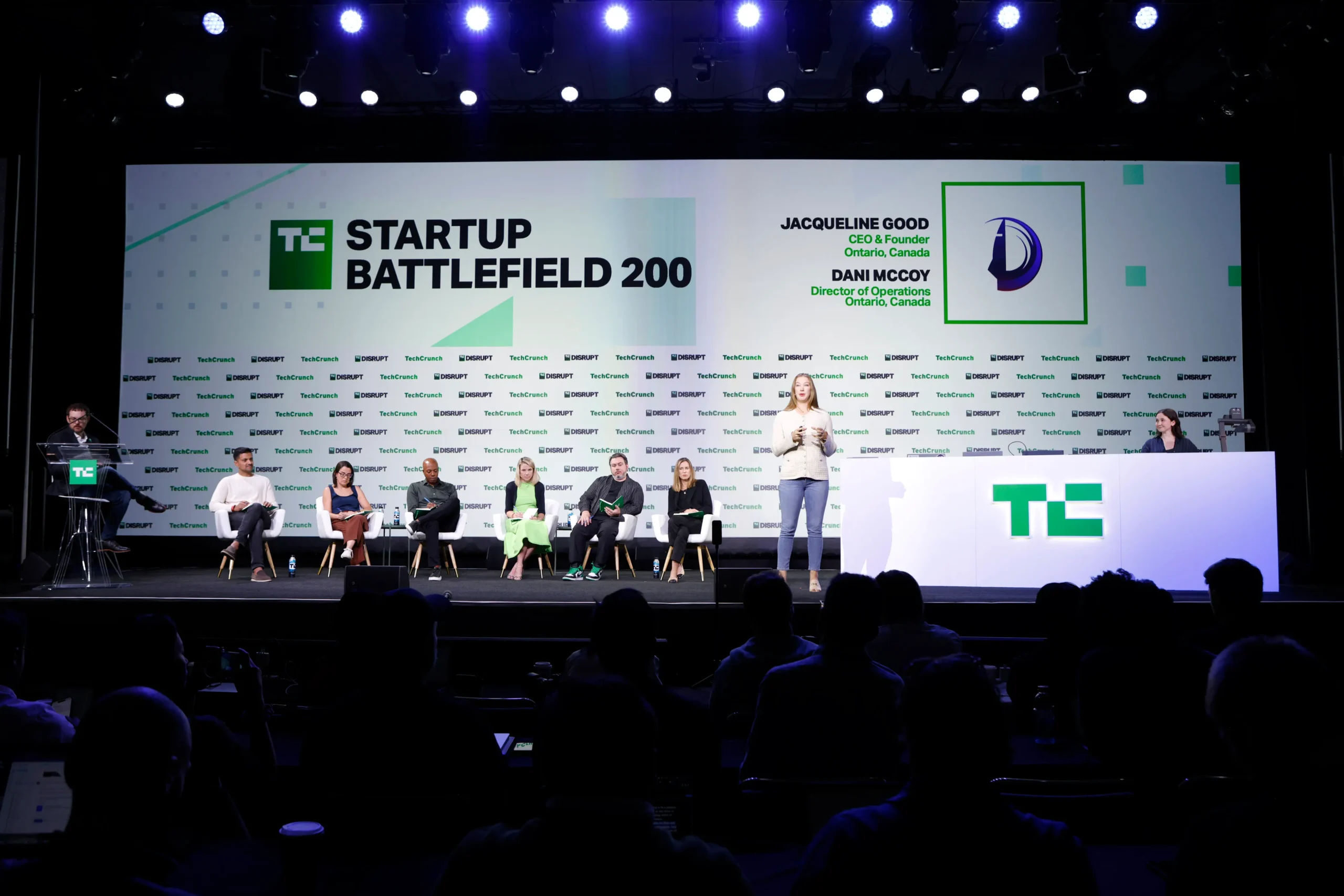
The warning from Bank of America follows a series of industry discussions regarding the integration of AI into the global financial plumbing. At the recent TechCrunch Disrupt conference, industry leaders, payment processors, and cybersecurity experts debated the future of "agentic payments." These are systems where an AI is empowered to buy products at the best available price or pay bills at the most tax-advantageous time.
While the potential for efficiency is high, the consensus among financial regulators is that the infrastructure is not yet ready for the widespread use of third-party agents. Reports have surfaced throughout late 2024 and 2025 of banks struggling with "unauthorized agents" attempting to scrape data or access accounts via brute-force or credential-sharing methods. This has led to a "cat-and-mouse" game between bank security teams and AI developers.
A spokesperson for Bank of America confirmed that the recent email blast was a proactive measure to educate customers before these habits become ingrained. The bank emphasized that while it supports innovation, the sanctity of the "one-user-one-password" model remains a cornerstone of financial defense.
Chronology of the AI Banking Crisis
The tension between AI and banking has escalated rapidly over the past four years:
- Late 2022 – Mid 2023: The launch of ChatGPT and other LLMs leads to a surge in consumers using AI for financial advice. Banks respond by enhancing their internal AI (e.g., Bank of America’s Erica) to keep users within their proprietary ecosystems.
- Early 2024: The first "agentic" startups emerge, promising to automate "life admin," including paying bills and negotiating with service providers. These tools require users to input passwords for various accounts.
- Late 2024: Major tech conglomerates announce the integration of AI agents directly into smartphone operating systems. Banks begin seeing a spike in "bot-like" login patterns that are traced back to consumer-authorized agents.
- Mid 2025: Several high-profile "leaks" from smaller AI productivity apps expose thousands of user credentials, leading to a wave of account takeovers.
- October 2026: Bank of America issues its most direct warning to date, explicitly naming AI agents as a threat to credential security and clarifying the shift in liability to the consumer.
Analysis: The Path Forward for Secure Agentic Finance
The current conflict highlights a fundamental flaw in how the internet handles identity. Relying on shared secrets (usernames and passwords) is an aging security model that is ill-suited for a world of autonomous software. To resolve the issues raised by Bank of America, the industry is likely to move toward more robust implementations of Open Banking and OAuth-style permissions.
Under an Open Banking framework, a customer would not give their password to an AI agent. Instead, the bank would provide a "token" that grants the agent limited, revocable access to specific functions—such as viewing a balance or making a payment under $100—without ever exposing the master login credentials. This "least privilege" model would mitigate the risks of credential leakage and provide a clearer legal framework for liability.
However, until such systems are universal and standardized across the global banking sector, the risks remain high. Bank of America’s decision to alert its customers serves as a vital reminder that in the "AI World," the most significant vulnerability is often the human desire for frictionless technology. For the time being, the bank’s message is clear: the convenience of an autonomous assistant does not outweigh the catastrophic risk of a compromised bank account. Customers who choose to ignore this warning do so at their own financial peril.